
One Grower. One Real Research Process.
MistCulture is built by a grower and technical researcher. The person who writes the guides is the same person who tests them in a working grow space.
Every guide is researched from primary sources, checked against peer-reviewed papers, and validated against real growing conditions before it is published. No invented experts. No anonymous AI slop.
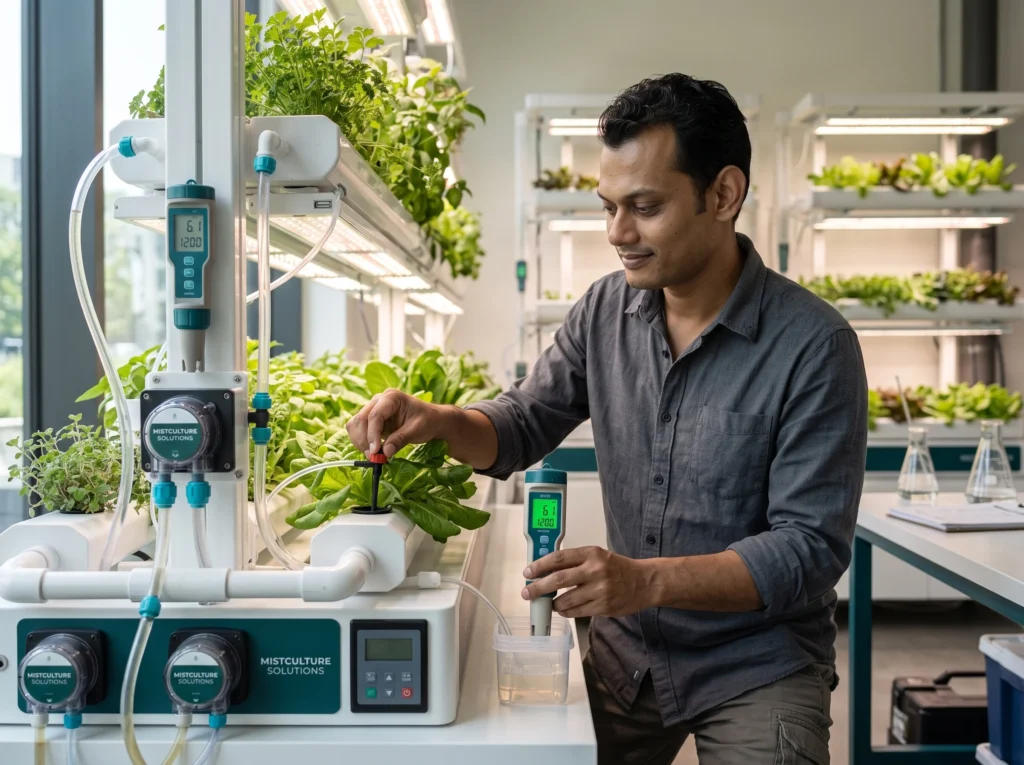 In the grow space, not a studio
Hello, I’m Shoyeb.
I’m the founder and editor behind MistCulture. I started growing soilless the way I do most things: by over-researching the subject, building the system, and then measuring everything until why something worked became obvious.
What I found was a problem: most hydroponic information online is either recycled marketing copy, one-size-fits-all advice with no source, or content nobody has actually tested. MistCulture exists to fix that — with real formulas, real sources, and a single accountable author behind every guide.
My background is in engineering and software, which is why the calculators on this site are built to documented formulas and why each article links back to the source it is based on. But the standard I hold this site to is simpler: if I would not trust the advice in my own grow space, I will not publish it.
How a MistCulture Guide Gets Written
One person, four honest steps, no shortcuts.
Research
Read the relevant chapters in the research library and pull the peer-reviewed papers that back each claim.
Hands-On Testing
Practical claims are verified in my own grow space: EC targets, pump sizing, misting duty cycles, lighting distances.
Explain
Rewrite the technical material into clear, actionable steps — the jargon stays only where it has to.
Review & Update
Re-read the draft against the sources before publishing, and revise guides when equipment or research moves on.

Our Research Standard
What every MistCulture guide promises — and the bar it is held to.
Traceable
Important technical claims can be traced to a specific source in the research library.
Practical
Recommendations are checked against real growing conditions where possible.
Transparent
Uncertainty and limitations are stated rather than hidden.
Current
Guides are reviewed as equipment, research and best practices evolve.
Sources Behind the Content
Every guide cites its chapter-level source. Tap any card to see the full reference details.
K1 Book Hydroponic Food Production
A definitive reference for advanced home and commercial hydroponic growers covering nutrient solutions, media, NFT, CO2, lighting, and crop culture chapters.
K2 Book Aquaponics Master Reference
Fish/plant/bacteria dynamics, nitrogen cycling, and flood-and-drain systems used across the aquaponics guides.
K3 Book DIY Systems Specialty Compendium
Build-level detail for DWC, NFT, drip, flood-and-drain, and propagation projects referenced throughout the DIY blueprints.
K4 Compendium Field Guide to Urban Gardening (Kevin Espiritu)
Practical urban and small-space growing methods used in the compact-system and apartment guides.
K5 Compendium Guide to Hydroponic Gardening
Soilless growing fundamentals, wicking and Kratky methods, water chemistry, and beginner troubleshooting.
K6 Compendium How to Garden Indoors & Grow Your Own Food Year Round
Vertical, container, and hydroponic gardening methods for year-round indoor production.
K7 Reference DIY Hydroponic Gardens (Dan Michaels)
PPM/TDS conversion and practical DIY builds for home soilless systems.
K8 Reference IoT & Automation Compendium
Photovoltaic, battery, MPPT, and fertigation automation references behind the smart-garden and solar guides.
K9 Paper Research Papers Compendium
A collection of peer-reviewed studies on plant physiology, oxygen, nutrient transport, and lighting used for cross-checking claims.
What MistCulture Doesn’t Do
Standards are defined as much by what we refuse to publish as by what we publish.
No copied AI summaries
We don’t publish generic rewrites of existing articles. Content starts from primary sources, not from other websites.
No unexplained claims
Numbers and recommendations have a reason behind them — a formula, a paper, or a measurement, stated on the page.
No one-size-fits-all advice
Different crops, systems and environments require different decisions. Guides say what changes and why.
No product hype disguised as education
Recommendations serve the grower’s problem first — never the vendor’s sales page.
Frequently Asked Questions
Straight answers about MistCulture and how its content is made.
01 Who writes the content on MistCulture?
One person: Shoyeb, the founder. Every guide is researched, written, and fact-checked by the same person, which keeps the voice consistent and the sourcing honest.
02 What qualifies you to write about hydroponics?
An engineering background, software experience, a working grow space, and a research library of technical books and peer-reviewed papers that every article cites. No invented credentials — the sources are listed in the Research Library above.
03 How do you research your guides?
Each guide starts with primary sources in the K1–K9 research library, cross-checks claims against peer-reviewed papers, and only then moves to writing. This happens before any advice is written.
04 How do you test recommendations?
Practical claims are validated in my own grow space before publishing — EC targets, pump sizing, misting duty cycles, lighting distances. Claims that come from hands-on testing are labeled as such.
05 Can I trust the content on MistCulture?
Every guide cites chapter-level sources from the K1–K9 research library and cross-checks against peer-reviewed papers. Tools are built to documented formulas. Where something is uncertain or untested, the guide says so.