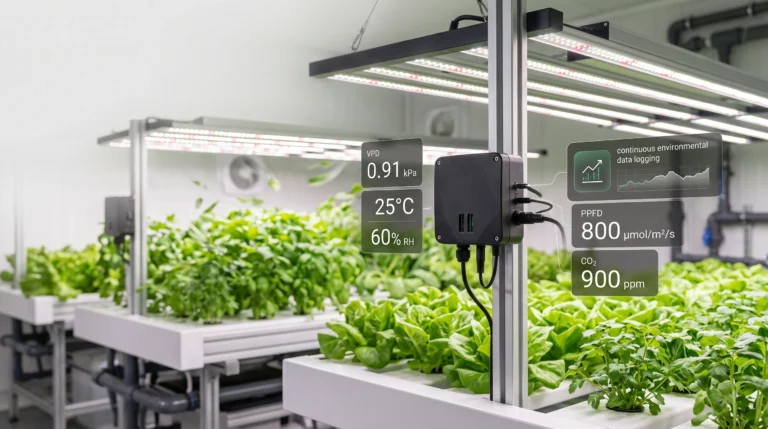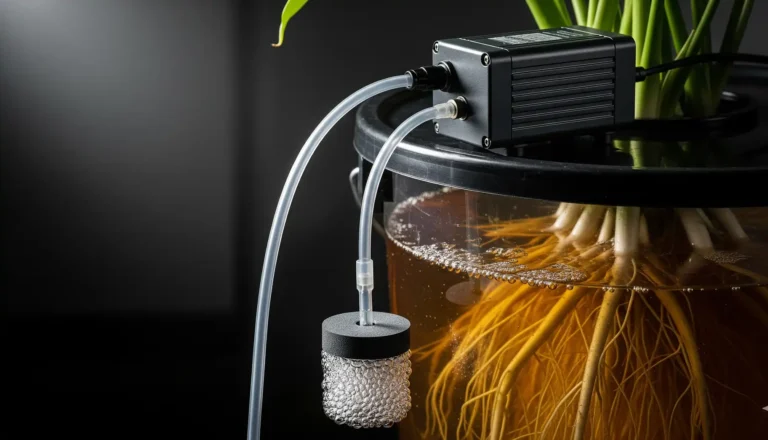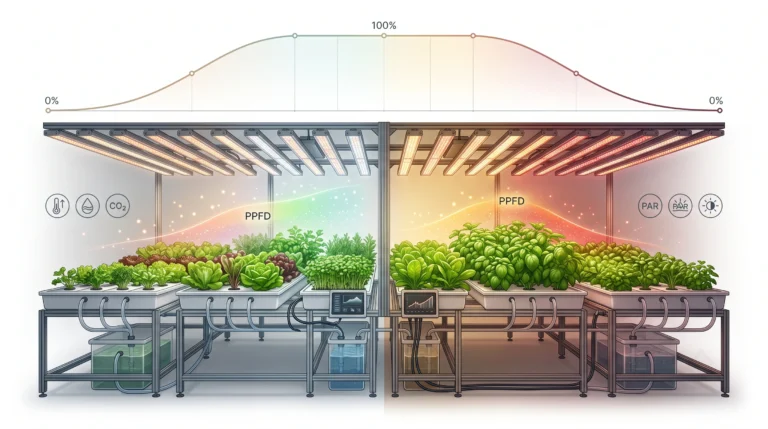
Hydroponic Troubleshooting: pH Drift, EC Spikes & Root Issues

Table of Contents
- The $300 Slime vs. Rot Disaster: A 2022 Post-Mortem
- The 5-Minute Systematic Triage Method
- The pH Drift Decision Tree
- EC Spike Emergency Routes & Osmotic Shock
- Root Pathogen Audit — Pythium vs. Staining vs. Hypoxia
- Real-World Diagnostic Case Studies
- The "Abandon Ship" ROI Tipping Point
- Printable Emergency Hydro Triage Checklist
- Curated Amazon Product Recommendations
- FAQ's
Executive Summary Diagnosing a failing hydroponic system requires a systematic, 5-step triage framework: Visual Foliage Audit, pH/EC Solution Testing, Root Physical Tactile Check, Flowchart Triage Mapping, and Targeted Intervention. Differentiating harmless nutrient staining from pathogenic Pythium root rot relies on the tactile “sloughing test” (slimy root cortex stripping away from the stele indicates rot, while firm brown roots indicate harmless organic staining). Rapid pH drift (>0.5 units/day) signifies bacterial blooms or pump failure, while EC spikes above 2.5 mS/cm trigger severe osmotic root lock, requiring an immediate system flush with a 50% strength balanced nutrient solution.
The $300 Slime vs. Rot Disaster: A 2022 Post-Mortem
In 2022, a misdiagnosis ruined a commercial 50-plant Deep Water Culture (DWC) system. Upon inspecting a dark brown, viscous coating on the root mass, the operator panicked, assumed severe Pythium root rot, and immediately dumped $300 worth of harsh chemical hydrogen peroxide (H2O2) and synthetic fungicides directly into the reservoir.
The diagnosis was entirely incorrect. The dark roots weren’t rotting — they were harmlessly stained by concentrated humic/fulvic acid additives in the nutrient formula. The aggressive chemical treatment destroyed the beneficial microbial colony, stripped root hairs, and induced severe osmotic shock. Within 48 hours, all 50 plants collapsed permanently, forcing a complete crop dump.
In high-performance hydroponics, panic is fatal. When a crop shows distress, you need to act like a clinical physician. Flowcharts and decision trees eliminate guesswork, letting growers systematically audit environmental metrics before applying corrective treatments.
The 5-Minute Systematic Triage Method
When foliage droops or yellows, run this standardized 5-step diagnostic protocol before adding any additives or adjusting chemical balances:
- Visual check — Identify chlorosis, necrosis, interveinal browning, or wilting.
- Sensor audit — Measure real-time reservoir pH, EC (mS/cm), and temperature (°F/°C).
- Tactile root check — Perform the “sloughing test” (firm vs. slimy tissue).
- Flowchart mapping — Match the data against red (emergency) or yellow (warning) thresholds.
- Execution — Apply a targeted protocol without introducing extra variables.
The Triage Execution Workflow
- Visual canopy audit: Examine upper versus lower leaves. Yellowing on lower growth indicates mobile nutrient movement (N, P, K, Mg), while yellowing on upper growth indicates immobile nutrient lockout (Fe, Ca, S).
- Calibrated pH & EC meter reading: Check solution parameters using calibrated digital probes. Verify both overall Electrical Conductivity (EC) and solution temperature (target water temp: 65°F to 68°F / 18°C to 20°C).
- Tactile root inspection: Pull a net pot and inspect root mass architecture. Touch the root mass directly — healthy roots feel firm and crisp, while infected roots feel slippery and slough off under light finger pressure.
- Path mapping: Cross-reference meter data and root texture with the visual diagnostic decision tree below.
- Targeted action protocol: Execute single-variable adjustments (e.g., top off with pure RO water or adjust water aeration) rather than making multiple simultaneous adjustments.
The pH Drift Decision Tree
pH drift isn’t a disease – it’s a direct measurement of biological or chemical activity within the root zone. Because pH is logarithmic (pH = -log[H⁺]), a shift from 5.8 to 6.3 represents a 3.16-fold decrease in hydrogen ion concentration, severely restricting cation exchange capacity for elements like iron and manganese.
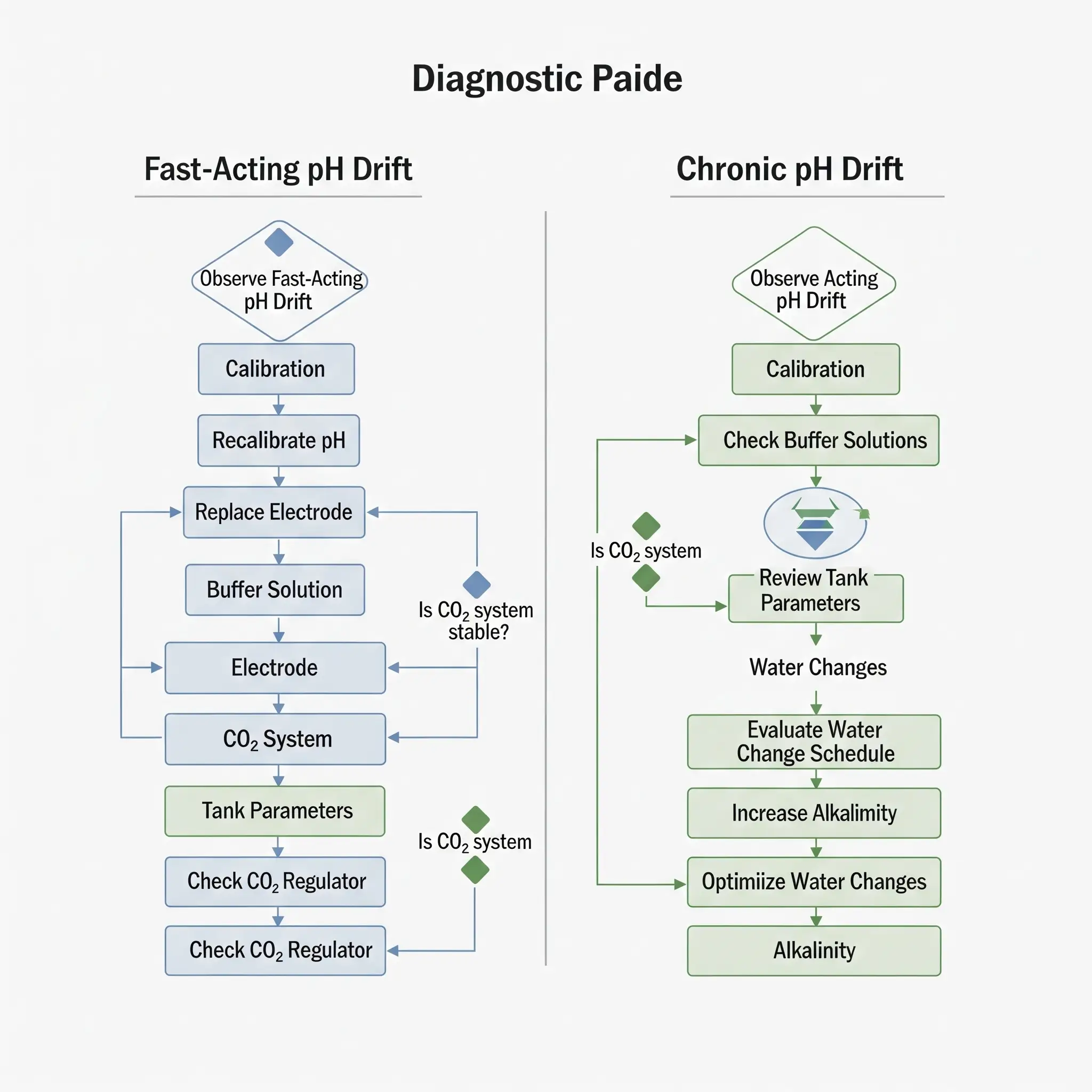
Reservoir pH drift generally falls into two categories: fast-acting drift (more than 0.5 units per day) that signals an acute problem, and chronic drift (less than 0.2 units per day) that reflects normal plant activity. Within fast-acting drift, watch whether EC is falling (plants eating rapidly) or rising (root rot or a bacterial outbreak). Within chronic drift, an upward trend usually reflects normal anion uptake during vegetative growth, while a downward trend reflects normal cation uptake during bloom.
Fast-Acting pH Drift (>0.5 Units per 24 Hours) — Red Alert
A sudden spike or drop in pH signals an acute biological crisis or mechanical failure:
- Fast pH spike + rising EC: Indicates rapid root cell death. Dying roots release alkaline cellular fluid into solution while stopping water uptake, concentrating nutrient salts. Action: Drain the reservoir immediately and inspect for severe oxygen starvation or pathogen attack.
- Fast pH drop + stable EC: Indicates rapid bacterial proliferation or acidic root exudates driven by severe anaerobic conditions. Action: Increase air pump output to boost dissolved oxygen (DO) above 6.0 mg/L.
Chronic pH Drift (<0.2 Units per 24 Hours) — Normal Maintenance
Slow drift reflects normal plant ion exchange during vegetative or flowering phases:
- Gradual upward drift (5.8 → 6.2): As plants consume nitrate anions (NO₃⁻), they release hydroxide (OH⁻) or bicarbonate ions, raising pH. This is a sign of healthy vegetative growth.
- Gradual downward drift (6.2 → 5.5): As plants consume ammonium (NH₄⁺) or potassium cations (K⁺) during heavy flowering, they release hydrogen ions (H⁺), lowering pH. Correct using mild carbonate buffers or dilute potassium hydroxide (pH Up).
EC Spike Emergency Routes & Osmotic Shock
Electrical Conductivity (EC) measures total dissolved nutrient salts in solution. Excessive EC increases solution osmotic pressure (Π ≈ 0.36 × EC, in atm). When solution osmotic pressure exceeds root internal fluid pressure, water flows out of the plant and back into the reservoir (reverse osmosis), causing rapid cell dehydration and leaf tip burn.
| EC Level (mS/cm) | Estimated Osmotic Pressure | Physiological Plant Impact | Target Action Protocol |
|---|---|---|---|
| 1.0-1.8 mS/cm | 0.36-0.65 atm | Optimal osmotic gradient for water & nutrient absorption. | Maintain standard feeding schedule. |
| 2.0-2.4 mS/cm | 0.72-0.86 atm | Maximum threshold for heavy-feeding crops (e.g., tomatoes). | Monitor leaf margins closely for tip burn. |
| ≥2.5 mS/cm | ≥0.90-1.15+ atm | Osmotic shock/lockout — roots lose ability to take up water. | Emergency flush: dilute solution with pure RO water. |
Emergency Intervention Protocols
- Evaporation spike (rising EC + dropping water level): Environmental VPD is too high, causing high transpiration rates where plants drink pure water faster than they consume salts. Fix: Top off the reservoir with plain pH-adjusted reverse osmosis (RO) water to bring EC back to baseline.
- Nutrient burn / salt lockout (rising EC + stable water level): Excessive mineral salt buildup. Leaf margins become crispy, brown, and claw downward. Fix: Perform a complete reservoir flush and replace the solution with a 50% strength balanced formula for 48 hours to restore osmotic equilibrium.
Root Pathogen Audit — Pythium vs. Staining vs. Hypoxia
Misidentifying root health issues leads to costly mistakes. Use this quantitative diagnostic matrix to distinguish between fungal pathogens (Pythium ultimum), organic nutrient staining, and dissolved oxygen hypoxia:
| Diagnostic Feature | Pathogenic Root Rot (Pythium) | Harmless Nutrient Staining | Oxygen Starvation (Hypoxia) |
|---|---|---|---|
| Tactile Texture | Slimy, soft, disintegrates easily. | Firm, crisp, structurally intact. | Limp, soft, non-slimy. |
| Sloughing Test | Outer cortex strips away from core stele. | Cortex remains firmly attached to stele. | Tissue stays attached but lacks rigidity. |
| Odor Profile | Foul, decaying organic / swamp smell. | Earthy, natural forest stream scent. | Stagnant, faint sour smell. |
| Root Color Pattern | Uneven dark brown/black patches. | Uniform light tan to dark amber tint. | Dull greyish-white or pale tan. |
| Dissolved Oxygen Level | Depleted (<3.0 mg/L). | Optimal (>6.0 mg/L). | Sub-optimal (<4.0 mg/L). |
The Root Sloughing Test Execution
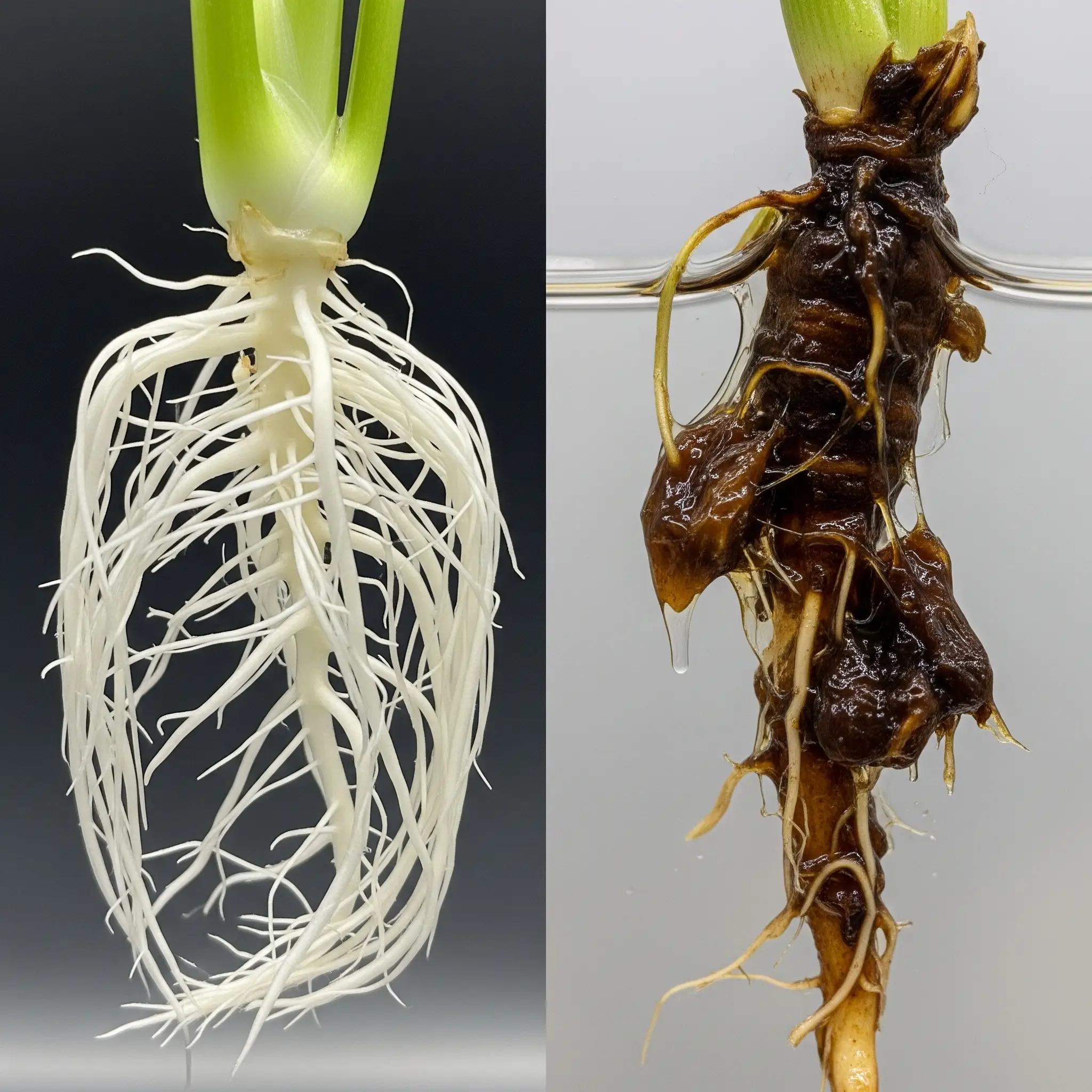
To perform the definitive root test, pinch a discolored root strand gently between two fingers and slide down toward the root tip. If the outer protective sheath (cortex) slides off effortlessly, leaving behind a fine thread-like inner core (stele), active bacterial/fungal root rot is present. If the root holds its structure without stripping, the brown discoloration is simply nutrient staining from organic additives.
Real-World Diagnostic Case Studies
Case Study #1: Vine Crop Organic Tannin Staining
Symptom profile: A tomato crop in a recirculating Dutch Bucket system showed dark amber root masses and yellowing lower leaves. The grower suspected severe root rot and prepared to discard the crop.
Triage findings: Applying the sloughing test confirmed the root cortex was completely firm and healthy. Reservoir readings showed pH at 5.7 and EC at a moderate 1.8 mS/cm. However, the grower had recently introduced an organic kelp/humic extract additive. The root discoloration was purely organic tannin staining, while the lower leaf yellowing was caused by a simple nitrogen deficiency resulting from rapid fruit set.
Corrective action: The grower flushed the system, refilled with a standard N-P-K nutrient solution, and maintained target EC. The crop recovered fully, yielding a normal harvest.
Case Study #2: Commercial Lettuce Carbonate Drift
Symptom profile: A raft NFT lettuce system experienced severe tip wilting and general leaf chlorosis. The operator assumed an iron deficiency and added chelating agents, which failed to fix the issue.
Triage findings: Testing revealed solution pH had drifted to 7.2 due to a high-bicarbonate tap water source without proper acid buffering. At a pH above 6.5, iron (Fe²⁺) precipitates out of solution into unusable ferric hydroxide, causing systemic nutrient lockout despite adequate iron levels in the tank.
Corrective action: The operator adjusted solution pH down to 5.8 using diluted phosphoric acid, unlocking bound micronutrients. Within 72 hours, leaf tissue regained healthy dark green coloration.
The “Abandon Ship” ROI Tipping Point
Not every crop can — or should — be saved. Attempting to salvage a severely infected system often costs more in wasted electricity, water, and specialized treatment additives than resetting the system entirely. The key decision point is functional root damage: under 30% is generally salvageable, while over 30% typically isn’t.
Quantitative Reset Thresholds
- <30% functional root damage: System is salvageable. Prune infected root tips using sterile shears, execute a full system water exchange, install extra air stones to maintain dissolved oxygen above 6.5 mg/L, and treat the reservoir with beneficial microbes (Bacillus amyloliquefaciens).
- >30% functional root damage: Crop is unsalvageable. Vascular transport vessels are permanently compromised, leaving plants unable to support transpiration during peak light hours. Destroy the crop immediately.
- Anaerobic sewage odor: Indicates systemic bacterial takeover (Pectobacterium or advanced Pythium oospore saturation). Reset the entire system immediately.
System Reset & Sterilization Protocol
When resetting an infected system, sanitize all hardware before introducing new plants: circulate a 10% bleach solution or 300 PPM active peracetic acid through all lines, reservoirs, pumps, and buckets for 6 hours. Flush thoroughly with clean water, allow to air-dry completely, and replace all flexible vinyl airline tubing.
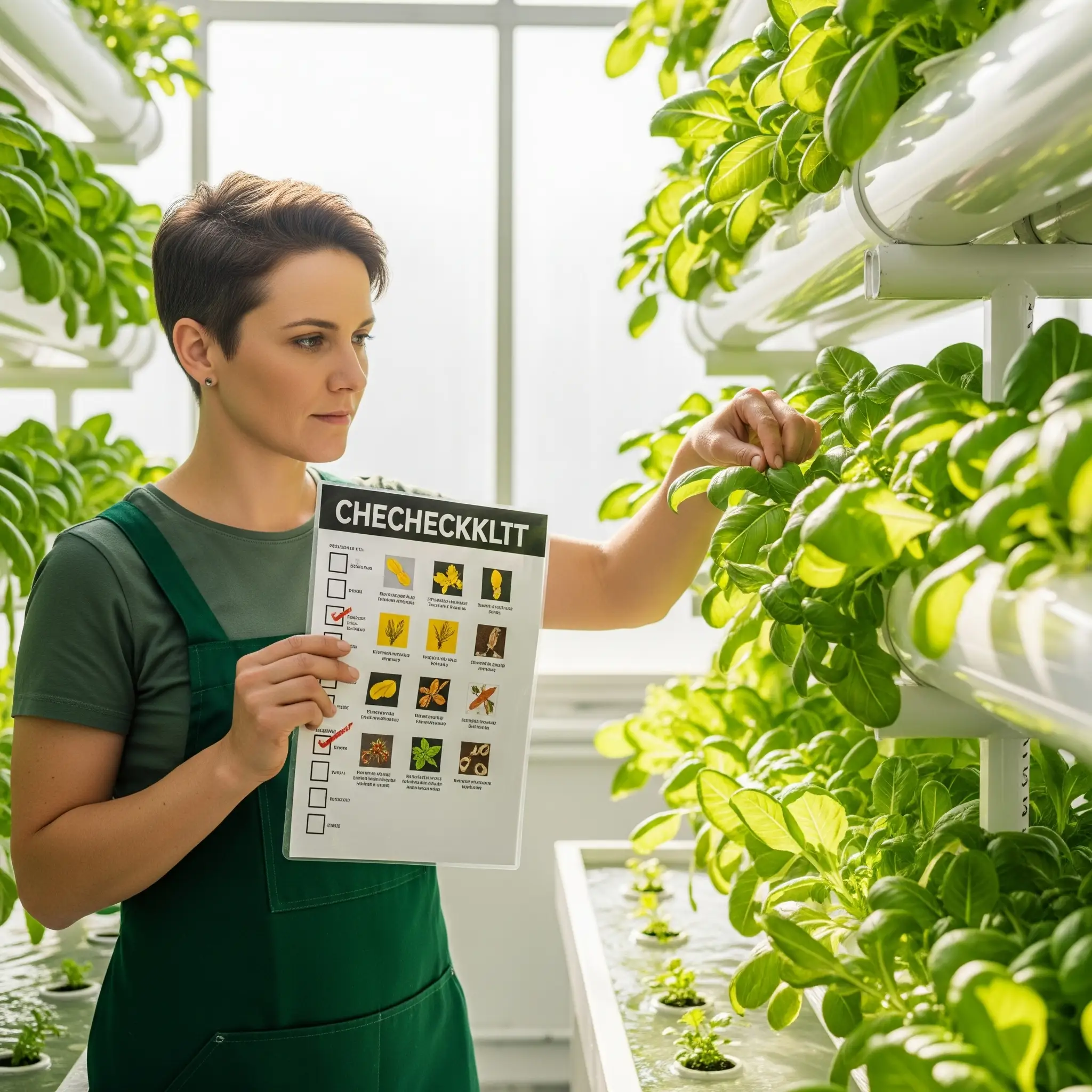
Printable Emergency Hydro Triage Checklist
Keep this checklist mounted near your reservoir monitoring station for rapid troubleshooting:
Phase 1: Sensor & Parameter Verification
- Calibrate pH and EC meters using 4.01/7.01 pH and 1413 µS/cm reference fluids.
- Measure reservoir temperature (confirm range: 65°F-68°F / 18°C-20°C).
- Record 24-hour pH drift rate (flag if drift exceeds 0.5 units/day).
- Record 24-hour EC trend (flag if EC rises above 2.5 mS/cm).
Phase 2: Root System Physical Audit
- Perform the tactile sloughing test on dark/discolored roots.
- Check for anaerobic odors (foul/swampy vs. earthy/forest stream).
- Assess functional root mass volume loss (<30% vs. >30%).
- Verify dissolved oxygen bubbling activity (ensure air pumps/stones run 24/7).
Phase 3: Immediate Corrective Action
- For high EC / osmotic shock: dilute reservoir 50% with pure RO water.
- For high pH lockout: adjust pH to 5.8 using dilute pH Down (phosphoric acid).
- For pathogenic rot (<30%): drain system, apply beneficial microbes, boost aeration.
- For unsalvageable rot (>30%): terminate crop, execute peracetic acid system wash.
Curated Amazon Product Recommendations
Based on the troubleshooting themes identified in the search results, here are highly relevant Amazon affiliate products that address these specific hydroponic challenges:
pH Management Solutions
Vivosun Digital pH Meter and TDS Combo Kit
Dual-function digital meter with automatic temperature compensation for precise pH and PPM readings.
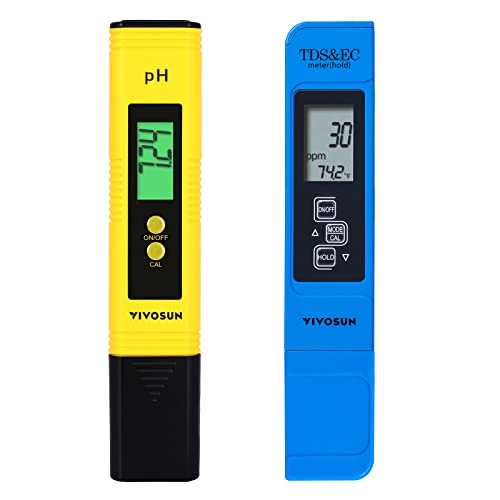
- Application: Great for all home and laboratory TDS & pH testing applications including aquariums, swimming pools
- PH Meter: Full measurement range of pH 0 – 14, reliable and quick readings
- 3-in-1 TDS Meter: Measurement Range 0-9990ppm, 0-9990µs/cm; Accuracy ± 2%, 0.1- 80.0°C, 32.0-176.0°F; Note: This meter c…
Top-Shelf Features:
- Dual-Parameter Monitoring: Simultaneously tracks pH and nutrient strength (PPM) for comprehensive solution management.
- Data Hold Function: Freezes readings for easy transcription into grow journals.
- Auto-Calibration: Features one-button calibration with included buffer powders for maintenance-free accuracy.
A Word of Caution:
- Calibration Demands: Requires weekly calibration to maintain precision readings.
- Fragile Components: Glass electrode needs careful handling and proper storage solution.
Who This Is For: Ideal for serious growers who need precise numerical readings rather than color interpretation. Perfect for diagnosing multiple parameter issues simultaneously.
Nutrient Management Systems
General Hydroponics FloraGro Nutrient Bundle
A 3-part nutrient system with logbook included for recording dosing schedules and plant responses.

- Fulfill your plants’ specific nutrient needs while keeping them happy with the General Hydroponics FloraSeries and CALiM…
- FloraMicro is rich in nitrogen, calcium, and chelated micronutrients to help support fast-growing crops during all growt…
- FloraGro is blended with nitrogen phosphorus, potassium, and magnesium for support of structural and foliar growth
Bloom & Boost:
- Integrated Tracking: Includes feeding schedule tracker and deficiency troubleshooting guide for simplified nutrient management.
- Pre-Measured Lines: Bottle markers indicate mL/gal ratios to eliminate mixing miscalculations.
- pH Stability: Formulated to help maintain stable pH levels, reducing adjustment frequency.
The Trade-Off:
- Learning Curve: Requires understanding of 3-part mixing ratios for different growth stages.
- Supplement Needs: May require additional calcium or magnesium supplements for some plants.
Our Grow-O-Meter Says
The perfect nutrient system for growers who want to document their feeding regimen while preventing deficiencies.
Monitoring & Automation Tools
Govee WiFi Hygrometer Thermometer 3-Pack
Wireless sensors that monitor temperature/humidity 24/7 and sync data to a smartphone app for export.
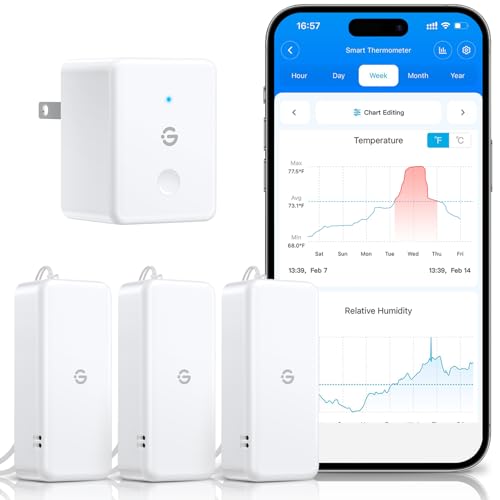
- Smart WiFi Control: Monitor indoor thermometer data anytime, anywhere. The gateway can be connected through WiFi via the…
- High-Precision Readings: The Swiss-made WiFi temperature sensor provides precise readings, measuring temperatures with ±…
- Remote Alarm: You can preset temperature and humidity values via the app. When the hygrometer thermometer sensor detec…
Root-Level Benefits:
- Environment Tracking: Continuously monitors temperature and humidity to prevent mold and stress conditions.
- Multi-Point Placement: Three sensors allow for mapping microclimates throughout grow space.
- Historical Data: Creates exportable graphs and charts for identifying environmental trends.
Not a Perfect Fit For:
- Non-Tech Users: Requires smartphone and app comfort for full functionality.
- Battery Dependency: Requires AAA battery replacements every 4-6 months of continuous use.
The Seedling Lowdown: Essential for growers struggling with environmental consistency issues. The data export feature makes it easy to correlate conditions with plant health changes.
AgroSense WiFi Plant Monitoring System
A smart monitoring system that tracks soil moisture, light intensity, and temperature with cloud data sync.

- 【2️⃣Two Ways Of Use】 When used alone, the large display give you an at-a-glance snapshot of current conditions. Or you …
- 【📈Real-Time Monitoring】Rainpoint Smart Digital Leave In Soil Meter continuously samples moisture to provide updated rea…
- 【💧Prevent Over/Underwatering】The low/high moisture alert feature allows you to customize the appropriate threshold acco…
Grow Room Win:
- Comprehensive Parameters: Monitors multiple variables simultaneously to identify imbalance patterns.
- Cloud Integration: Automatically populates spreadsheets with timestamped data for hands-off journaling.
- Custom Alerts: Sends notifications when parameters deviate from preset ranges.
Things to Consider:
- Subscription Model: Advanced analytics require monthly premium plan access.
- Hydroponic Adaptation: Some sensors require modification for deep water culture systems.
Is It Right for Your Garden? Perfect for tech-savvy growers who want to automate their data collection and receive immediate alerts about changing conditions.
Pest Management Solutions
General Hydroponics Defense Root Zone Treatment
A natural microbial solution that prevents root rot and protects against pathogens in hydroponic systems.

- Rapid rooter plugs are fortified with general hydroponic micronutrients for abundant root growth
- The optimal air-to-water ratio within the plug matrix results in explosive early root growth
- Use rapid rooter for robust early rooting that supports explosive plant growth
The Green Thumb Upside:
- Root Protection: Introduces beneficial microbes that outcompete harmful pathogens causing rot.
- System Compatibility: Works with all hydroponic systems including DWC, NFT, and aeroponics.
- Preventative Formula: Can be used regularly to maintain root health before problems emerge.
Grower’s Notes:
- Refrigeration Needed: Requires consistent 40-50°F storage to maintain microbial viability.
- Application Frequency: Needs weekly application for maximum effectiveness in prevention.
System Maintenance Essentials
AC Infinity Gardening Journal Logbook
A hardbound journal with structured sections for tracking pH, EC, nutrients, and environmental data.

Fifth-generation homesteader Melissa K. Norris has found gardening to be one of the easiest and most complex things there is. It really is as simple as plopping a seed into the soil, giving it adequate light and water, and watching it grow. But if you want to get the most out of your garden and produce more food each year, you need a plan to help you stay on track.
Why Growers Love It:
- Structured Format: Pre-formatted tables simplify data entry for pH, EC, nutrient dosing, and environmental conditions.
- Durable Design: Spill-resistant cover and tear-proof pages withstand humid grow environments.
- Strain Comparison: Includes sections for comparing performance across different plant varieties.
Room for Improvement:
- Manual Entry: Requires consistent manual recording rather than automated data collection.
- Space Limitations: Fixed space may be insufficient for large-scale operations with multiple systems.
Bottom Line for Growers: The perfect solution for growers who need to establish consistent monitoring habits. The structured format ensures all critical parameters are tracked regularly.
WARNING: Always calibrate meters weekly. Download is for educational use.
FAQ’s
How do I know if my brown hydroponic roots have rot?
Brown roots don’t always mean rot. The key is to check the texture. If the roots are slimy and have a foul, swampy smell, you have root rot. If they are firm and have no bad smell, the brown color is likely just a harmless nutrient stain.
What is pH drift and why is it a sign of a bigger problem?
pH drift is the gradual or rapid change in your nutrient solution’s pH. It’s a symptom, not the disease itself. Fast pH drift can signal a major nutrient imbalance or a bacterial outbreak, while slow drift may indicate an issue with your water’s buffer.
What is the difference between a high EC and nutrient lockout?
A high EC (electrical conductivity) means your u003ca href=u0022https://mistculture.com/hydroponic-kits-review/u0022u003enutrient solution u003c/au003eis too concentrated, which can lead to nutrient burn. Nutrient lockout, on the other hand, occurs when your plants look starved despite a high EC. This is often caused by a pH imbalance that prevents your plants from absorbing the nutrients.
u003cstrongu003eWhat is the u00225-Minute Diagnostic Methodu0022?u003c/strongu003e
The 5-Minute Diagnostic Method is a quick, systematic approach to troubleshooting your grow. It involves a visual check of your plants, a quick check of your pH and EC levels, a root inspection, and then using a flowchart to guide you to a specific action step.
At what point should I abandon a hydroponic grow?
The decision to abandon a grow is difficult but sometimes necessary. You should consider abandoning ship if your roots have more than 30% visible damage, or if your reservoir has a foul, swamp-like smell, which indicates a major bacterial outbreak that is often too costly and difficult to fix.
Instant Field Manuals: Take your grow room optimization offline with our library of printable cheat sheets, feeding schedules, and step-by-step system checklists. Download Your Free Resources →
More from the Plant Care Hub: For the full suite of nutrient, pH, and environment troubleshooting protocols, visit our Plant Care Hub.

Continue Your Learning Journey