Cal-Mag Hydroponics: When You Actually Need It

Table of Contents
- Understanding Water Hardness: Soft vs. Hard Water Protocols
- The LED Light Trap: Why Blue Spectra Demand More Calcium
- Identifying Deficiencies: Calcium vs. Magnesium Symptoms
- Overdose Dangers: The Lockout Chain Reaction
- The Golden Dosage Matrix: By Crop & Stage
- FAQ
- Affiliate Evidence Locker: What Survived My Toxicity Tests
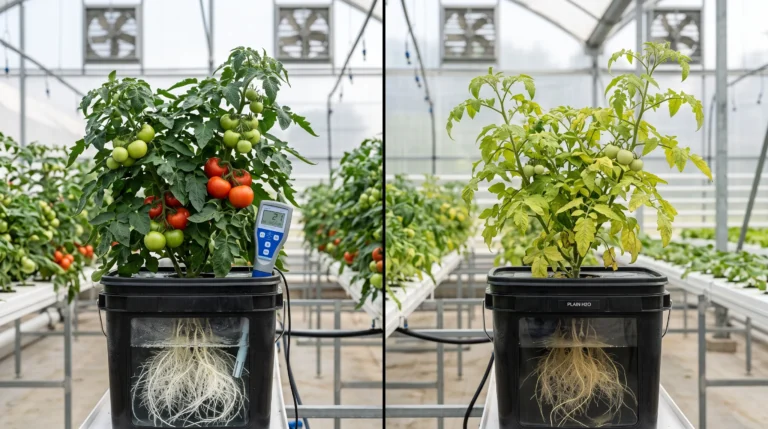
My first big hydroponic crop was a tragedy. I’m talking about a full-on, five-figure tomato massacre. I’d seen a few yellow leaves on my indeterminate vines, so I did what every beginner does: I panicked. I assumed I had a calcium and magnesium deficiency, and I started pumping a popular Cal-Mag supplement into my reservoir like a mad scientist. The first week, things seemed to perk up, so I added more. The second week? Disaster. My new leaves started curling, my older leaves were a mottled mess, and my plants looked like they were on fire. In my frantic attempt to fix a perceived problem, I had created a real one. My Cal-Mag overdose caused what I now know was a cascade of nutrient lockouts, essentially starving my plants of iron and potassium in a watery grave of my own making. That single mistake cost me nearly a month of growth and hundreds of dollars in lost produce. The real culprit wasn’t a lack of nutrients, but a rookie’s heavy hand and a fundamental misunderstanding of my water. Don’t be like me. Don’t add Cal-Mag just because a forum told you to. It’s a precise tool for a specific job. You have to know your crime scene first. You need to know your water.
WARNING: Overdose causes cascading lockouts. Test water first. Links fund our lab. Commissions earned.
Understanding Water Hardness: Soft vs. Hard Water Protocols
The number one rule in my lab, the single most important lesson I’ve learned from years of hydroponic plant pathology, is this: your water is your first fertilizer. Before you ever open a bottle of a two-part base nutrient, before you even think about Cal-Mag, you need to know what’s already in your tap. You can’t build a balanced ecosystem on an unknown foundation. That’s how you end up with my tomato massacre.
The key variable here is water hardness. Hardness is primarily a measure of the dissolved calcium (Ca2+) and magnesium (Mg2+) ions in your water. It’s what leaves those tell-tale white spots on your glassware and clogs your showerhead. For us hydroponic growers, it’s a pre-existing condition that dictates our entire nutrient strategy.
- Soft Water (<50 ppm Ca/Mg): If your water source has less than 50 parts per million (PPM) of total calcium and magnesium, you have soft water. This is the hydroponic equivalent of a blank canvas, but it’s also a warning sign. Without a baseline of these two critical elements, your plants will eventually show signs of deficiency, especially as they grow larger and their demand for building materials increases. This is the prime scenario for a Cal-Mag additive. You must supplement.
- Hard Water (>150 ppm Ca/Mg): On the flip side, if your water test comes back with over 150 PPM of these minerals, you have hard water. Congratulations, you’ve hit the hydroponic jackpot! Your water already contains a sufficient, and sometimes excessive, amount of calcium and magnesium to support plant growth. Adding more Cal-Mag in this situation is like pouring more water into a full glass—it’s going to overflow, causing a disaster.
I once spent an entire week troubleshooting what I thought was an iron deficiency in a batch of leafy greens. I was so convinced I needed more iron that I almost bought an expensive chelate supplement. Turns out, my city water was a geological titan, already packed with over 200 ppm of calcium. All that excess calcium was acting like a bouncer, physically blocking my plants from absorbing other critical nutrients like iron and phosphorus. The symptoms mimicked a deficiency, but the root cause was a toxic overdose. A simple, affordable water test could have saved me weeks of stress and a murdered crop.
This table is your first diagnostic tool. It’s your compass in the wilderness.
| PPM of Total Hardness | Calcium & Magnesium Present | Cal-Mag Needed? |
| <50 ppm | Very low | Yes, likely |
| 50-150 ppm | Moderate | Maybe. Adjust dosage. |
| >150 ppm | High to very high | No. Skip it. |
Pro Tip: If your water test measures in Degrees of General Hardness (°GH), remember this simple conversion: 1°GH hardness = ~17.9 ppm of total calcium and magnesium. It’s a fast way to know where you stand.
The LED Light Trap: Why Blue Spectra Demand More Calcium
The sun is a full-spectrum beast. Our LED grow lights, however, are highly engineered works of art. They are designed to deliver specific wavelengths of light that plants love for photosynthesis. We’ve become experts at hitting the perfect PPFD targets, but we’ve forgotten one crucial detail: light isn’t just energy, it’s also a signal.
My second great Cal-Mag crime happened with a new rack of leafy greens under a powerful, blue-heavy LED array. I had perfectly dialed in my nutrient solution for my soft water, and everything was humming along beautifully for the first three weeks. Then, suddenly, my new growth, the tiny, vulnerable leaves at the top, started showing signs of tip burn. They looked like crumpled tissue paper, dry and necrotic. I was stumped. My water was soft, my nutrient solution was balanced, so what was the problem? The answer, I learned the hard way, was light.
The intense blue light from my new LEDs, with a PPFD exceeding 800µ˜mol/m2/s, wasn’t just supercharging photosynthesis. It was also acting as a relentless, invisible alarm bell, telling my plants to grow faster than their internal plumbing could keep up. Calcium is a surprisingly sluggish nutrient. It travels through the plant primarily via the transpiration stream, so a high rate of photosynthesis and rapid growth (especially under intense light) can outstrip the plant’s ability to move calcium to the new, rapidly expanding leaves. My plants were literally starving their new growth because they couldn’t transport calcium fast enough.
Research at the University of Minnesota on plant mineral nutrition in controlled environments has shown that high-intensity, blue-dominant light can increase calcium uptake by 24-32% over traditional fluorescent lighting. My old fluorescent lights had demanded a certain amount of calcium; my new LEDs had a whole new set of rules. I needed to adjust my entire recipe.
| Factor | Calcium Impact | Magnesium Impact |
| Soft Water (<50ppm) | Deficiency likely | Deficiency likely |
| LED >800μmol | +30% demand | +15% demand |
| pH >6.2 | Lockout risk | Lockout risk |
| Overdose Threshold | >200 ppm Ca | >100 ppm Mg |
Hack: To improve calcium mobility, subtly drop your grow room’s air temperature by 3-5°F during the light cycle. Cooler air slows down the rapid, frantic growth that can cause calcium to get “stuck” in older leaves, giving your plants a fighting chance to get it where it needs to go.
Identifying Deficiencies: Calcium vs. Magnesium Symptoms
Identifying a deficiency in a hydroponic system is a game of deduction, a race against the clock to solve a crime scene before the plant-victim succumbs. The symptoms of calcium and magnesium deficiency often appear together, but a skilled plant coroner knows how to spot the subtle clues that differentiate the two. I learned this when I nearly murdered a beautiful crop of spinach, mistaking a magnesium deficiency for a far more complex issue. My 2023 spinach failure was actually a pH lockout. My pH had drifted, and even though the Mg was there, the plants couldn’t touch it.
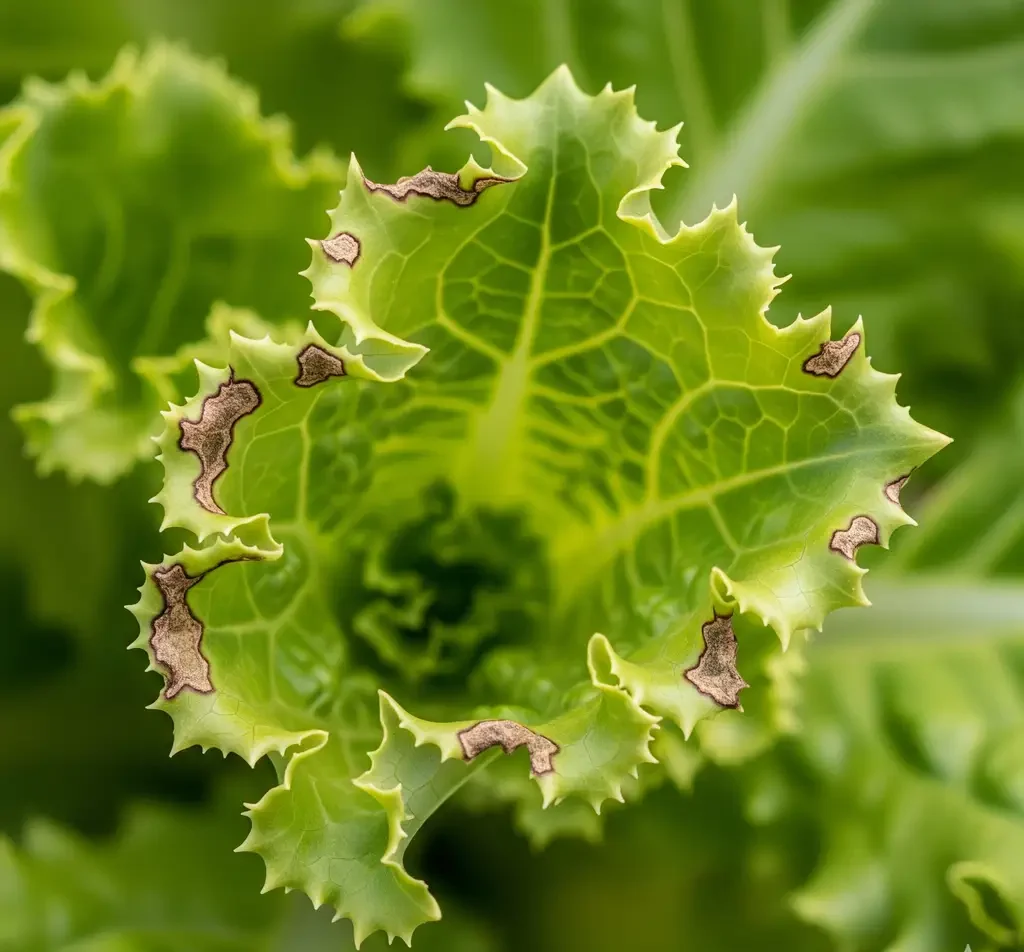
The key to diagnosis lies in one question: Is the damage on new or old leaves?
- Calcium: The Young Leaf Killer. Calcium is an immobile nutrient. Once it’s locked into a plant’s structure, it can’t be moved to new tissue. This means a calcium deficiency will always, without exception, present on new growth first. The terminal buds, the newest leaves, are the crime scene.
- Visual Guide: The Calcium Crime Scene
- Necrotic New Growth: Look for small, pin-prick-sized brown or black spots on the youngest leaves. These spots grow and merge, eventually causing the entire leaf tip to die back.
- Distorted Tips: New leaves may appear small, curled, and distorted. They might look like they’ve been crumpled or bent, never fully expanding.
- Poor Roots: The roots themselves may appear weak, brown, and stunted, refusing to grow. They might even feel slimy.
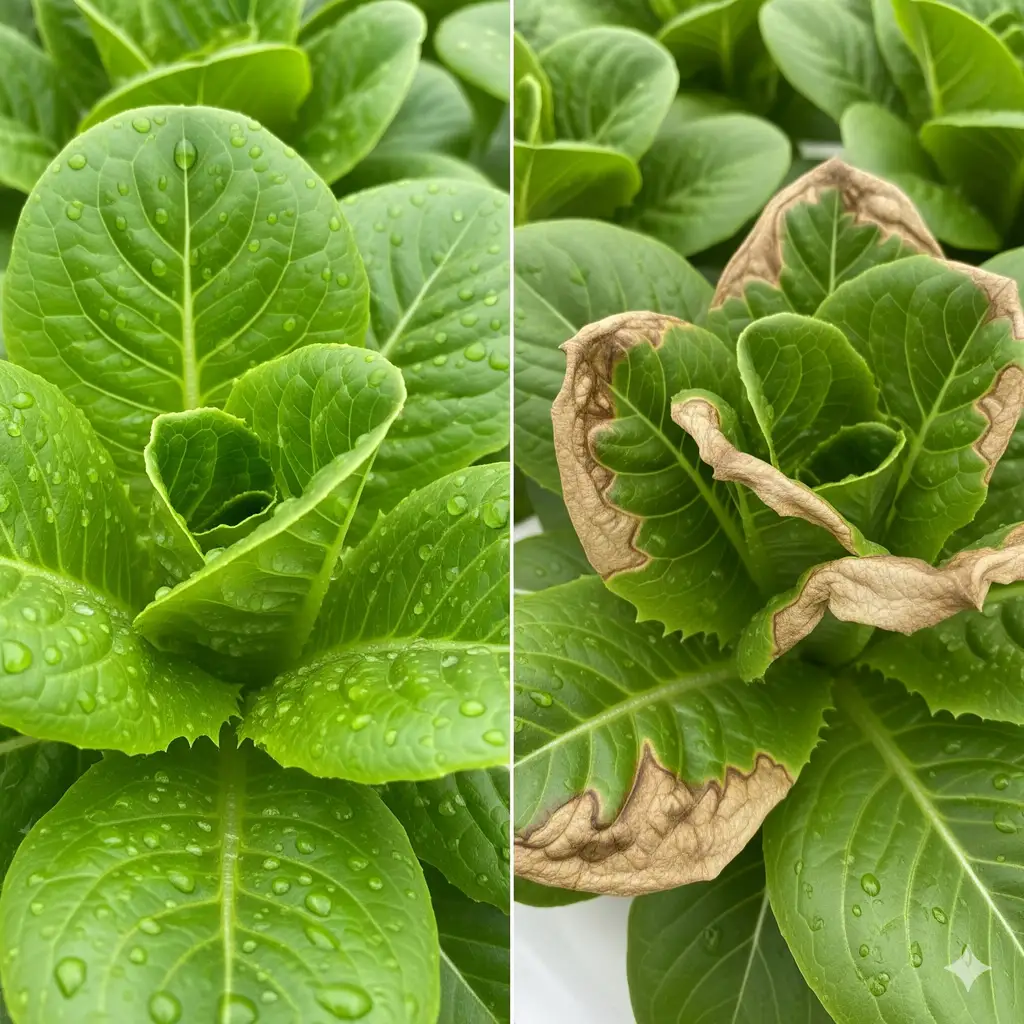
- Magnesium: The Old Leaf Predator. Magnesium, by contrast, is a mobile nutrient. When a plant is running low, it strips magnesium from older, established leaves to feed the new growth. The old leaves are the victim, sacrificing themselves for the future of the plant.
- Visual Guide: The Magnesium Crime Scene
- Interveinal Chlorosis: The classic symptom. The veins of the older leaves will remain a dark green while the tissue between them turns pale yellow. This looks like a roadmap of the plant’s nutrient struggles.
- Purple Stems: In some crops, a magnesium deficiency can cause the stems and petioles to turn a vibrant purple or reddish color.
- Burnt Edges: Advanced deficiency can cause the leaf margins on the older leaves to dry out and turn brown, as the plant sacrifices itself.
- Visual Guide: The Magnesium Crime Scene
This flowchart should be your first step:
- Observe the damaged leaves.
- Is the damage on the newest leaves or the oldest leaves?
- Newest Leaves: It’s a calcium deficiency. Check your water test, your pH, and your light intensity.
- Oldest Leaves: It’s a magnesium deficiency. Check your water test, your pH, and your feed schedule.
Overdose Dangers: The Lockout Chain Reaction
My most expensive lesson was learning that adding more is not always better. In fact, when it comes to Cal-Mag, adding more is often a sentence of death for your crop. Overdose = lockout. Lockout = starvation. This is a cold, hard truth born from the unforgiving world of chemistry.
Think of it like this: your plant’s roots are tiny doorways, and the nutrients are people waiting to get in. If you flood the entrance with too many large, boisterous guests—calcium and magnesium—they block the doors, preventing other essential nutrients from getting inside. An excess of one element can literally shut down the absorption of another. It’s a vicious, cascading chain reaction.
- Excess Calcium Locks Out Iron and Phosphorus: Calcium is the bouncer for your roots. When you overdose on Cal-Mag, you introduce an abundance of calcium into the solution. This excess then binds with and physically blocks the uptake of other elements, particularly iron (Fe2+) and phosphorus (P5+). The symptoms that follow are often mistaken for iron chlorosis, with new leaves turning pale yellow while the veins stay green. It’s the same symptom as iron deficiency, but the cause is completely different.
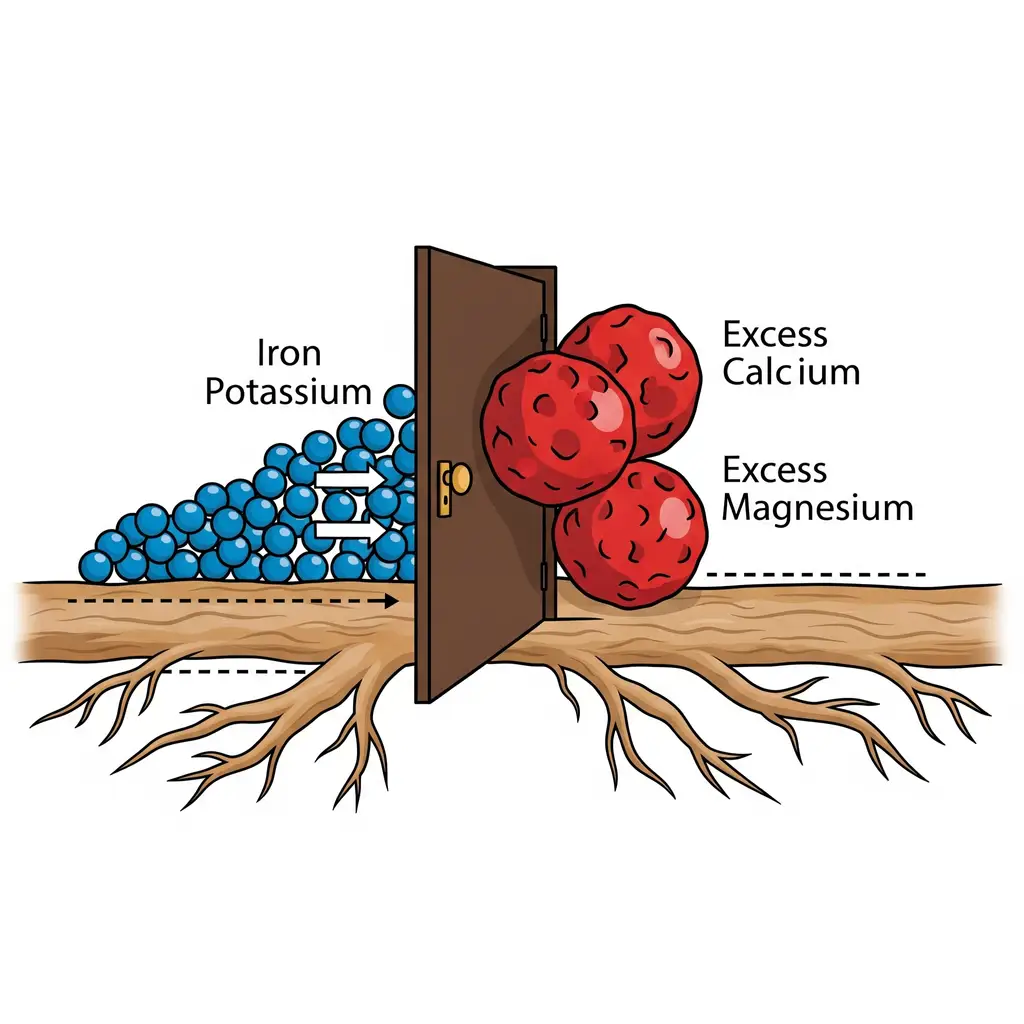
- Excess Magnesium Locks Out Potassium: In a similar fashion, an overabundance of magnesium in your reservoir can lead to a potassium lockout. Plants need potassium for a wide range of functions, including a plant’s water pump and its ability to deal with stress. When too much magnesium crowds the roots, potassium can’t get in. This can lead to classic potassium deficiency symptoms, such as burnt leaf margins and stunted growth.
The critical threshold for this chain reaction is a combined calcium and magnesium concentration above 250 ppm in your solution. Past this point, the risk of mineral precipitation and nutrient lockout skyrockets. The overdose isn’t just bad for your plants; it’s a huge waste of money. Those extra nutrients aren’t being used—they’re just turning into a useless sludge in your reservoir. It’s cheaper to replace a faulty pump than to deal with the fallout of an overzealous dosing regimen.
The Golden Dosage Matrix: By Crop & Stage
Now that you’ve run a water test and understand the risks of an overdose, let’s talk about a sensible, measured approach. Your plants’ calcium and magnesium needs aren’t static; they change throughout their life cycle. A tiny seedling has different demands than a mature, fruit-bearing plant. This table is based on years of field data and is your guide to precision feeding.
| Crop | Seedling Stage (ppm Ca) | Vegetative Stage (ppm Ca) | Flowering/Fruiting Stage (ppm Ca) |
| Lettuce | 40-60 | 60-80 | 80-100 |
| Tomatoes | 100-120 | 120-160 | 160-200 |
This matrix provides a starting point, a baseline for what your plants need. You’ll need to use your own water test results to determine how much of a supplement to add. If your water already has 50 ppm of calcium, and your target for vegetative lettuce is 60 ppm, you only need to add an extra 10 ppm of calcium via a supplement. Precision saves money and prevents disaster.
FAQ
What is the most important step before adding Cal-Mag to my hydroponic system?
The most important step is to u003cstrongu003etest your water hardnessu003c/strongu003e first. Your water’s hardness is a direct measure of its existing calcium and magnesium content. If you have hard water, it may already contain enough of these minerals, and adding more can cause a toxic overdose that leads to u003cstrongu003enutrient lockoutu003c/strongu003e.
How can I tell if my plant has a calcium vs. a magnesium deficiency?
You can tell by where the damage appears on your plant. A u003cstrongu003ecalcium deficiencyu003c/strongu003e will show up on u003cstrongu003enew growthu003c/strongu003e first, as calcium is an immobile nutrient that cannot be moved to new tissue. A u003cstrongu003emagnesium deficiencyu003c/strongu003e will appear on u003cstrongu003eolder leavesu003c/strongu003e first, as the plant strips magnesium from old tissue to feed the new growth.
What happens if I add too much Cal-Mag to my hydroponic system?
Adding too much Cal-Mag can cause a chain reaction of u003cstrongu003enutrient lockoutu003c/strongu003e. Excess calcium can physically block your plant from absorbing other vital nutrients like u003cstrongu003eiron and phosphorusu003c/strongu003e, leading to deficiency symptoms. Similarly, an overabundance of magnesium can block the uptake of u003cstrongu003epotassiumu003c/strongu003e, which is a crucial element for a plant’s health.
Why do my plants need more calcium under a high-intensity LED light?
Intense, u003cstrongu003eblue-dominant LED lightu003c/strongu003e can supercharge a plant’s growth and photosynthesis, but calcium is a sluggish nutrient that travels slowly through the plant. This rapid growth can outstrip the plant’s ability to transport calcium to the new leaves, leading to deficiency symptoms like tip burn even if the nutrient is present in the reservoir.
How much Cal-Mag should I add if I have soft water?
If your water source has less than u003cstrongu003e50 ppmu003c/strongu003e of total calcium and magnesium, you have soft water. This is the prime scenario for a Cal-Mag additive. You should add a supplement to bring your total calcium levels to a baseline that supports your crop, which is typically u003cstrongu003e80-120 ppmu003c/strongu003e, depending on the plant and its growth stage.
u003cstrongu003eWhat is the difference between a nutrient deficiency and a nutrient lockout?u003c/strongu003e
A nutrient deficiency is a lack of a specific nutrient in your reservoir. A nutrient lockout is a chemical blockage that prevents your plants from absorbing a nutrient, even though it is present in the reservoir. Nutrient lockout is often caused by an u003cstrongu003eincorrect pHu003c/strongu003e or, in the case of Cal-Mag, an overdose that clogs the root’s absorption sites.
Affiliate Evidence Locker: What Survived My Toxicity Tests
In my career as a professional crop killer (and now, a plant rescuer), I’ve experimented with dozens of products. These are the ones that have stood up to my trials—and more importantly, the ones that have survived my personal history of misdiagnosis and overdose.

Solves: Soft water disasters where your plants have no foundational calcium or magnesium to draw from. Its 2% nitrogen content is a solid boost for vegetative growth.nnVerdict: This is a fantastic supplement, but be aware of the added nitrogen. I once used it on flowering plants and ended up with a leafy mess because the nitrogen pushed them back into a vegetative state. It’s a great tool, but don’t use it in late bloom.nnTarget Water: Water source with less than 50 ppm of total hardness.

Solves: Hard water nutrient imbalances. This product is designed to be used with hard water and contains a lower concentration of calcium and magnesium to prevent overdose. My own tragic story has taught me that the right solution for hard water isn’t necessarily more Cal-Mag, but a balanced base nutrient that accounts for what’s already present.nnVerdict: A lifesaver for those with hard tap water. It’s a core nutrient, so it’s not just a supplement. It provides a full spectrum of micronutrients without pushing your Ca/Mg levels into the danger zone. Use this as your base and skip the extra Cal-Mag entirely.nnTarget Water: Water source with more than 150 ppm of total hardness.

Solves: The knowledge gap. This little device is a game-changer, a crucial piece of evidence that tells you exactly what your EC and pH are in real-time. I’ve used it to validate my manual soap foam test (a surprisingly accurate DIY trick) and to pinpoint exactly when my nutrients were falling out of my target range. Without this, you’re just guessing.nnVerdict: This is the cheapest insurance you can buy against a total crop failure. It’s accurate, reliable, and makes troubleshooting a breeze. It’s cheaper than replacing lockout-killed crops.nnTarget Water: Everyone. No exceptions.
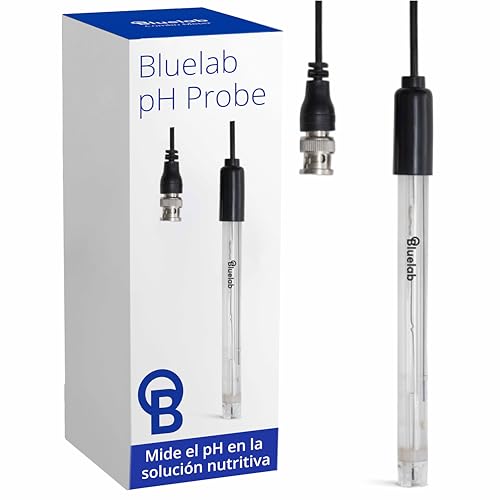
Solves: The silent killer of pH drift. A nutrient recipe can be perfect on paper, but if your water’s pH drifts out of the ideal 5.5-6.5 range, your plants can’t absorb any nutrients, and a lockout occurs even with a perfectly balanced solution. I’ve seen my pH jump from 6.0 to 7.5 overnight in a new reservoir, and this probe caught it before it became a problem.nnVerdict: It’s the sentinel of your grow room. While the Hanna is great, this is for continuous monitoring. It provides a peace of mind that is worth its weight in gold. Use it in conjunction with your EC meter and you’ll have a forensic-level view of your grow.nnTarget Water: Everyone, but especially those using recirculating systems.
Ready to keep growing? Mastering your reservoir chemistry is just the start. Check out our complete library of growing guides, troubleshooting tips, and setup walk-throughs: View all our Plant care articles.

Continue Your Learning Journey