Plastic-Free Hydroponics: Build a Microplastic-Free Growing System

Table of Contents
- The Silent Contaminant in Soilless Root Zones
- The Chemistry of Hydroponic Leaching
- The Horticultural Plastic Safety Directory
- Audit Your Grow Room Polymer Leaching Risk Index
- Sourcing Directory: Recommended Amazon Affiliate Picks
- The 100% Plastic-Free DIY Build Guides
- Microplastic-Free Substrates & Nutrients
- Horticultural Toxicity Diagnosis
- Plastic-Free Growing FAQ
- Watch the Cinematic Grow Room Material Safety Guide
Disclosure: MistCulture summarizes verified product specs, engineering data, and community feedback. We may earn an affiliate commission if you purchase through our links. Regulations vary by location; this content is for educational purposes only.
Most indoor farm and smart garden failures aren’t crop failures, they’re chemical and material design failures. This guide breaks down the science of polymer degradation, microplastic bioaccumulation, and how to design a completely plastic-free growing system from scratch. Grab our companion parts checklist below, and learn to grow with absolute organic purity.
The Silent Contaminant in Soilless Root Zones
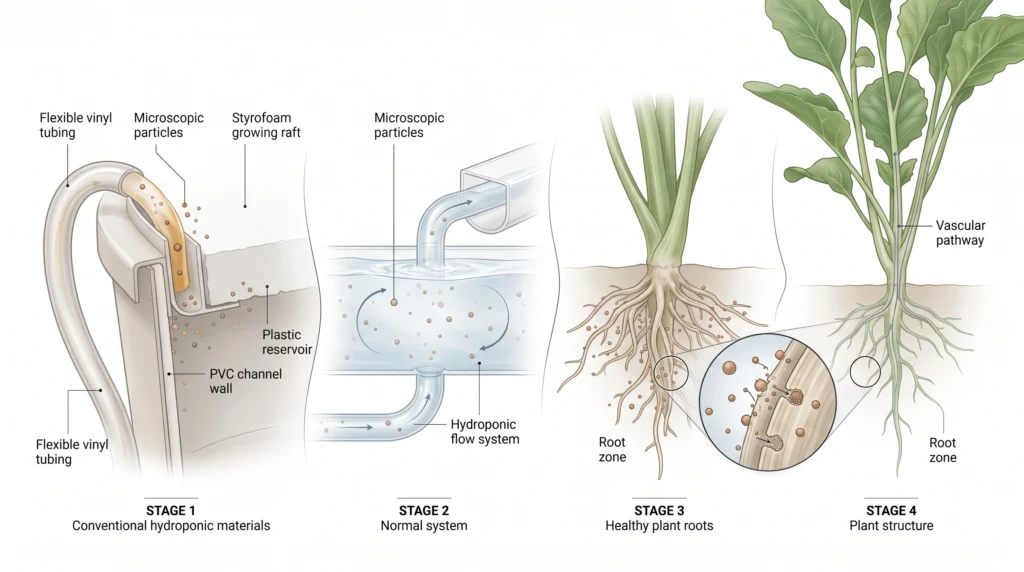
The core promise of hydroponics has always been purity: pristine, pesticide-free crops grown in highly managed, water-efficient environments. However, a silent, microscopic threat is rising within Controlled Environment Agriculture (CEA). While soilless growing eliminates heavy metals and soil pathogens, it relies on an infrastructure dominated by synthetic polymers. From polyethylene reservoirs and PVC channels to polypropylene net pots and vinyl hoses, your plants’ root zones are constantly bathed in water circulating through plastic. Recent plant physiology research has confirmed what agricultural scientists have feared: plant roots actively bioaccumulate microplastics and nanoplastics from their nutrient solutions, leading to systemic transport into edible stems, leaves, and fruits.
The Chemistry of Hydroponic Leaching
Many indoor growers believe that selecting a plastic container stamped with “BPA-Free” guarantees absolute safety. This is a severe misunderstanding of polymer chemistry. Bisphenol A (BPA) is merely one of hundreds of additives used to stabilize or harden plastics, primarily polycarbonate. Removing BPA often means manufacturers simply substitute it with Bisphenol S (BPS) or Bisphenol F (BPF), which exhibit near-identical endocrine-disrupting behavior. In closed-loop recirculating hydroponic systems, the environmental conditions are optimized for plant growth, but they are also highly catalytic for polymer degradation and chemical leaching.
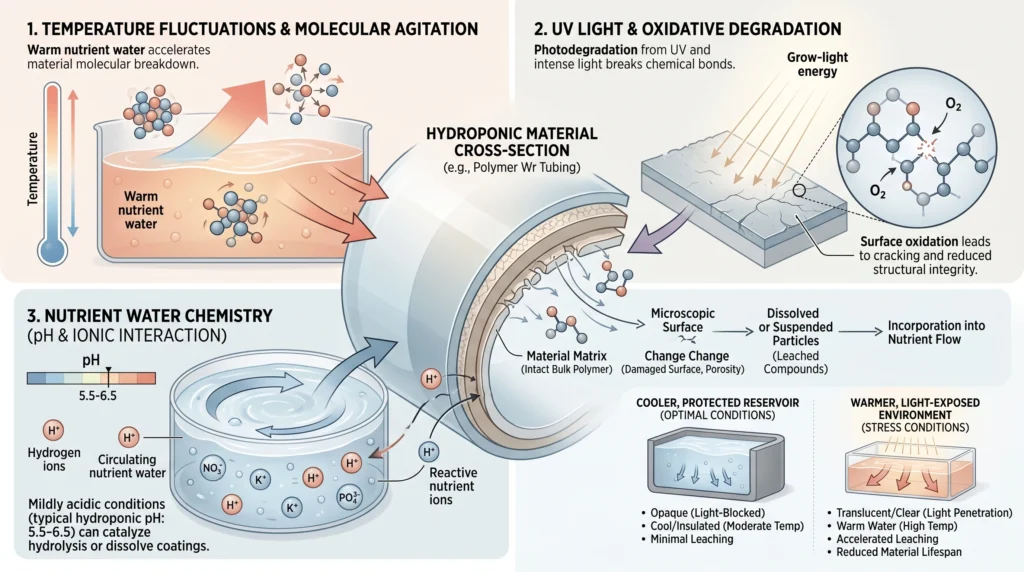
The rate at which plasticizers, stabilizers, and monomers leach from a hydroponic container into your nutrient solution is governed by Fick’s Second Law of Diffusion:
∂C / ∂t = D (∂2C / ∂x2)
Where C is the concentration of the leaching chemical, t is time, and D is the diffusion coefficient. The diffusion coefficient of synthetic polymers is highly dependent on temperature, defined by the Arrhenius relation:
D = D0 e-Ea / RT
Where T is the absolute liquid temperature, R is the gas constant, and Ea is the activation energy of diffusion. In practical terms, this thermodynamic law means that as your reservoir water temperature rises, particularly above 22°C (72°F), the kinetic energy of the polymer chains increases, allowing plasticizers and monomers to slip out of the plastic matrix and dissolve into your water at an exponential rate. When this warm water is combined with a slightly acidic pH range (5.5 to 6.5) required for optimal nutrient uptake and continuous exposure to high-intensity ultraviolet (UV) light from grow lights, the polymer chains undergo oxidative cleavage, rapidly accelerating the shedding of physical microplastics into the root zone.
The Horticultural Plastic Safety Directory
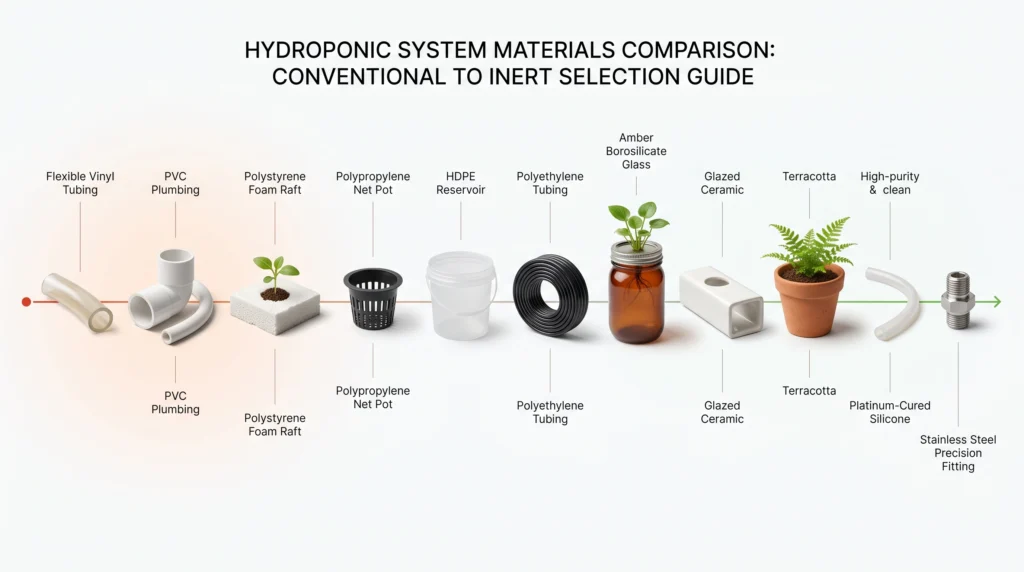
To safely navigate the transition to a microplastic-free grow room, you must understand the safety profile of the polymers currently hiding in your system. Not all plastics are created equal; some possess tight crystalline structures that are highly resistant to chemical erosion, while others are heavily plasticized and prone to rapid leaching under basic hydroponic conditions.
Commonly used in plumbing, fittings, and vinyl hoses. Requires heavy phthalate plasticizers (DEHP) to remain flexible. Unstable in acidic nutrient water; highly prone to leaching endocrine disruptors.
Critical Risk — AvoidStandard Styrofoam used in floating raft boards. Subject to rapid polymer chain erosion under grow lights. Constantly leaches styrene monomers and sheds micro-shards directly into aerated reservoirs.
High Risk — ReplaceCommonly used in net pots, reservoirs, and fittings. Possesses an extremely high melting threshold (115°C) and excellent chemical resistance. Highly stable and safe for structural hydroponic housings.
Stable — Food GradeUsed in food-grade buckets, grow bags, and supply tubes. Crystalline, dense molecular structure with zero plasticizer additives. Highly resistant to chemical leaching and completely safe for root zones.
Safe — Minimal Leaching- Flexible Vinyl Hoses: Clear or black vinyl hoses are loaded with up to 40% plasticizer by weight to make them pliable. Switch to silicone.
- Polystyrene Rafts: Never float raw Styrofoam boards directly on water. Bubbles grind against the foam, shedding millions of microparticles.
- Non-Food Safe PVC: Standard hardware PVC pipes contain organotin or lead thermal stabilizers that leach under acidic conditions.
- Rigid UPVC (Unplasticized): Ensure any PVC used is explicitly marked “UPVC” or certified to food-safe NSF-61 plumbing standards.
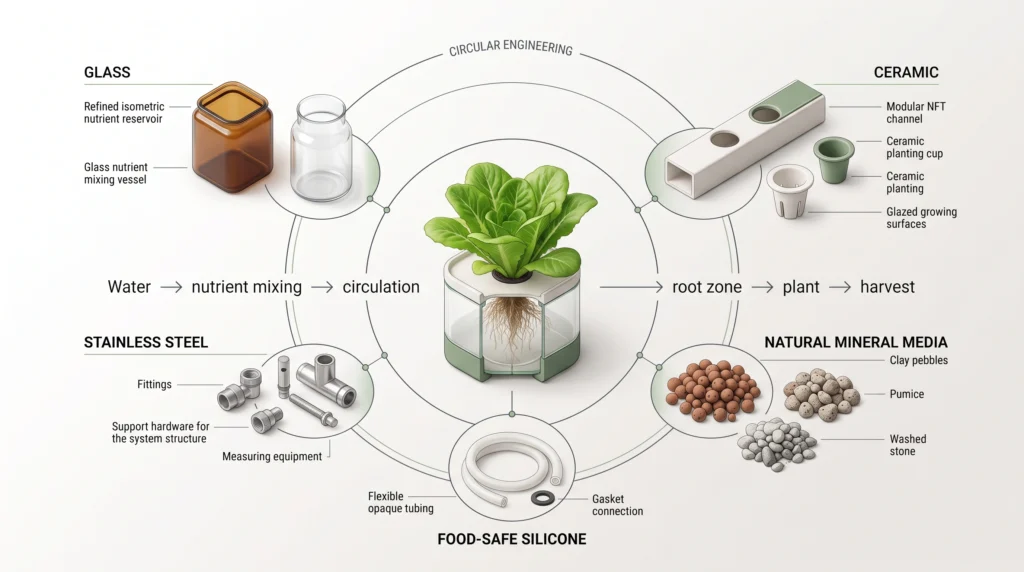
- Platinum-Cured Silicone: Use medical-grade platinum-cured silicone tubing for all flexible reservoir and pump returns.
- Amber Borosilicate Glass: For small-scale wicking and Kratky setups, standardizing on glass jars completely eliminates plasticizer footprint.
Audit Your Grow Room Polymer Leaching Risk Index
Before investing in new non-plastic hardware, use our precision material safety auditor. Input your current reservoir plastic composition, average nutrient water temperature, and light exposure levels to calculate your system’s Fickian diffusion risk score and receive recommended engineering retrofits.
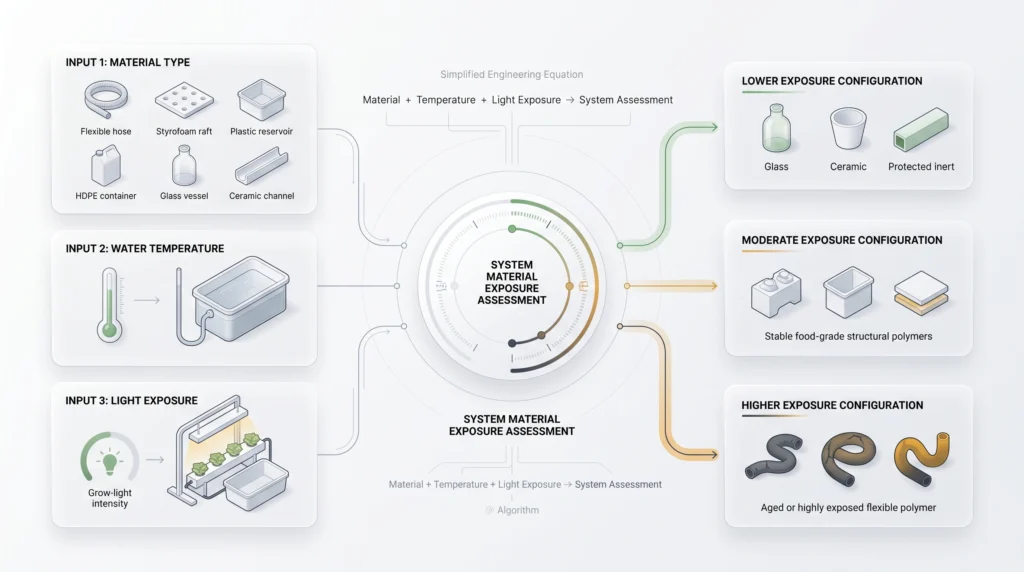
Horticultural Plastic Leaching Auditor v1.2
Audit your system’s plasticizer and monomer leaching risk based on liquid chemistry, thermal load, and polymer type.
Sourcing Directory: Recommended Amazon Affiliate Picks
To assist you in executing these physical upgrades immediately, we have curated a master list of zero-leaching, premium agricultural hardware available on Amazon. Each recommendation has been vetted to meet strict lead-free, non-toxic standards.
The gold-standard passive reservoir for Kratky and small wicking setups. Amber blocks 99% of photosynthetically active radiation (PAR), starving algae while allowing direct visual water level checks.
Shop on AmazonPerfect unglazed clay net cups designed for high root zone gas exchange. Naturally breathable terracotta facilitates evaporative root-cooling and provides structural mineral grip without synthetic binders.
Shop on AmazobHigh-temperature fired German expanded clay pellets. Sourced with zero synthetic chemical binding glues or artificial pigments, ensuring zero leaching in recirculating systems.
Shop on AmazonMedical-grade, food-safe silicone tubing (1/2” ID) that features 100% zero plasticizers or phthalates. Completely opaque white/black sleeve blocks grow light scatter, preventing inner hose algae.
Shop on AmazonThe 100% Plastic-Free DIY Build Guides
Eliminating plastic from your hydroponic grow room does not require sacrificing agricultural efficiency. By substituting synthetic polymers with inert, high-density natural materials, you can construct highly productive systems that are completely microplastic-free. Below are two optimized blueprints designed for the home grower and the boutique commercial producer.
Blueprint A: The Zero-Plastic Kratky Mason Jar
The Kratky method is the gold standard for passive, noncirculating hydroponics. Because it requires zero electricity, air pumps, or complex water circulation, it is incredibly easy to construct with entirely plastic-free materials. Standardizing on amber borosilicate glass jars has a dual advantage: the glass is completely inert, and the amber tint blocks light, preventing algae growth without the need to paint the exterior of the container.
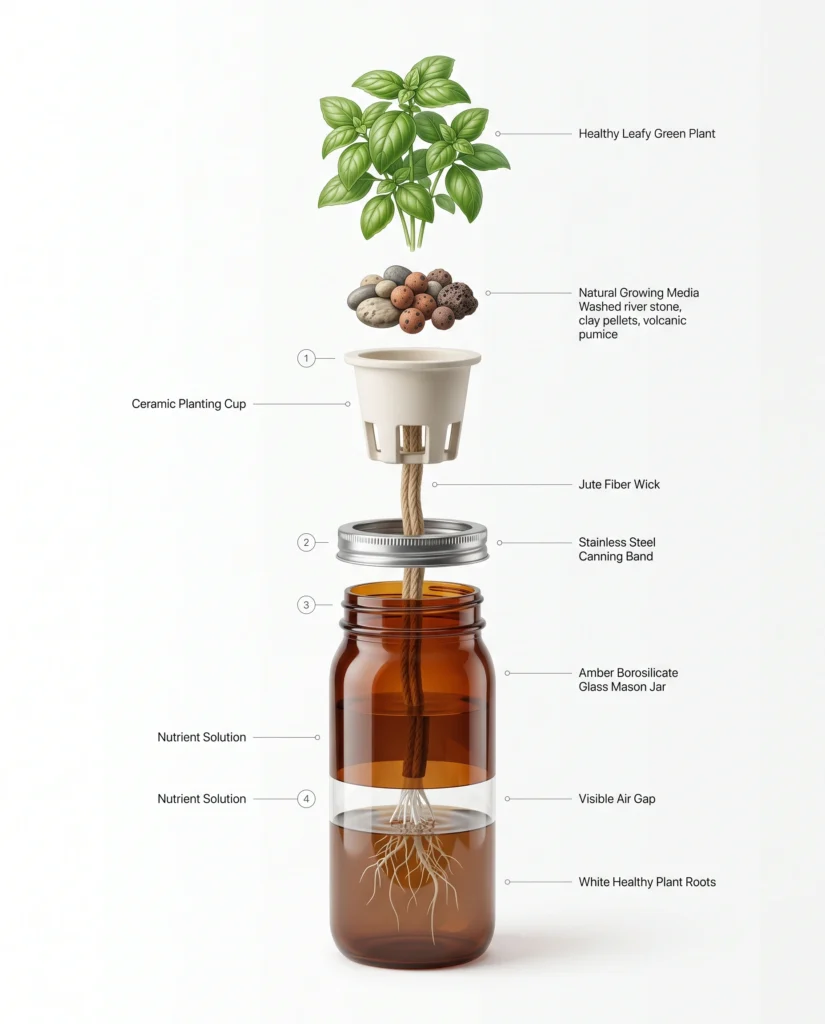
- Reservoir: 1-Quart (950 mL) Amber Glass Mason Jar with a stainless steel canning band. [Shop Jars]
- Plant Holder: 3-inch high-fired, lead-free glazed ceramic net cup or unglazed terracotta pot with pre-slotted drainage holes. [Shop Pots]
- Root Zone Support: Natural river rock, unglazed clay pebbles (Hydroton), or volcanic pumice. [Shop Media]
- Capillary Bridge: Organic, raw jute fiber wicking strip or unbleached coconut coir strip to draw nutrient solution to the seed plug during the first week.
Blueprint B: The 3D-Printed Ceramic NFT Channel
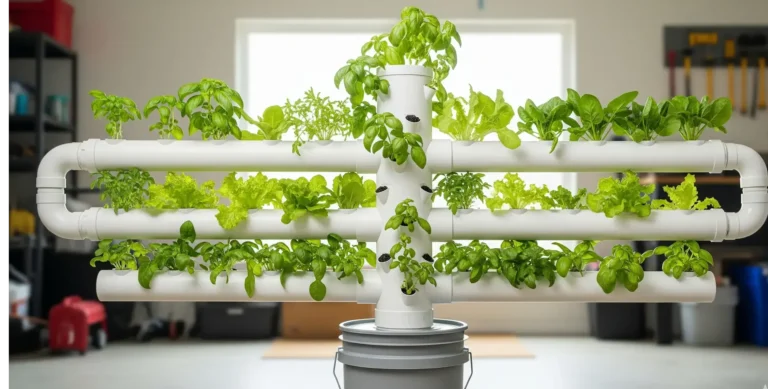
For growers seeking higher commercial turn rates and vertical space optimization, the Nutrient Film Technique (NFT) is highly efficient. When the original Compact Hydroponic Farm (CHF) patent was filed in 1981, science was largely unaware of the chronic endocrine-disrupting hazards of microplastics. Fortunately, the patent for this highly compact, vertically stacked design expired in 1999, opening the door for a plastic-free, 3D-printed ceramic agricultural revolution.
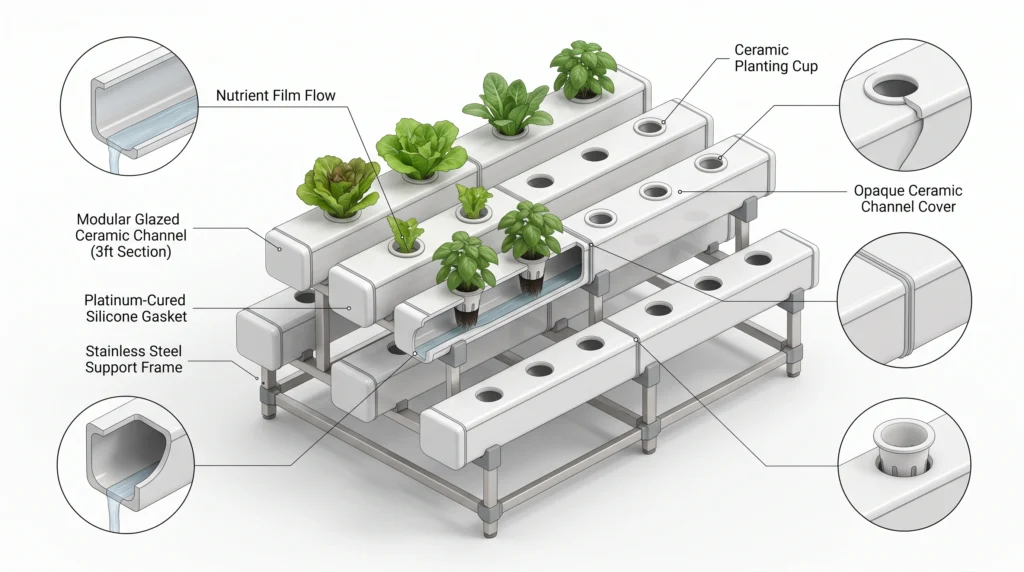
Modern industrial 3D printers can print directly in high-purity technical ceramics. By 3D-printing a modular set of interlocking ceramic channels, we can eliminate plastic PVC gutters entirely. The ceramic channels are fired at 1200°C (2192°F) and coated with a food-safe, lead-free white porcelain glaze. This smooth, glazed surface is completely inert, reflects excess light, resists chemical erosion from acidic nutrient solutions, and is incredibly easy to clean and steam-sterilize between crop cycles.
- Glazed Ceramic Ducts: White-colored ceramic channels 3D-printed in modular 3-foot interlocking sections. The white color makes it easy to visually inspect root health.
- Negative Phototropism Protection: Plant roots naturally exhibit negative phototropism, they actively grow away from light. The ceramic ducts feature an opaque, fitted ceramic cover plate with pre-cut 3-inch openings to keep the root zone in absolute, sterile darkness.
- Food-Safe Seals: Interlocking channel joints are sealed using platinum-cured, medical-grade NSF-51 food-safe silicone gaskets, completely eliminating the need for toxic PVC primers and cements. [Shop Silicone Gaskets]
- Ceramic Planting Cups: 98 separate 3D-printed ceramic planting cups are placed individually into the cover plate duct holes, providing a secure, reusable, and completely plastic-free anchor for your leafy greens.
Microplastic-Free Substrates & Nutrients
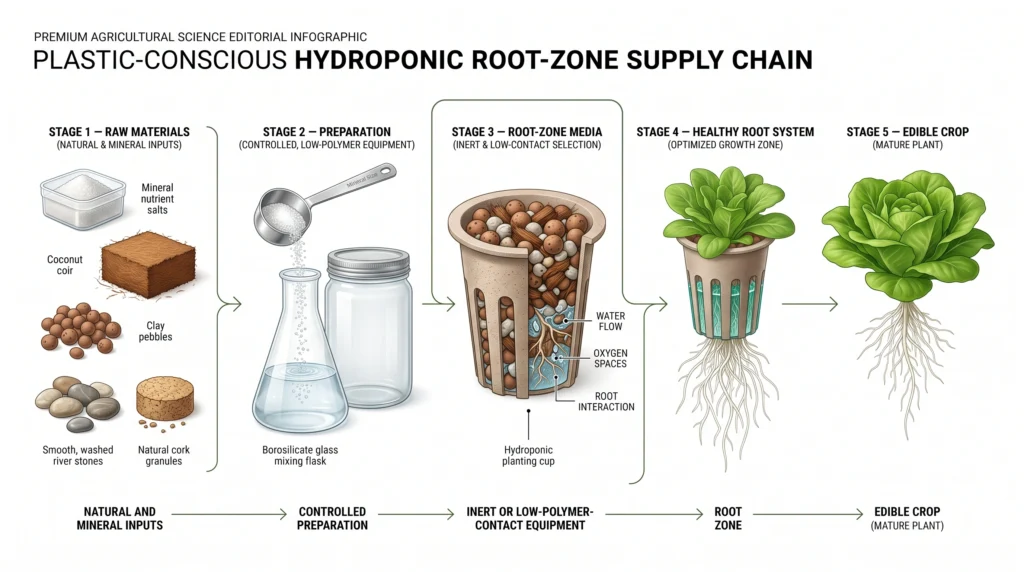
Building a plastic-free structural frame is only half the battle. You must also ensure that the media supporting your roots and the fertilizers nourishing your plants are not introducing synthetic contaminants into your food supply. Standard rockwool cubes are often bound with synthetic phenol-formaldehyde resins, and basic liquid nutrients are shipped in heavy plastic jugs that degrade over time under storage temperatures.
-
Organic Coconut Coir Slabs Standardize on uncompressed, pure organic coconut coir wrapped in natural burlap rather than synthetic plastic grow bags. Ensure the coir is thoroughly flushed with RO water to remove excess sodium.
-
Unglazed Clay & River Rock Media High-temperature expanded clay pellets (Hydroton) and washed river rocks are completely inert, reusable, and contain zero synthetic binders. [Buy Hydroton]
-
Dry-Pack Mineral Salts Ditch liquid fertilizers shipped in plastic jugs. Source high-purity dry mineral salts (like potassium nitrate and calcium nitrate) and mix your concentrates in borosilicate glass flasks or stainless steel tanks. [Buy Dry pH Control Kit]
-
Premium Fe-DTPA Chelated Iron When pH drifts above 6.0, standard iron EDTA degrades. Swap to premium Fe-DTPA chelated iron powder (stable up to pH 7.0) to ensure continuous iron bioavailability even during active drifts. [Shop Chelated Fe-DTPA]
-
Granulated Cork Denitrification For sustainable wastewater treatment, utilize granulated cork as a natural, organic carbon source. Cork’s specific particle size facilitates biological denitrification, naturally removing nitrates from wastewater.
Horticultural Toxicity Diagnosis
Plants affected by severe chemical leaching or microplastic root blockage often display visual symptoms that are easily misdiagnosed as standard nutrient deficiencies. Use our diagnostic matrix below to distinguish between systemic polymer toxicity and common mineral lockouts.
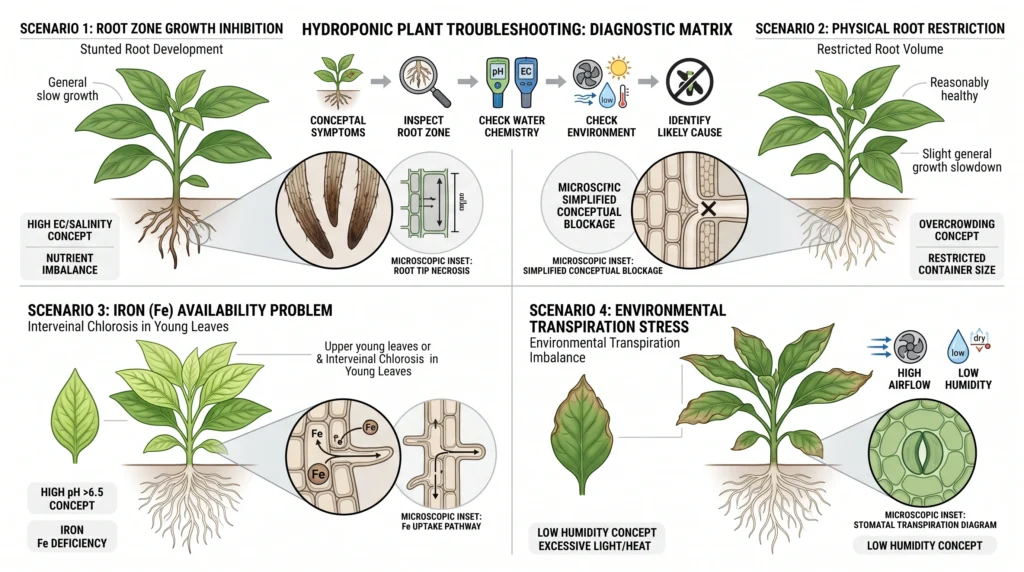
| Visual Symptom | Possible Diagnosis | Root Cause (Chemical / Physical) | Immediate Technical Fix |
|---|---|---|---|
| Stunted root elongation; roots turning dark, brittle, and abnormally stubby. | Phthalate / Plasticizer Toxicity | Flexible PVC or vinyl tubing leaching endocrine-disrupting phthalates, inhibiting cell division at root meristems. | Drain and flush system; replace flexible vinyl lines with platinum-cured silicone tubing. |
| Young leaves showing severe margin burn; roots white but restricted from branching. | Nanoplastic Root Occlusion | Micro- and nanoplastic particles blocking the porous xylem channels, halting the passive transport of water and calcium. | Filter reservoir with a 5-micron active RO or carbon filter; swap out raw Styrofoam rafts. |
| New leaves turning pale yellow (chlorosis), but veins remain dark green. | Iron Lockout (pH Drift) | Elevated pH (above 6.5) precipitates iron out of solution, making it unavailable for root uptake. | Adjust reservoir pH slowly to 5.8 using diluted phosphoric acid; switch to Fe-DTPA chelates. |
| Leaf margins curling upward and drying out; dry spots on leaf bottoms. | Environmental Blockage (Low VPD) | High relative humidity (above 80%) halting transpirational pull, cutting off passive calcium transport. | Dehumidify the room and set up oscillating fans to maintain a target VPD of 0.8 to 1.2 kPa. |
Plastic-Free Growing FAQ
Plastic-Free Hydroponics Questions & Answers
Expert clarifications on polymer chemistry, food safety codes, and plastic-free materials.
Food-grade plastics like Code 5 Polypropylene (PP) and Code 2 High-Density Polyethylene (HDPE) are the safest synthetic options available. They do not require plasticizer additives (like phthalates) to remain flexible and they have a tight crystalline molecular structure that is highly resistant to chemical erosion. However, over long periods (12+ months) of exposure to acidic nutrient solutions and high-intensity ultraviolet grow lights, even these polymers can undergo slow surface oxidation, releasing trace microparticles. For absolute purity, glass or glazed ceramic are the only permanently inert materials.
Flexible hoses made of Polyvinyl Chloride (PVC) require the addition of liquid chemical plasticizers (typically phthalates like DEHP) to become pliable and flexible. Because these plasticizers are not chemically bonded to the PVC polymer chains, they easily migrate out of the hose matrix and dissolve into your warm, acidic nutrient water. Furthermore, clear hoses allow light penetration, triggering rapid algae blooms inside your lines that clog emitters and compete with your plants for dissolved oxygen. Always substitute flexible vinyl with opaque, platinum-cured silicone tubing.
Yes. Unglazed clay or terracotta pots are highly suitable for hydroponic systems. Terracotta is porous, allowing air and water to freely pass through the pot walls, which naturally increases root aeration and cools the root zone through evaporative cooling. However, because of this porosity, unglazed clay will slowly absorb mineral salts from your nutrient solution over time, requiring periodic soaking and rinsing in fresh RO water to prevent salt buildup and EC toxicity.
Watch the Cinematic Grow Room Material Safety Guide
To see these plastic-free components in action and learn how to audit your own system, watch our cinematic agritech masterclass and viral shorts below. They provide a step-by-step visual guide to replacing flexible vinyl hoses and Styrofoam boards with high-purity glass, silicone, and glazed ceramic.
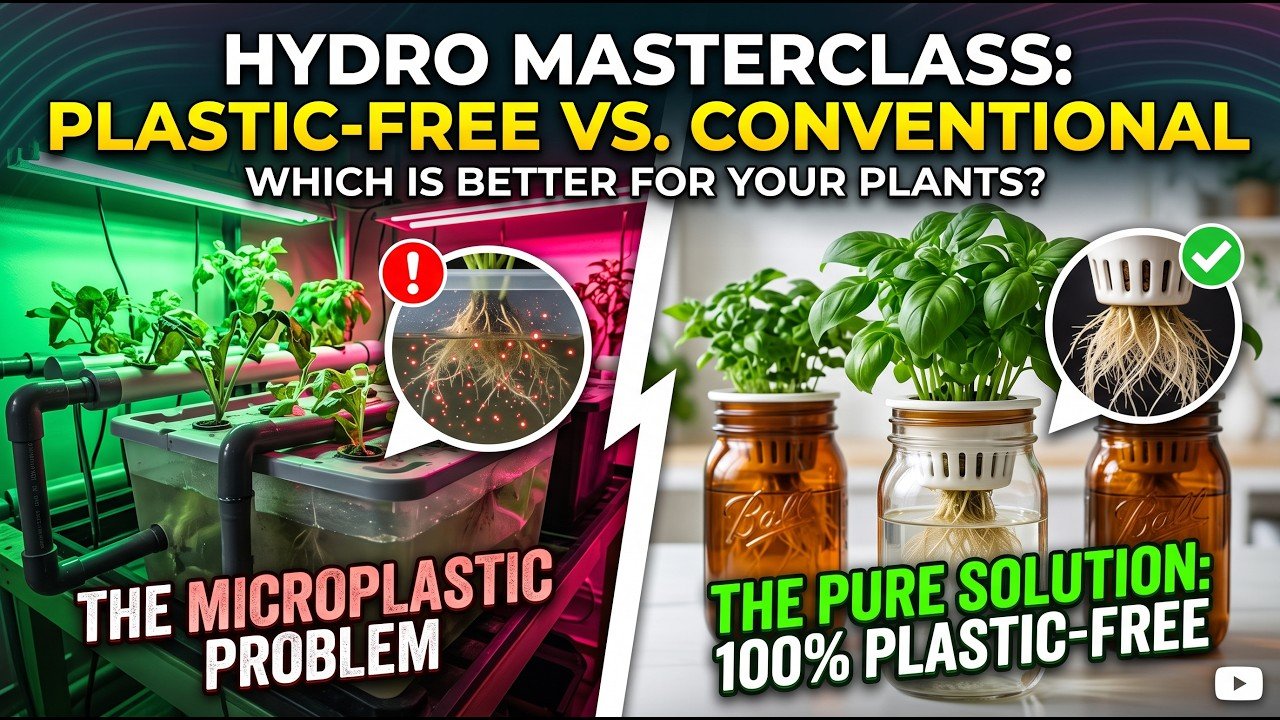
The Microplastic Bioaccumulation Crisis in Soilless Agriculture (16:9 Masterclass)
Horticultural Material Audit: A deep, cinematic overview of material safety, detailing how to audit plasticizer degradation under Fick’s Second Law and upgrade to 100% inert white-glazed ceramics.
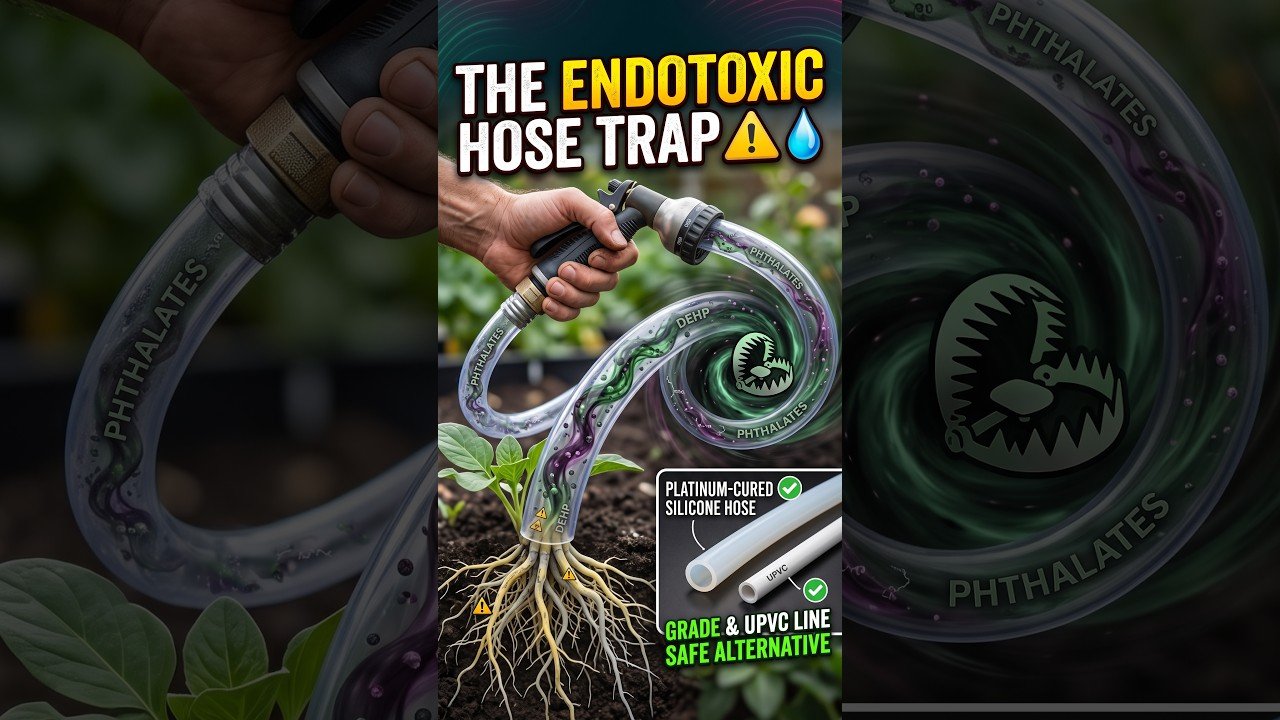
The Endotoxicity of Flexible Hoses (9:16 Short)
The PVC Tubing Hazard: A rapid vertical short explaining the molecular leaching of endocrine disruptors inside standard vinyl lines and demonstrating the 10-second silicone swap.
Ready to Secure Your Hydroponic Root Zone?
Don’t let leaching plasticizers compromise the organic purity of your harvest. Audit your grow room today with our free precision tools or explore our step-by-step DIY builds.

Continue Your Learning Journey