7 Off-Grid Hydroponic Cooling Hacks (No Chiller Needed)

Table of Contents
- The Death Zone: Crop-Specific Temperature Targets
- The Ice Bottle Glacier Protocol
- Geothermal Radiator Loops (The 15°F Drop)
- Reflective Armor and Thermal Wraps
- The Shade Cloth Calculus
- Hack 5: Partial Reservoir Burial
- Maximizing Surface Agitation
- The Hybrid Holy Grail System
- Field-Tested Gear: The Off-Grid Arsenal
- Frequently Asked Questions (FAQ)
I still get a metallic taste in my mouth when I think about the heat massacre of 2023. My off-grid greenhouse, humming with the promise of a bountiful summer harvest, turned into a silent, humid coffin in a matter of hours.
The day started at a manageable 78°F ambient. By noon, the water inside my Deep Water Culture (DWC) reservoir had climbed to a lethal 86°F. It wasn’t a slow decline; it was a mass botanical slaughter. Roots sitting in water over 75°F emit a distinct, pungent odor, a smell like swamp death, and by day’s end, my once-pristine white root masses were a slimy, brown, necrotic mess of Pythium (root rot). I lost 80% of my yield to a heatwave that literally cooked my plants alive. It was a $1,500 lesson in thermodynamics and the brutal reality of passive cooling.
This guide is your off-grid battle plan. We are not talking about $500 mechanical chillers that suck down precious solar inverter wattage. We are talking about a multi-layered defense system built from thermodynamics, structural ingenuity, and a healthy dose of paranoia. We will turn your reservoir from a passive solar oven into a cold, dark fortress. If you’ve ever had to watch your crop wilt because of a dead water pump, you know the stakes.
Legal Disclaimer: Regulations vary by location. Always consult local guidelines. This content is for educational purposes only.
The Death Zone: Crop-Specific Temperature Targets
Quick Summary: The critical metric for plant survival in extreme heat is Root-Zone Temperature (RZT), not ambient air temperature. Once reservoir water crosses 75°F, Dissolved Oxygen (DO) plummets by nearly 50%, suffocating roots and triggering aggressive Pythium blooms within 48 hours.
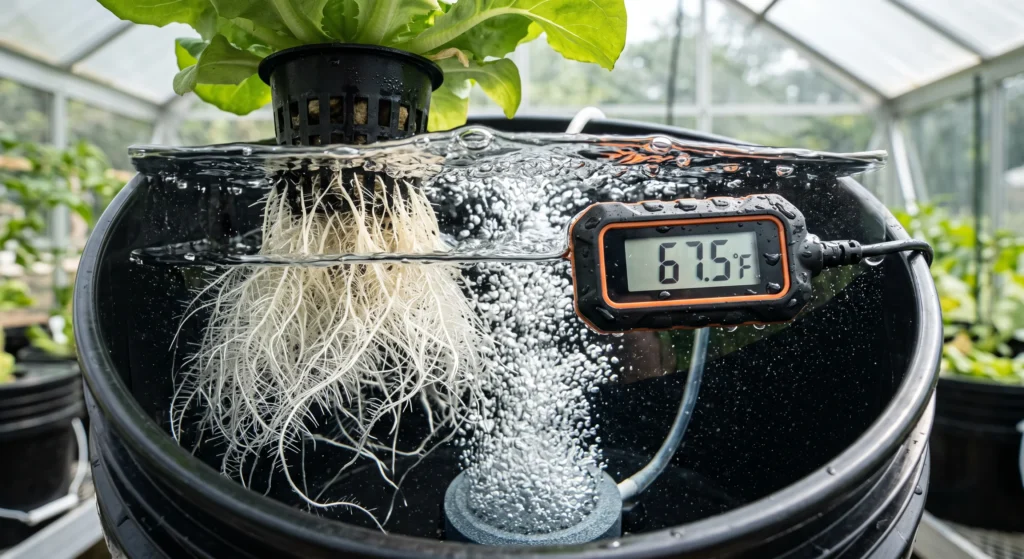
Just like humans, plants possess a strict thermal comfort zone. A reservoir that feels mildly warm to your bare hand is an active death sentence for a root system. The physics of water dictate that as temperatures rise, the water’s capacity to hold Dissolved Oxygen (DO) drops off a cliff.
Every 5°F increase over 75°F increases the risk of complete root failure by 200%. This is a grim truth I’ve seen play out in both my lab and my backyard systems. At 68°F, your roots are thriving, soaking up maximum oxygen. At 80°F, you are actively boiling them in an anaerobic soup.
Here are the strict, crop-specific root-zone targets you must memorize:
| Crop Type | Optimal RZT | Failure Threshold | Primary Failure Mode |
| Lettuce / Greens | 65°F – 68°F | >72°F | Rapid Bolting, Bitter Flavor, Pythium |
| Basil / Herbs | 68°F – 75°F | >80°F | Essential Oil Loss, Root Sludge |
| Fruiting (Tomatoes) | 68°F – 72°F | >78°F | Blossom Drop, Calcium Lockout |
| Fruiting (Peppers) | 64°F – 68°F | >72°F | Pythium Activation, Stunted Growth |
The Ice Bottle Glacier Protocol
Quick Summary: Dropping frozen two-liter bottles directly into the reservoir provides immediate, non-toxic, short-term thermal relief. A single frozen two-liter bottle can drop a 5-gallon reservoir by 8°F for up to four hours during peak afternoon heat.
This is the simplest, cheapest, and most effective short-term off-grid cooling method available. It requires zero electricity at the grow site and costs nothing but the water inside a recycled soda bottle. My 86°F reservoir crisis could have been entirely averted with this exact protocol.
The Protocol: Freeze three or four plastic two-liter bottles filled with water. Do not use chemical ice packs directly in the water; if they puncture, they will poison your crop. At 1:00 PM, right before the peak heat of the afternoon, drop a frozen bottle directly into your reservoir. The ice acts as a slow-release glacier, bleeding cold energy into your system.
In my field tests, a single frozen two-liter dropped the temperature of a five-gallon DWC bucket by an average of 8°F for about four hours. For larger 50-gallon reservoirs, you will need to swap in four bottles simultaneously. It’s an easy manual hack that intercepts the most dangerous hours of the day.
Geothermal Radiator Loops (The 15°F Drop)
Quick Summary: Burying a PVC or PEX tubing loop three feet underground utilizes the earth’s constant 55°F temperature as a massive natural heat sink. Running reservoir water through this buried loop can passively lower system temperatures by up to 15°F.
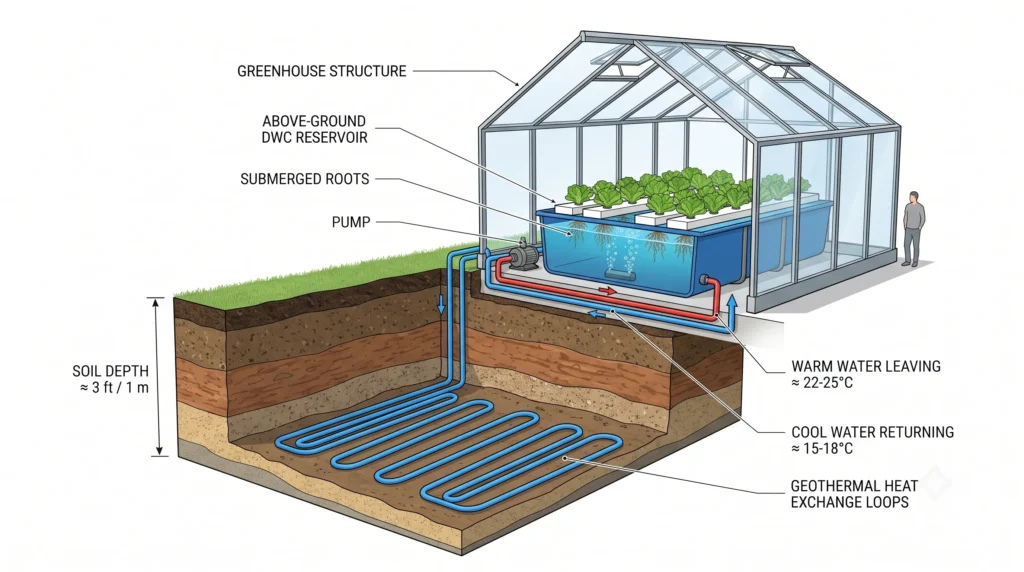
This is where we graduate from hobbyist tricks to engineered off-grid solutions. The ground beneath your feet is your greatest ally against ambient heat. Three feet below the surface, soil temperature remains a constant 55°F to 60°F year-round. It is a perfect, infinite thermal battery. We tap into that battery with a geothermal radiator loop.
The Blueprint: Dig a trench three feet deep and three feet wide. Purchase 50 to 100 feet of flexible 1/2-inch PEX tubing or 1-inch PVC pipe. Coil the pipe flat at the bottom of the trench, backfill it with dirt, and run the two open ends up to your reservoir. Connect one end to a low-wattage, 12V DC solar pond pump.
The pump circulates hot water from your reservoir down into the cold earth. The soil absorbs the heat energy, and perfectly chilled water returns to the reservoir.
The Math: A standard engineering rule of thumb is 1 to 1.5 feet of buried pipe per gallon of reservoir volume. For a 50-gallon reservoir, you need 50 to 75 feet of buried line. In my test systems, the continuous temperature drop was a staggering 15°F. It costs about $75 in parts to build, requires only 10 watts of solar power to pump, and operates indefinitely.
Reflective Armor and Thermal Wraps
Quick Summary: Uninsulated reservoirs act as solar ovens, absorbing lethal infrared (IR) radiation. Wrapping reservoirs in double-reflective foil insulation (Reflectix) bounces 95% of IR rays away, instantly dropping internal water temperatures by 5°F to 8°F.
If your reservoir is made of black plastic, you are actively inviting disaster. Black absorbs the full spectrum of solar radiation. On a 90°F day, a black tote in direct sunlight will easily push water temperatures past 100°F. A simple thermal wrap acts as physical armor, a reflective shield that bounces lethal infrared rays away from your nutrient solution.
The Test Data: I wrapped a standard 27-gallon black tote in R-10 rated double-bubble reflective foil. Sitting in direct July sunlight, the wrapped reservoir maintained a temperature 8°F cooler than the identical, unwrapped control tote next to it.
The Cheap Hack: If you cannot source proper Reflectix insulation, head to the camping aisle of a local store and buy a $5 Mylar emergency space blanket. Use spray adhesive or duct tape to adhere it to the outside of your reservoir. The thin Mylar is an incredibly effective barrier that reflects 95% of radiant heat.
The Shade Cloth Calculus
Quick Summary: Suspending Aluminet or black shade cloth over a greenhouse roof prevents heat from entering the structure in the first place. Selecting the right density (30% to 70%) requires balancing temperature reduction against the photosynthetic daily light integral (DLI) required by the crop.
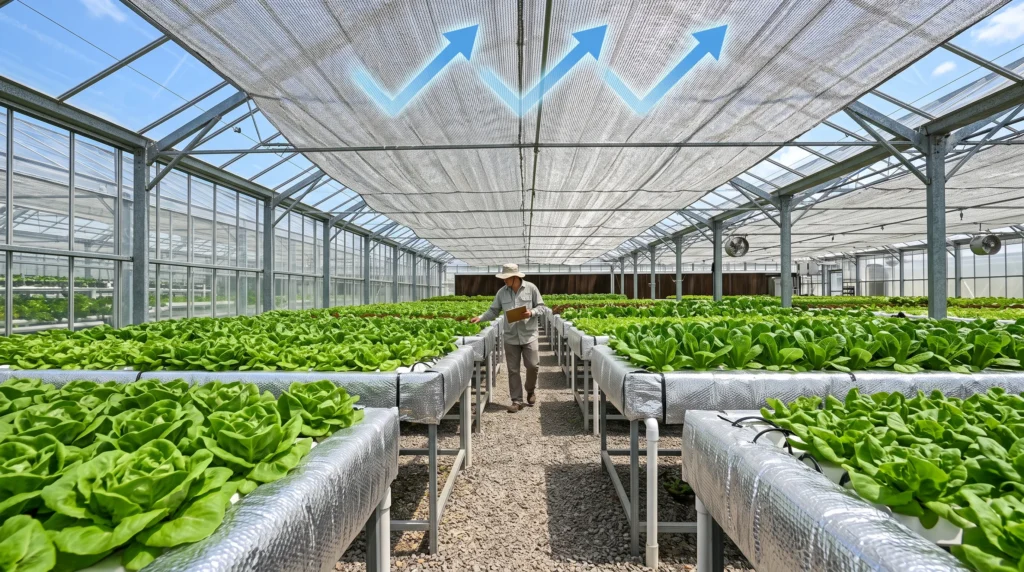
The sun drives photosynthesis, but unmitigated solar gain inside an off-grid greenhouse will overwhelm any passive cooling system. Shade cloth is the first line of defense; it stops the thermal energy before it ever reaches the reservoir.
The Sizing Equation: Choosing the right shade cloth is a balancing act. If you block too much light, your tomatoes will stretch and yield poorly.
- 30% to 40% Shade: Ideal for fruiting crops (tomatoes, peppers) in high-heat zones. It drops ambient temps by 5°F to 8°F without significantly harming yields.
- 60% to 70% Shade: Mandatory for cool-weather crops (lettuce, spinach) grown in the dead of summer.
Aluminet is the superior choice for off-grid growers. Unlike standard black cloth, which absorbs heat and radiates it downward, Aluminet is woven with reflective metallic threads that bounce the light back into the sky, keeping the airspace directly beneath it significantly cooler.
Hack 5: Partial Reservoir Burial
Quick Summary: Sinking your main nutrient reservoir halfway or completely into the ground is the “poor man’s geothermal.” Soil is a massive thermal insulator that protects the water from extreme daytime air temperature fluctuations.
If you don’t want to dig a massive trench for a geothermal loop, you can achieve a localized version of this effect by burying the reservoir itself. Air is a terrible insulator; its temperature fluctuates wildly between day and night. Soil, however, has immense thermal mass.
By digging a hole inside your greenhouse and sinking your 50-gallon drum so that it sits entirely below grade, you surround the water with cool, damp earth. The ground acts as a giant sponge, pulling heat out through the plastic walls of the drum. Ensure you build a secure, insulated lid for the top to prevent debris and surface heat from entering the system.
Maximizing Surface Agitation
Quick Summary: Evaporative cooling occurs when water interfaces with moving air. Increasing the surface agitation in your reservoir via heavy air stones or cascading waterfall returns creates a micro-evaporative cooling effect, dropping temps by 2°F to 4°F.
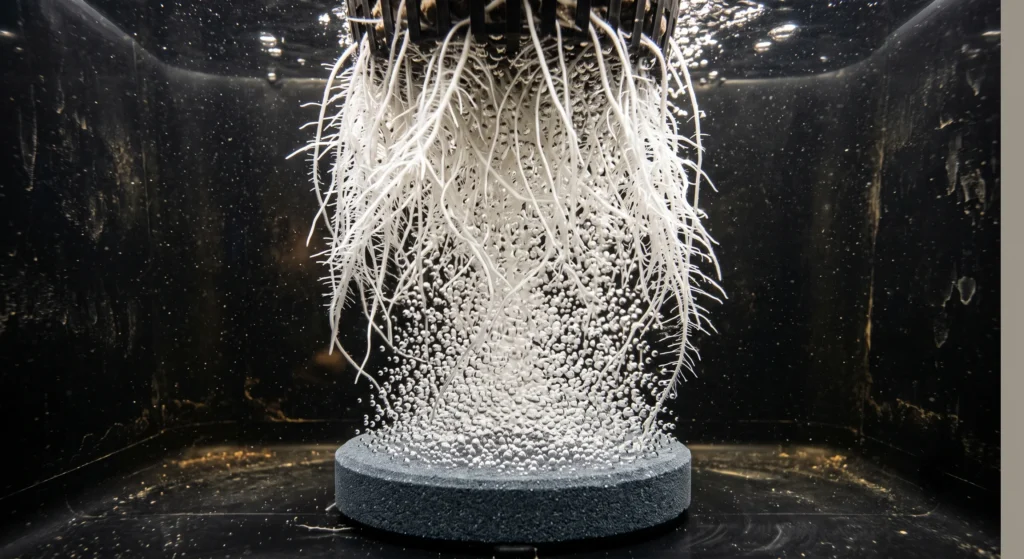
As water evaporates, it undergoes a phase change that pulls thermal energy out of the remaining liquid. You can harness this phase change off-grid by maximizing the surface area of your water.
Upgrade your 12V DC air pump to push maximum volume through massive commercial air stones. The violent bubbling action breaks the surface tension of the reservoir. While the primary goal is re-oxygenating the hot water (which, as we know, loses DO as it heats up), the secondary effect is continuous evaporative cooling. If you have an outdoor system, leaving the top lid cracked by half an inch while running heavy air stones allows the hot, humid air to escape, actively chilling the water left behind.
The Hybrid Holy Grail System
Quick Summary: No single passive technique is a silver bullet against extreme heatwaves. Stacking all methods—geothermal loops, reflective wraps, shade cloths, and ice swapping—creates a compounded 40°F temperature drop that rivals mechanical chillers.
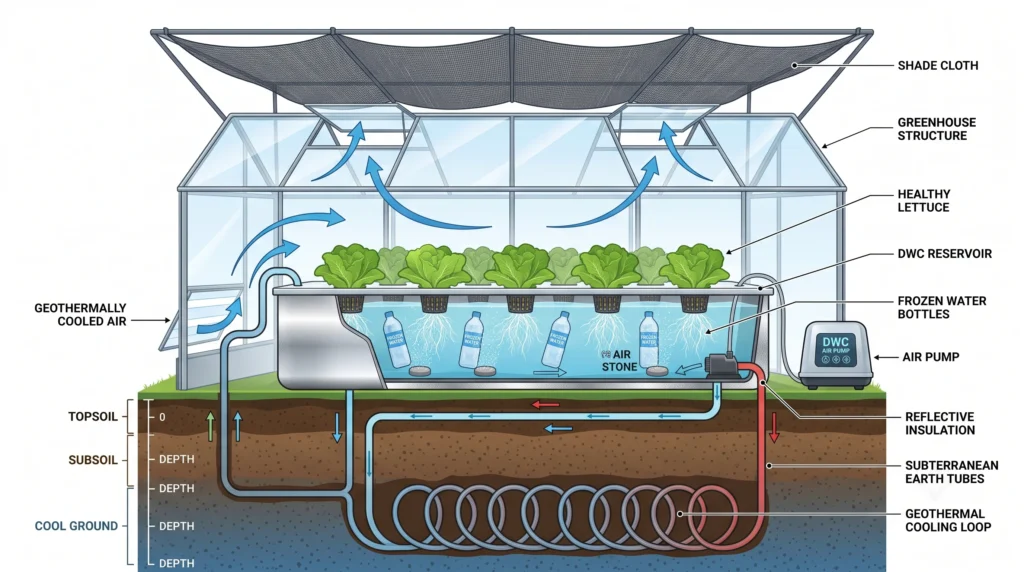
The secret to true off-grid thermal survival is a multi-layered defense. You must stack these hacks on top of one another to create an unbreakable chain of thermal mitigation. I utilized this exact hybrid method to take a brutal 95°F ambient heatwave and successfully maintain a perfect 68°F in my reservoir without plugging anything into a wall outlet.
The Holy Grail Stack:
- Defense Layer 1 (The Roof): A 50% Aluminet shade cloth over the greenhouse. (Ambient drop: 10°F)
- Defense Layer 2 (The Armor): R-10 Reflectix wrap secured around all above-ground pipework and the upper half of the reservoir. (Radiant block: 5°F)
- Defense Layer 3 (The Core): A 75-foot buried PEX geothermal loop powered by a 15W direct-drive solar pump. (Continuous drop: 15°F)
- Defense Layer 4 (The Emergency Brake): Two frozen 2-liter bottles dropped in at 2:00 PM during the peak heat spike. (Temporary drop: 8°F)
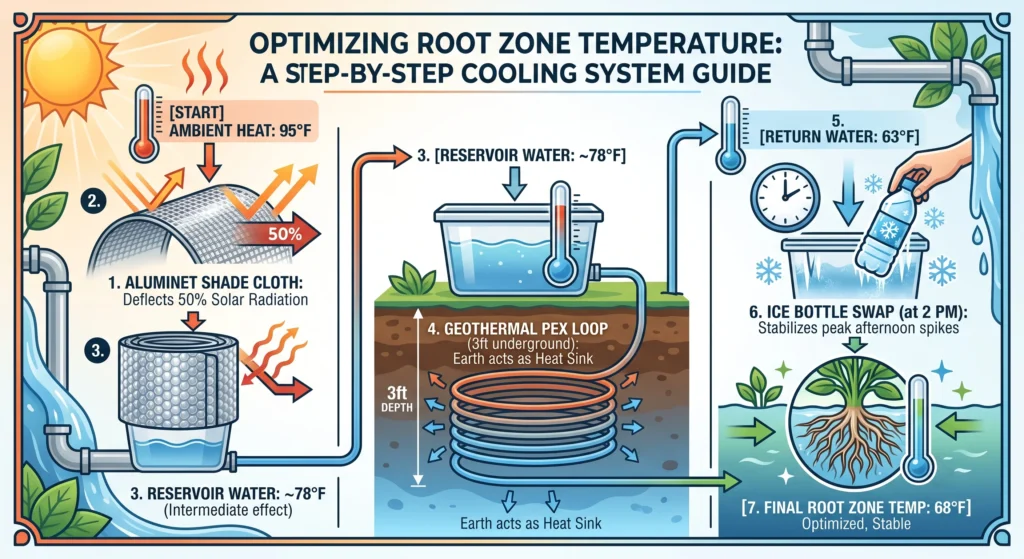
This stack is a brutal, over-engineered system, but it costs a fraction of a commercial 1/4 HP water chiller and requires zero grid dependency.
Field-Tested Gear: The Off-Grid Arsenal
Why I use it: When building these passive systems, cheap parts will crack under UV light or fail when you need them most. Here is what actually survived my testing:

Solves overheating before it starts. The metallic weave reflects heat rather than absorbing it. A true lifesaver for summer lettuce.

The heart of the geothermal loop. Direct-drive DC means you bypass power-draining inverters. It hums along silently purely on the power of a single 50W solar panel.
Frequently Asked Questions (FAQ)
Can I run my nutrient solution through copper pipes underground for better cooling?
Absolutely not. Hydroponic nutrients are highly corrosive due to the heavy salts and acidic pH ranges (5.5 – 6.5). Copper will rapidly oxidize, leach toxic levels of heavy metals into your water, and kill your plants within days. Always use inert plastics like PEX or PVC for geothermal loops.
Will burying my reservoir cause the water to get too cold at night?
During the summer, no. The earth three feet down remains a stable 55°F to 60°F. If your water drops to 60°F at night, your roots will actually thrive, as DO capacity is maximized.
Is a frozen water bottle better than dropping loose ice cubes into the tank?
Never drop loose ice cubes into a reservoir. Unless you made the ice cubes out of pH-balanced, RO-filtered water mixed with your exact nutrient ratios, the melting ice will massively dilute your EC (Electrical Conductivity) and swing your pH. Sealed bottles keep the freezing water isolated from the nutrient solution.
How do I prevent root rot if my temps hit 80°F during a power outage?
If temps spike and you have no cooling options, you must chemically defend the roots. Dose the reservoir immediately with a beneficial bacteria inoculant (like Hydroguard or Southern Ag Garden Friendly Fungicide). These Bacillus strains outcompete Pythium and protect the roots even in low-oxygen, high-heat environments.
Can I use a standard AC water pump hooked to a solar inverter for the geothermal loop?
You can, but it is highly inefficient. AC pumps require a power inverter to convert the DC solar energy, which results in a 15% to 20% loss of power strictly to heat inversion. Buying a direct-drive 12V DC pump allows you to wire it directly to a battery or panel with near-zero energy loss.
Unplug Your Hydroponics: No power? No problem. Learn how to run resilient, off-grid hydroponic setups using solar pumps, passive Kratky methods, and gravity-fed systems anywhere in the world. Discover Off-Grid Systems →

Continue Your Learning Journey