Fungus Gnats in Rockwool and Clay Pebbles: Biological Control Protocol

Table of Contents
- The Science of Fungus Gnats in Controlled Environments
- Why Rockwool and Clay Pebbles Are Breeding Grounds
- The Biological Eradication Protocol
- Bti Application: Mosquito Bits vs Gnatrol
- Environmental Parameters and Biological Efficacy
- Recommended Products
- Frequently Asked Questions
- Bti Dosing Calculator
- Conclusion: Securing the Root Zone
- Fungus Gnats in Hydroponics: Biological Eradication Protocol
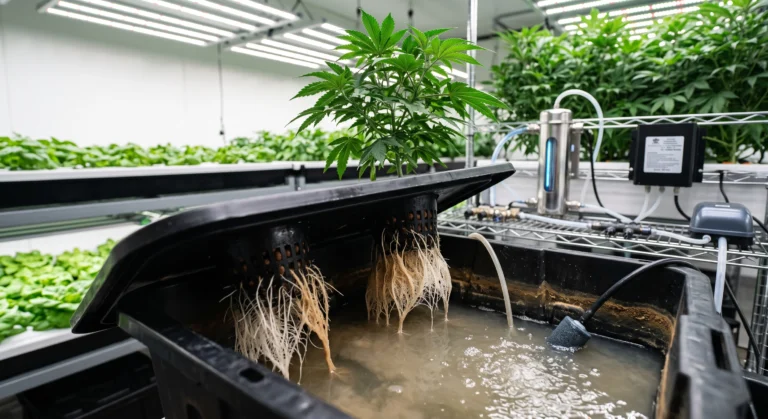
You walk into your grow room, part the canopy to check your nutrient lines, and a cloud of tiny black flies erupts from the base of your plants. They bounce off your grow lights, land in your reservoir, and fly straight at your face. That’s a fungus gnat infestation, and while a lot of indoor gardeners write these off as a minor annoyance, the real damage is happening where you can’t see it. The flying adults are basically harmless to your crop. Their larvae, multiplying in your rockwool or clay pebbles, are actively stripping root hairs from your root system.
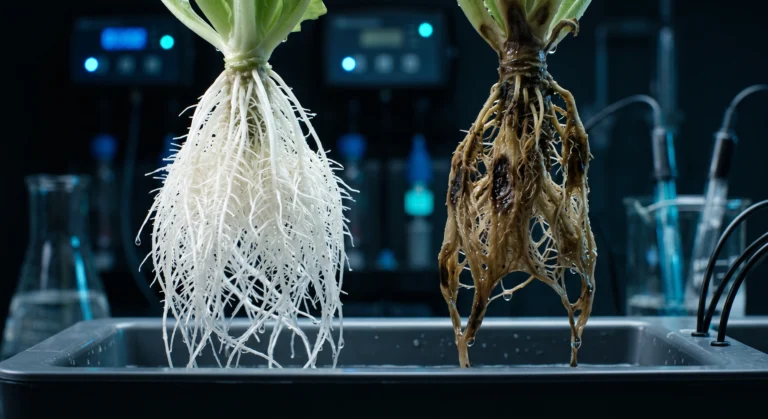
Managing fungus gnats in hydroponics means rethinking how you look at your root zone. In soil, these insects feed on decaying compost and organic matter. In a mostly sterile hydroponic setup, they adapt, feeding on plant roots directly and on algae growing on wet media instead. Worse, as they chew through root tissue, they leave open wounds that become direct entry points for waterborne pathogens like Pythium and Fusarium.
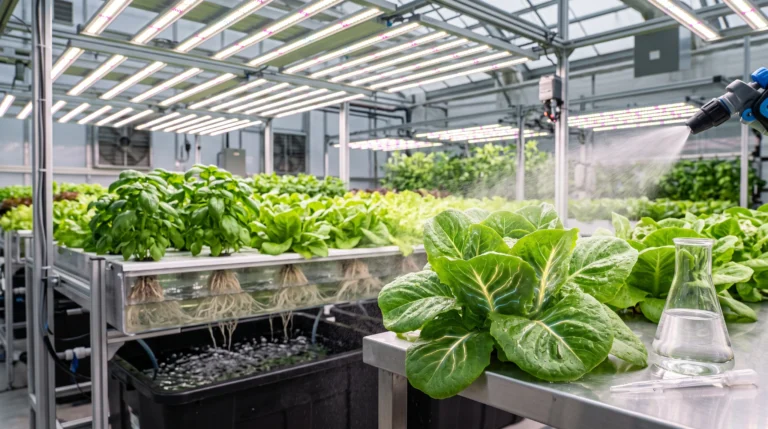
Chemical pesticides in a nutrient reservoir will damage roots and leave residue in your crop, so the durable fix here is biological. By managing moisture in your growing media and introducing targeted biological agents, you can eliminate an infestation without resorting to harsh chemicals. This guide covers the pest’s life cycle, why certain hydroponic substrates become breeding grounds, and how to run a full biological eradication protocol.
The Science of Fungus Gnats in Controlled Environments
Fungus gnats (family Sciaridae) thrive in warm, high-humidity indoor gardens. Their life cycle runs faster in wet hydroponic substrates, where larvae feed on root hairs, cutting into a plant’s ability to take up nutrients and opening the door to fungal disease.
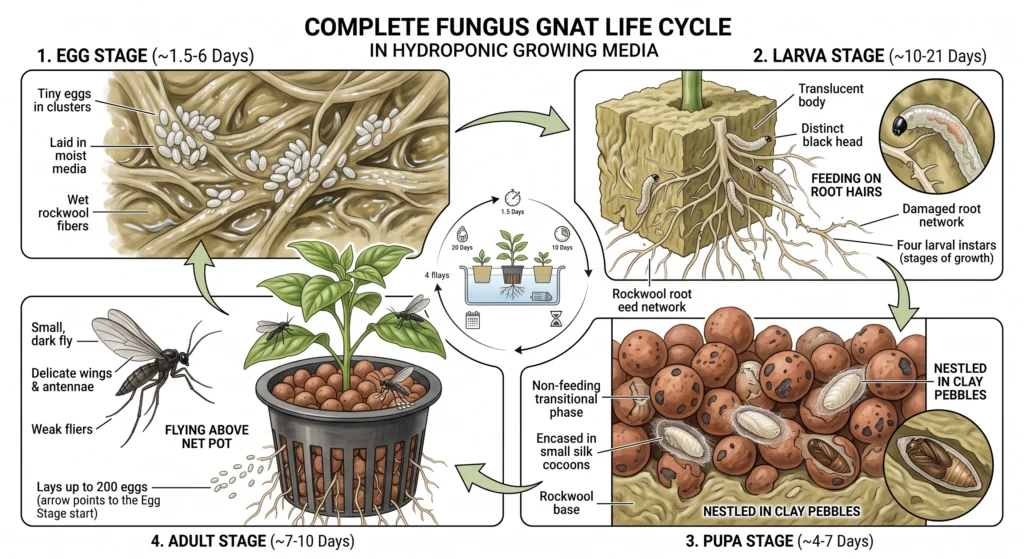
Fungus gnats move through four life stages: egg, larva, pupa, and adult. The full cycle generally runs about three to four weeks, and it moves noticeably faster in a warm grow tent, commonly cited extension sources put the female’s lifespan at roughly 7 to 10 days.
Adult females are drawn to the scent of moist growing media and decomposing organic matter. During her short lifespan, a female can lay up to around 200 microscopic eggs in the crevices of rockwool blocks or the moist upper layer of clay pebbles. Within about four to six days, eggs hatch into legless, translucent larvae with distinct shiny black heads.
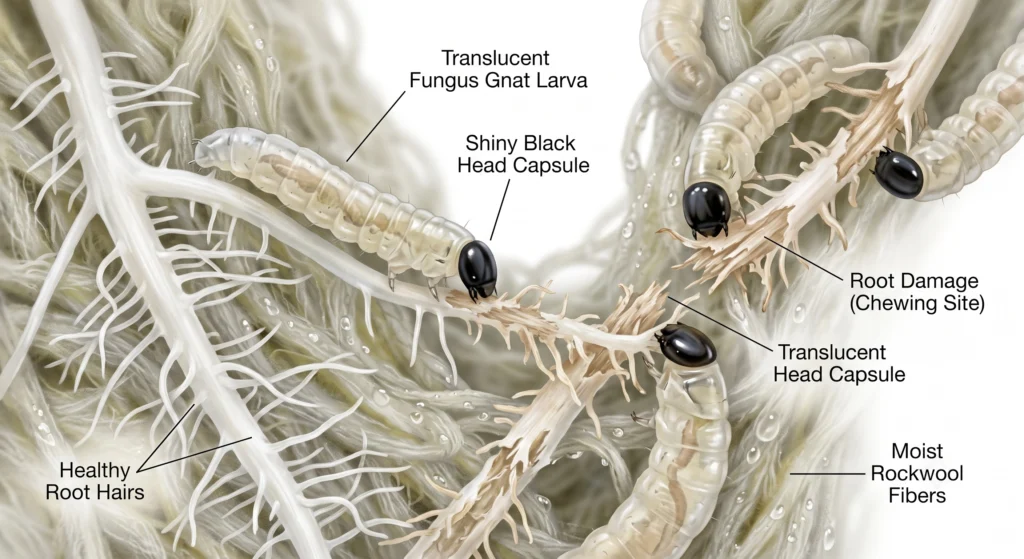
This larval stage runs roughly two weeks and is the only stage that actually damages your plants. The larvae have chewing mouthparts built for processing fungal mycelium and organic debris. In a hydroponic system without much compost around, they turn to the next best food source: your plants’ microscopic root hairs, the primary uptake sites for water and dissolved minerals. As larvae strip these hairs away, plants start showing nutrient lockout symptoms, wilting during peak light hours, and stunted growth. If you’re seeing unexplained canopy stress, cross-check against our hydroponic troubleshooting guide to confirm pest activity rather than a pH issue.
Beyond direct feeding damage, fungus gnat larvae are real disease vectors. Moving through wet substrate, they can carry spores of Pythium, Verticillium, and Fusarium in their gut and deposit them straight into the fresh wounds they create on roots. If you’re dealing with a simultaneous root slime and gnat outbreak, our root rot prevention guide covers systemic recovery.
Why Rockwool and Clay Pebbles Are Breeding Grounds
Rockwool’s high water-holding capacity keeps its surface consistently moist, an ideal nursery for fungus gnat eggs. Clay pebbles drain faster, but their uneven, porous surfaces trap organic debris and algae, giving larvae an easy food source.
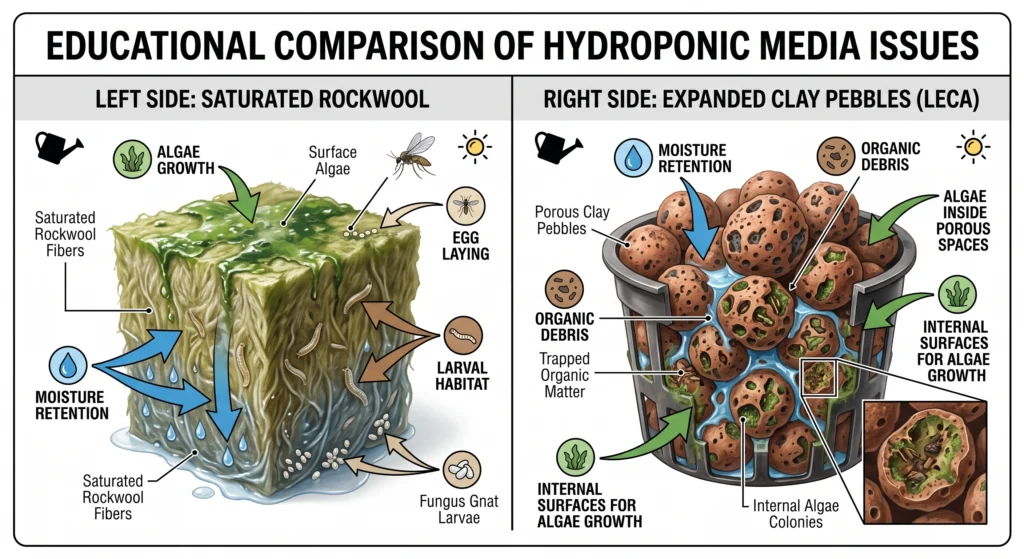
Hydroponic media is designed to balance air and water at the root zone, but a few common substrates end up creating perfect breeding conditions for Sciarid flies without meaning to.
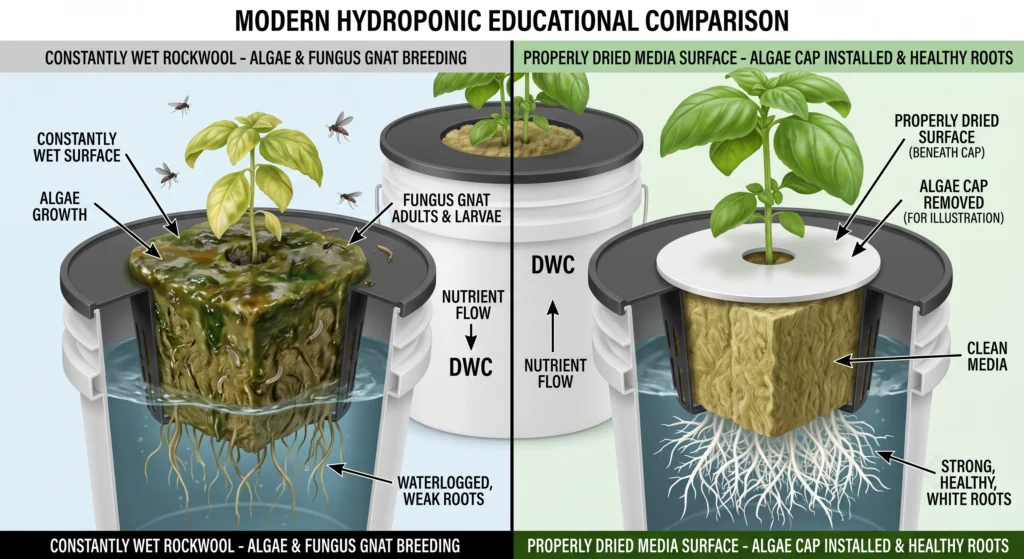
Rockwool is spun volcanic rock with very high water-holding capacity, great for propagation and clone establishment, but the top surface of a block often stays wet more or less permanently. Algae colonizes that wet surface fast under intense grow lights. The combination of standing moisture and fresh algae is exactly what signals adult gnats to lay eggs in the top half-inch of the block, where the interior is protected from airflow and the eggs face essentially no risk of drying out.
Expanded clay pebbles present a different problem. They drain quickly and hold relatively little water overall, but their uneven, porous surfaces trap dead root tissue and nutrient salts. In a top-feed drip system or an ebb and flow tray, the top layer of clay pebbles stays constantly bathed in nutrient solution. Algae grows on the porous clay, and the gaps between irregular pebbles create dark, humid, protected pockets ideal for larvae to pupate in.
Breaking the breeding cycle means changing the physical conditions of these substrates. For broader sanitation strategy, see our hydroponic IPM guide.
The Biological Eradication Protocol
Full eradication takes a coordinated approach: trapping adults, manipulating substrate moisture to kill eggs, and applying biological larvicides to eliminate the feeding stage.
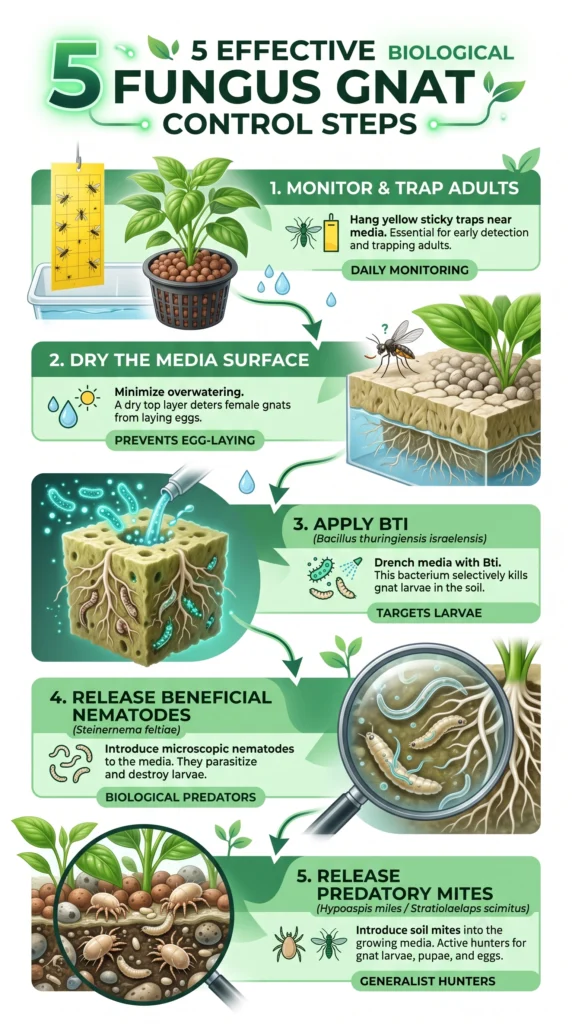
You can’t wipe out an active infestation with one treatment. Because the pest exists across four life stages simultaneously, killing only the flying adults still leaves hundreds of eggs ready to hatch tomorrow. Run through this protocol to break the cycle fully.
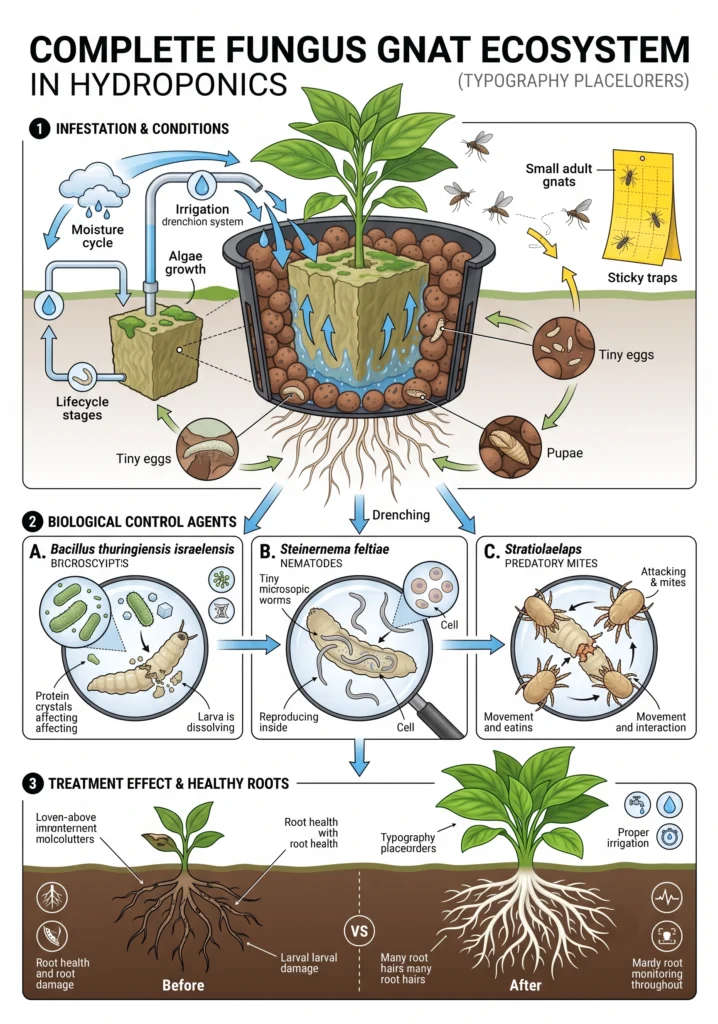
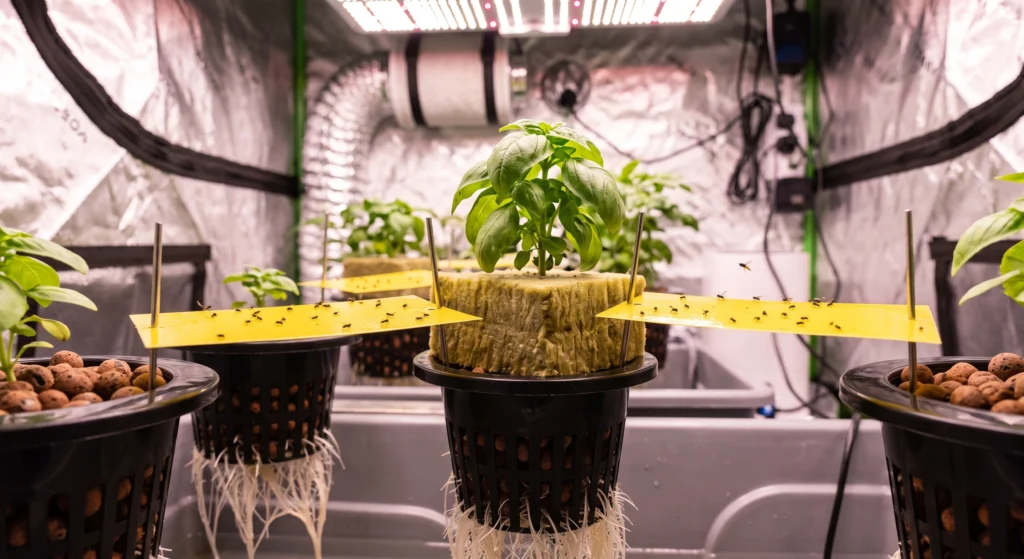
Mass trap the adults. The immediate goal is stopping females from laying more eggs. Fungus gnats are strongly attracted to yellow. Deploy yellow sticky traps aggressively, laid flat across net pots or rockwool tops, or hung horizontally about an inch above the media surface. Adults are weak flyers that tend to hover right above the substrate, so traps hung up in the canopy are largely wasted. Replace weekly to track population trend.
Dry down the substrate and cut off algae. Eggs and young larvae desiccate and die if their environment dries out. Adjust irrigation timers to allow a heavier dry-back between cycles, for rockwool, letting the block lose up to around 50% of its water weight before the next watering is a reasonable target. Cover rockwool tops with algae caps or a solid layer of poly film to starve surface algae of light. For clay pebbles, add a couple inches of completely dry, coarse perlite or dry clay pebbles on top, and adjust drip emitters to deliver water beneath that dry top layer.
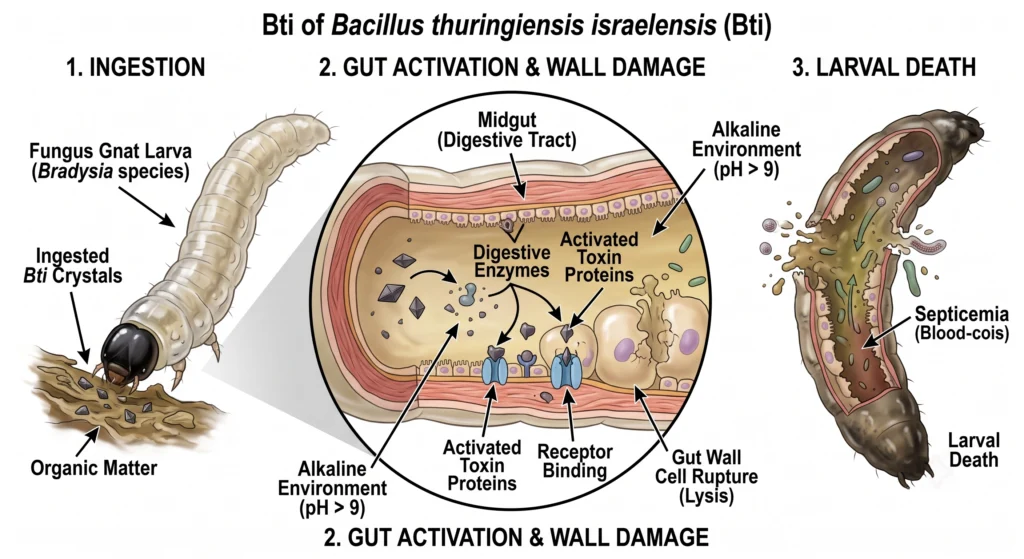
Apply targeted biological larvicide (Bti). Bacillus thuringiensis subspecies israelensis (Bti) is a naturally occurring soil bacterium producing protein crystals toxic specifically to dipteran larvae (mosquitoes, black flies, fungus gnats). When larvae ingest it, the alkaline environment in their gut dissolves the protein crystal, rupturing the stomach lining. Feeding stops within hours, and death follows within a day or two. Bti is considered harmless to humans, pets, plant roots, and beneficial insects, it’s highly targeted.
Add predatory reinforcements for severe infestations. For large, ongoing infestations in extensive media beds, Stratiolaelaps scimitus (formerly Hypoaspis miles) is a soil-dwelling predatory mite that actively hunts fungus gnat larvae and pupae, simply sprinkled onto clay pebbles in its carrier material. For rockwool slabs, beneficial nematodes (Steinernema feltiae) applied as a root drench actively search out and kill larvae within the wet fibers.
Before introducing live biology like nematodes, make sure your water chemistry is stable, drastic pH swings can shock beneficial organisms. Our pH and EC guide covers balancing that.
Bti Application: Mosquito Bits vs Gnatrol
Matching the Bti product format to your system type matters. Mosquito Bits generally need a pre-soaked “tea” method to avoid clogging drip systems, while Gnatrol WDG is fully water-soluble and better suited for direct reservoir dosing.
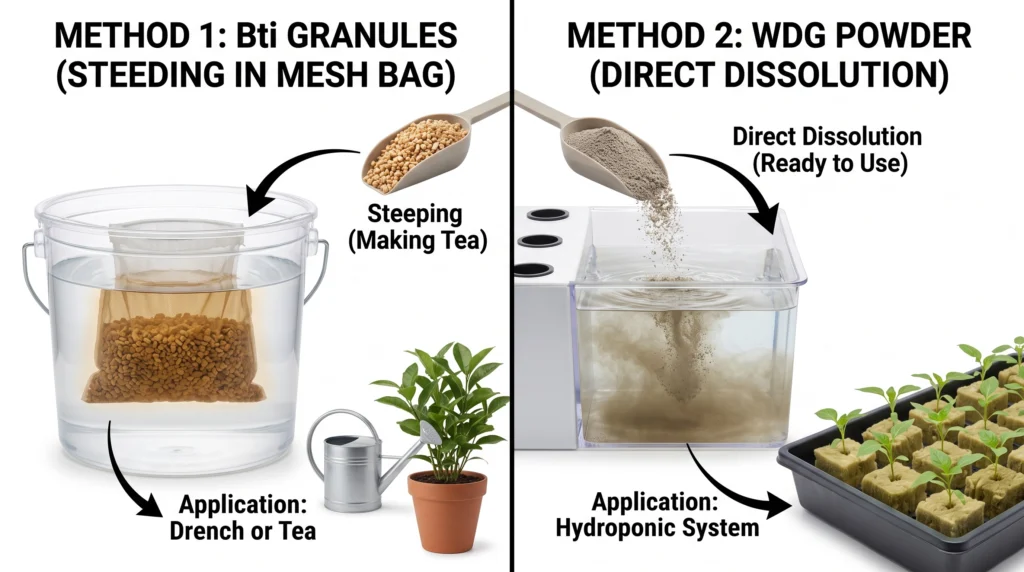
The most common failure point in biological gnat control is misapplying the Bti product itself, not every format is built for hydroponics.
Mosquito Bits are corn cob granules coated in Bti spores. Dumping them directly into a nutrient reservoir or drip system risks the corn cob rotting, which can cause bacterial blooms, pH swings, and clogged pumps. The safer method is brewing a tea: place a few tablespoons of bits in a fine mesh bag or old pantyhose, submerge in about a gallon of lukewarm, dechlorinated water, and let steep for 30 to 60 minutes. Squeeze the bag to extract the bacteria, discard the corn cob granules, and use the resulting liquid as a reservoir addition or a heavy top-drench over media.
Gnatrol WDG (Water Dispersible Granules) is a concentrated commercial-grade Bti formulation with no organic carrier like corn cob. It dissolves fully into a clean liquid that won’t clog fine drip emitters or aeroponic misters, making it a better fit for DWC or fine-emitter systems specifically. Dosing typically falls somewhere in the range of a quarter to a full teaspoon per gallon depending on infestation severity, always check your specific product’s label for the exact rate.
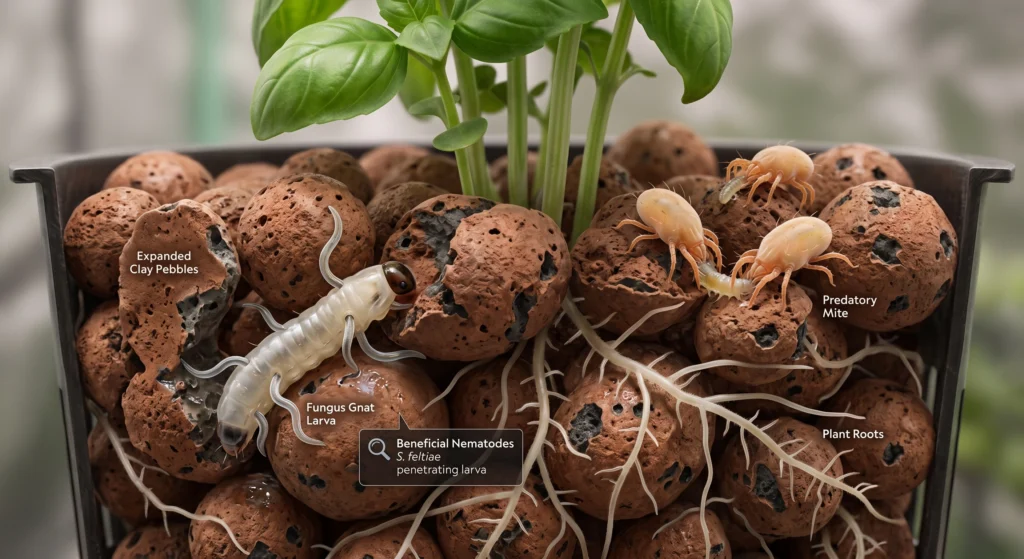
Because Bti breaks down fairly quickly in oxygenated, UV-exposed water, reapplication every few days for a few weeks is generally needed to catch new larvae as they hatch. Since Bti is biological, it does interact with your existing microbiome, our microbes and enzymes guide covers balancing that.
Environmental Parameters and Biological Efficacy
Getting the most out of biological controls means keeping your environment within the ranges these organisms actually tolerate. Push root zone temperature too high and your Bti degrades faster, or your nematodes may struggle outside their effective range.
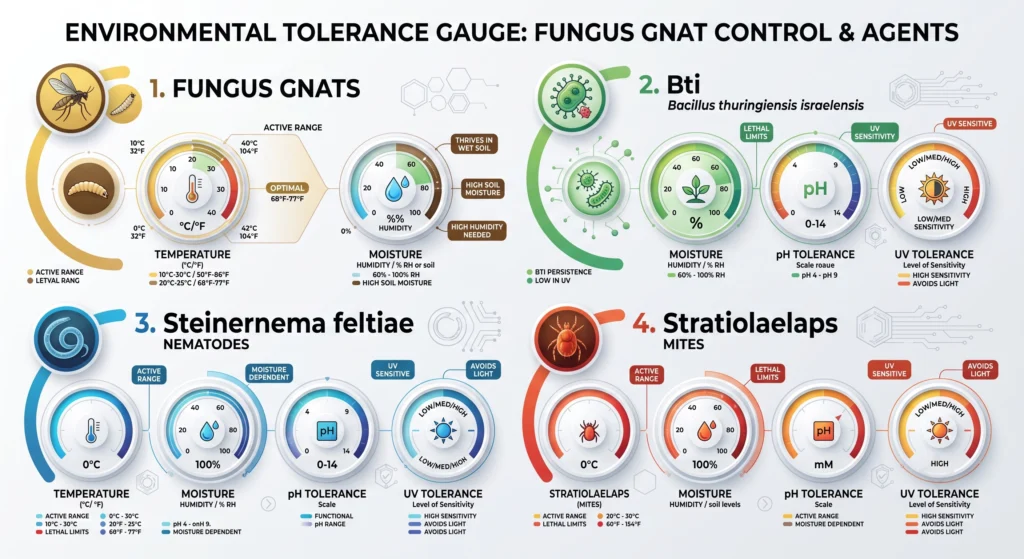
| Parameter | Fungus Gnat Ideal Range | Bti (Gnatrol/Bits) Optimal Efficacy | Beneficial Nematodes (S. feltiae) | Predatory Mites (S. scimitus) |
|---|---|---|---|---|
| Media Temperature | 70-80°F | 60-80°F | Effective 60-90°F | 60-80°F, life cycle fastest around 68-77°F |
| Media Moisture | Saturated / soggy | Moist (needs water to spread) | Requires consistent moisture | Slightly moist / damp |
| Nutrient Solution pH | N/A | 5.5-7.0 | 5.5-7.5 | N/A (surface dweller) |
| Persistence in System | 3-4 week life cycle | A few days, needs re-dosing | Roughly 10-14 days active in media | Life cycle around 15-18 days; can persist for weeks scavenging if hosts are scarce |
| Light Tolerance | Hides in darkness | Degrades under heavy UV light | Sensitive to UV, apply at night or in shade | Prefers dark media crevices |
For further reading directly from a research-backed source, UC IPM’s pest note on fungus gnats covers Bti persistence and product options in more depth, and UConn’s IPM program on biological control of fungus gnats has good detail on combining nematodes with predatory mites for tougher infestations. If reservoir temperature is a struggle to keep in range, our passive cooling guide covers practical approaches.
Recommended Products
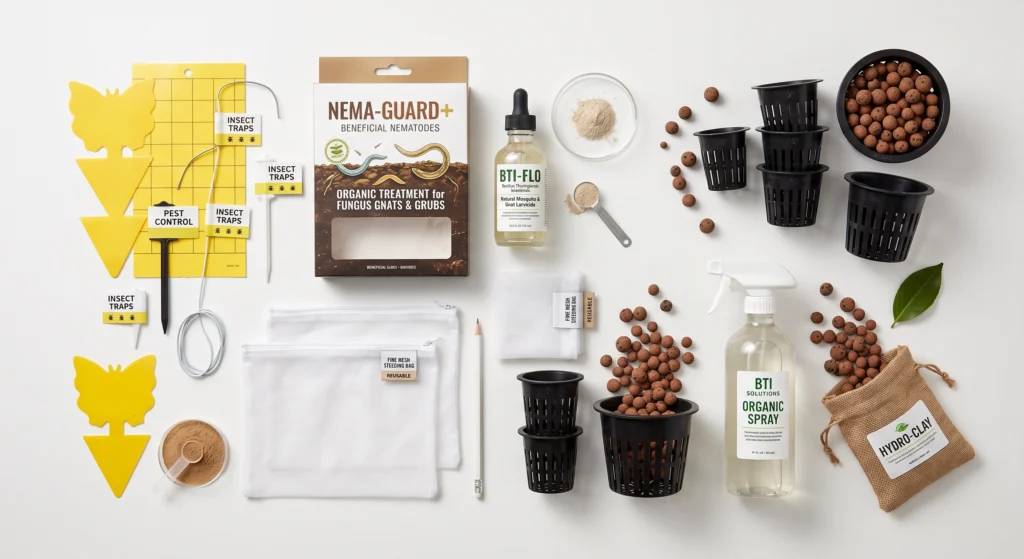
Dissolves completely into a reservoir with no rotting organic carrier left behind, a safer fit for fine drip emitters and aeroponic sprayers than granule-based products.

A cost-effective, widely available Bti source, well suited to treating small or isolated plants, or brewing a quick tea for spot top-feeding individual rockwool blocks.
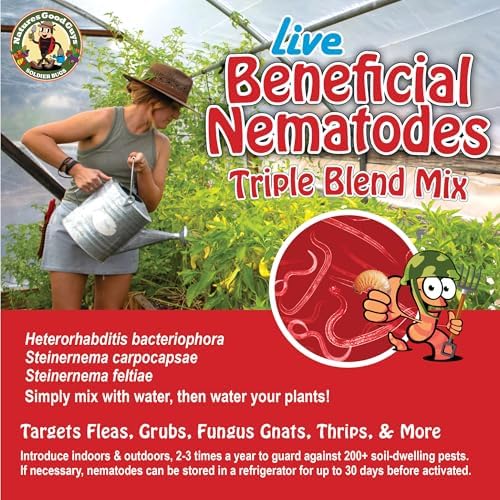
Useful for deep, systemic infestations inside large rockwool slabs where Bti might not reach evenly, watered into the root zone to hunt larvae directly.

Moving to well-slotted net pots that let roots drop quickly into a DWC reservoir reduces how much wet clay pebble surface sits exposed at the top, cutting down available breeding area.
Frequently Asked Questions
How long does it take for Bti to kill fungus gnats?
Bti works as a stomach poison for larvae. Feeding stops within hours of ingestion, and death typically follows within a day or two. It has no effect on eggs, pupae, or flying adults though, so you won’t see fewer adults flying around until the current generation naturally dies off, roughly a week. Reapplying every few days for about three weeks covers newly hatching larvae as they emerge.
Can I use hydrogen peroxide to kill fungus gnats?
A dilute soil drench (commonly cited around 1 part 3% H2O2 to 4 parts water) will kill larvae on contact through oxidation. It’s non-selective though, it’ll also damage beneficial microbes and mycorrhizae in your root zone, and it leaves no residual protection, so gnats can return quickly. Bti is generally the better choice specifically because it’s targeted rather than indiscriminate.
Do fungus gnats live in deep water culture systems?
They can’t breed in open, moving water, they’ll drown. They breed readily in the net pots suspended above a DWC reservoir though, if those pots hold rockwool or constantly wet clay pebbles. Larvae feed on the root crown inside the net pot before roots drop down into the water below.
Are fungus gnats and fruit flies the same thing?
No. Fruit flies are thicker, lighter colored (often brown or tan), have red eyes, and go for rotting fruit and fermentation. Fungus gnats are slender, dark gray or black, look like tiny mosquitoes, and are drawn specifically to wet soil, peat, rockwool, and fungal growth. Apple cider vinegar traps work well for fruit flies but do essentially nothing against fungus gnats.
Will Gnatrol clog my hydroponic water pump?
No. Gnatrol WDG is built for commercial irrigation systems specifically, WDG stands for water dispersible granule. Once mixed, it stays fully suspended and passes through standard pumps, inline filters, and drip emitters without causing blockages.
Bti Dosing Calculator
Use the tool below to calculate a Mosquito Bits tea recipe or a Gnatrol reservoir dose scaled to your actual reservoir or treatment volume.
Scale a Mosquito Bits tea recipe to the amount of treatment water you want to brew.
Calculate a Gnatrol WDG dose for your reservoir. Always confirm against your specific product’s label, rates can vary by formulation.
General planning estimates based on commonly cited hobbyist and label rates. Always defer to your specific product’s label instructions.
Conclusion: Securing the Root Zone
Eradicating fungus gnats from a hydroponic garden is a test of persistence more than anything else, you’re fighting a pest with overlapping generations, not a single battle. Eliminating the environmental triggers, surface algae and perpetually wet top media, strips adults of their breeding grounds. Running a sustained, multi-week biological campaign with Bti and, where needed, predatory mites or nematodes, takes care of the larvae doing the actual damage.
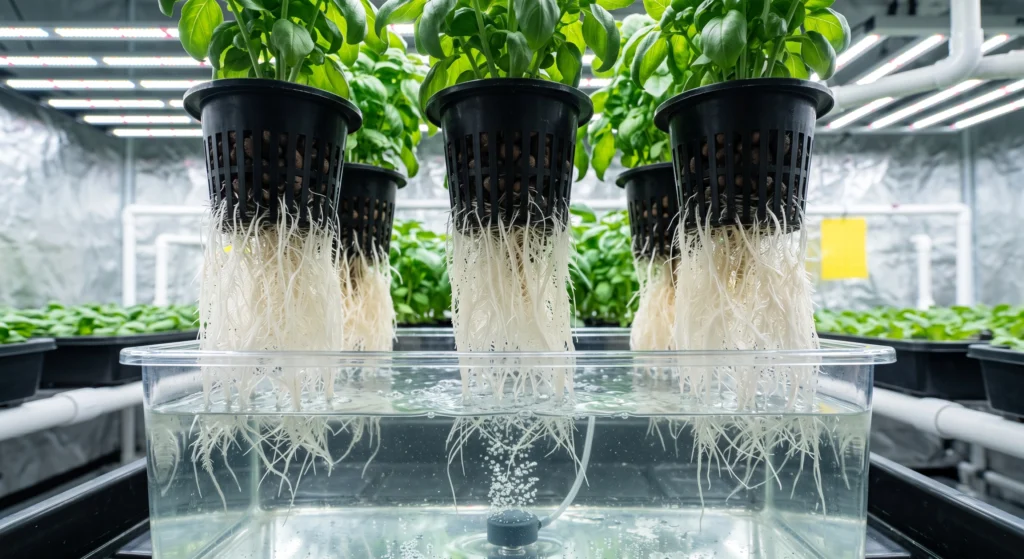
Don’t underestimate what these small pests cost you. Protecting root hairs from larval feeding keeps your plants able to take up the nutrients you’re actually providing, which is what protects both yield and disease resistance downstream. Keep the sticky traps up, keep media surfaces dry, and let the biology do the heavy lifting.

Continue Your Learning Journey