Pythium Root Rot: Hypochlorous Acid vs Hydrogen Peroxide

Table of Contents
- The Science of Pythium in Hydroponic Systems
- Hydrogen Peroxide (H2O2): The Traditional Oxidizer
- Hypochlorous Acid (HOCl): The Modern Antiseptic
- Head-to-Head Comparison
- Summary Table: HOCl vs H2O2 for Root Rot
- How to Cure Root Rot: Step-by-Step Eradication Protocol
- Recommended Products
- Frequently Asked Questions
- Dosage and pH Calculator
- Hypochlorous Acid vs Hydrogen Peroxide for Root Rot Eradication
Few things strike fear into an indoor grower quite like the swampy, sour smell of dying roots. You lift the lid on your reservoir expecting a clean, bright white root mass and instead find a foul-smelling brown slime. Plants wilt under the lights despite sitting in gallons of water, growth stalls out completely, and the reservoir starts foaming. That’s Pythium, the main culprit behind hydroponic root rot.
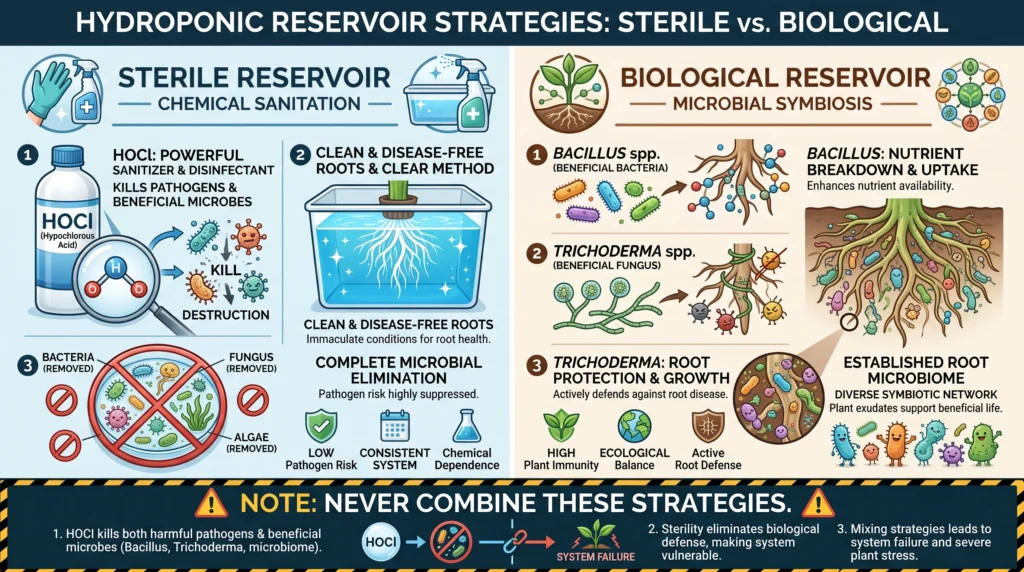
Facing a real Pythium outbreak, growers generally choose between two strategies: running a biological reservoir (introducing beneficial bacteria to outcompete the pathogen) or running a sterile one. If you go the sterile route, you’re relying on an oxidizing agent to kill the pathogen in the water column. For decades, hydrogen peroxide (H2O2) was the default choice. More recently, hypochlorous acid (HOCl) has become a strong, increasingly common alternative in commercial hydroponic operations.
This comparison covers how each of these actually works chemically, their real tradeoffs, and a practical protocol for curing an active outbreak.
Legal Note: Regulations vary by location. Always consult local guidelines. This content is for educational purposes only and is not a substitute for professional agronomic or safety advice. Concentrated hydrogen peroxide is a hazardous chemical, handle it with appropriate protective equipment.
The Science of Pythium in Hydroponic Systems
Pythium isn’t a true fungus, it’s a water mold (oomycete) that thrives in warm, poorly oxygenated reservoirs. It reproduces through motile zoospores that swim through the nutrient solution to reach and attack root tissue.
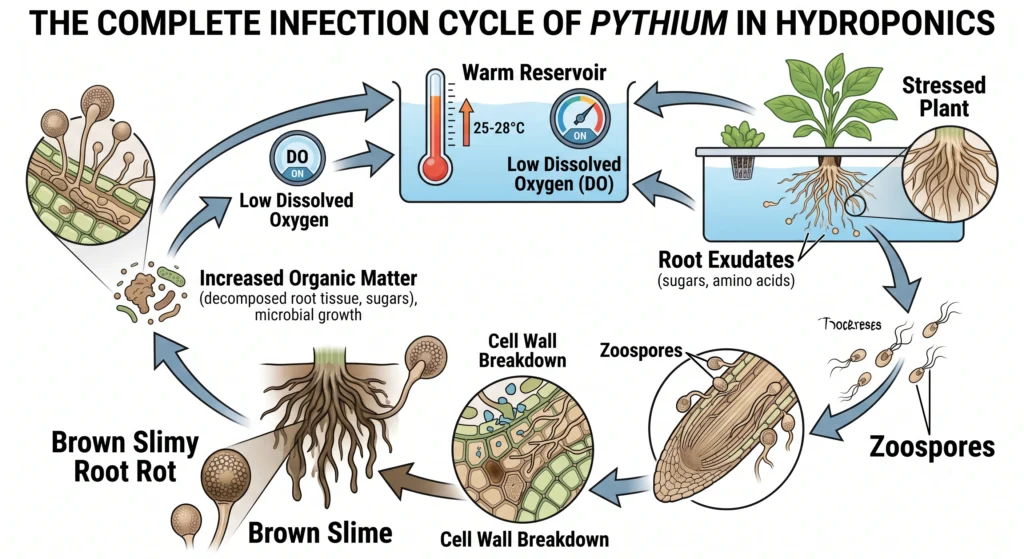
Pythium is opportunistic. It’s essentially always present in the environment, in dust, on clothing, in most municipal water supplies, but it only becomes a real problem once conditions favor its reproduction and plant defenses are already down.
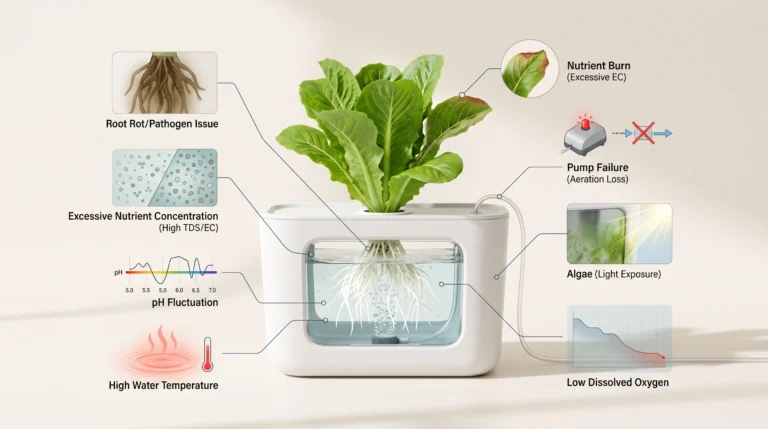
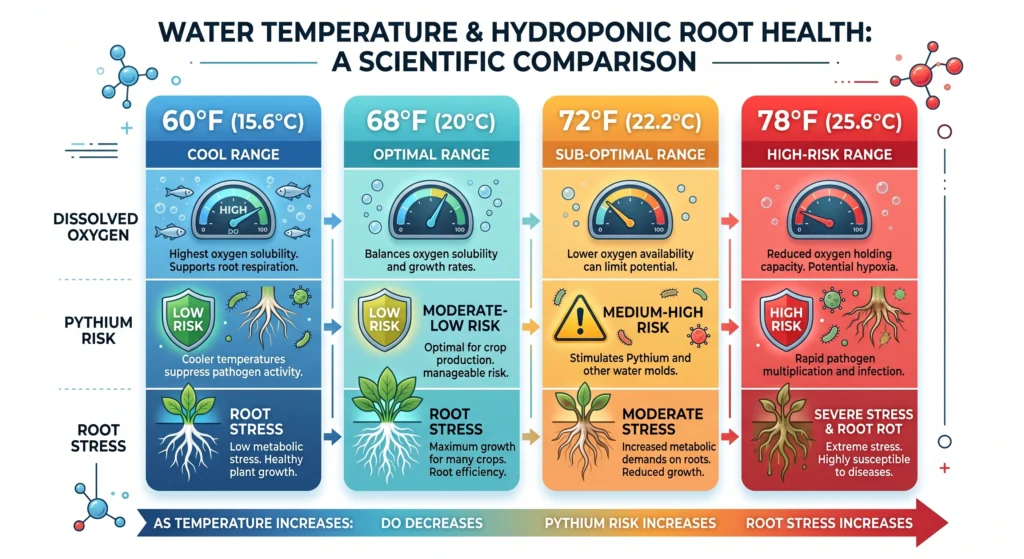
When reservoir temperature climbs above about 72°F (22°C), the water’s capacity to hold dissolved oxygen drops. Plants start to struggle under those warm, low-oxygen conditions, and stressed roots leak simple sugars (exudates) into the water. Pythium zoospores have flagella, whip-like structures that let them actively swim through the solution, and they follow the chemical trail of those sugars straight to weakened roots.
Once attached, the pathogen secretes enzymes that break down root cell walls, turning healthy tissue into the brown, mushy slime associated with the disease. As root tissue dies, it adds more decaying organic matter to the water, which fuels further Pythium growth in a feedback loop. At this stage, standard root rot prevention practices generally aren’t enough on their own, you need an active eradication protocol.
Hydrogen Peroxide (H2O2): The Traditional Oxidizer
Hydrogen peroxide is a fast, powerful oxidizer that kills pathogens by releasing reactive oxygen. It’s genuinely effective, but its reactivity means it breaks down quickly in a reservoir, leaving the system unprotected again fairly soon after application.
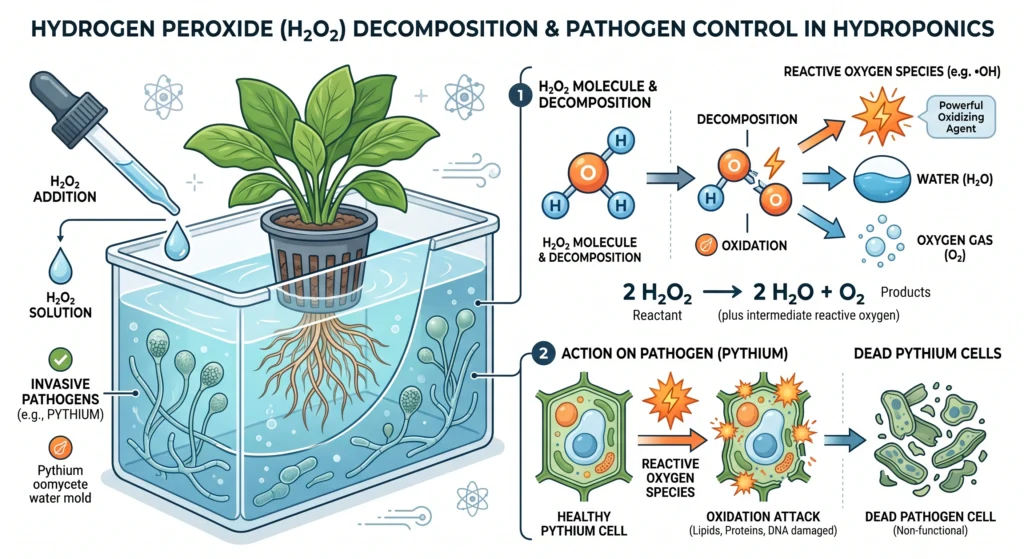
H2O2 is essentially water with an extra, unstable oxygen atom attached, and that extra atom wants to break free. When added to a reservoir, it detaches and attacks whatever organic matter it encounters, oxidizing the cell walls of pathogens, algae, and decaying root tissue in the process.
Since the only byproducts are water and oxygen gas, H2O2 leaves no toxic residue behind, and the oxidative burst briefly floods the root zone with extra oxygen, which can genuinely help roots that are struggling to breathe.
The real drawback is its lack of selectivity and stability. Because it’s so reactive, it oxidizes everything indiscriminately, the Pythium, but also your nutrient solution’s chelating agents (like EDTA or DTPA that keep iron available), and any dead plant matter floating around. Within hours, sometimes minutes depending on how much organic material is in the system, the H2O2 is fully spent. Any Pythium spores that survived inside dead root tissue will start reproducing again the moment the reservoir loses that protection.
A real safety note: effective treatment generally requires concentrated food-grade H2O2 (commonly 29% to 34%), not the 3% drugstore version, which contains stabilizers that are toxic to plants. Concentrated H2O2 at this strength is a genuinely hazardous chemical. It can cause severe chemical burns to skin and eyes on contact, and as a strong oxidizer it poses a real fire risk around combustible materials. Handle it with chemical-resistant gloves and eye protection, work in a ventilated area, and store it away from anything flammable and out of reach of children.
Hypochlorous Acid (HOCl): The Modern Antiseptic
Hypochlorous acid is a stable, chlorine-based compound that’s biologically identical to what the human immune system produces to fight infection. It works at very low concentrations and stays active in a reservoir for an extended period, providing more continuous protection than H2O2.
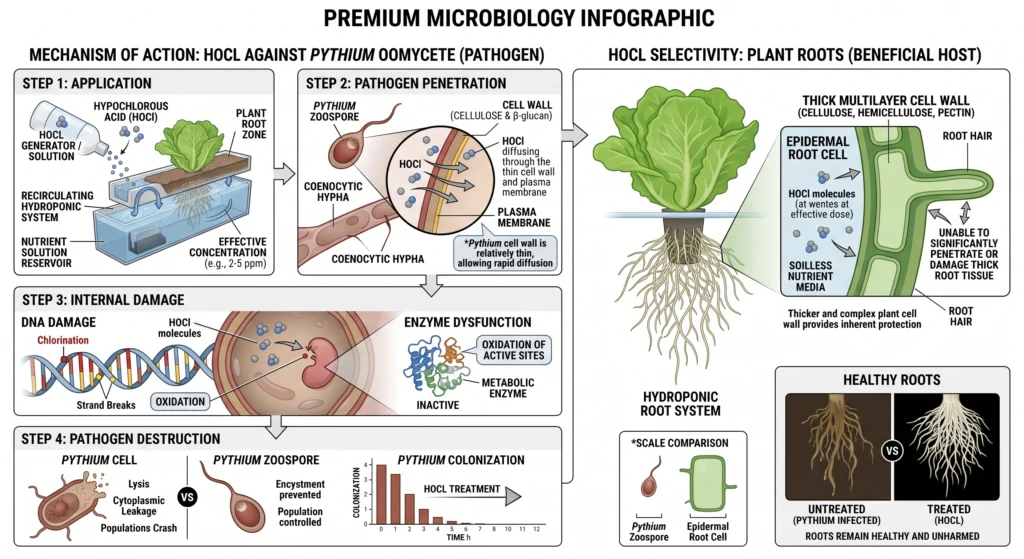
Don’t let the word “chlorine” cause alarm here, HOCl is not the same thing as household bleach (sodium hypochlorite). HOCl is a weak acid that carries no electrical charge, which lets it pass through the negatively charged cell walls of pathogens like Pythium fairly easily. Once inside, it disrupts the organism’s DNA and metabolic enzymes.
This is genuinely the same compound your own white blood cells produce to fight infection. In commercial hydroponics, HOCl-based products have become a standard tool for keeping lines and reservoirs clear and biofilm-free.
Its real advantage over H2O2 is stability. Rather than reacting violently and burning out fast, HOCl holds a more consistent oxidation reduction potential (ORP) in the water over an extended period, commonly cited as several days rather than hours, actively limiting pathogen growth the whole time rather than protecting the system only briefly after each dose. It’s also considerably gentler on plant tissue at the concentrations used for reservoir maintenance, since it targets single-celled organisms without meaningfully affecting multicellular root tissue at proper dosing.
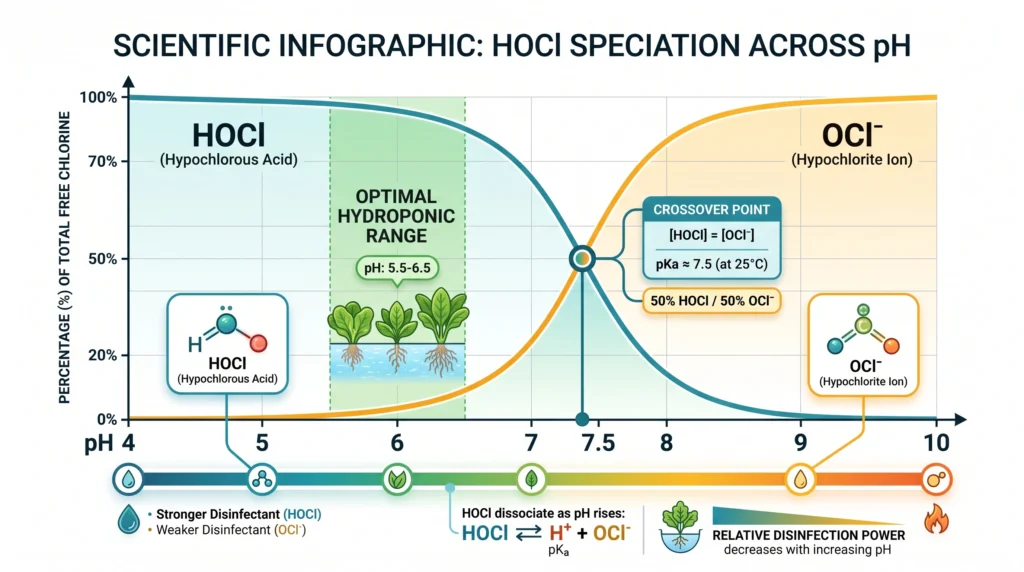
There’s an important chemical caveat: HOCl’s effectiveness depends heavily on pH. With a pKa of about 7.5, HOCl is the clearly dominant chlorine species from acidic pH up through about pH 7, and stays meaningfully present even a bit above that, but its share drops as pH climbs past roughly 7.5, converting increasingly into the far less effective hypochlorite ion (OCl-). Practically, this means keeping your reservoir in the 5.5 to 6.5 range, which conveniently overlaps with the general optimal nutrient uptake range for most hydroponic crops, gives HOCl the best conditions to work. Mastering your pH and EC management is genuinely a prerequisite for getting real value out of HOCl.
Head-to-Head Comparison
HOCl generally wins for ongoing reservoir maintenance and root safety. H2O2 still has a real place for fast shock treatments and sterilizing inert equipment between crop cycles.
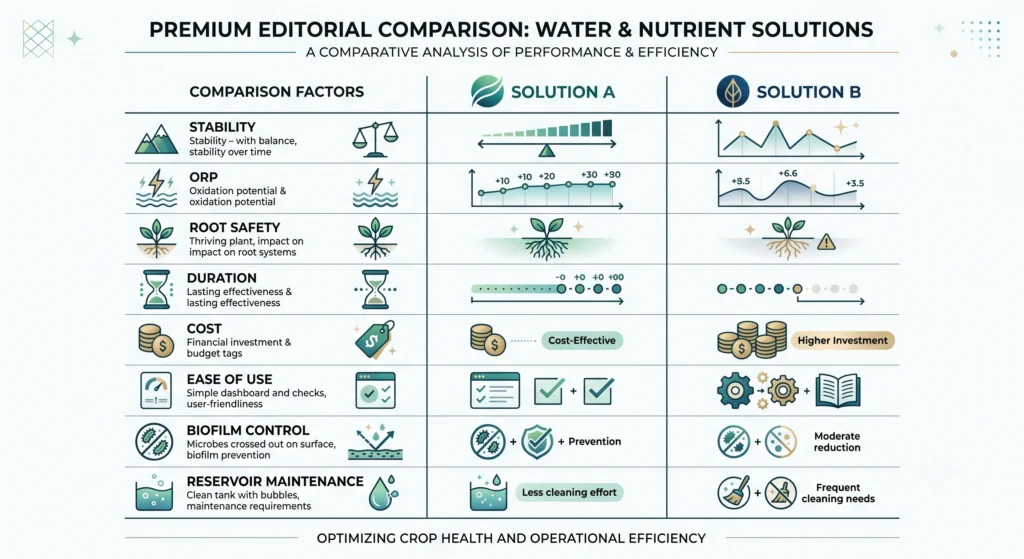
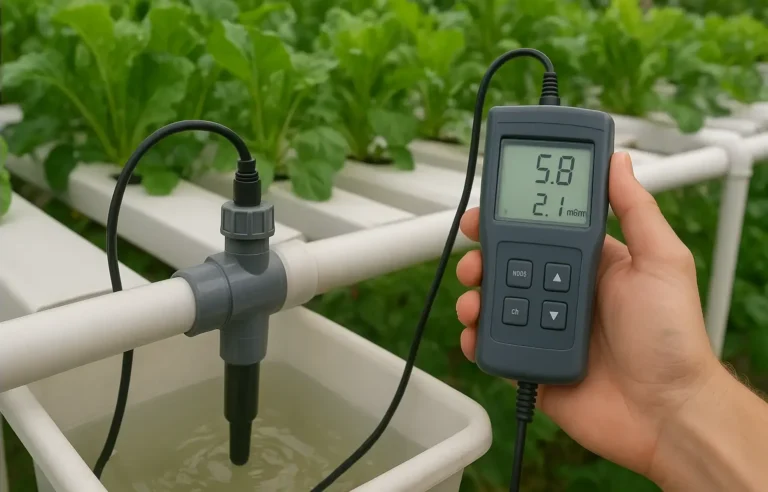
Oxidation Reduction Potential (ORP) and stability. ORP measures a water’s capacity to break down contaminants, in millivolts. A commonly cited healthy target range for a sterile reservoir is roughly 300 to 400mV. H2O2 tends to spike ORP aggressively on application, sometimes well past 500mV, but that reading tends to fall back down within a day or so, meaning it generally needs to be redosed frequently to hold sterility. HOCl is commonly reported to bring ORP into that 300 to 400mV range and hold it there for several days, which is the main reason it’s considered better suited to ongoing maintenance rather than one-off treatment. These specific timeframes are widely repeated in grower circles rather than independently lab-verified figures I can point you to, so treat them as a reasonable planning range rather than an exact guarantee for your specific water chemistry.
Safety for roots and microbiomes. H2O2 is caustic at the concentrations needed to be effective. Overdosing it in a desperate attempt to fix an active outbreak can chemically burn the surviving healthy roots, adding stress on top of stress. HOCl is considerably gentler on root tissue at typical maintenance concentrations. Worth being clear on: neither product is compatible with a biological reservoir strategy. Both are broad-spectrum oxidizers that will kill beneficial bacteria (like Bacillus species) right alongside the pathogen. If you’d rather run a biological approach, see our microbes and enzymes guide instead.
Cost and application. H2O2 is cheap per bottle, but because it degrades so fast, the volume needed to maintain protection over a full crop cycle adds up. HOCl products can carry a higher upfront cost per bottle, but dosing is typically measured in fractional milliliters per gallon, so a bottle tends to last considerably longer. Some growers also build their own HOCl at home using an electrolytic generator with just water, salt, and a small amount of acid (often vinegar) to control pH, which can bring the cost down to pennies per gallon if you’re willing to manage the equipment.
Summary Table: HOCl vs H2O2 for Root Rot
| Feature | Hypochlorous Acid (HOCl) | Hydrogen Peroxide (H2O2) |
|---|---|---|
| Commonly Reported Active Lifespan in Water | Several days | Roughly 12 to 24 hours |
| Risk of Root Burn | Low at proper dosing | Higher if overdosed |
| pH Dependency | High, most effective below roughly pH 7 to 7.5 | Low, works across a wider pH range |
| Impact on Chelated Nutrients | Mild | More significant, oxidizes iron chelates |
| Best Use Case | Continuous sterile maintenance, treating active infections | Fast shock treatments, cleaning equipment between grows |
| Storage Stability | Generally good over months if stored properly | Poor, degrades with light/heat exposure |
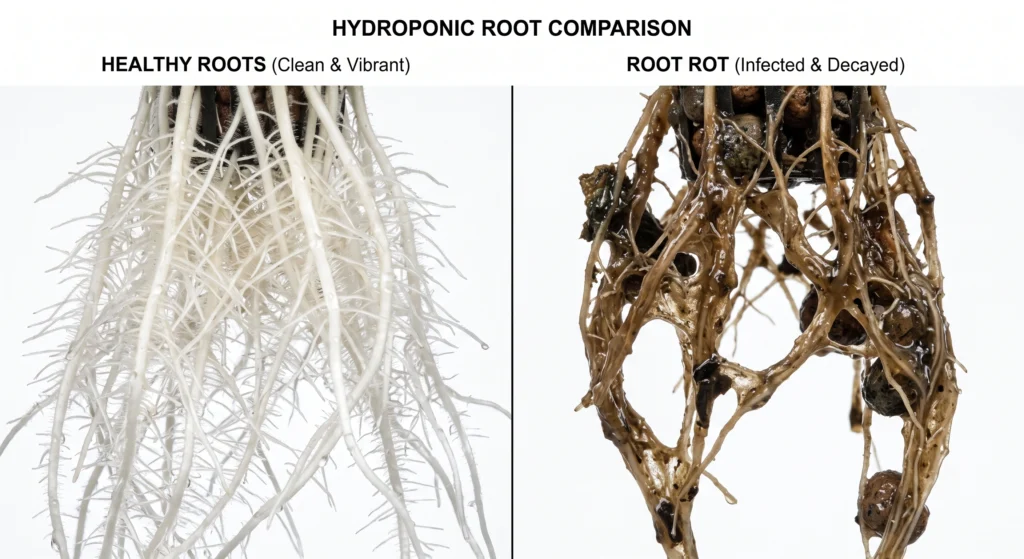
Whether you’re running deep water culture or comparing DWC vs NFT vs aeroponics, your choice of sterilizing agent will shape your ongoing maintenance routine either way.
How to Cure Root Rot: Step-by-Step Eradication Protocol
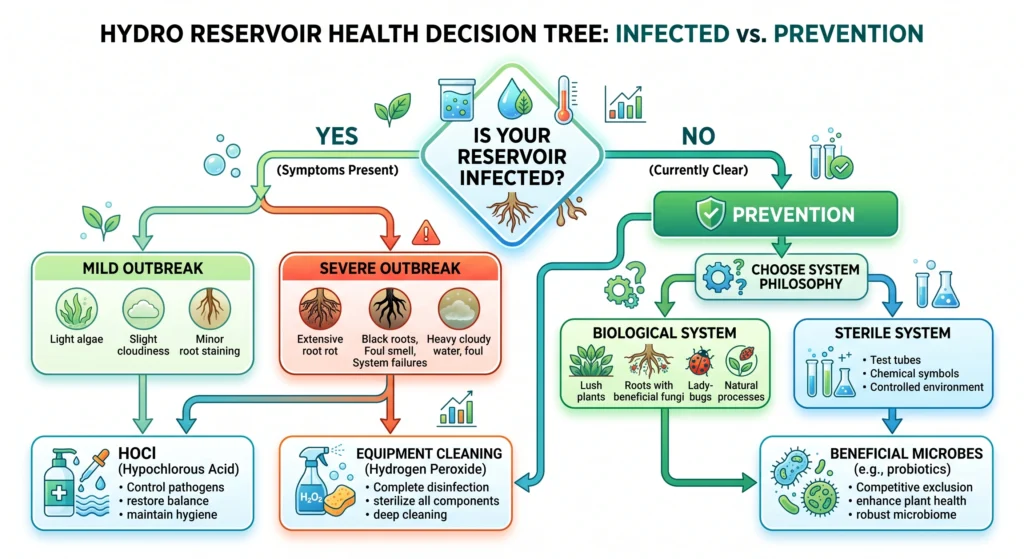
Curing an active outbreak means physically removing decaying organic matter before applying any chemical oxidizer. A staged protocol, an H2O2 equipment flush followed by ongoing HOCl maintenance, gives both steps their best chance to work.
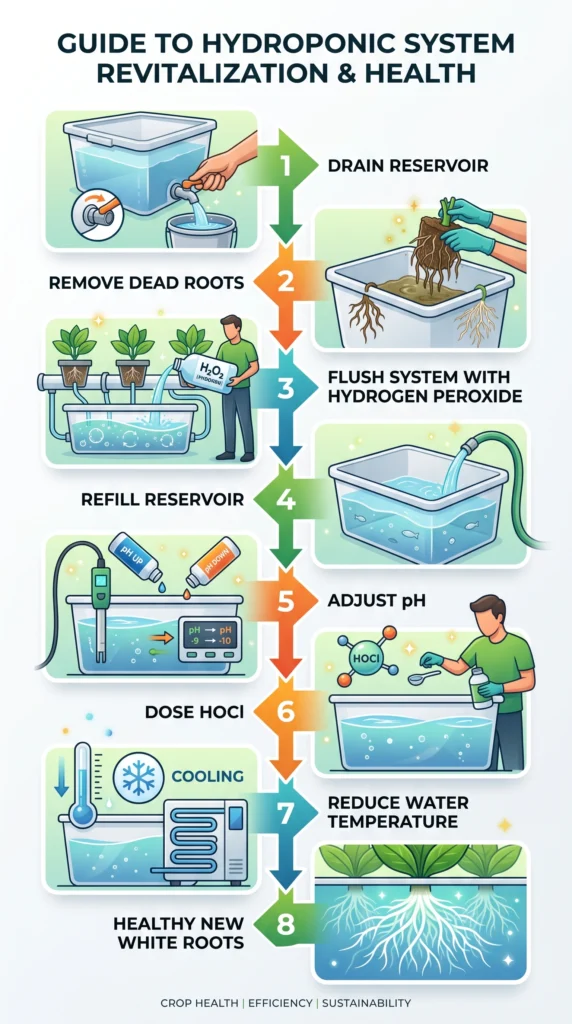
Dumping either oxidizer straight into an already-dirty, infected reservoir won’t save the crop, the sheer volume of dead organic slime in the water will consume the oxidizer before it reaches the living pathogen. You need to reset the environment methodically.
- Physical removal. Drain the infected reservoir completely. Remove the plants and rinse root masses gently under cool running water, pulling away as much of the brown, slimy dead tissue as you reasonably can without tearing the surviving white core.
- System shock, the H2O2 phase. With plants removed, fill the reservoir and lines with fresh water and a strong dose of food-grade H2O2 (roughly 3ml of 29% solution per gallon is a commonly used starting point). Run the pumps for about 2 hours to strip biofilm off the reservoir walls, pumps, and tubing. Wear proper protective equipment during this step. Drain this flush water completely afterward.
- The reset. Refill with fresh water, add your nutrients, and balance pH to roughly 5.5 to 6.0.
- The cure, the HOCl phase. Dose with your HOCl product at the manufacturer’s recommended shock rate (commonly in the 2 to 5ml per gallon range, but always check your specific product’s label). Return plants to the system.
- Temperature control. Pythium thrives in warm water. Getting reservoir temperature down below roughly 68°F (20°C) meaningfully reduces its ability to spread. If you don’t have a dedicated chiller, our passive cooling guide covers lower-cost approaches.
- Ongoing maintenance. Dose at the standard maintenance rate every few days per your product’s label. New, healthy root growth (fuzzy, bright white) emerging from the crown is the sign the treatment is working.
Source note: for background on Pythium’s biology, temperature sensitivity, and general management in hydroponic systems, see Penn State Extension’s Pythium overview and the more specific, peer-reviewed diagnostic guide for Pythium root rot in hydroponic leafy greens and herbs published in Plant Health Progress.
Recommended Products
A stabilized hypochlorous acid product built specifically for hydroponics, commonly used for maintaining a sterile reservoir and reducing mineral scale in DWC systems without harming young root hairs.
A concentrated HOCl formulation aimed at breaking down organic matter and keeping drip emitters and NFT channels free of biofilm.

Useful for cleaning empty reservoirs, pumps, and airstones between crop cycles. Note this is the dilute 3% product suited for equipment cleaning, not the concentrated 29-34% product referenced in the shock treatment protocol above.

The biological alternative if a sterile reservoir strategy isn’t the right fit. Inoculates the root zone with Bacillus amyloliquefaciens to compete with Pythium for space and resources.

Chemistry alone can only do so much. Keeping water reliably below the temperature threshold where Pythium thrives is one of the most effective preventative tools available, regardless of which oxidizer strategy you choose.
Frequently Asked Questions
Can I mix HOCl and H2O2 together in the same reservoir?
No. Combining them causes a reaction that neutralizes both, leaving the reservoir without effective protection from either. Pick one strategy and stick with it.
Will hypochlorous acid kill beneficial microbes?
Yes. HOCl is a broad-spectrum, non-selective biocide, it will kill Pythium along with beneficial mycorrhizae, Trichoderma, and Bacillus strains. You can’t run a sterile reservoir and a biological one at the same time. If you’re using HOCl, hold off on compost teas or bacterial inoculants.
Why does my HOCl smell like bleach?
HOCl is in the chlorine family, so a faint pool-water scent is normal. It’s still fundamentally different from sodium hypochlorite (household bleach), which contains sodium that can build up and harm plants and runs at a much higher pH. Don’t substitute household bleach for a horticultural HOCl product.
Is a HOCl-based routine better for cloning than H2O2?
Generally, yes. Aeroponic cloners are prone to bacterial buildup, and a light HOCl dose keeps the water sterile and cutting stems clean without the harshness that can damage the delicate tissue trying to push out new roots. H2O2 tends to be too aggressive for fresh cuttings.
How do I know root rot is actually cured?
Brown, dead root tissue stays dead, it won’t turn back to white. The real sign of success is new, fuzzy, bright white root growth emerging from the net pot or crown above the old damaged mass, along with the reservoir’s odor clearing up within about a day of treatment.
Dosage and pH Calculator
Use the tool below to calculate HOCl and H2O2 dosing for your specific reservoir size, and to see how much of your HOCl is actually in its active form at different pH levels.
Calculate the amount of product needed for your reservoir at a given dose rate. Always defer to your specific product’s label if it differs from a general rate entered here.
HOCl’s effectiveness depends on how much of it stays in the active HOCl form versus the far less effective hypochlorite ion (OCl-) at a given pH. This uses the real Henderson-Hasselbalch relationship with HOCl’s published pKa of 7.5.
Educational tool. Always cross-check against your specific product’s label, and consult a professional for anything beyond routine hobby-scale use.

Continue Your Learning Journey