Hydroponic Pepper EC Levels: Field Notes on EC Stacking for Super-Hots

Table of Contents
- Why Super-Hots Demand EC Stacking
- Wins and Fails with Superhot Pepper Nutrients
- The Master Pepper EC Chart
- Metrics Log: Executing the EC Stacking Technique
- Custom Hacks for Habanero EC Level and Beyond
- Gear Field Notes: What Actually Kept Things Alive
- What I'd Do Differently Next Run
- Core Takeaways for Hydroponic Pepper EC Levels
- Frequently Asked Questions (FAQ)
- The Final Harvest
Quick Summary: Pushing super-hot peppers to their genetic limits requires exact control over hydroponic pepper EC levels. By strategically “stacking” Electrical Conductivity (EC) during the late flowering and fruiting stages, growers can induce mild osmotic stress, significantly increasing both fruit yield and capsaicinoid production (heat) without causing nutrient lockout.
Growing lettuce hydroponically is a great way to cut your teeth in controlled-environment agriculture, but cultivating super-hot peppers—Carolina Reapers, Ghost Peppers, Trinidad Scorpions, and even specialized habaneros—is an entirely different beast. You are managing a heavy-fruiting, long-lifecycle crop that demands hyper-specific nutrition to hit peak pungency.
I recently wrapped up a nine-month indoor deep water culture (DWC) and Dutch bucket run dedicated entirely to super-hots. The goal was simple: test the limits of hydroponic pepper ec levels using a technique called “EC Stacking.” Instead of maintaining a static nutrient concentration, EC stacking involves progressively ramping up the dissolved salts in the reservoir to mimic drought and salt stress. This biological trigger forces the plant to defend itself by producing secondary metabolites—specifically, capsaicin.
Here is the unfiltered field log of that run, including the exact nutrient curves, the spectacular wins, the catastrophic fails, and the precise metrics you need to replicate the heat.
Legal Note: Regulations vary by location. Always consult local guidelines. This content is for educational purposes only.
Why Super-Hots Demand EC Stacking
Quick Summary: Standard nutrient profiles fail to maximize the heat and flavor of super-hot peppers. EC stacking gradually increases the nutrient salt concentration, applying controlled osmotic pressure that forces the plant to concentrate capsaicinoids as a stress response, resulting in a drastically hotter and heavier harvest.
When you grow a pepper plant in perfect, low-stress hydroponic conditions, you often get massive, beautiful fruits that lack their characteristic fire. Capsaicin, the chemical responsible for the heat in peppers, is an evolutionary defense mechanism. If the plant feels completely pampered, it has no biological incentive to expend energy producing high levels of capsaicin.
To get a Carolina Reaper to top 2 million Scoville Heat Units (SHU), you have to make the plant suffer just a little bit.
In soil, growers achieve this by withholding water. In a hydroponic system, withholding water leads to immediate root death. Instead, we use EC stacking. By intentionally pushing the nutrient concentration higher as the fruit matures, we increase the osmotic pressure in the root zone. The water becomes “heavier” with salts, making the plant work harder to uptake hydration. This simulated drought stress ramps up capsaicin production while continuing to deliver the heavy doses of potassium and calcium required for fruit swell.
Wins and Fails with Superhot Pepper Nutrients
Quick Summary: Pushing superhot pepper nutrients to extreme levels requires a careful balance to avoid root zone toxicity. A major win was the unprecedented fruit density and heat achieved through targeted potassium boosts, while early failures highlighted the dangers of stacking EC without matching vapor pressure deficit (VPD).
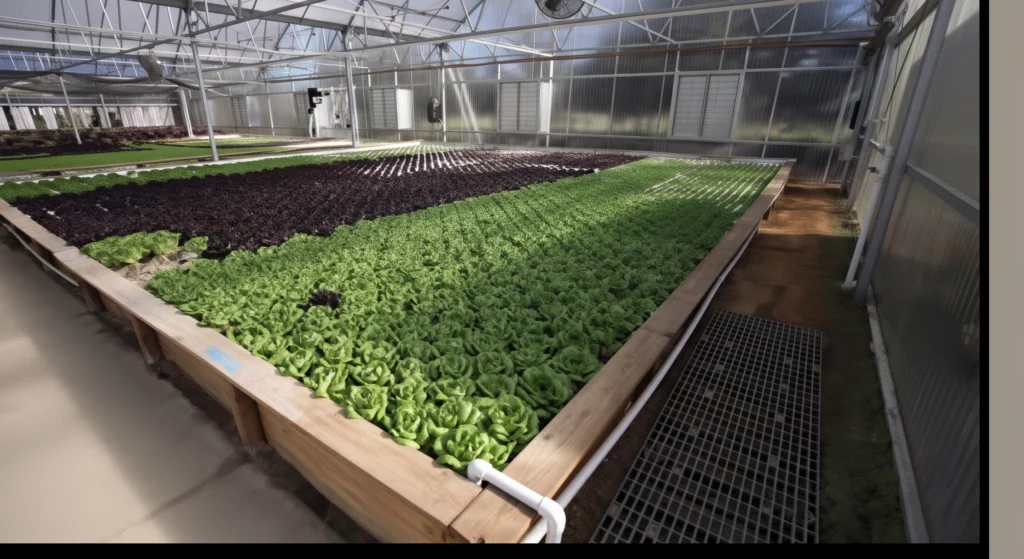
You learn more from the disasters than the textbook successes. Going into this run, I leaned heavily on principles adapted from commercial hydroponic tomatoes and peppers, but super-hots play by slightly different rules.
The Wins:
- Explosive Floral Sets: Bumping the EC to 2.4 mS/cm right at the first sign of floral initiation (combined with a phosphorus boost) resulted in virtually zero blossom drop.
- Capsaicin Density: The final harvest of Ghost Peppers was visibly oozing capsaicin oil inside the placental tissue. The heat was blinding, entirely due to pushing the late-stage EC to a punishing 3.8 mS/cm.
- Fruit Wall Thickness: Maintaining high calcium levels via a dedicated Ca(NO₃)2 line prevented the thin, papery walls that often plague indoor peppers.
The Fails:
- The Calcium Lockout Incident: In week six, I ramped the EC too fast while the grow room humidity dropped. The resulting high transpiration rate caused the plants to suck up water but leave the salts behind. The EC spiked over 4.5 overnight, locking out calcium. I lost an entire flush of early habaneros to Blossom End Rot (BER).
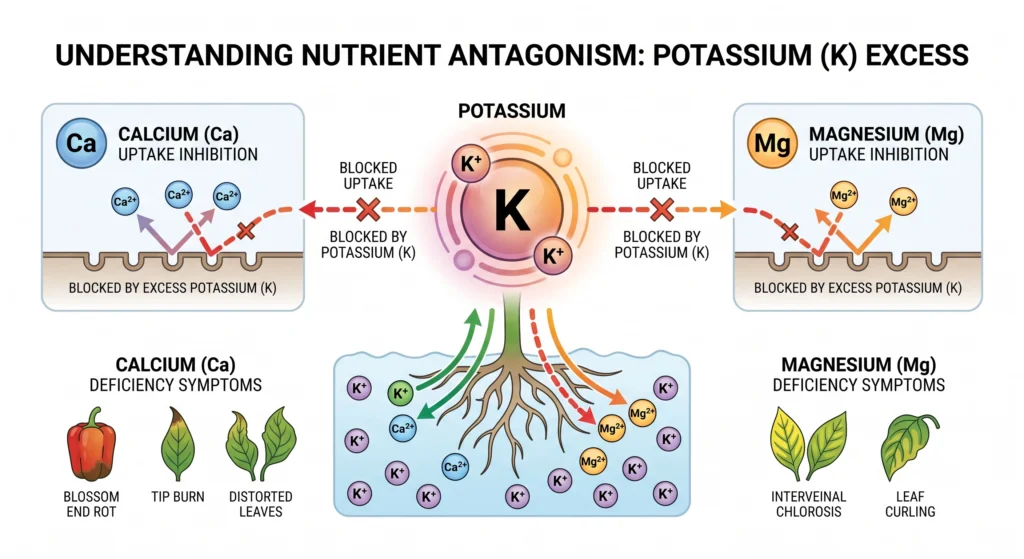
- Magnesium Deficiencies: As I pushed the potassium (K⁺) levels up for fruit ripening, the heavy K concentration antagonized magnesium (Mg²⁺) uptake. Lower leaves developed severe interveinal chlorosis before I corrected the ratio.
The Master Pepper EC Chart
Quick Summary: A phased pepper ec chart is critical for mapping out the crop’s lifecycle. EC levels should start low (0.8 mS/cm) during the seedling phase and aggressively peak (up to 3.8 mS/cm) during the final ripening phase to maximize fruit weight and capsaicin production.
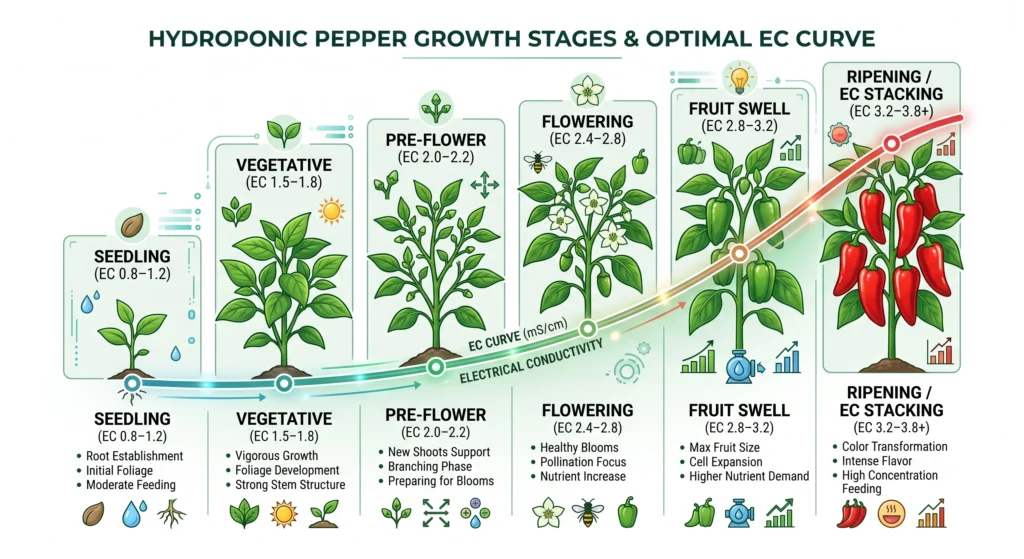
Based on daily logs, tissue responses, and yield metrics, I mapped out the exact pepper ec chart that yielded the best results for aggressive super-hots. Note that these metrics are specific to heavy-fruiting varieties.
| Growth Stage | Timeline | Target EC (mS/cm) | Target pH | Key Nutrient Focus |
| Seedling / Propagation | Weeks 1-3 | 0.8 – 1.2 | 5.8 – 6.0 | Balanced N-P-K, Root inoculants |
| Early Vegetative | Weeks 4-6 | 1.5 – 1.8 | 5.8 – 6.1 | High Nitrogen (NO₃⁻), Calcium |
| Late Vegetative / Pre-Flower | Weeks 7-8 | 2.0 – 2.2 | 6.0 – 6.2 | Transitioning to higher Phosphorus |
| Active Flowering / Fruit Set | Weeks 9-12 | 2.4 – 2.8 | 6.0 – 6.3 | Potassium (K⁺) and Calcium (Ca²⁺) |
| Fruit Swell | Weeks 13-16 | 2.8 – 3.2 | 6.0 – 6.2 | Peak Potassium, Magnesium |
| Ripening (EC Stacking Phase) | Weeks 17+ | 3.2 – 3.8+ | 5.8 – 6.0 | Osmotic stress, minimal Nitrogen |
You will notice a gradual pH climb during the vegetative stages, peaking at 6.3 during fruit set to optimize the uptake of heavy cations like Calcium and Potassium, before dropping slightly at the end to clear out residual salts. If you struggle with maintaining these exact ranges, I highly recommend reviewing our baseline hydroponic pH and EC guide.
Metrics Log: Executing the EC Stacking Technique
Quick Summary: Successfully executing EC stacking requires daily reservoir monitoring and a shift from nitrogen-heavy vegetative growth to a potassium-dominated fruiting profile. The metrics log proves that aggressive late-stage EC pushing triggers massive secondary metabolite responses.
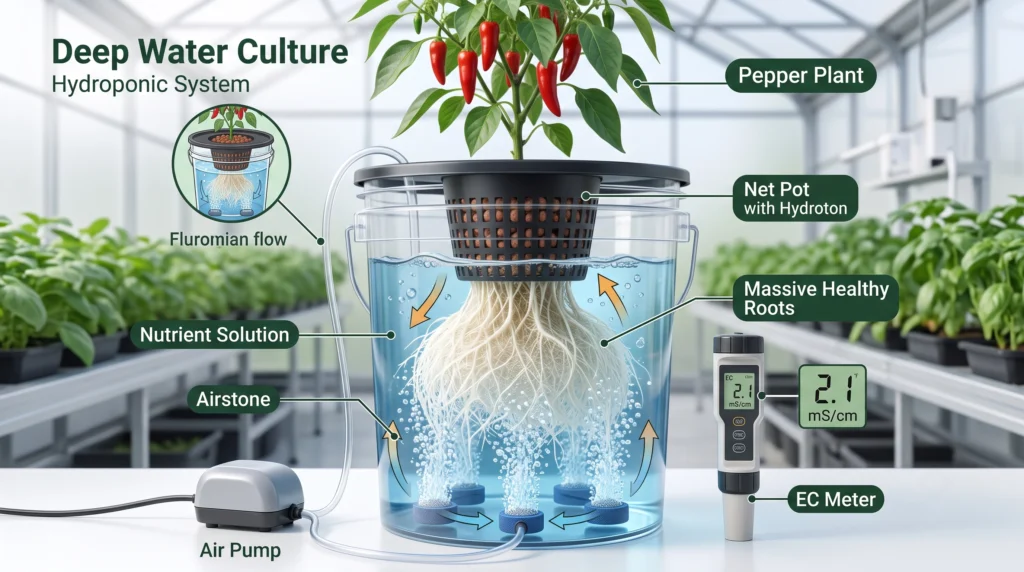
The heart of this field test was the daily monitoring of the nutrient reservoir. Here is how the EC stacking actually played out over the lifecycle of the crop.
Weeks 1-6: Building the Chassis
During the vegetative phase, the goal is structural integrity. Super-hots get heavy, and weak stems will snap under the weight of a dense canopy. I held the EC tightly at 1.8 mS/cm. The nutrient profile was heavy in calcium nitrate and magnesium sulfate. The plants grew thick, woody main stalks. Tracking daily water uptake showed a healthy, linear curve.
Weeks 9-12: The Shift to Generative Growth
As the first flowers appeared, I initiated the first stack. I raised the base EC from 1.8 to 2.4 mS/cm over a period of 4 days. This sudden bump in salinity acts as a generative cue, telling the plant to stop prioritizing leaf growth and start prioritizing reproduction. I swapped out the vegetative base nutrient for a bloom formulation heavy in monopotassium phosphate (KH2PO₄).
Weeks 13-16: The Potassium Push
Once the fruits were set and swelling, the demand for potassium skyrocketed. Potassium regulates the opening and closing of stomata and acts as the primary transporter for sugars into the fruit. I pushed the EC up to 3.0 mS/cm. At this concentration, you have to watch your pH closely. The plants were eating so much potassium that the reservoir pH was actively dropping overnight, requiring regular adjustments.
Weeks 17+: The Burn (Capsaicin Stacking)
This is where the magic happens. With the fruits reaching full size but still green, I stacked the EC aggressively up to 3.8 mS/cm. To do this safely without burning the roots, I used a clean potassium sulfate (K2SO₄) boost. The plants stopped drinking as much water because of the heavy osmotic pressure. The foliage looked a bit ragged—slight tip burn, a little drooping—but the fruit ripened rapidly, transitioning to vibrant reds and chocolates. The stress response worked perfectly.
Custom Hacks for Habanero EC Level and Beyond
Quick Summary: Standardizing the habanero ec level requires adjusting for the specific genetics of the plant. Using sulfate-based finishers, incorporating regular flush days, and manipulating reservoir temperatures can safely elevate the capsaicin profile without causing irreversible root damage.
Super-hots like the Reaper are incredibly resilient, but if you are targeting a specific habanero ec level (especially for milder or more flavor-focused varieties like the Habanada or standard orange Habanero), an EC of 3.8 might cause total defoliation. Here are the custom hacks I implemented to dial in the stress.
The “Sulfate Finisher” Hack
When stacking EC late in flower, you cannot just add more of your standard A/B base nutrient. Doing so adds too much nitrogen, which encourages the plant to revert to vegetative leaf growth, delaying ripening. Instead, I built the late-stage EC purely using Potassium Sulfate (K2SO₄) and Magnesium Sulfate (MgSO₄). Sulfates are highly soluble, boost essential oils and terpenes, and raise the EC rapidly without adding any unwanted nitrogen.
The Weekly Micro-Flush
When running your superhot pepper nutrients at extreme concentrations, salt buildup in the root zone is inevitable. To prevent toxic lockout, I implemented a 12-hour micro-flush every 7 days during the heavy fruiting phase. I would drop the reservoir EC down to a baseline 1.0 mS/cm using just reverse osmosis (RO) water and a mild enzymatic cleaner. The plants would gorge on the fresh water, flush accumulated salts from their vascular tissue, and prepare for the next heavy nutrient dose. (For more on this, check out our hydroponic nutrient schedule guide).
Reservoir Temp Manipulation
A secondary hack to increase mild stress is letting the reservoir temperature drift slightly upward during the final two weeks. Instead of keeping the water at a strict 68°F (20°C), I let the ambient room temperature pull the reservoir up to 74°F (23°C). This mildly decreases dissolved oxygen (DO) capacity, adding another layer of stress to force capsaicin production.
Gear Field Notes: What Actually Kept Things Alive
Quick Summary: Running high-EC reservoirs demands industrial-grade monitoring equipment and specific nutrient additives to prevent precipitation and root lockout. Relying on cheap pens or poor-quality base nutrients will result in catastrophic crop failure when pushing super-hots.
To pull off EC stacking, your telemetry has to be bulletproof. When you are hovering at an EC of 3.8, a calibration error of 0.2 mS/cm can be the difference between spicy peppers and dead plants.
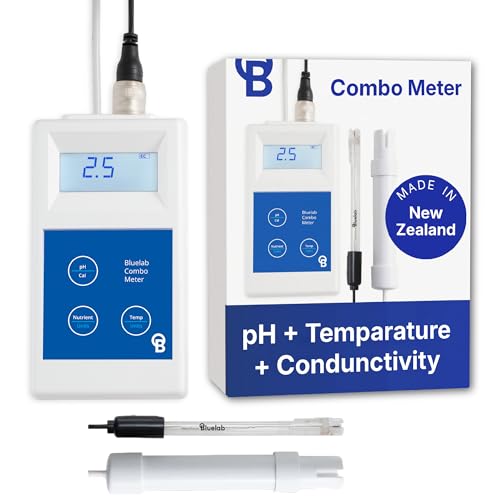
Why I use it: When you are constantly shifting the nutrient concentration, cheap ppm pens fail. The Bluelab Combo meter gave me instant, temperature-compensated EC and pH readings. I calibrated it weekly. When pushing osmotic stress, trusting your metrics is non-negotiable.

Why I use it: Pushing high salt concentrations stresses the root zone, making it susceptible to opportunistic pathogens like Pythium (root rot). Adding a robust biological inoculant kept the roots brilliant white even when they were swimming in a highly concentrated, slightly warmer reservoir.
What I’d Do Differently Next Run
Quick Summary: Future iterations of this EC stacking technique will require tighter control over Vapor Pressure Deficit (VPD) to match the root zone stress, alongside a more gradual transition into the final ripening phase to prevent premature leaf drop.
Looking back at the data logs, the final fruit quality was exceptional, but the plant stress management was a bit of a bumpy ride.
First, I will absolutely synchronize my Vapor Pressure Deficit (VPD) closer to the EC curve next time. When you raise the EC in the reservoir, the plant has a harder time absorbing water. If the grow room is too dry (high VPD), the air pulls water out of the leaves faster than the stressed roots can replace it, leading to severe crispy leaf margins. Next round, as I push the EC above 3.0 mS/cm, I will simultaneously raise the relative humidity in the room to lower the VPD, allowing the plant to “breathe” easier while dealing with the salty root zone.
Second, I will taper the nitrogen off much earlier. I kept a mild nitrogen feed running into week 12, which resulted in a massive, bushy canopy. While it looked impressive, it blocked light penetration to the lower fruit clusters. Transitioning to a pure phosphorus and potassium heavy bloom schedule by week 9 will keep the canopy open and redirect all energy to the pods.
Core Takeaways for Hydroponic Pepper EC Levels
Quick Summary: Successfully executing an EC stack for super-hots relies on phased nutrient delivery, prioritizing potassium and calcium, and utilizing controlled stress to force secondary metabolite production.
- Respect the Phases: Seedlings need low EC (0.8 mS/cm). Vegetative growth needs structural support (1.8 mS/cm). Fruiting demands heavy loading (2.8+ mS/cm).
- Stress Equals Heat: Capsaicin is a stress response. Pushing the EC past 3.0 mS/cm safely simulates drought, forcing the plant to build thick, blisteringly hot fruit.
- Watch the Antagonism: Heavy potassium doses during fruiting will lock out calcium and magnesium. Always supplement heavily with a quality Cal-Mag product.
- Flush Regularly: High-EC reservoirs accumulate unusable salts quickly. Implement a micro-flush with plain, pH-balanced water every 7-10 days to reset the root zone.
- Drop the Nitrogen Late: Do not use vegetative base nutrients during the ripening phase. Build your final EC stacks using Potassium Sulfate to avoid pushing the plant back into leafy growth.
Frequently Asked Questions (FAQ)
Quick Summary: Growers often struggle with translating general hydroponic advice to the specific, heavy-feeding demands of super-hot peppers. Addressing common issues like flower drop, ideal habanero levels, and salt buildup is critical for success.
What is the ideal hydroponic pepper ec level for a standard habanero vs a super-hot like a Reaper?
A standard habanero generally peaks happily around an EC of 2.4 to 2.8 mS/cm. Pushing it higher can cause unnecessary leaf drop without significantly improving flavor. Super-hots (Reapers, Ghosts, Scorpions) have a much higher ceiling and will handle an EC of 3.2 to 3.8 mS/cm during the late fruiting stage to maximize capsaicin production.
Why are my pepper flowers falling off before they form fruit?
Blossom drop in hydroponic peppers is almost always tied to environmental stress or nutrient imbalance. The most common causes are temperatures exceeding 85°F (29°C), a sudden drop in humidity, or a lack of phosphorus and potassium. Bumping your EC with a bloom-specific nutrient formulation usually resolves the issue.
Can I use standard tomato nutrients for my super-hot peppers?
Yes, but with caveats. Tomatoes and peppers share a similar biological profile, but peppers generally prefer slightly less nitrogen during the vegetative stage and tolerate a much higher EC during the late fruiting stage. You can use a tomato base, but you will need to supplement heavily with potassium sulfate late in the run.
How do I know if my EC is too high and I am causing nutrient lockout?
Watch the leaf tips. The first sign of salt toxicity (EC too high) is u0022tip burn,u0022 where the very edges of the leaves turn brown and crispy. If you see this, check your reservoir. If the EC is rising daily while the water level drops, the plants are drinking water and leaving the salts behind. You must immediately dilute the reservoir with fresh water.
Do I need to adjust my pH when I start EC stacking?
Yes. As you push high levels of potassium and phosphorus into the system, the pH will naturally tend to drop as the plant actively uptakes these large cations and excretes hydrogen ions in exchange. Check your pH daily and keep it firmly in the 5.8 to 6.2 range to ensure calcium remains available.
Is a DWC or Dutch Bucket system better for growing super-hots?
Both work exceptionally well. DWC provides explosive early vegetative growth due to the massive oxygenation of the root zone. However, for a mature, top-heavy pepper plant, Dutch buckets offer superior physical support and make it much easier to perform the frequent reservoir flushes required when running high EC levels.
The Final Harvest
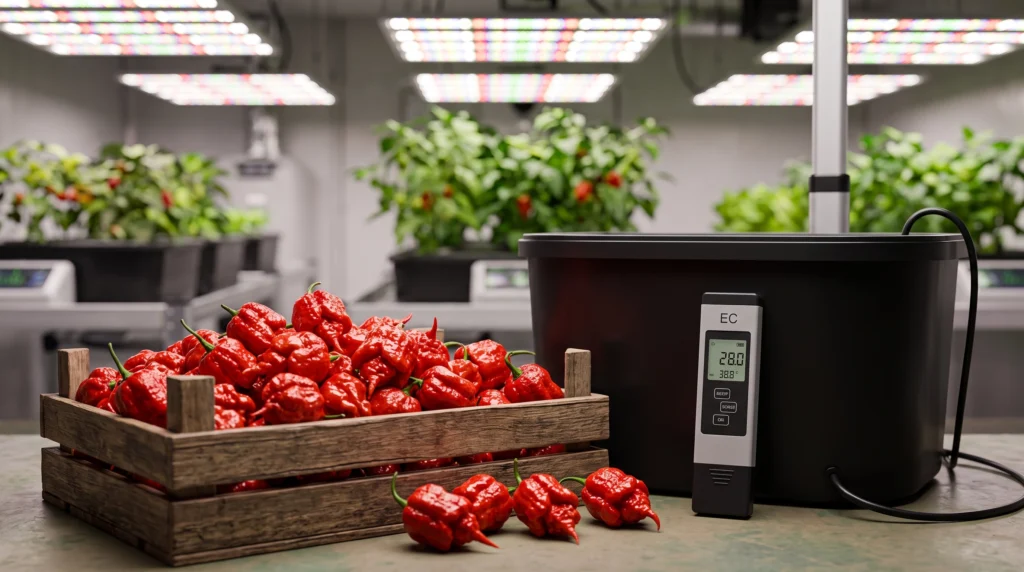
By closely monitoring your pepper ec chart, reacting to what the plant foliage is telling you, and leaning into the chemistry of potassium and calcium interactions, you can produce peppers that are thicker, heavier, and violently hotter than anything grown in traditional soil. It requires discipline, flawless metrics, and the willingness to push the boundaries of standard hydroponic advice.
Ready to expand your indoor harvest?
Mastering your current system is just the beginning. Whether you are looking to dial in massive leafy greens, experiment with heavy-feeding fruiting plants, or troubleshoot a specific root zone, success comes down to crop-specific blueprints. Explore All Hydroponic Crop Guides →

Continue Your Learning Journey