Hydroponic CSA & Subscription Models: Recurring Revenue for Small Farms

Table of Contents
- The Economics of CSA vs. Subscriptions
- Sizing Your Subscription Business (The Math of Break-Even)
- Designing Tiers & Volumetric Packing Standards
- Sourcing Reusable Gear & Capital Budgeting
- Logistics: Zone Routing & Density Math
- Subscriber Retention & Financial Safeguards
- Recommended Gear
- Frequently Asked Questions
- Conclusion
Disclosure: MistCulture summarizes verified product specs, engineering data, and community feedback. We may earn an affiliate commission if you purchase through our links. Regulations vary by location; this content is for educational purposes only.
Recurring revenue is the dividing line between a hydroponic farm that confidently forecasts its growth and a farm that perpetually panics over weekly sales. When you transition from relying entirely on unpredictable farmers’ market foot traffic or wholesale restaurant orders to a direct-to-consumer recurring model, you stabilize your cash flow. As we continuously track in the mistculture-master-workbook.xlsx, financial predictability is the bedrock of scaling any controlled environment agriculture operation.
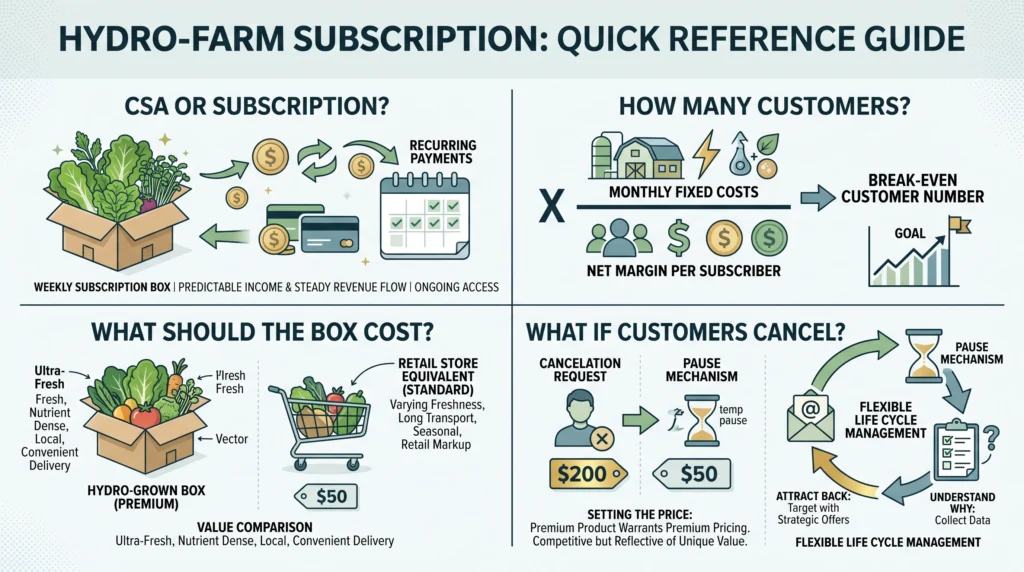
Two primary models dominate the direct-to-consumer farm space: Community Supported Agriculture (CSA) and the subscription box. While both serve to generate recurring revenue, they attract different customer bases, require different accounting practices, and carry vastly different operational expectations.
The Economics of CSA vs. Subscriptions
To scale a small commercial farm, you must solve a fundamental economic riddle: how to replace unpredictable sales with stable, recurring revenue. Relying on farmers’ market foot traffic, seasonal wholesale restaurant orders, or volatile weather-dependent retail sales makes it nearly impossible to confidently forecast growth, manage labor, or secure business expansion capital. Transitioning to a direct-to-consumer recurring model changes the equation, turning volatile harvests into predictable cash flow streams.
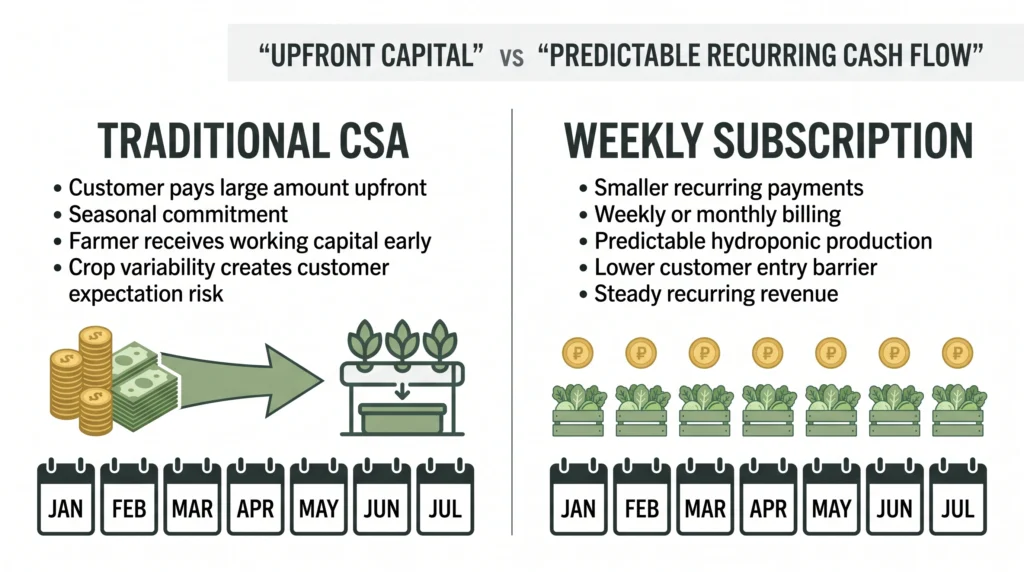
In the direct-to-consumer farm business space, two primary recurring revenue models dominate: the traditional Community Supported Agriculture (CSA) model and the modern Weekly Subscription Box. While both models are designed to secure recurring revenue, they attract different customer bases, dictate different operational workflows, and carry vastly different cash flow timelines.
Risk-Sharing Agreement: Customers legally accept the shared risk of bad weather, pest outbreaks, and poor crop yields.
Operational Match: Designed for field-based, seasonal, single-harvest farms with unpredictable summer bumper yields.
Customer Promise: Zero shared risk. The climate-controlled indoor farm guarantees consistent quality and weight in every box.
Operational Match: Engineered to match continuous, year-round, staggered hydroponic crop production timelines.
Upfront Seasonal Capital vs. Predictable Hydroponic Cycles
A traditional CSA model requires customers to pay for their entire seasonal share upfront, typically as a single lump-sum prepayment before the first seed is even planted. The advantage of this model is that the farmer receives an immediate surge of working capital to purchase critical inputs, such as bulk grow media, nutrients, seeds, and system upgrades. However, this upfront cash comes with a heavy customer service expectation: the subscriber accepts the agricultural risk. If a sudden freeze or a pest infestation ruins the outdoor field crops, the subscriber’s weekly box shrinks in variety and volume.
For a modern, climate-controlled indoor farm, this traditional CSA model creates an friction point. Because you are growing in an engineered, highly optimized environment, manipulating photosynthetic light with standard PAR curves and dosing mineral salts precisely with automated dosing controllers, your crop yields are remarkably steady and predictable week over week. You do not suffer from the extreme seasonal booms and busts of soil farming.
A Weekly Subscription Box Model aligns perfectly with this steady year-round hydroponic output. Instead of asking customers to commit $600 upfront before seeing a single leaf, they pay on a weekly or monthly pay-as-you-go basis. This significantly lowers the barrier to entry, making it easy for customers to join. Furthermore, because your output is highly predictable, you completely bypass the difficult “why is my box so empty this week?” conversations that traditional CSA farmers must navigate during seasonal field crop shortages. For a comprehensive look at how different growing system choices affect these startup and continuous operating budgets, explore our guide on Hydroponic System Cost & Budget Breakdowns.
Sizing Your Subscription Business (The Math of Break-Even)
To build a sustainable subscription program, you must move past loose financial estimates and establish precise mathematical formulas. Indoor farms are high-efficiency, intensive operations with specific fixed costs (such as LED grow light power draw, ventilation fans, lease payments, and SaaS subscription billing tools) alongside variable expenses (including single-use packaging bags, delivery vehicle fuel, and raw seeds). Sizing your required customer base requires balancing these inputs against your weekly yield capacities.
Calculating the Profit and Break-Even Equations
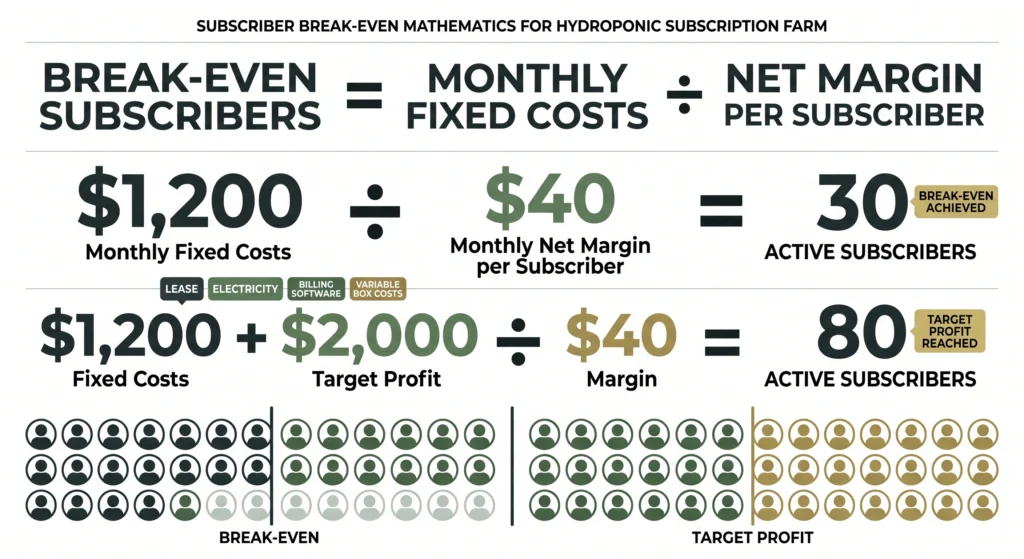
To determine how many active subscribers you need to reach profitability, you must establish your Net Margin per Box. First, split your costs into Fixed and Variable columns. Your Monthly Fixed Costs ($FC$) represent your overhead expenses that do not change regardless of how many boxes you pack. Your Variable Cost per Box ($VC$) represents the exact incremental expense to fulfill a single box.
Let us define your monthly profitability with the following mathematical equations:
Using these metrics, your Break-Even Subscriber Target is calculated as:
To run a healthy operation, you must target more than a simple break-even. To reach a specific Target Net Profit ($Ptarget), structure your target customer base using this formula:
For example, if your monthly farm lease, electrical power, and billing software total $1,200 in Monthly Fixed Costs, and you earn a healthy $40 net margin per month from each subscriber, your break-even point is exactly 30 active subscribers ($1,200 / $40). To hit a target monthly net profit of $2,000, you would need to scale your system to support exactly 80 active subscribers (calculated as: ($1,200 + $2,000) / $40). To calculate the exact raw power and water costs of your indoor equipment before setting these final box margins, plug your hardware specs into our free Hydroponic Cost & ROI Calculator.
Farm Break‑Even & Subscriber Sizer v2.0
Input your monthly operating costs and target margins to calculate the exact number of subscribers and yields required for profitability.
Managing Cash Flow: Sizing Your Buffer and Capital Limits
When running a direct-to-consumer farm subscription program, you must carefully monitor your customer base size. If you operate below your break-even point for even a few months, your fixed costs will quickly drain your capital reserves, leading to farm insolvency. To safeguard your cash flow, you must maintain a healthy operating buffer.
To project your weekly harvests and ensure your grow room is capable of producing the required volume, utilize our free, browser-based Hydroponic Yield & Harvest Calculator.
Designing Tiers & Volumetric Packing Standards
In a direct-to-consumer agricultural subscription program, your packing table is the physical bottleneck of your business. As your customer base scales from 10 to 100+ active households, the time spent sorting, weighing, and packing individual boxes will quickly consume your weekly labor schedule. If your product offerings are overly complex, your team will lose hours dealing with customizable orders, leading to packing mistakes and delayed deliveries. To run a profitable farm, you must simplify your pricing tiers and establish strict, physics-backed volumetric packing standards.
Streamlining Product Tiers for Packing Line Efficiency
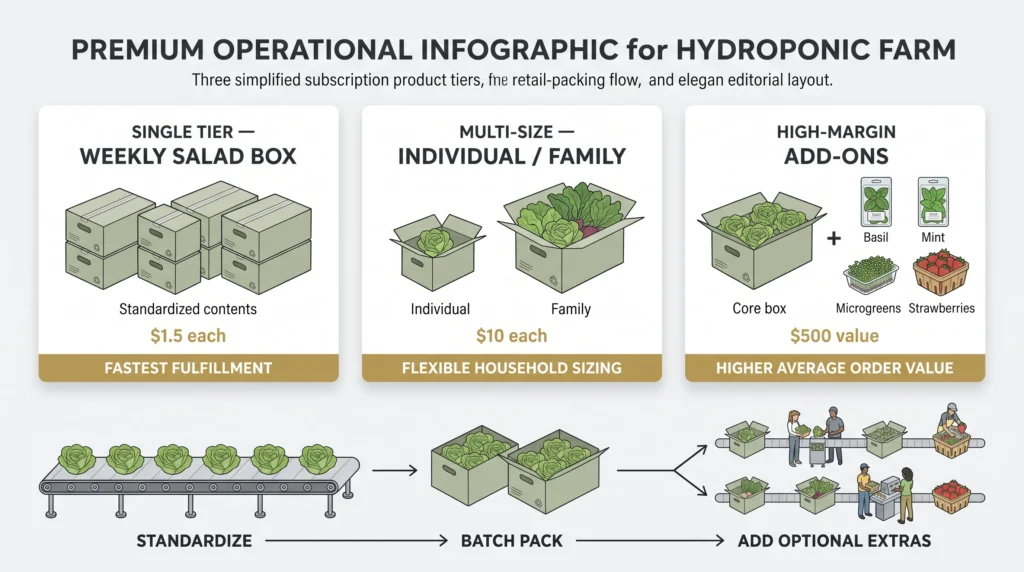
When designing your subscription tiers, the operational goal is to make it as easy as possible for a customer to select their box size while maximizing the throughput of your fulfillment line. A common beginner mistake is offering complete box customization (allowing customers to pick every single individual crop weekly). While customization sounds attractive to consumers, it introduces severe sorting confusion and halts your packing line. To maintain speed, standardize on these three simplified subscription tiers:
📦 The Single Tier (The Weekly Salad Box)
This is the most operationally efficient model. You offer one standard, high-density product bundle at a single fixed price (e.g., $30/week). Because every single subscriber gets the exact same set of crops, your packing line can operate at lightning speeds, pre-assembling boxes in massive batches without checking customer spreadsheets.
📦 The Multi-Size Tier (Family vs. Individual Sizing)
Offering a “Small” (Individual) and “Large” (Family) box size allows households to self-select based on active vegetable consumption. This single operational pivot prevents small households from canceling due to produce waste, while capturing higher average basket values from larger families.
📦 High-Margin Add-On Items
Instead of customizing the entire box, keep your core crop selections fixed and offer simple “Add-On” products at checkout. Hydroponic culinary herbs, potted microgreens, and sweet strawberries act as excellent high-margin fillers. They require minimal physical grow space on vertical racks, can be pre-packed, and significantly boost your average order value (AOV) with zero disruption to your primary box assembly. To match the perfect high-margin crops to your current footprint, check out the Interactive Plant Selection & Match Tool.
The “Heaviest‑on‑Bottom” Volumetric Stacking SOP
Volumetric Stacking Physics: The Heaviest-on-Bottom SOP
Hydroponic crops are living, high-moisture tissue structures. Unlike tough field carrots or thick-skinned onions, freshly harvested indoor leafy greens are highly vulnerable to physical trauma. When stacking crops inside a reusable delivery tote, you must apply the laws of static physical load balancing. Fulfilling boxes in a random, disorganized sequence leads to crushed canopies, broken stems, and rapid bruising, which ruins the customer opening experience.
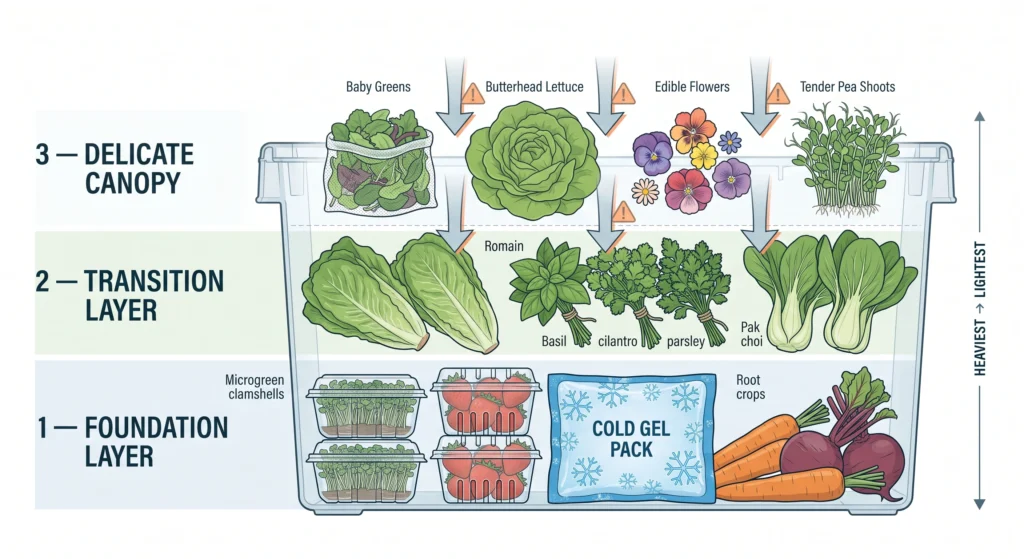
To eliminate post-harvest crop damage, enforce a strict Heaviest-on-Bottom Stacking Standard Operating Procedure (SOP) inside your facility. Deliveries must be packed in three distinct vertical zones:
- The Foundation Layer (Bottom): Place your heaviest, most structurally rigid packaging units on the bottom of the box. This includes heavy plastic clamshells of microgreens, punnets of strawberries, cold gel-packs, or solid root crops. This forms a rigid floor that safely carries the total cargo weight without flexing.
- The Transition Layer (Middle): Place semi-dense, structurally supportive crops in the center. Tight heads of romaine lettuce, bundle culinary herbs, and thick-stemmed pak choi belong in this zone. These crops can withstand minor shifting and light horizontal pressure without damage.
- The Delicate Canopy Layer (Top): Reserve the top of the box exclusively for loose baby greens, butterhead lettuce, edible flowers, and fragile pea shoots. These high-volume, low-weight items are easily crushed and must sit loosely at the top of the stack, protected from any compression forces.
Box Density Mathematics: Balancing Weight with Volume
To prevent your delivery vehicle from carrying boxes filled with mostly empty air, you must calculate your target Box Density Ratio. Sizing your delivery totes requires matching the physical volume of your crops with their raw harvest weight. Baby salad greens are exceptionally low-density, occupying massive space at low weights. For example, a single pound of baby arugula requires nearly five times more physical box volume than a single pound of dense microgreens.
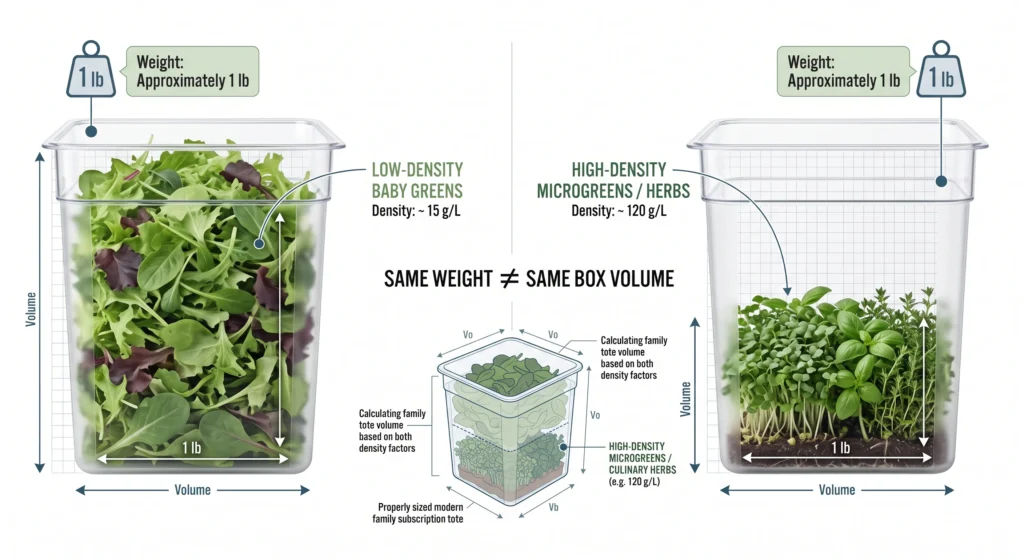
To calculate your target container size, use this box volume equation:
Example: For a standard weekly family share consisting of 1.5 lbs of loose baby salad greens (density: ~15 g/L) and 1 lb of potted microgreens/herbs (density: ~120 g/L), the volumetric requirement is:
📊 To calculate your farm’s weekly yield outputs in pounds before mapping out these final box volumes, utilize our browser-based Hydroponic Yield & Harvest Calculator.
Sourcing Reusable Gear & Capital Budgeting
Once you have standardized your subscription tiers and locked down your volumetric box-packing physics, you must address the physical vessels of your delivery network. A common pitfall for startup farm businesses is treating packaging as an afterthought, selecting materials based solely on the lowest upfront purchase price. In a continuous, year-round hydroponic subscription program, packaging choices directly dictate your operating margins, localized cold chain security, and delivery labor times. To secure maximum profitability, you must perform a strict lifetime cost-benefit analysis of your delivery assets.
The Deceptive Trap of Single-Use Cardboard Boxes
Most traditional farms and CSAs package their weekly produce in standard single-use corrugated cardboard boxes. While cardboard is cheap upfront (typically costing between $1.50 and $2.50 per box), it is a continuous operational and financial leak.
Reusable Delivery Gear Budget Tracker v2.0
Select your required subscription scale below, then check off components as you source them to dynamically calculate your upfront gear capital budget.
Securing the Cold Chain: Thermal Liners & Ice Pack Thermodynamics
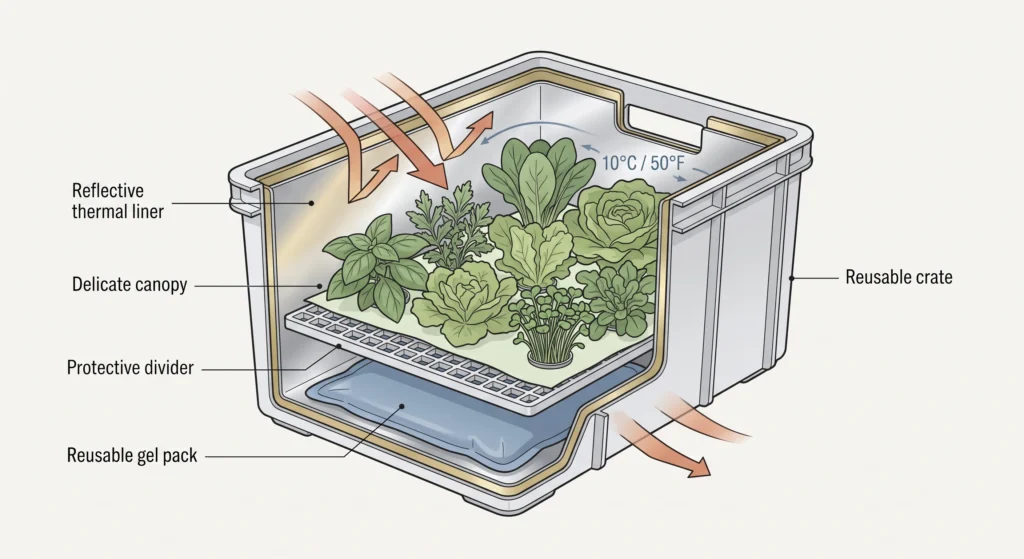
Maintaining a strict, uninterrupted cold chain is the single most critical factor in preserving the post-harvest shelf life of hydroponic crops. Once leafy greens, microgreens, or fresh herbs are harvested, they continue to transpire and respire. If their internal tissue temperature rises above 10°C (50°F), their decay rate accelerates exponentially, causing rapid wilting, yellowing, and nutrient degradation.
This requires equipping your reusable plastic delivery crates with thermal shielding:
🧊 Reflective Insulated Box Liners
Sourced to fit snugly inside your standard plastic totes. These dual‑layer, bubble‑wrapped foil liners act as a physical heat‑barrier, reflecting up to 97% of ambient radiant energy away from your produce.
🧊 Phase‑Change Gel Packs
Sourced as reusable, non‑toxic gel refrigerant sheets. Never let bare ice touch delicate baby greens, as direct contact will freeze the water inside the plant’s cells, rupturing the cell walls and leaving mushy, black leaves. Place your gel packs at the absolute bottom of the crate (Level 1), separated from your delicate canopy layer by a protective structural divider or card layer.
Administrative Gear: Smudge‑Free Labeling & Mobile Payment Hubs
Beyond physical boxes and coolers, managing an efficient subscription route requires professional administrative hardware. If your delivery driver must manually consult paper address lists and hand-write label details at every stop, your route times will balloon, driving up labor costs and risking critical routing errors.
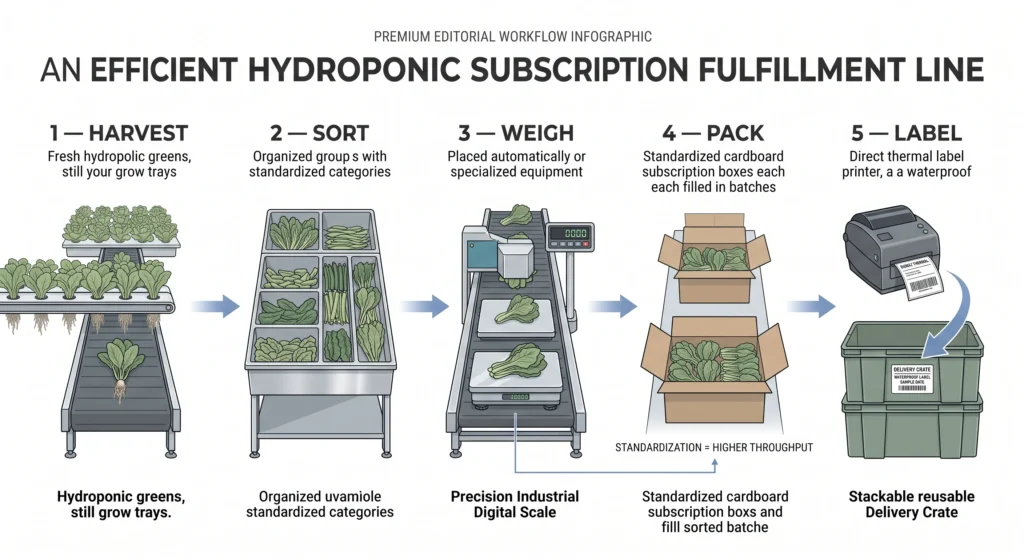
To streamline your route operations, source a dedicated Direct Thermal Label Printer for your packing line. Direct thermal printers do not use ink cartridges or toner, meaning your labels will never smudge when exposed to water droplets, reservoir moisture, or wet hands. Pair this printer with waterproof, synthetic polyester direct thermal labels.
📖 To learn more about standard commercial farm abbreviations and technical definitions, check out our Hydroponics A‑to‑Z Technical Glossary.
Logistics: Zone Routing & Density Math
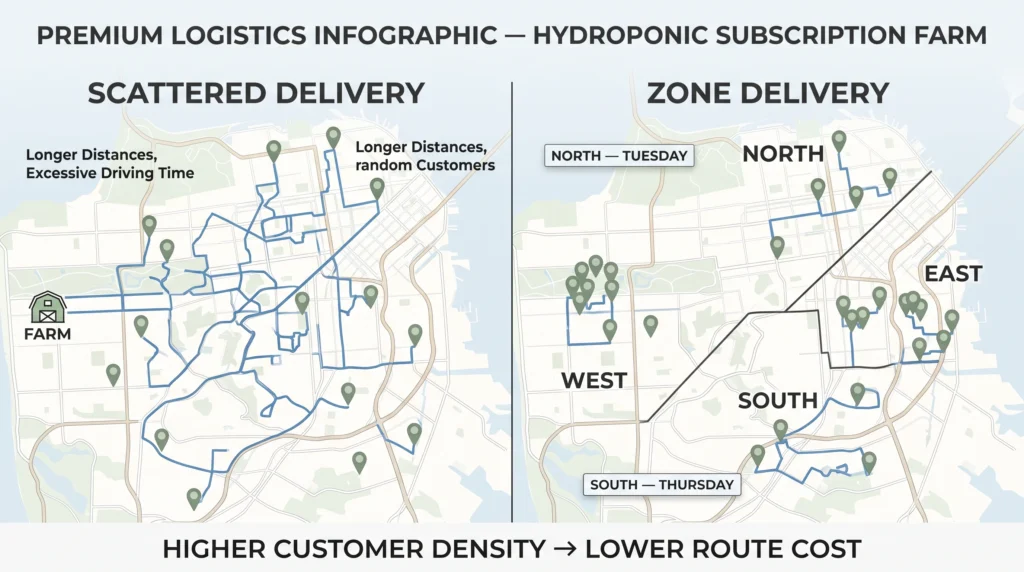
In a direct-to-consumer farm subscription business, your delivery vehicle is a mobile extension of your farm. A common agricultural business trap is focusing entirely on maximizing harvest yields while neglecting the physical distribution pipeline. If your delivery driver has to cross from one side of the city to the other to drop off a single $30 salad box, your fuel costs and driver labor hours will quickly wipe out 100% of your product profit margin. To run a sustainable delivery operation, you must treat your routing network with strict mathematical rigor.
The Zone Delivery Rule: Curbing Route Mileage and Labor Waste
To eliminate unprofitable, chaotic delivery runs, you must enforce a strict Zone Delivery Rule. Under this operational protocol, you divide your target urban or suburban delivery territory into distinct geographic sectors (such as North, South, East, and West). Instead of allowing subscribers to choose their preferred delivery day, you assign a single, non-negotiable delivery day to each specific zone (e.g., North Zone on Tuesdays, South Zone on Thursdays).
📊 To understand how these distribution overheads fit into your broader agricultural start‑up plan, review our Hydroponic System Cost & Budget Breakdowns.
Evaluating Route Efficiency: The Route Profitability Ratio
To verify if a specific delivery route is economically viable, you must continuously calculate your Route Profitability Ratio (Rprofit). This ratio evaluates the total revenue generated on a specific route against the combined cost of driver labor and vehicle operating expenses:
Where your Vehicle Operating Costs are calculated using your total route distance (miles) multiplied by the standard IRS mileage rate (or localized equivalent) to account for fuel, insurance, and vehicle wear-and-tear:
Let us run the math for two contrasting scenarios on a delivery route utilizing a driver paid at $20/hour and a vehicle cost of $0.67 per mile:
Revenue: $300
Expenses: $80 labor + $40.20 mileage = $120.20
Revenue: $750
Expenses: $60 labor + $10.05 mileage = $70.05
📊 To analyze how different cropping systems can yield the physical volumes needed to support high‑density subscription runs, run your setup through our free Hydroponic Yield & Harvest Calculator.
The 48‑Hour Harvest‑to‑Door Pipeline
Crops are harvested early in the morning when tissue turgor pressure is highest and sugar content is locked in. Stems are cut with sanitized shears to prevent leaf bruising.
Freshly cut crops are moved immediately into cold storage. Forced‑air cooling drops internal leaf temperatures from grow‑room ambient down to 4°C (39°F) in under 2 hours, halting post‑harvest respiration.
Within a 4°C workspace, operators sort crops and apply the “Heaviest‑on‑Bottom” stacking rules. Reusable plastic totes are labeled with zone‑specific delivery routes.
Crates packed with thermal bubble liners and reusable gel ice sheets are loaded into delivery vehicles. Drivers execute geographic routes mapped to minimize total travel time.
The driver places the packed, temperature‑protected box on the subscriber’s doorstep or slides it directly into their designated outdoor cooling cooler, retrieving the previous week’s clean tote.
Drop‑Off Hubs: Maximizing Density in Fragmented Markets
If your farm business operates in a highly spread‑out, fragmented suburban market where you cannot achieve the target density of 4 home deliveries per mile, home delivery ceases to be a viable option. Attempting to force home drop‑offs in these low‑density areas will exhaust your delivery budget and force you to raise subscription box prices, driving away customers.
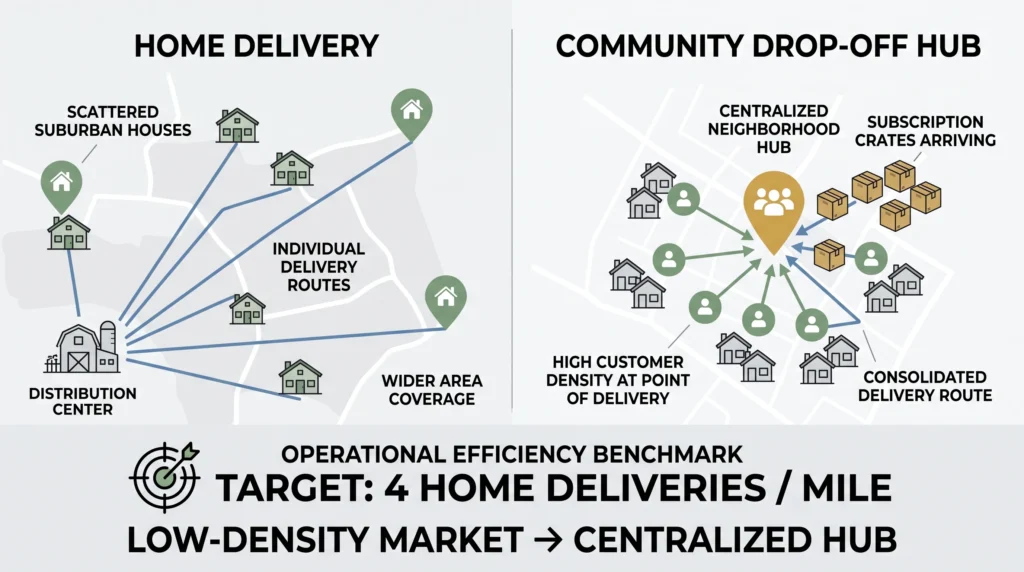
To capture these spread‑out customers profitably, you must implement a network of Community Drop‑Off Hubs. A drop‑off hub is a centralized, high‑density collection point, such as a friendly local coffee shop, yoga studio, boutique grocery store, or community center, that agrees to host your weekly subscription boxes.
🌱 To evaluate which crops are best suited for rapid, high‑margin production to supply these local hubs, consult our master match manual: Greens vs Fruit: Best Hydroponic System Match Guide.
Subscriber Retention & Financial Safeguards
Acquiring a new farm subscriber requires a significant marketing and sales effort, but retaining an existing customer costs nearly nothing. In a recurring revenue model, your most critical business metric is not your total sales volume, it is your Customer Retention Rate (or Churn Rate). If you lose 10% of your subscriber base every month, your business is constantly leaking money, requiring you to spend your hard-earned margins on continuous marketing just to maintain your baseline break-even point. To secure long-term profitability, you must implement relationship-focused retention protocols and establish strict bookkeeping rules to manage unearned cash.
The Unit Economics of Churn: Lifetime Value vs. Acquisition Costs
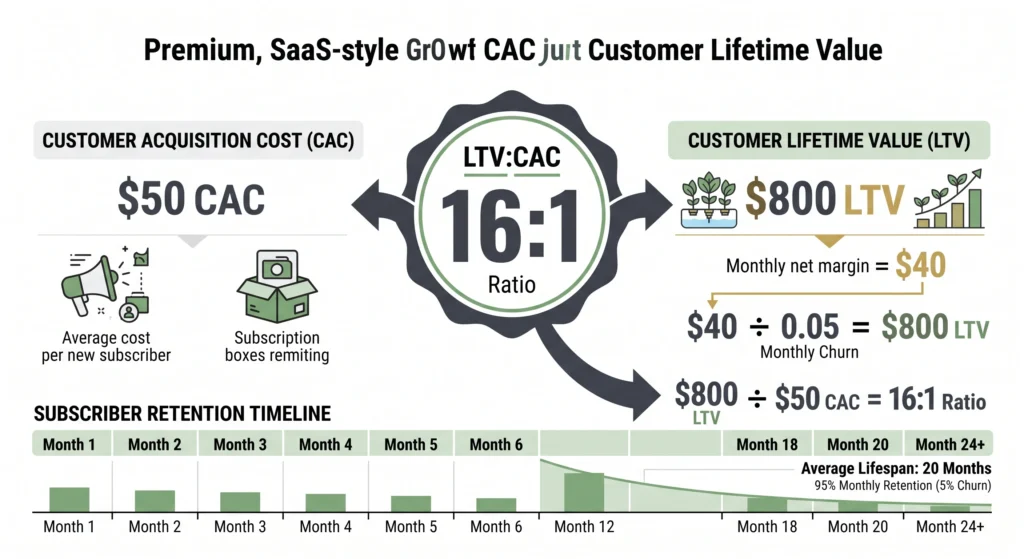
To measure the health of your subscription business, you must track the relationship between two vital commercial metrics: Customer Acquisition Cost (CAC) and Customer Lifetime Value (LTV).
- Customer Acquisition Cost (CAC): This is the total money spent on marketing, advertising, printing flyers, and offering signup discounts, divided by the number of new customers acquired during that period.
- Customer Lifetime Value (LTV): This is the total net margin a single customer generates for your farm over their entire relationship with your brand before canceling their subscription.
LTV is calculated with the following equation:
Example: If a subscriber pays a box price that yields a $40 monthly net margin, and your average monthly customer churn rate is 5% (0.05), the projected LTV of that customer is $800 ($40 ÷ 0.05). If you spent $50 in advertising to acquire that customer (CAC = $50), your LTV to CAC ratio is 16:1, indicating a highly profitable marketing model.
📊 To model your farm’s LTV and see how churn rates alter your annual profit margins, run your metrics through our interactive forecaster tool below.
Subscription Churn & LTV Forecaster v2.0
Plug in your monthly box margins, churn rates, and marketing acquisition costs to instantly project customer lifetimes and identify financial leaks.
Managing the Vacation Hold Buffer: Self‑Serve Pausing Mechanics
To reduce customer cancellations, you must introduce flexibility into your administrative software. Life happens: customers go on vacations, experience produce surpluses, or occasionally need to skip a delivery.
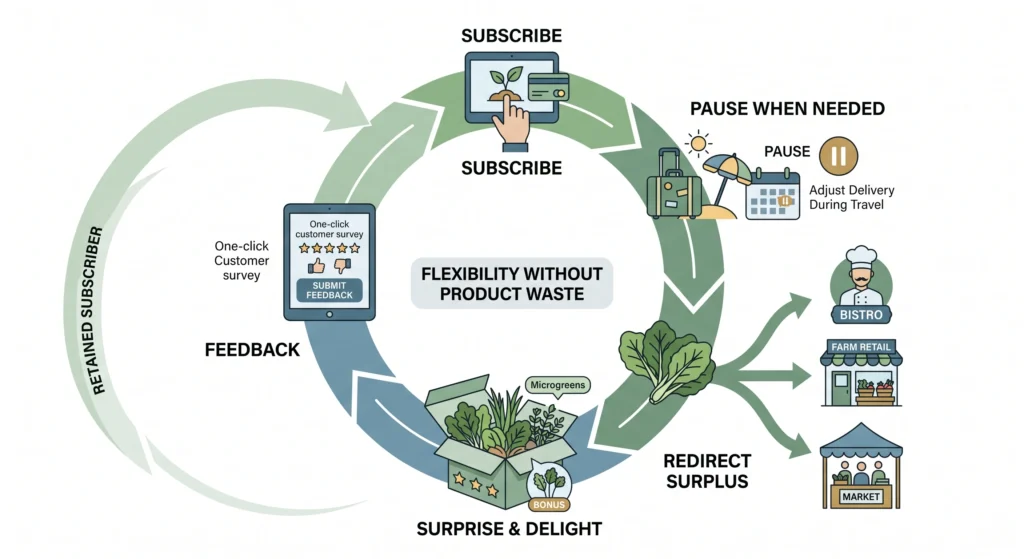
However, allowing subscription holds introduces a physical planning challenge for your harvest schedule. If 5% to 12% of your customer base pauses their deliveries weekly, you will end up with a corresponding surplus of fresh, perishable hydroponic produce inside your facility. Because plants cannot be paused once they are in their peak harvest window, you must utilize the Holds Buffer Safety Margin. Divert this surplus weekly produce into secondary, high‑margin sales channels, such as local restaurant walk‑ins, on‑farm retail sales, or a localized farmers’ market stand. This ensures that paused boxes do not result in agricultural waste or lost revenue.
📊 To coordinate your staggered planting schedules to account for these weekly holds, input your system dimensions into our Hydroponic Yield & Harvest Calculator.
The “Surprise‑and‑Delight” Retention Loop
To keep subscribers engaged over several months, you must transition your customer relationship from a dry transaction into an active partnership. To accomplish this, implement these three simple, relationship‑building protocols:
🎁 Surprise‑and‑Delight Injections
Keep your weekly boxes exciting by dropping in small, unexpected bonus items. A trial bunch of a rare, peppery mustard green, a fresh bundle of lemon basil, or a tiny pot of microgreens costs your farm pennies to produce on a vertical rack, but leaves a massive, high‑value impression on the subscriber.
📖 Direct Value Communication
Always include a simple printed card inside your delivery crates. Use this card to list the exact crops inside the box, share a healthy recipe, and explain the science of how they were grown (e.g. noting that the greens were harvested just four hours ago using 95% less water than field‑grown equivalents). This turns a simple head of lettuce into an educational experience.
📋 Continuous Monthly Feedback Loops
Send out a brief, single‑click survey to your subscribers every month. Ask what crops they enjoyed, which ones stayed in their fridge too long, and what they would like to see in future boxes. Subscribers who feel their preferences are actively shaping the farm’s planting schedules are far more loyal and show exceptionally low churn rates. If you encounter nutritional issues or leaf curling while attempting to dial in these customer‑favored crops, diagnose your reservoir metrics instantly using our diagnostic MistCulture Hydro Doctor Tool.
Accounting for Deferred Revenue: The Separate Account Rule
While mastering relationship‑building retains customers, securing your farm’s financial survival requires strict adherence to accounting standards. When a customer signs up for a multi‑week or multi‑month subscription program, they pay you upfront. For example, if a customer prepays $120 for four weeks of deliveries, a common bookkeeping mistake is recording that entire $120 as immediate earned revenue.
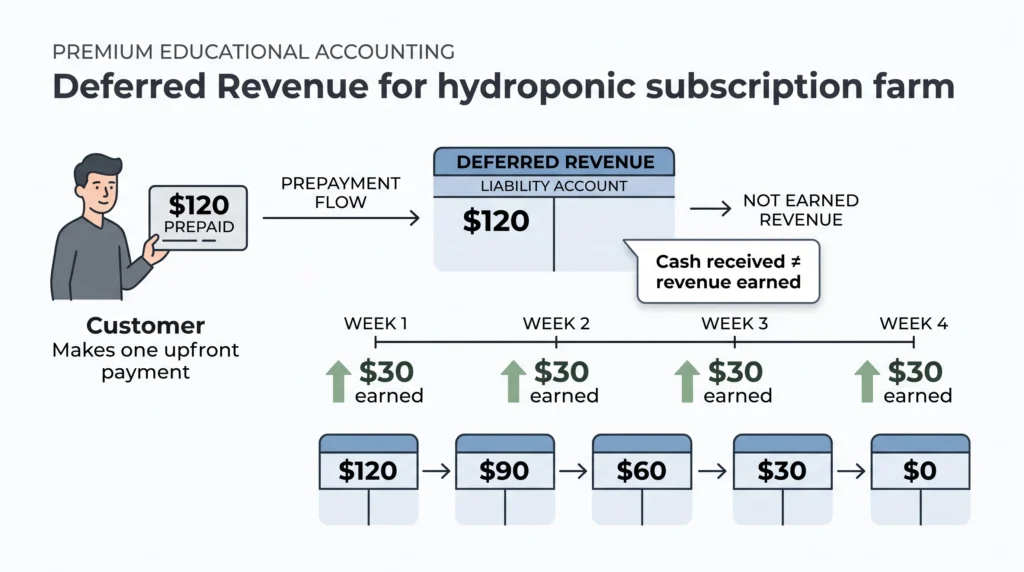
Finally, strictly track your local sales tax liabilities for direct‑to‑consumer farm sales. State regulations vary significantly regarding tax assessments on agricultural products. To safeguard your cash flow from unexpected tax audits, establish a 25% tax holdback margin on all gross revenue, transferring these funds automatically into a dedicated tax ledger.
📊 To analyze your complete crop expenses and running costs before setting these final box prices, input your operational hardware parameters into our free Hydroponic Operating Cost & ROI Calculator.
Recommended Gear

- biodegradable pulp fiber
- Classic green, molded pulp berry/produce baskets are ideal for displaying your fresh produce. Perfect for farmer’s marke…
- A simple, functional basket with slotted sides for ventilation. Eco-friendly and compostable.
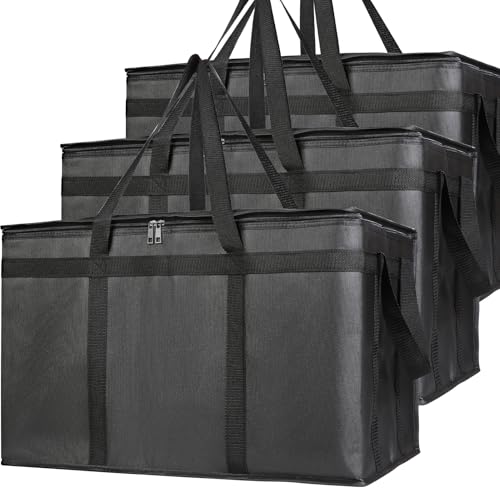
- 【Capacity Size】23″W x 15″H x 14″D. Capacity of 79L/20.5 gallons. This large thermal shopping bag is very suitable for me…
- 【Keep Food Temperature】The insulated shopping bag has both cooling bag and thermal bag functions. The hot/cold storage b…
- 【Excellent Insulation Performance】 The insulated bag features a three-layer insulation system (high-quality aluminum foi…

Why it’s necessary: Personalized boxes ensure accurate packing and help retain subscribers. A dedicated thermal label printer allows you to quickly print subscriber names, addresses, and exact box contents for pennies per label without dealing with ink cartridges.nnKey Spec: Direct thermal printing technology supporting 4×6 inch shipping labels.

- Use the, easy-to-use, and customizable POS to get started.
- Accept contactless payments, chip cards, Apple Pay, and Google Pay from anywhere, with improved connectivity, extended b…
- No long-term commitments or contracts, no monthly fees- and with offline payments, keep taking payments for up to 24 hou…
Get All 6 Agribusiness Tools in One Place
Access the complete Agribusiness Economics Tools Suite; a standalone page with the Business Model Comparison, Break‑Even Calculator, Packing Physics SOP, Budget Tracker, Logistics Timeline, and Churn & LTV Forecaster all in one interactive hub.
- Business Model Comparison
- Break‑Even Calculator
- Packing Physics SOP
- Equipment Budget Tracker
- Logistics Timeline
- Churn & LTV Forecaster
Frequently Asked Questions
Should I run a CSA or a subscription for my hydroponic farm?
For hydroponic operations, a subscription model is the better fit. Your production is steady and predictable week over week, which perfectly matches a recurring subscription box. This avoids the uncomfortable conversations common in CSAs regarding equity and seasonal crop shortages.
How many subscribers do I need to be profitable?
To calculate your break-even point, divide your monthly fixed costs by your average subscription margin per customer. For example, if your fixed costs are $1,000 and you make a $40 margin per subscriber each month, you need 25 subscribers to break even. Double that number for a healthy buffer. Most small farms require 20 to 50 dedicated households to start generating profit.
How much should a weekly produce box cost?
Price your weekly bundle 15% to 25% below what the exact same volume of your produce would cost at retail. This pricing structure feels like a significant deal to your subscribers while still keeping your farm’s profit margins healthy. It also prices out retail competitors who cannot match your harvest day freshness. Ensure you factor your recurring nutrient costs into this margin using tools like our u003ca href=u0022https://mistculture.com/tools-and-resources/hydroponic-nutrient-calculator/u0022 target=u0022_blanku0022 rel=u0022noopeneru0022u003ehydroponic nutrient calculatoru003c/au003e
How do I handle subscribers who cancel?
Churn is a normal part of the subscription business. To minimize it, make it incredibly easy for customers to pause their subscription for vacations rather than forcing a hard cancellation. When they do cancel, automatically collect feedback on their way out to improve your service, and attempt to win them back later with a single, compelling discount offer.
Conclusion
Securing recurring revenue through a subscription model transforms a volatile hydroponic operation into a stable, scalable business. By aligning your steady crop yields with predictable weekly deliveries, you protect your cash flow and build deep loyalty with your local customer base. Ensure your pricing tiers are simple, your delivery routes are dense, and your accounting strictly tracks deferred revenue. For deeper insights on optimizing your farm’s inputs to maximize these subscription margins, utilize our hydroponic nutrient calculator to dial in your overhead costs before setting your final box prices.
Watch the Masterclass: Sizing, Scaling, & Logistics
If you prefer a visual walk-through, we have filmed a comprehensive video package breaking down the complete unit economics of this direct-to-consumer farming model. You can watch our deep-dive widescreen masterclass or catch the rapid-fire 60-second summary below to see how these calculations operate in the field.
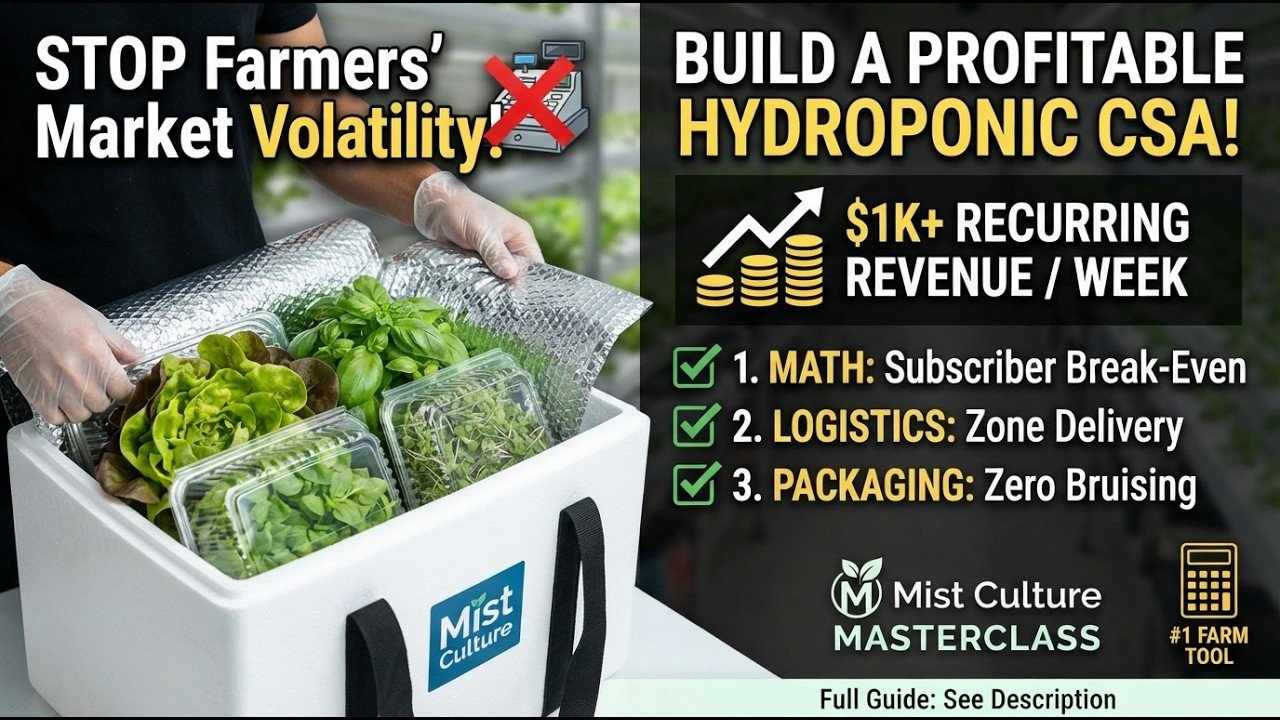
Our comprehensive horizontal guide dives deep into real-world agribusiness economics, including variable and fixed crop expenses, the physics of stacking containers, and cold-chain timing guidelines.
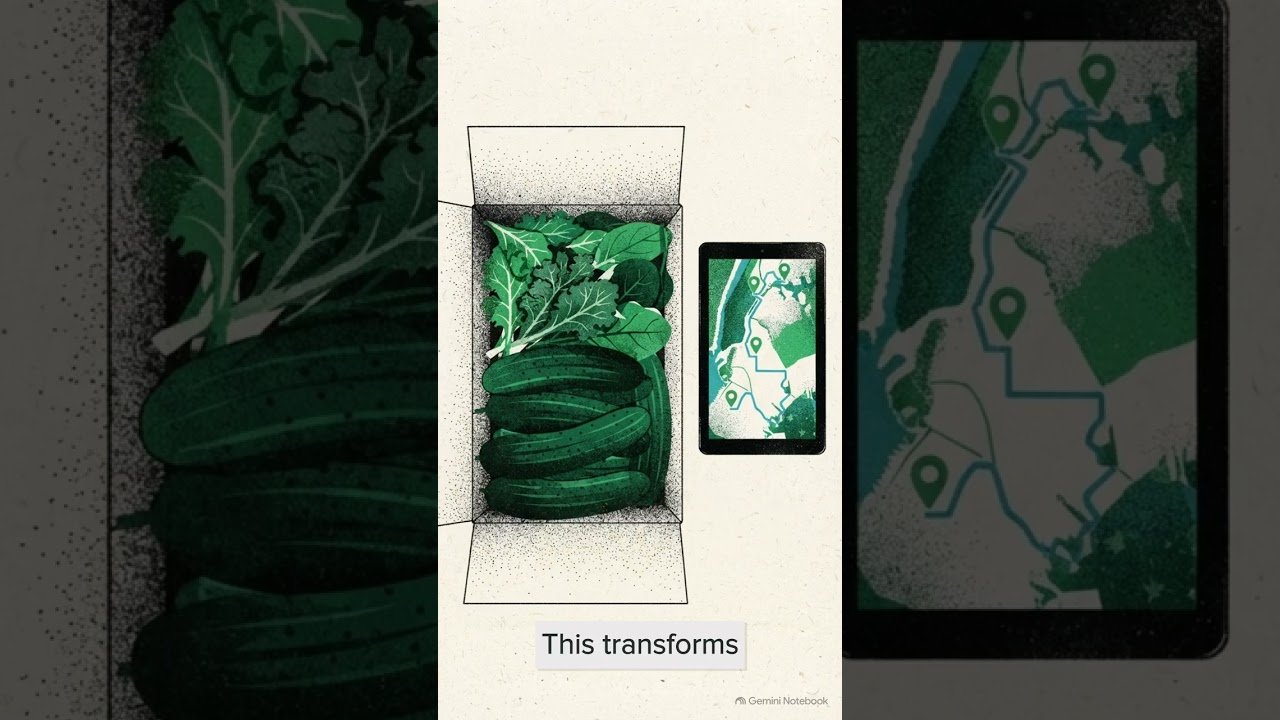
Avoid the ultimate financial mistake that sinks startup farms. Learn how to manage prepaid subscriber cash flows and stay legally compliant.

Continue Your Learning Journey