Hydroponics Glossary: 100+ Technical Terms Every Grower Must Know

Table of Contents
Disclosure: MistCulture summarizes verified product specs, engineering data, and community feedback. We may earn an affiliate commission if you purchase through our links. Regulations vary by location; this content is for educational purposes only.
Soilless cultivation replaces native soil with precise fluid engineering, controlled atmospheric vapor pressure, and exact elemental chemistry. Operating a commercial or home hydroponic setup without mastering its core technical vocabulary leads to miscalibrated dosing, undetected nutrient lockouts, and catastrophic crop loss.
Whether you are calculating the dissolved oxygen saturation of a deep water culture reservoir, converting electrical conductivity across different meter scales, or balancing ammonium-to-nitrate ratios in a recirculating system, exact terminology matters. This technical glossary breaks down over 100+ essential hydroponic terms, chemical mechanisms, system design parameters, and mathematical formulas required to run a high-yielding soilless facility.
Download: Precision Hydroponic Telemetry Cheat Sheet
Take this master reference guide to your grow room. This visual, high-density PDF slideshow summarizes vital crop targets, quick conversion scales, and reservoir safety limits.
- ✓ EC-to-PPM conversion quick-reference scale (500/640/700 scales)
- ✓ Ideal root-zone water temperature and oxygen thresholds
- ✓ Visual pH nutrient lockout zones for quick diagnostic sweeps
The Core Mathematics and Physics of Soilless Cultivation
Hydroponic fluid management relies on exact conversions between electrical conductivity, ionic concentration scales, and atmospheric vapor pressures. Understanding these mathematical relationships enables growers to maintain precise nutrient availability and prevent osmotic shock.
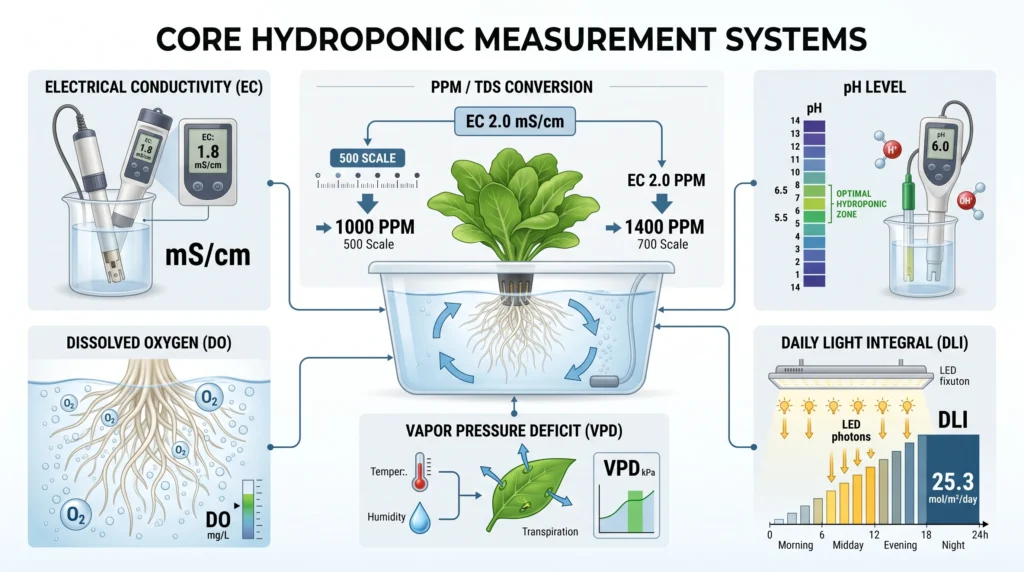
Managing a soilless root zone requires converting raw sensor measurements into actionable plant nutrition adjustments. Electrical conductivity (EC) measures the total dissolved ionic salts in a solution by testing its ability to conduct an electrical current between two electrodes. Because different handheld meters display salt concentrations using different algorithms, growers often confuse parts per million (PPM) readings.
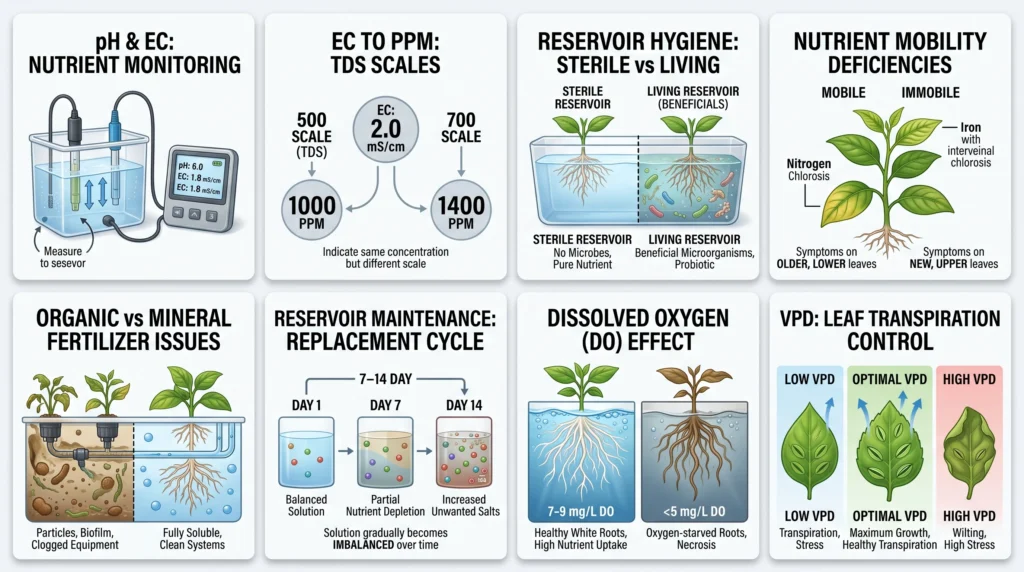
The two main conversion scales used worldwide are the 500 Scale (TDS / Hanna instrument standard, where 1.0 mS/cm = 500 PPM) and the 700 Scale (Truncheon / KCl standard, where 1.0 mS/cm = 700 PPM). A reading of 2.0 mS/cm on a quality meter translates to 1000 PPM on a 500-scale meter, but reads as 1400 PPM on a 700-scale meter. To prevent fatal over-fertilization, always record and communicate target concentrations in mS/cm or µS/cm rather than raw PPM.
To calculate target nutrient strength and environmental conditions, refer to our interactive hydroponic pH and EC master guide or use the mathematical framework summarized below.
📊 Core Conversion Formulas
-
EC to PPM (500 Scale):
PPM500 = EC (in mS/cm) × 500 -
EC to PPM (700 Scale):
PPM700 = EC (in mS/cm) × 700 -
mS/cm to µS/cm:
µS/cm = mS/cm × 1000 -
Vapor Pressure Deficit (VPD in kPa):
VPD = VPsat(Tair) − VPact(Tair, RH)Where VPsat is saturated vapor pressure at air temperature, and VPact is actual vapor pressure derived from relative humidity.
Master Technical Conversion & Target Matrix
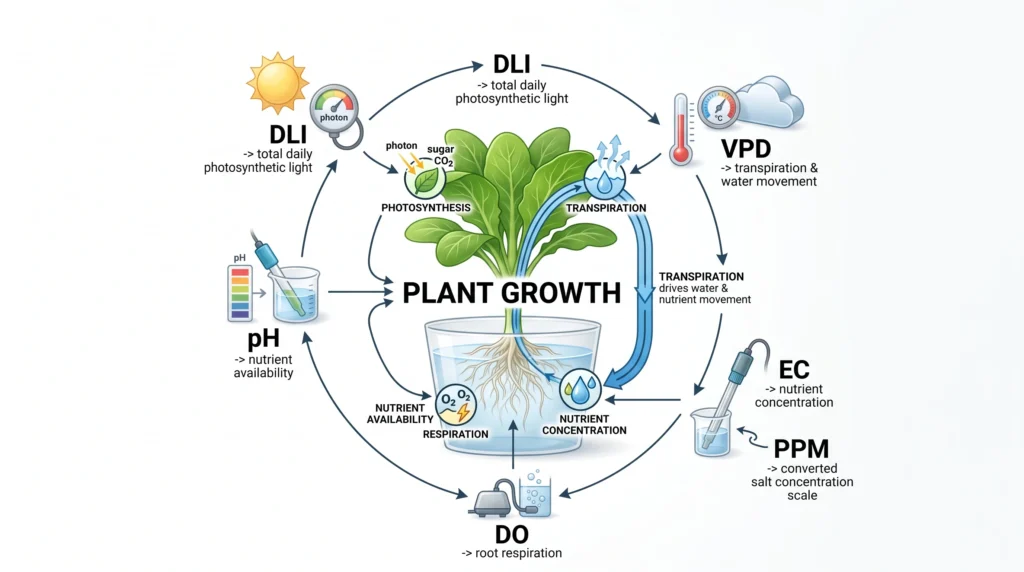
| Parameter / Metric | Standard Unit | Target Range (Leafy Greens) | Target Range (Fruiting Crops) | Measurement Mechanism |
|---|---|---|---|---|
| Electrical Conductivity (EC) | mS/cm | 1.0 – 1.6 mS/cm | 2.0 – 3.0 mS/cm | Dual-electrode or toroidal conductivity probe |
| Total Dissolved Solids (500 Scale) | PPM_500 | 500 – 800 PPM | 1000 – 1500 PPM | Mathematical conversion from EC (EC * 500) |
| Total Dissolved Solids (700 Scale) | PPM_700 | 700 – 1120 PPM | 1400 – 2100 PPM | Mathematical conversion from EC (EC * 700) |
| pH (Potential Hydrogen) | -log[H⁺] | 5.5 – 6.0 | 5.8 – 6.3 | Glass bulb electrode potential difference |
| Dissolved Oxygen (DO) | mg/L (PPM) | 7.0 – 9.0 mg/L | 7.0 – 9.0 mg/L | Galvanic or optical luminescent DO probe |
| Vapor Pressure Deficit (VPD) | kPa | 0.8 – 1.1 kPa | 1.0 – 1.4 kPa | Infrared leaf temperature + psychrometric math |
| Daily Light Integral (DLI) | mol/m²/day | 14 – 17 mol/m²/day | 25 – 35 mol/m²/day | Integrated PAR sensor photodiode over 24 hours |
Hydroponic EC to PPM & Dosing Calculator
Convert nutrient electrical conductivity (EC) to parts per million (PPM) and instantly verify target thresholds.
New to the field? Start with a reliable, dual-purpose sensor to verify your numbers before adjusting any chemicals. We highly recommend a waterproof handheld probe with automatic temperature compensation.
Letters A – E
A Aeroponics
An advanced soilless technique where bare plant roots hang suspended inside a dark chamber and receive nutrient solution via high-pressure misters or ultrasonic foggers.
Droplet size must be maintained between 30 and 80 microns to maximize root hair absorption without suffocation.
Clogged misting nozzles lead to complete root desiccation within 15 to 30 minutes.
A Aggregate
Inert solid media (such as perlite, expanded clay, or river rock) used to physically anchor root structures within a container, bucket, or flood tray.
Must be chemically inert and free of carbonate mineral contamination that alters reservoir pH.
A Air Pump
An electromagnetic diaphragm or linear piston compressor designed to push ambient air through flexible tubing into a nutrient reservoir to maintain dissolved oxygen levels.
Sized at a minimum flow rate of 1 liter per minute (LPM) per gallon of nutrient solution.
A Air Stone
A porous ceramic, sintered glass, or wooden block attached to an air line that diffuses compressed air into micro-bubbles within liquid reservoirs.
Smaller bubble diameters increase the total gas-liquid contact surface area, speeding up oxygen transfer rates into the water column.
A Algae
Single-celled or filamentous photosynthetic micro-organisms that multiply rapidly in nutrient-rich water exposed to direct light.
Algae consume dissolved oxygen at night, drive rapid pH spikes during the day, and clog pump impellers and drip lines.
A Alkalinity (Water Buffering)
A measure of water’s capacity to neutralize acids, primarily driven by bicarbonate (HCO₃⁻) and carbonate (CO₃²⁻) ions.
Target alkalinity in source water should ideally be below 50–80 mg/L (PPM) CaCO₃ equivalent.
High alkalinity causes persistent pH upward drift, leading to nutrient lockouts. Consider using Reverse Osmosis (RO) filtration to remove excess carbonates.
A Ammonium (NH₄⁺)
A positively charged cationic form of nitrogen that plants absorb rapidly without spending significant metabolic energy.
Should not exceed 10% to 15% of total nitrogen in hydroponic formulas. High NH₄⁺ ratios acidify the root zone and cause soft, leggy growth.
A Anchor Point
The specific mechanical location on a trellis wire, vine clip, or support stake where a growing plant stem is secured to support heavy fruit loads.
A Anion
A negatively charged ion in a solution (e.g., Nitrate [NO₃⁻], Phosphate [H₂PO₄⁻], Sulfate [SO₄²⁻]).
A Anoxia
A biological state where the root zone is completely depleted of dissolved oxygen (0 mg/L DO).
Triggers rapid cell death in root tips, causes systemic wilting, and allows waterborne pathogens to attack the root system.
A Antagonism (Nutrient Competition)
A chemical condition where an excess of one ion inhibits the root absorption of another ion due to competition at cell membrane transport channels.
A Auto-Siphon (Bell Siphon)
A mechanical passive draining valve that uses hydro-static pressure differentials and air-sealing physics to automatically flood and drain a media bed without electronic timers or electrical switches.
A Autotrophic Bacteria
Micro-organisms (such as Nitrosomonas and Nitrospira) that synthesize their own cellular material using inorganic carbon sources and derive energy from oxidizing inorganic compounds.
B Beneficial Microbes
Inoculated bacterial and fungal species (e.g., Bacillus, Trichoderma) that colonize the root surface, suppress plant pathogens, and enhance nutrient availability.
B Biofilm
A sticky polysaccharide matrix produced by bacteria and fungi that adheres to the inside of irrigation tubing, water channels, and reservoir walls.
Restricts fluid flow in drip emitters and harbors pathogenic organisms.
B Biological Oxygen Demand (BOD)
The amount of dissolved oxygen required by aerobic micro-organisms to break down organic matter present in a water column over a specific temperature and timeframe.
B Buffer
A chemical substance or combination of weak acids/bases that resists changes in solution pH when external acids or bases are added.
C Cal-Mag
A concentrated liquid additive containing Calcium (Ca²⁺), Magnesium (Mg²⁺), and sometimes trace Iron (Fe²⁺/Fe³⁺).
Essential when using Reverse Osmosis (RO) water or growing in coco coir media.
C Calcium Nitrate [Ca(NO₃)₂]
A highly soluble inorganic fertilizer salt supplying available Calcium (Ca²⁺) and Nitrate-Nitrogen (NO₃⁻).
Must always be dissolved in “Tank A” when using two-part concentrates to prevent insoluble calcium sulfate precipitation.
C Capillary Action
The movement of liquid through narrow spaces or porous substrate matrixes caused by cohesive and adhesive molecular forces, independent of gravity.
C Cation
A positively charged ion in a nutrient solution (e.g., Calcium [Ca²⁺], Magnesium [Mg²⁺], Potassium [K⁺], Ammonium [NH₄⁺]).
C Cation Exchange Capacity (CEC)
The total capacity of a substrate to hold and exchange positively charged cations.
Pure hydroponic media like perlite, rockwool, and expanded clay have a CEC near zero, meaning all applied nutrients remain immediately available in solution.
C Chelate
An organic molecule (such as EDTA, DTPA, or EDDHA) bonded around a central metallic trace ion to protect it from reacting with other ions and precipitating out of solution.
C Chlorosis
The yellowing of green leaf tissue due to a lack of chlorophyll synthesis.
Interveinal chlorosis on new growth signals immobile element deficiencies (Iron/Manganese), while chlorosis on older bottom leaves signals mobile element deficiencies (Nitrogen/Magnesium).
C Clay Pebbles (LECA)
Lightweight Expanded Clay Aggregate formed by firing raw clay in a rotary kiln at 1200°C, creating porous, pH-neutral spheres with high air porosity.
C Closed-Loop System (Recirculating)
A hydroponic architecture where excess nutrient runoff is collected, filtered, sanitized, re-balanced, and recirculated back to the crop rather than discharged to waste.
C Coco Coir
A fibrous substrate manufactured from processing coconut husks. Offers high water-holding capacity and balanced air porosity but requires thorough buffering to remove residual Sodium (Na⁺) and Potassium (K⁺) ions.
D Daily Light Integral (DLI)
The total number of photosynthetically active photons (PAR) delivered to a specific one-square-meter area over a 24-hour period, measured in moles per square meter per day (mol/m²/day).
Maintain DLI between 14 and 17 mol/m²/day for leafy greens, and 25 to 35 mol/m²/day for heavy-fruiting crops.
Stunted growth occurs if DLI falls below minimum crop thresholds, while excessive light exposure triggers chlorosis, leaf-margin bleaching, and stomatal closure.
D Deep Water Culture (DWC)
A hydroponic technique where bare plant roots are continuously submerged in a heavily aerated reservoir of nutrient solution, supported by net pots set into a floating or fixed lid.
D Denitrification
The biological reduction of Nitrate (NO₃⁻) into Nitrite (NO₂⁻), Nitric Oxide (NO), and Nitrogen gas (N₂) by anaerobic bacteria in stagnant, oxygen-deprived zones.
D Desalination
The water treatment process (typically using Reverse Osmosis membranes) used to remove sodium, chlorides, and dissolved mineral salts from raw source water.
D Dissolved Oxygen (DO)
The concentration of free, non-compound oxygen gas dissolved in a liquid, measured in mg/L or PPM.
Maintain reservoir DO between 7.0 and 9.0 mg/L. Levels below 5.0 mg/L induce root stress and encourage Pythium proliferation.
D Drip Emitter
A pressure-compensating or non-pressure-compensating fluid fitting inserted into lateral tubing to deliver precise hourly volumes of nutrient solution to individual plant containers.
D DTPA (Iron DTPA)
A high-purity organic chelating agent bonded around trace iron ions (Fe-DTPA) to maintain iron solubility and plant availability across moderate pH ranges.
Highly effective and stable in nutrient solutions up to pH 7.0, making it superior to EDTA-Iron for crops grown in systems prone to minor pH upward drift.
D Dutch Bucket (Bato Bucket)
A specialized bucket container system (typically 11 liters) featuring a recessed siphon elbow at the base that maintains a 1-inch safety reservoir of nutrient solution while discharging excess runoff.
E Ebb and Flow (Flood and Drain)
A system that periodically floods a shallow bench or container filled with substrate or potted plants using a submersible pump, then allows the solution to drain back into an underlying reservoir via gravity.
E EDDHA (Iron Chelate)
An ultra-stable iron chelate molecule that keeps Iron (Fe³⁺) soluble and available to plant roots across extremely high pH levels (up to pH 9.0).
E EDTA (Ethylenediaminetetraacetic acid)
A standard chelating agent used for micronutrients, effective and stable only in lower pH nutrient solutions (below pH 6.0 to 6.5).
E Electrical Conductivity (EC)
The technical measure of a fluid’s capability to pass an electrical current, directly proportional to the total concentration of dissolved mineral salts. Measured in milliSiemens per centimeter (mS/cm).
E Epsom Salt (Magnesium Sulfate)
A highly soluble hydrated inorganic fertilizer salt (MgSO₄·7H₂O) supplying essential Magnesium (Mg²⁺) and Sulfur (SO₄²⁻).
Standard hydroponic formulations target magnesium levels between 50 and 80 mg/L (PPM) and sulfur levels between 60 and 120 mg/L (PPM).
Deficiency symptoms include severe interveinal chlorosis on older bottom foliage.
Letters F – J
F Fertigation
The automated process of delivering soluble mineral fertilizers simultaneously with irrigation water through specialized pump networks and manifold emitters.
F Flood and Drain
Synonymous with Ebb and Flow. A cyclic watering system reliant on timed pumps and gravity returns.
F Flow Rate
The volumetric displacement of liquid passing through a channel or pipe per unit of time, typically recorded in Gallons Per Hour (GPH) or Liters Per Minute (LPM).
F Foam Plug (Polymer Plug)
A synthetic, sterile rooting medium constructed from polyurethane or sponge-like polymers engineered with uniform air-to-water ratios for seed germination and tissue culture cloning.
F Foliar Feeding
The technique of spraying dilute liquid nutrients directly onto plant foliage, where ions are absorbed through stomata and epidermal cells.
Keep foliar EC below 0.8 mS/cm and apply during low-light hours to prevent leaf scorch.
F Fungus Gnats (Bradysia spp.)
Small black flies whose soil/substrate larvae feed on root hairs and organic decay.
Eradicate using Bacillus thuringiensis israelensis (BTI) or predatory soil mites (Hypoaspis miles).
G Germination
The physiological reactivation of a seed embryo from dormancy, culminating in the emergence of the radicle (primary root) and plumule (shoot).
G Grow Light
An artificial light source (such as LED, CMH, or HPS) engineered to emit light spectrums optimized for driving plant photosynthesis.
H Head Height (Dynamic Head Pressure)
The total equivalent vertical height and resistance a water pump must overcome to push fluid through a piping network, accounting for vertical elevation, pipe friction, and elbow restrictions.
H Heterotrophic Bacteria
Micro-organisms that derive energy and carbon by consuming organic compounds. In hydroponics, excess heterotrophic bloom strips dissolved oxygen from the water column.
H High-Pressure Aeroponics (HPA)
An aeroponic design operating at 80 to 100+ PSI fluid pressure, pushing nutrient solution through specialized solenoid valves and atomizing nozzles to generate a true 30- to 50-micron mist.
H Hydrogen Peroxide (H₂O₂)
A strong oxidizing agent used to sterilize reservoirs and strip biofilm.
34% Food Grade H₂O₂ is applied at 1 to 2 mL per gallon for sanitation, but it breaks down rapidly and kills beneficial biology alongside pathogens.
H Hydroton
A popular brand name for Expanded Clay Pebbles (LECA).
H Hypochlorous Acid (HOCl)
A gentle, highly stable oxidizing agent used to maintain sterile reservoirs, clear mineral deposits, and suppress Pythium without burning sensitive root tissues.
I Immobile Nutrients
Elements that cannot be re-translocated from older plant tissue to new growth once deposited in cell structures (e.g., Calcium [Ca], Iron [Fe], Boron [B], Sulfur [S]).
Immobile nutrient deficiencies always manifest on the youngest, top leaves first.
I Integrated Pest Management (IPM)
An ecosystem-based strategy focusing on long-term prevention of pests through a combination of biological controls, environmental management, physical barriers, and targeted, low-toxicity spray applications.
I Ion Lockout
A physiological condition where plant roots cannot absorb specific mineral elements from the root zone, caused by pH extremes, low root zone temperatures, or ion antagonism from over-fertilization.
I Iron Chelate
A water-soluble chemical compound consisting of an iron ion bound to a chelating agent (EDTA, DTPA, or EDDHA) to keep iron soluble across varying solution pH levels.
Letters K – P
K Kratky Method
A passive, non-circulating hydroponic technique where plants are supported above a static nutrient solution. As the plant drinks the liquid, the water level drops, creating a humid “air gap” where oxygen-absorbing roots develop while lower roots drink from the remaining solution.
L Leaching
The practice of running plain, pH-adjusted water or an ultra-dilute nutrient solution through a substrate to flush out accumulated mineral salts and reset the root zone EC.
L LECA
Acronym for Lightweight Expanded Clay Aggregate.
L LED (Light Emitting Diode)
Solid-state semiconductor light sources that emit narrow, highly efficient spectrums of light when an electrical current passes through them.
L Light Saturation Point
The specific level of light intensity (PPFD) beyond which a plant’s photosynthetic rate reaches its maximum and no longer increases with additional light.
Excess light past this point causes photo-inhibition and cellular damage.
L Living Reservoir
A reservoir management philosophy that intentionally inoculates the water column with beneficial bacteria, fungi, and biological enzymes rather than using chemical sterilizers like HOCl or H₂O₂.
M Macronutrient
An essential plant nutrient required in relatively large quantities: Nitrogen (N), Phosphorus (P), Potassium (K), Calcium (Ca), Magnesium (Mg), and Sulfur (S).
M Microgreens
Young vegetable, herb, or grain shoots harvested at the cotyledon or first true-leaf stage, typically 7 to 14 days post-germination.
M Micronutrient (Trace Element)
Essential elements required by plants in minute quantities: Iron (Fe), Manganese (Mn), Zinc (Zn), Copper (Cu), Boron (B), Molybdenum (Mo), Chlorine (Cl), and Nickel (Ni).
M Mobile Nutrients
Elements that a plant can physically translocate from older, established leaves to feed actively growing upper leaves during a deficiency: Nitrogen (N), Phosphorus (P), Potassium (K), Magnesium (Mg), and Zinc (Zn).
Mobile nutrient deficiencies always manifest on the lower, mature leaves first.
M Monopotassium Phosphate (MKP)
A highly water-soluble inorganic fertilizer salt (KH₂PO₄) supplying readily available ionic Phosphorus (H₂PO₄⁻) and Potassium (K⁺) without adding any Nitrogen.
MKP is the preferred fertilizer during flowering and fruiting developmental stages to stimulate root proliferation and flower set.
Over-application of MKP spikes the root zone EC, inducing osmotic stress (plasmolysis), and triggers nutrient lockout due to ion antagonism.
N Net Pot
A rigid, slotted plastic basket designed to hold growing media and anchor plant crowns while allowing roots to grow freely through the mesh openings into the nutrient solution.
N Non-Recovery System (Drain-to-Waste)
An irrigation layout where excess fertigation water draining from container pots or slabs is discarded to waste rather than returned to the primary dosing reservoir.
N Nutrient Film Technique (NFT)
A hydroponic architecture where a continuous, shallow stream (“film”) of nutrient solution flows across the bottom of sloped, enclosed channels, bathing the bottom of bare plant root mats while top roots absorb atmospheric oxygen.
N Nutrient Solution
A precise mixture of water and dissolved inorganic fertilizer salts containing all essential macro- and micronutrients balanced for plant absorption.
O Osmotic Pressure
The minimum pressure required to prevent the inward flow of pure solvent across a semipermeable membrane.
If reservoir EC is driven too high (over-fertilization), the osmotic pressure of the solution exceeds the internal pressure of root cells, causing water to leach out of the roots (“fertilizer burn”).
O Oxygenated Root Zone
A root environment engineered to maintain high levels of oxygen gas within the substrate voids or liquid solution, accelerating metabolic nutrient transport and preventing fungal infections.
P PAR (Photosynthetically Active Radiation)
The spectral waveband of solar or artificial radiation from 400 to 700 nanometers that photosynthetic organisms use to drive carbon assimilation.
P Perlite
A lightweight, highly porous aggregate manufactured by rapidly heating volcanic glass until it pops like popcorn. Used to increase aeration and drainage in container mixes.
P pH (Potential Hydrogen)
The negative logarithm of hydrogen ion activity in a solution, measuring acidity (pH 0 to 6.9) or alkalinity (pH 7.1 to 14.0).
Most hydroponic plants require a solution pH between 5.5 and 6.5 for optimal nutrient solubility.
P Phosphate (H₂PO₄⁻ / HPO₄²⁻)
The ionic form of phosphorus absorbed by plant roots, critical for energy transfer (ATP synthesis), root initiation, and early flower development.
P Photoperiod
The duration of light and dark cycles experienced by a plant over a 24-hour period, controlling developmental shifts like vegetative growth versus flowering.
P Photosynthesis
The biochemical process by which green plants convert light energy, carbon dioxide (CO₂), and water (H₂O) into chemical carbohydrates (sugars) and oxygen gas (O₂).
P Plasmolysis
The shrinkage of root cell protoplasm away from the cell wall caused by water loss when the plant is exposed to a hypertonic (over-fertilized) external solution.
P Potassium Silicate
A specialized beneficial liquid additive supplying soluble Potassium (K⁺) and Silicon in the form of monosilicic acid, which strengthens cell walls.
Silicon deposits inside plant cell walls, creating a physical protective barrier that reduces heat stress, transpiration water loss, and mechanical weakness.
Potassium Silicate is highly alkaline. It must be heavily diluted in fresh water before being added to a nutrient reservoir; adding concentrated silicate directly triggers immediate precipitation of calcium and micronutrients.
P PPFD (Photosynthetic Photon Flux Density)
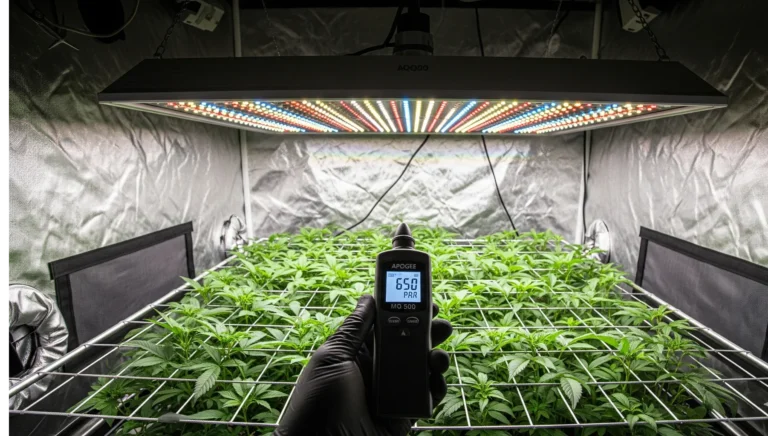
The measurement of the total number of PAR photons hitting a one-square-meter surface per second, expressed in µmol/m²/s.
P PPM (Parts Per Million)
A measure of concentration representing one milligram of solute per liter of liquid (mg/L). Must be paired with a known conversion scale factor (500 or 700 scale).
P Propagation
The biological process of reproducing new plants via sexual means (seeds) or asexual vegetative methods (cuttings, tissue culture, layering).
P Pythium (Water Mold)
A genus of parasitic oomycete water molds that attack plant root systems, acting as the primary biological pathogen responsible for catastrophic hydroponic root rot.
Pythium spores germinate and colonize root tissues rapidly in warm (above 22°C / 72°F) reservoirs with low dissolved oxygen levels (below 5.0 mg/L).
Once infected, roots turn brown, slimy, and emit a foul odor, leading to sudden, irreversible systemic wilting.
Letters Q – Z
R Reservoir
The primary holding vessel or tank designed to store, blend, and condition the nutrient solution before it is distributed throughout a hydroponic system.
Nutrient solution temperature must be strictly maintained between 18°C to 21°C (64°F to 70°F). Above 22°C, dissolved oxygen drops and Pythium thrives. Below 15°C, nutrient absorption stalls.
R Reverse Osmosis (RO)
A water filtration process that forces pressurized raw source water through a semi-permeable membrane to remove up to 99% of dissolved solids, heavy metals, and mineral ions, yielding pure base water (0.0 mS/cm EC).
R Rockwool (Stone Wool)
A sterile, fibrous substrate manufactured by melting basaltic rock and chalk at 1600°C and spinning it into threads. Formed into propagation plugs, blocks, and growing slabs.
R Root Rot
A destructive root disease caused by fungal water molds (primarily Pythium, Phytophthora, and Fusarium) thriving in warm, low-oxygen reservoirs. Symptoms include brown, slimy, decaying roots and sudden leaf wilting.
R Runoff
The percentage of applied nutrient solution that drains out from the bottom of a container or substrate slab during a fertigation event.
Typically managed between 10% and 30% in drain-to-waste systems to prevent salt buildup.
S Sanitization
The mechanical and chemical process of sterilizing equipment, reservoirs, lines, and substrate surfaces using agents like hypochlorous acid or bleach to eliminate plant pathogens between crop cycles.
S Silica (Monosilicic Acid [H₄SiO₄])
A beneficial element additive that strengthens cell walls, improves mechanical stem strength, increases thermal tolerance, and enhances systemic resistance against pests and mildews.
S Slope (NFT Slope)
The precise drop angle along the length of an NFT channel required to ensure gravity pulls the nutrient solution down the channel without pooling.
Maintained between 1:30 and 1:40 (a 1-inch drop for every 30 to 40 inches of horizontal channel length).
S Soluble Salt
Any inorganic mineral salt that dissolves completely in water, separating into free-floating cations and anions available for root uptake.
S Sterile Reservoir
A nutrient reservoir management strategy that uses continuous low-level oxidizers (such as Hypochlorous Acid or Hydrogen Peroxide) or UV-C sterilizers to keep the water completely free of living bacteria, fungi, and algae.
S Substrate
The inert solid material (coco coir, rockwool, perlite, expanded clay) in which plant roots grow and anchor themselves in a soilless system.
T TDS (Total Dissolved Solids)
An estimate of the total concentration of dissolved organic and inorganic substances in a liquid, calculated by multiplying an EC probe reading by a conversion constant.
T Thermal Mass
The capacity of a body of water or physical material to absorb, store, and slowly release heat energy, helping stabilize root zone temperatures against ambient air spikes.
T Timer
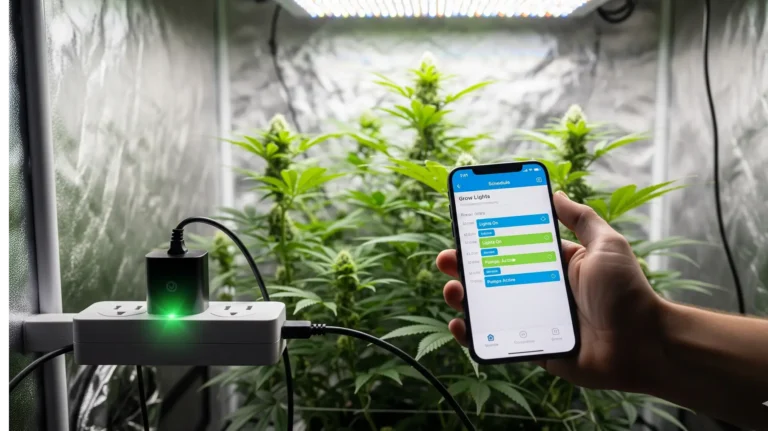
An electronic or mechanical control device used to cycle pumps, solenoid valves, lighting systems, and dosing equipment on precise schedules.
T Tip Burn
A physiological disorder in fast-growing crops (especially lettuce) characterized by necrosis on young inner leaf edges. It is caused by a localized Calcium deficiency in rapidly expanding cells, often triggered by high humidity or low airflow restricting plant transpiration.
T Transpiration
The process by which water travels through a plant from the roots, evaporating through stomatal pores on the leaves into the atmosphere, pulling calcium and other essential ions upward.
T Trichomes
Glandular epidermal structures found on the surfaces of many plant species. In crops like cannabis, capitate-stalked trichomes produce and store high concentrations of cannabinoids and aromatic terpenes.
V Venturi Injector
A specialized fluid device with a constricted throat that uses the Bernoulli principle to create a localized vacuum, pulling liquid concentrated fertilizers or air bubbles directly into a flowing water stream.
V Vermiculite
A hydrous phyllosilicate mineral that expands significantly under heat into accordion-like lightweight granules. Features high water retention and a moderate cation exchange capacity.
V VPD (Vapor Pressure Deficit)
The difference between the pressure exerted by water vapor inside the leaf’s saturated interior and the vapor pressure of the surrounding air. Measured in kilopascals (kPa), VPD directly controls plant transpiration rates and nutrient transport.
W Water Hardness (dGH / dKH)
A measure of the mineral content in raw water. General Hardness (dGH) measures dissolved Calcium (Ca²⁺) and Magnesium (Mg²⁺) ions, while Carbonate Hardness (dKH) measures dissolved bicarbonate and carbonate ions that drive water alkalinity.
Always test your raw source water’s EC before adding any fertilizers. If your tap water has a background EC above 0.3 mS/cm, it contains a heavy load of calcium, magnesium, and carbonates that will react with your nutrient solution, causing rapid pH fluctuations and nutrient lockout. Invest in a Reverse Osmosis (RO) filtration system to strip source water back to a clean, 0.0 EC slate before dosing.
W Wicking
The passive absorption and transport of a nutrient solution from a lower reservoir upward into a plant root zone via capillary action through a porous substrate or absorbent fabric strip.
The wicking medium must have a balanced capillary action; if it is too dense, it will waterlog the root zone, and if it is too porous, it will fail to pull the solution upward.
Salt accumulation at the top of the medium due to continuous water evaporation can lead to nutrient burn. Flush the substrate periodically with pure water to reset the EC.
System Architecture Dynamics and Engineering Metrics
Choosing the right hydroponic system architecture requires balancing root zone oxygenation against maintenance risk and mechanical complexity. This section compares six primary system layouts.
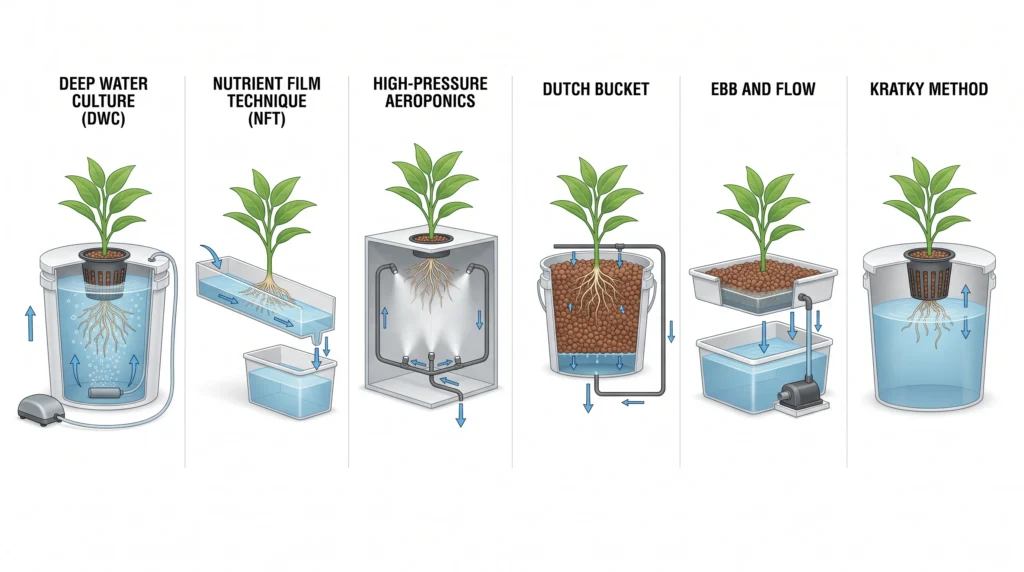
Different hydroponic designs vary in how they deliver nutrient solutions and oxygen to the root zone. Selecting the proper architecture depends on crop type, facility scale, power reliability, and grower experience.
For a complete breakdown of commercial vs. residential system builds, read our DWC vs. NFT vs. Aeroponics guide.
Comparison of Major Hydroponic System Architectures
| System Type | Root Zone Oxygenation | Preferred Substrate | Ideal Crop Selection | Mechanical Failure Risk | Water Use Efficiency |
|---|---|---|---|---|---|
| Deep Water Culture (DWC) | Medium to High (air stone reliant) | Net pots with LECA or Rockwool | Leafy greens, small herbs, short-term crops | Low (water volume buffers against drought) | High (Closed-loop recirculating) |
| Nutrient Film Technique (NFT) | High (continuous air exposure) | Bare root or small rockwool plugs | Lettuce, basil, strawberries, greens | High (channel dry-out within hours if pump fails) | Very High (Low water volume recirculating) |
| High-Pressure Aeroponics (HPA) | Extreme (true atomized mist) | Bare root in neoprene collars | High-value herbs, leafy greens, clones | Critical (nozzles clog easily; roots desiccation in minutes) | Maximum (Ultra-low fluid volume) |
| Dutch Bucket (Bato Bucket) | High (drainage channels) | Perlite or Expanded Clay | Tomatoes, peppers, cucumbers, vining crops | Low (1-inch bottom safety reservoir) | High (Recirculating or Drain-to-Waste) |
| Ebb and Flow (Flood & Drain) | High (air pulled during drain) | Expanded Clay, Gravel, Perlite | Nursery starts, potted herbs, floral crops | Medium (timer or siphon failure causes root dry-out) | High (Recirculating bench system) |
| Kratky Method | Low to Medium (humid air gap) | Net pots with coco/perlite | Fast-turn lettuce, spinach, small herbs | None (Zero electrical or moving parts) | High (Passive static reservoir) |
Precision Hardware for Hydroponic Monitoring
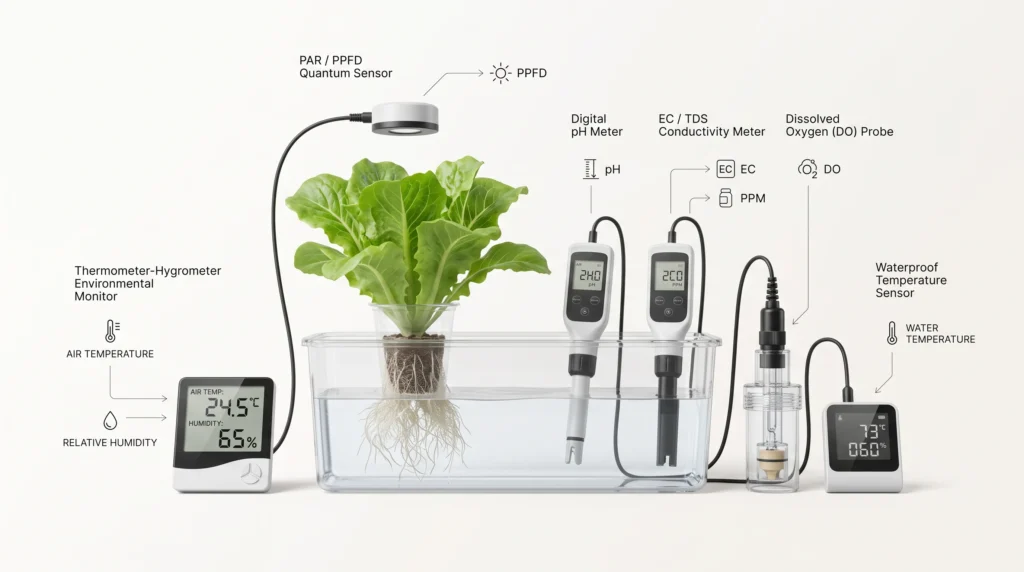
Waterproof Combo pH/EC/TDS Meter
Simultaneously measures pH, electrical conductivity (EC), and TDS with automatic temperature compensation to eliminate raw dosing calculations.
• Dual Backlit LCD Screen
• ±0.01 pH Accuracy / ATC
UC Roots / Clear Line Sanitizer
An elite hypochlorous acid (HOCl) sanitizer that breaks down mineral biofilms and targets waterborne root rot spores.
• Dissolves Organic Slime
• Zero Sodium Contamination
Active Aqua Submersible Pump
Heavy-duty magnetic drive water pump with adjustable flow velocity, engineered for consistent recirculation in active hydro setups.
• Heavy-Duty 550+ GPH Lift
• Corrosion-Resistant Ceramic Shaft
Active Aqua 4-Outlet Air Pump
Powerful dynamic air pump designed to supply continuous oxygen micro-bubbles, maintaining vital DO saturation levels.
• 15 LPM / 240 GPH Output
• Silent Multi-Chamber Muffler
Real-World Hydroponic Diagnostic Workflows
Diagnostic protocols require systematically isolating chemical, mechanical, and environmental variables. Following structured steps prevents misdiagnosing environmental stress as a nutrient deficiency.
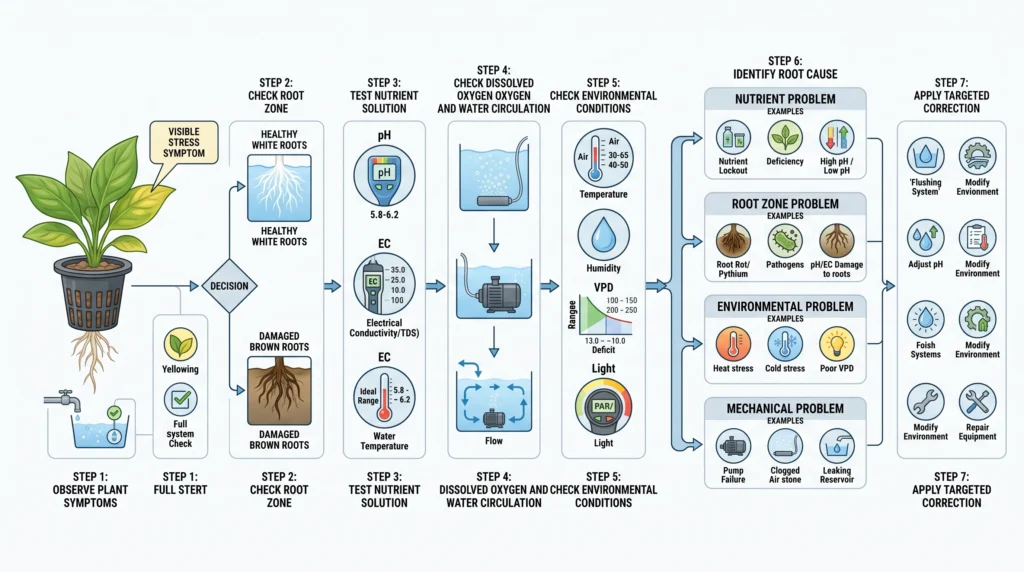
When crops show stress symptoms, do not immediately add single-element fertilizers or chemical additives. Follow these structured troubleshooting workflows to identify the root cause.
Rapid absorption of Nitrate anions (NO₃⁻) by fast-growing plants causes the roots to excrete hydroxyl (OH⁻) or bicarbonate (HCO₃⁻) ions into the solution to maintain electrochemical balance. Alternatively, an algae bloom in an unshaded reservoir may be consuming dissolved carbonic acid.
- ✓ Shade the reservoir completely to block all photosynthetic light from reaching the solution.
- ✓ Adjust pH back down using dilute Phosphoric Acid (best for vegetative stages) or Nitric Acid.
- ✓ If using municipal tap water, verify that high carbonate hardness (dKH) is not actively buffering the solution back upward.
Frequently Asked Questions
What is the most important parameter to measure in a hydroponic system?
Both pH and Electrical Conductivity (EC) are equally vital. The pH determines whether nutrient elements remain soluble and available for absorption, while the EC tells you the total concentration of dissolved salts in the solution.
Why is PPM ambiguous on different hydroponic meters?
PPM meters do not actually count individual particles. They measure the electrical conductivity (EC) of the solution and multiply that number by an assumed conversion factor. The 500 scale multiplies EC by 500, while the 700 scale multiplies EC by 700. As a result, the same nutrient solution reads as 1000 PPM on a 500-scale meter and 1400 PPM on a 700-scale meter.
What is the difference between sterile and a living reservoir?
A sterile reservoir relies on sanitizers like HOCl or H₂O₂ to destroy all biological life, keeping the root zone completely clean and pathogen-free. A living reservoir intentionally inoculates the water column with beneficial bacteria and fungi (like Bacillus and Trichoderma) to crowd out pathogens.
What is the difference between mobile and immobile plant nutrients?
Mobile nutrients (Nitrogen, Phosphorus, Potassium, Magnesium, Zinc) can be physically moved by the plant from older leaves to feed young, new growth during a shortage. Consequently, mobile nutrient deficiencies appear on older, lower leaves first. Immobile nutrients (Calcium, Iron, Boron, Sulfur) cannot be re-translocated, meaning their deficiency symptoms always show up on the newest, top leaves first.
Can I use regular organic fertilizers in a hydroponic setup?
Unprocessed organic fertilizers like fish emulsions, bone meal, or animal manures should not be used in standard hydroponic reservoirs. Unrefined organics require soil microbes to break down into plant-available ionic forms, and putting them into water channels causes thick slime, severe biofilm, fouled pumps, and low dissolved oxygen levels.
How often should I drain and replace my hydroponic reservoir?
In non-automated home setups, drain and replace the reservoir every 7 to 14 days. Over time, plants absorb water and specific nutrients at uneven rates, leaving behind an imbalanced ratio of unused salts that handheld EC meters cannot detect. Replacing the solution resets the root zone chemistry.
What is the ideal dissolved oxygen (DO) level for hydroponic roots?
The ideal dissolved oxygen level in a hydroponic reservoir is between 7.0 and 9.0 mg/L (PPM). Dissolved oxygen levels below 5.0 mg/L cause root hypoxia, reduce water and nutrient uptake, and create ideal conditions for Pythium root rot.
How does Vapor Pressure Deficit (VPD) affect hydroponic plant feeding?
VPD measures the drying power of the air surrounding the plant canopy. If VPD is too low (high humidity), the plant cannot transpire water, blocking Calcium transport and causing tip burn. If VPD is too high (dry air), the plant transpires too rapidly, over-drinking the nutrient solution and causing osmotic salt burn on leaf margins.
Master Soilless Growing with MistCulture
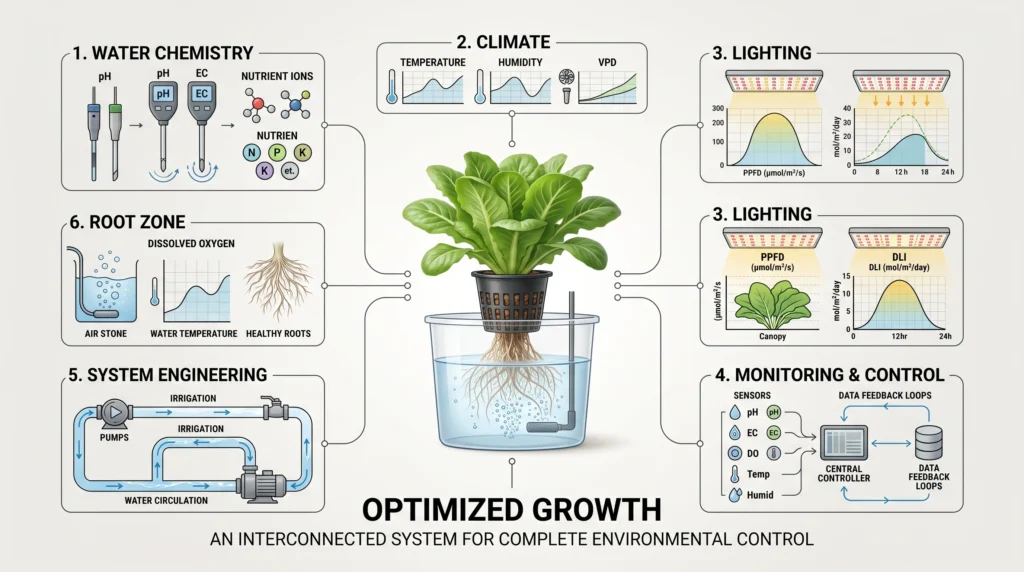
Mastering technical terminology is the first step toward total control over your soilless growing environment. By understanding the chemical interactions, system mechanics, and physical principles defined in this glossary, you can prevent crop failures, diagnose root zone stress early, and optimize your harvests.
Ready to take your growing setup to the next level? Calculate your exact system requirements using our free interactive hydroponic yield calculator tool or explore our comprehensive hydroponics comparison hub to find the best equipment for your space.
Prefer Visual Learning? Watch the Complete Video Guide
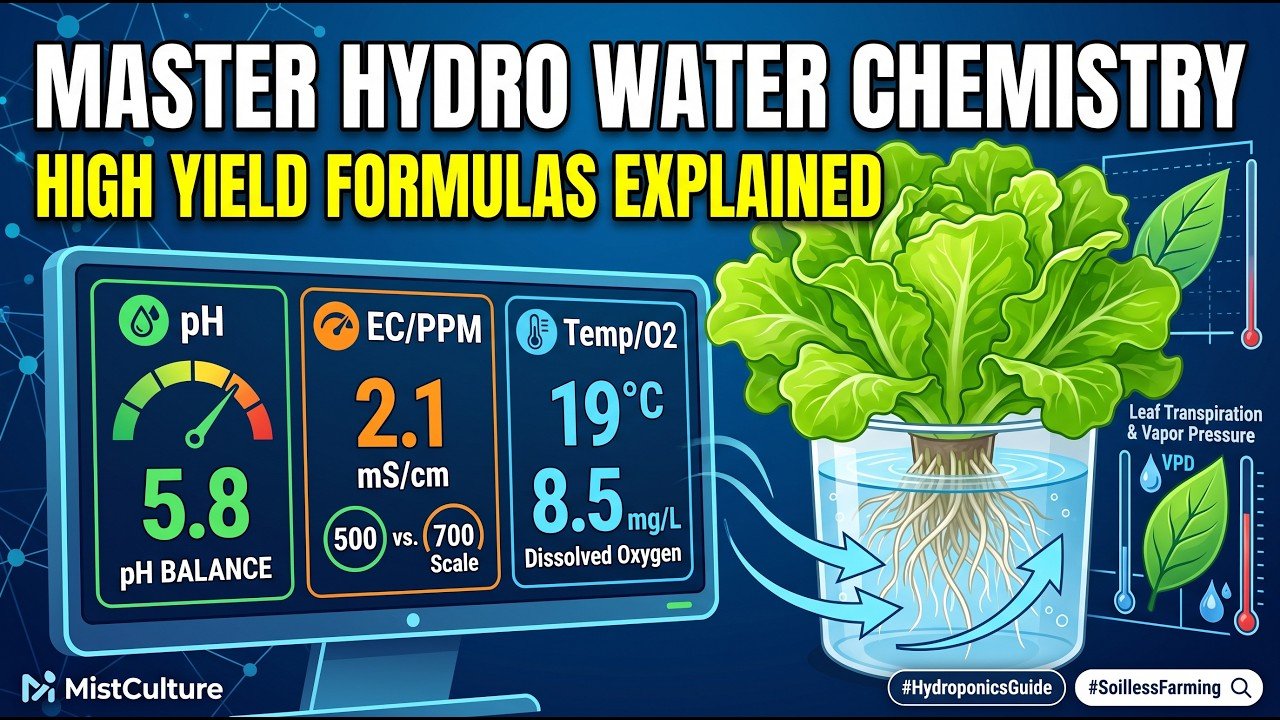
If you prefer to see these fluid dynamics and chemical reactions in action, we have compiled a comprehensive, cinematic masterclass.
Watch as we break down the complex mathematics of EC-to-PPM conversions, illustrate pH lockout thresholds, and map out the exact environmental controls needed to prevent root-zone hypoxia.

Continue Your Learning Journey