Hydroponic Wasabi Cultivation: Engineering Cold-Water Systems

Table of Contents
- The Physiology and Natural Habitat of Eutrema japonicum
- Thermodynamics and Water Chiller Sizing
- Fluid Dynamics and Stream Simulation
- Dissolved Oxygen Mechanics at Low Temperatures
- Water Quality Chemistry and Filtration
- Substrate Biology and Media Selection
- Photobiology and PPFD Thresholds
- Nutrient Profiling and Sulfur Chemistry
- System Cleaning and Sanitation Protocols
- Harvesting, Processing, and Economics
- Frequently Asked Questions
Disclosure: MistCulture summarizes verified product specs, engineering data, and community feedback. We may earn an affiliate commission if you purchase through our links. Regulations vary by location; this content is for educational purposes only.
Eutrema japonicum, universally known as wasabi, represents one of the most challenging and economically lucrative crops in the controlled environment agriculture sector. Authentic wasabi rhizomes consistently command retail prices ranging from $80 to $160 per pound. The extreme market value is a direct reflection of the plant’s notorious cultivation difficulty. Standard hydroponic greenhouse infrastructure, optimized for tomatoes or leafy greens, will completely fail to support Eutrema japonicum. This specific crop mandates rigid adherence to cold-water fluid dynamics, intense oxygenation protocols, and exact environmental controls that accurately replicate the shaded mountain stream beds of Japan.
The gap between standard hydroponic parameters and authentic wasabi cultivation requirements is massive. Standard greenhouses operate at ambient temperatures and water parameters that will destroy a wasabi crop within weeks. Success with this species requires engineering a specialized fluid delivery system that prioritizes thermal management above all other variables.
This guide details the complete engineering framework for designing, building, and managing a cold-water hydroponic system specifically engineered for wasabi. By applying strict fluid dynamics, thermodynamic calculations, and specific nutrient profiling, growers can simulate the perfect riparian environment and harvest premium rhizomes indoors.
The Physiology and Natural Habitat of Eutrema japonicum
Wasabi is an aquatic to semi-aquatic herbaceous plant endemic to the shaded, gravelly riverbeds of Japanese mountain valleys. In its native habitat, wasabi relies on continuous, fast-flowing streams of cold meltwater to supply oxygen to its root zone and flush away metabolic exudates. Replicating this exact environment is non-negotiable for commercial or serious hobbyist success.
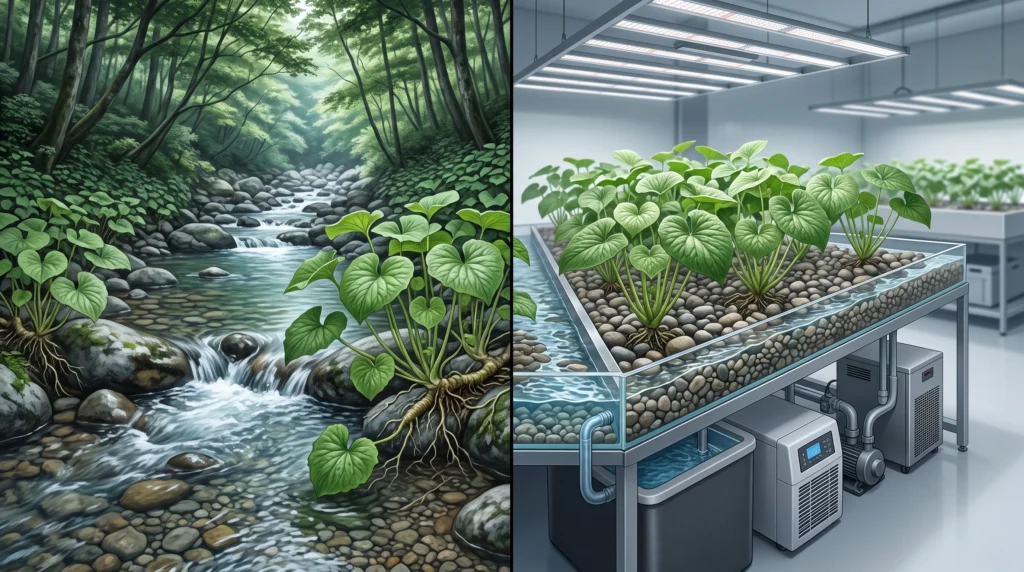
Water temperature dictates the absolute physiological boundary for this crop. The nutrient solution must remain clamped between 50 and 60 F (10 to 15.5 C) continuously, regardless of ambient room temperatures. As fluid temperatures climb above 68 F (20 C), wasabi rapidly displays acute physiological stress. Growers will observe rapid leaf scorch, aborted rhizome development, and an extreme vulnerability to opportunistic fungal pathogens. If reservoir temperatures are allowed to exceed 75 F (24 C), root death is nearly instantaneous and irreversible.
Maintaining this narrow thermal band in a controlled environment, where ambient air frequently exceeds 80 F (26.6 C) from lighting and external weather, requires dedicated active cooling infrastructure and heavy thermal insulation. The entire system architecture must be built around the absolute necessity of temperature preservation. You can review foundational concepts of thermal regulation in our passive hydro cooling guide to lower baseline ambient heat before relying entirely on mechanical refrigeration.
Thermodynamics and Water Chiller Sizing
Cooling nutrient solutions is an energy-intensive process that requires precise mathematical calculation. Growers must size water chillers correctly by calculating the total heat load on the system. Undersizing a chiller will result in continuous compressor operation, rapid mechanical failure, and crop death. Heat enters a hydroponic system through three primary vectors: ambient heat transfer across reservoir and pipe walls, mechanical heat rejected directly into the water by submersible pumps, and biological heat generated by root metabolism.
To calculate the ambient heat transfer, you must evaluate the total exposed surface area of the reservoir and all plumbing lines. The formula for ambient heat load is: Ambient Load (BTU/hr) = Surface Area (sq ft) * U-value * Temperature Difference (F)
Assume a grower operates a 100-gallon uninsulated plastic reservoir. This tank has approximately 30 square feet of exposed surface area. The ambient room temperature is 78 F, and the target water temperature is 55 F. The temperature differential (Delta T) is 23 F. An uninsulated plastic wall has a U-value of roughly 1.0. Ambient Load = 30 sq ft * 1.0 * 23 F = 690 BTU/hr.
Next, calculate the mechanical heat dumped into the water by the primary circulation pump. A water pump converts electrical wattage into fluid movement, but internal motor friction and inefficiency reject heat directly into the nutrient solution. One electrical Watt equals 3.41 BTU/hr of heat energy. A standard 150-watt submersible pump running continuously adds: Mechanical Load = 150 Watts * 3.41 = 511.5 BTU/hr.
Biological heat from root respiration and microbial activity in the media bed also warms the water. In a densely planted 20-square-foot canopy, metabolic processes add roughly 10 BTU/hr per square foot. Biological Load = 20 sq ft * 10 = 200 BTU/hr.
The Total Baseline Heat Load is the sum of these three vectors: Total Heat Load = 690 + 511.5 + 200 = 1,401.5 BTU/hr.
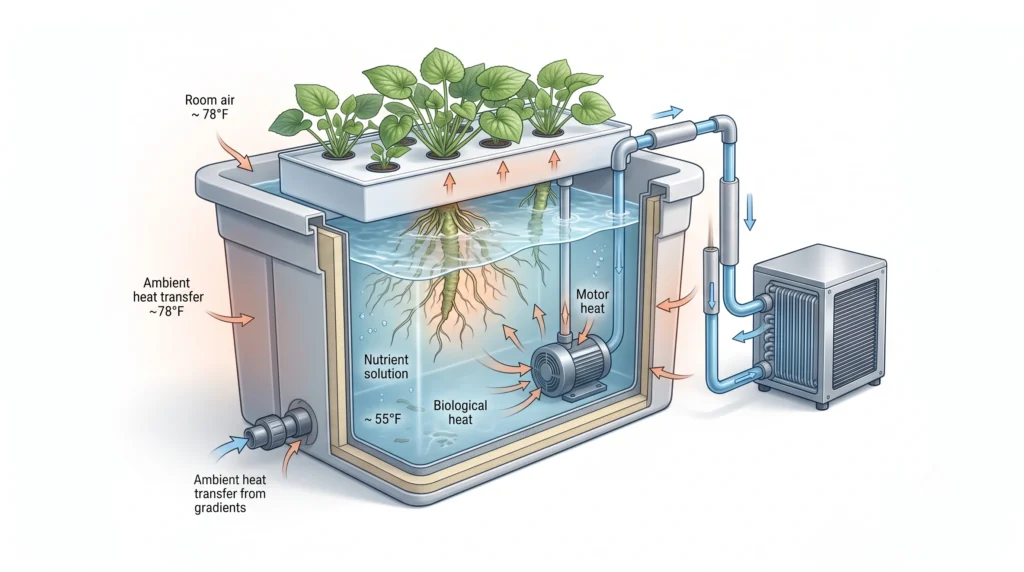
Chiller compressors degrade in efficiency over time, and ambient room temperatures can spike during summer heatwaves. Always apply a 1.5x safety multiplier to your baseline load to guarantee adequate chilling capacity. Target Chiller Capacity = 1,401.5 * 1.5 = 2,102.25 BTU/hr.
Since 1 Ton of refrigeration equals 12,000 BTU/hr, a 1/4 HP chiller (which typically provides 2,500 to 3,000 BTU/hr) is perfectly sized for this specific application. To reduce the ambient load and decrease electrical costs, insulate all reservoirs and pipes.

- Rapid Cooling with Boost Function: Achieve the perfect temperature faster for your nutrient solutions, aquariums, or col…
- Efficient Temperature Control: User-friendly interface of this fish tank chiller gives you full control over the precise…
- Versatile Applications: This aquarium water chiller is ideal for hydroponic systems, aquaponic reservoirs, and even cold…
Fluid Dynamics and Stream Simulation
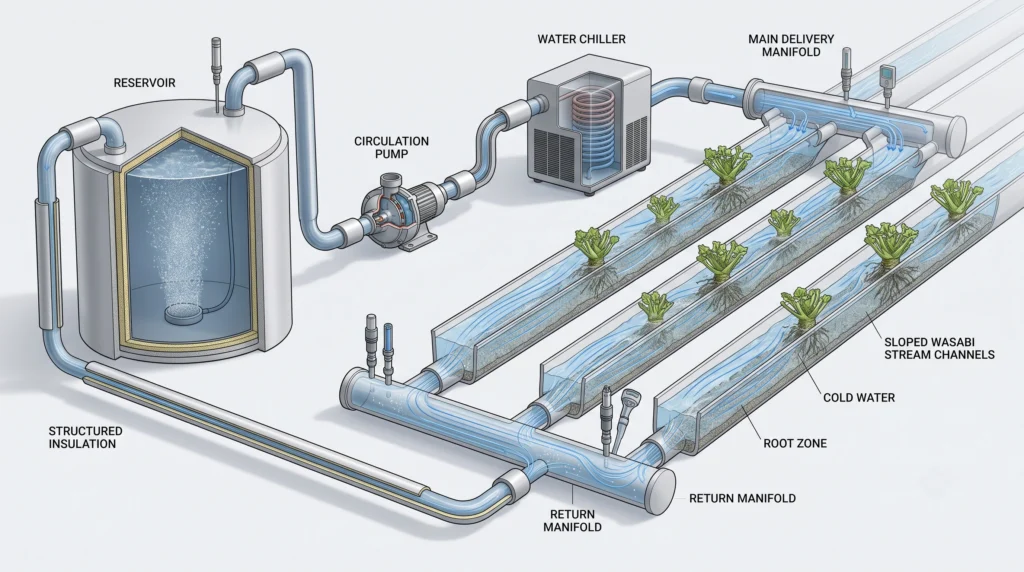
Standard hydroponic methodologies like Deep Water Culture (DWC) drown wasabi crowns, inducing rapid crown rot. Standard ebb-and-flow systems fail to provide constant, continuous water movement. The optimal design for Eutrema japonicum is a modified Nutrient Film Technique (NFT) or a shallow-stream gravel bed that replicates the Tatami-ishi system used by Japanese mountain farmers.
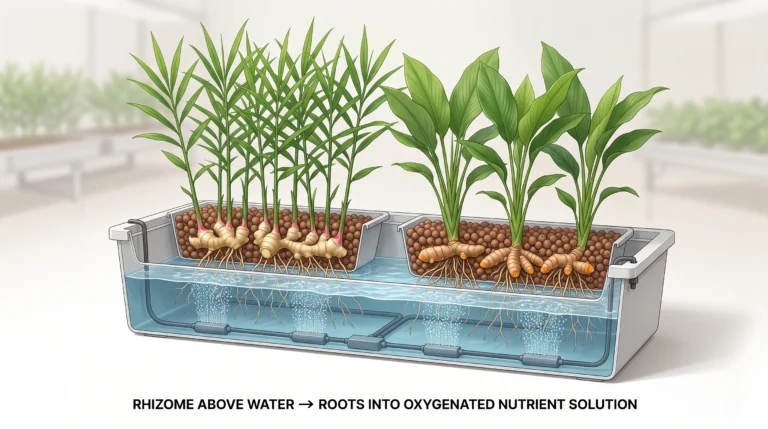
Plants must be positioned in sloped channels filled with a coarse, inert media like river rock or large-grade expanded clay pebbles. The slope of the channel must be engineered between 3% and 5% to maintain high fluid velocity. Fast-moving shallow water mimics a mountain stream, keeping the crown of the plant completely dry while the root mass remains submerged in a highly oxygenated, fast-flowing nutrient layer.
To replicate a Japanese mountain stream accurately, water velocity must be optimized using specific mathematical models. If water moves too slowly, the boundary layer of fluid surrounding the roots stagnates. This leads to localized oxygen depletion and nutrient starvation. If the water moves too fast, the kinetic force causes root shearing and physical trauma to the delicate root hairs. Optimal fluid velocity through the wasabi root zone is exactly 0.5 to 1.0 feet per second.
To calculate this, growers must understand the cross-sectional area of their growing channel and match the output of their circulation pump. Velocity (V) = Flow Rate (Q) / Area (A).
Convert gallons per minute (GPM) into cubic feet per second (CFS). One GPM equals 0.002228 CFS. If you construct a flat-bottomed channel 6 inches wide (0.5 feet) and maintain a flowing water depth of 1 inch (0.083 feet), the cross-sectional area is 0.0415 square feet. To achieve a baseline velocity of 0.5 feet per second, the required flow rate is: Q = V * A Q = 0.5 * 0.0415 = 0.02075 CFS.
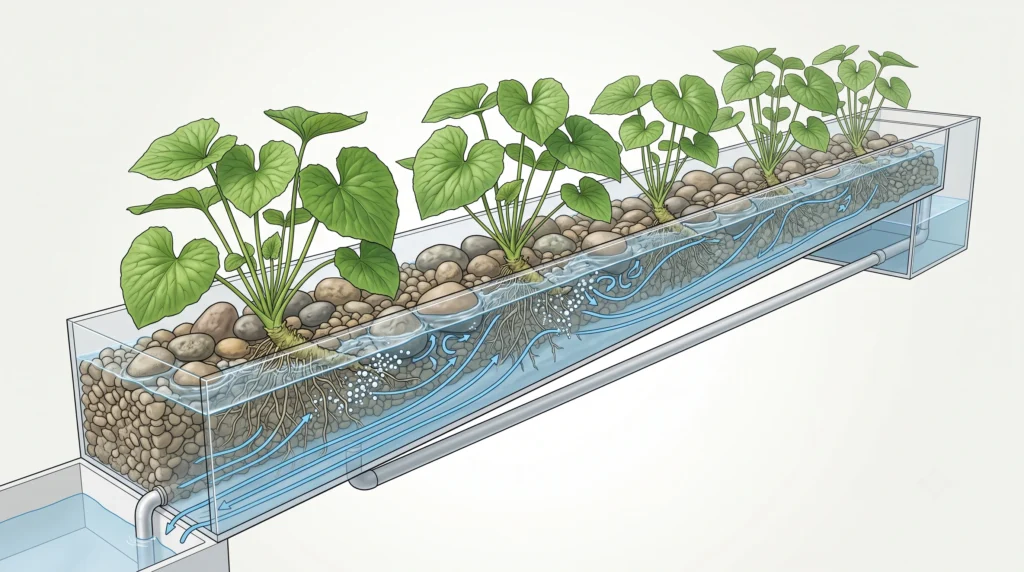
Convert this back to GPM by dividing by 0.002228, which dictates a flow requirement of 9.31 GPM per channel. If your vertical farm layout has 10 parallel channels, your manifold must deliver 93.1 GPM simultaneously. Moving massive volumes of water generates immense friction loss within the piping network. Growers must upsize their main delivery lines to 2-inch or 3-inch PVC to reduce friction and pump workload. Use our hydroponic water efficiency calculator to balance your total system volume against required channel velocity.
Dissolved Oxygen Mechanics at Low Temperatures
The physical relationship between fluid temperature and dissolved gas solubility is a core principle of wasabi cultivation. Cold water holds dissolved oxygen (DO) at much higher maximum concentrations than warm water. At 55 F, water reaches 100% oxygen saturation at approximately 10.5 milligrams per liter (mg/L). At 75 F, maximum saturation drops to 8.4 mg/L.
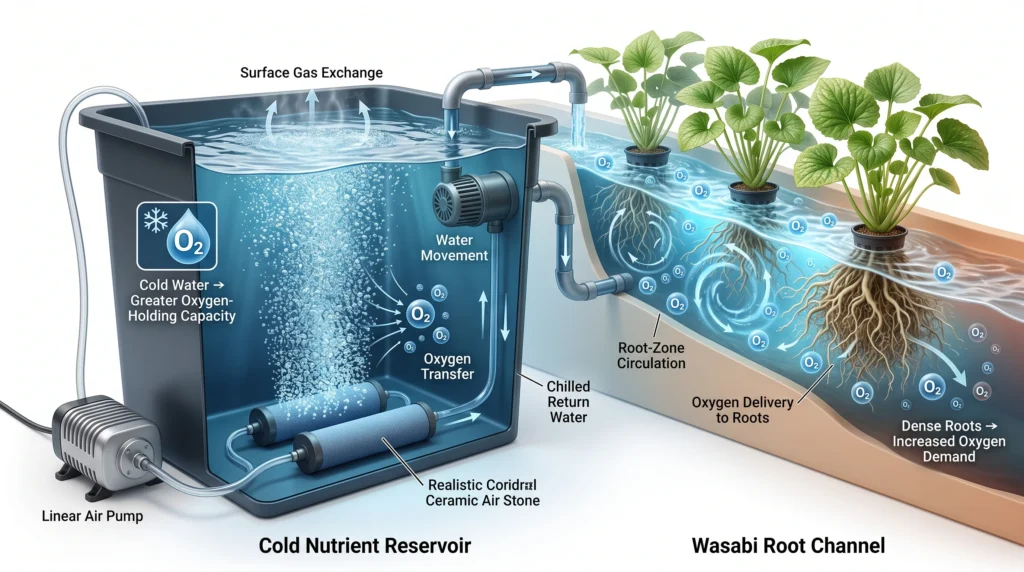
While cold water natively possesses a higher carrying capacity for oxygen, the dense root mats of mature wasabi plants strip DO from the nutrient solution much faster than passive surface exchange can replenish it. Relying on the natural flow of the stream bed is insufficient in a recirculating closed-loop system. Active, continuous oxygenation is required to prevent hypoxic conditions at the root boundary layer.
Aeration stones driven by high-output linear piston air pumps are standard for small to medium reservoirs. Two 6-inch cylindrical ceramic air stones placed at opposite ends of a 100-gallon tank, driven by a pump delivering 10 to 15 liters per minute (LPM), provides a solid baseline for oxygen transfer. The goal is to create maximum agitation at the surface of the reservoir to facilitate off-gassing of carbon dioxide and in-gassing of ambient oxygen.
Commercial systems processing hundreds of gallons per minute rely on venturi injectors installed directly on the chiller return lines. As pressurized water is forced through the venturi constriction, internal pressure drops, drawing atmospheric air into the stream and shearing it into microscopic bubbles. Microbubbles possess immense surface area-to-volume ratios, maximizing gas transfer efficiency directly into the solution. Target a continuous DO reading of 8.0 to 10.0 mg/L in the root zone. Monitor this variable constantly using calibrated digital probes. Select medical-grade probes via our hydroponic sensors guide.

- POWERFUL AERATOR PUMP & ENERGY CONSERVATION – AQQA fish tank air pump 3 watt equipped with a high-quality pump, the pump…
- NOISE REDUCTION ULTRA QUIET FUNCTION – The aquarium air pump features a sturdy double-layer structure with a built-in ai…
- DURABLE STAINLESS STEEL DUAL OUTLET DESIGN – The fish air pump designed with 2 stainless steel outlets, long service lif…
Water Quality Chemistry and Filtration
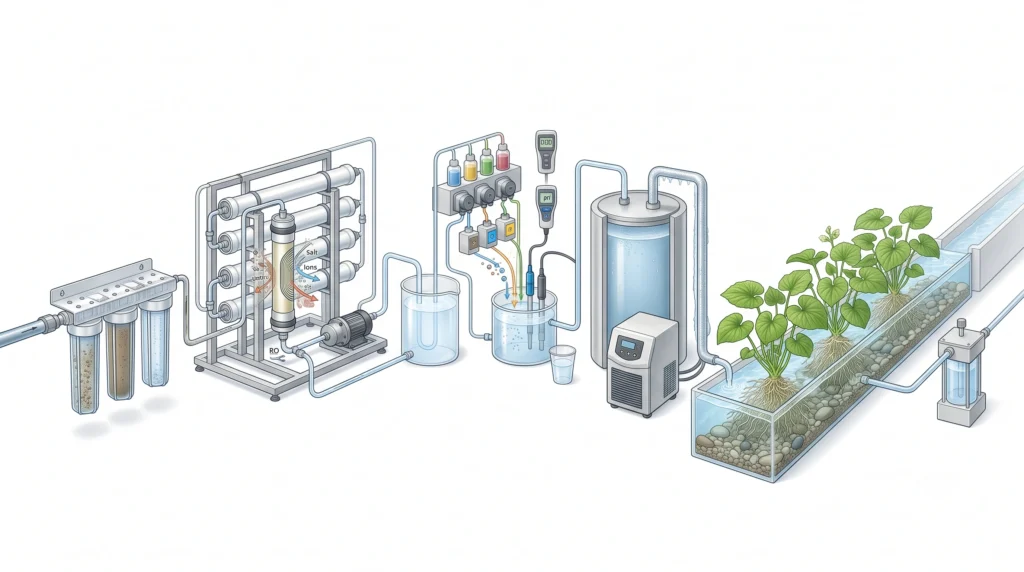
Wasabi evolved in pristine mountain runoff entirely free of human pollutants and municipal chemical additives. Source water chemistry dictates the baseline success or failure of the entire crop cycle. Growers must test source water for pH, total dissolved solids (TDS), mineral content, and municipal sanitizers before introducing a single drop to the system. Strict water parameters must be maintained throughout the 18-month growth cycle.
Target Parameters for Eutrema japonicum:
- pH: 6.0 to 7.0 (Slightly wider than standard hydroponic crops, but must remain highly stable).
- TDS/EC: Source water must start below 150 ppm (0.3 mS/cm) before adding any base nutrients.
- Chlorine/Chloramine: Absolute zero. Even trace municipal sanitizers will burn delicate root hairs and destroy beneficial bacteria.
- Heavy Metals/Iron: Below detection limits. Excess iron easily precipitates on roots in cold water, causing brown staining and catastrophic nutrient lockout.
Reverse osmosis (RO) filtration is the only reliable way to achieve these metrics. RO filtration forces water across a semi-permeable membrane, stripping it of all dissolved minerals and municipal chemicals, providing a pure blank slate. However, bare RO water is structurally aggressive and completely lacks calcium and magnesium carbonates. This means its pH will swing violently when minimal amounts of fertilizer are added.
Growers must remineralize RO water with a dedicated Cal-Mag supplement or potassium bicarbonate to stabilize the alkalinity buffer before adding base hydroponic nutrients. Strict adherence to the parameters outlined in our hydroponic pH and EC guide 2026 is required to prevent wild pH drifts.
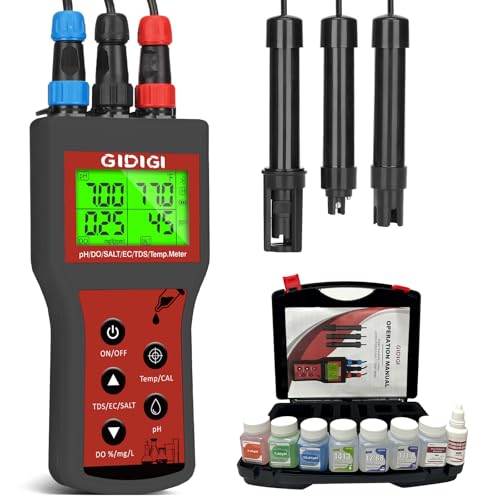
- 【Smart 6-in-1 Multi-Parameter Display】 The GIDIGI Dissolved Oxygen Meter for water testing by displaying real-time measu…
- 【Lab-Grade Accuracy Meets Hassle-Free Calibration & Complete Accessories】 Say goodbye to complex setups—the GIDIGI disso…
- 【Pro Tool for Ponds, Aquariums & Hydroponics with Smart Compensation】 Engineered for demanding environments, the GIDIGI …
Substrate Biology and Media Selection
Although wasabi is grown in water, authentic Japanese cultivation relies heavily on the physical structure of the stream bed. The Tatami-ishi system uses a specifically engineered, tiered rock bed. The top layer consists of small gravel, the middle layer contains medium rocks, and the base utilizes large boulders. This structured matrix acts as a massive physical biofilter, fostering immense colonies of nitrifying bacteria and beneficial microbes that process organic waste and stabilize the ecosystem.
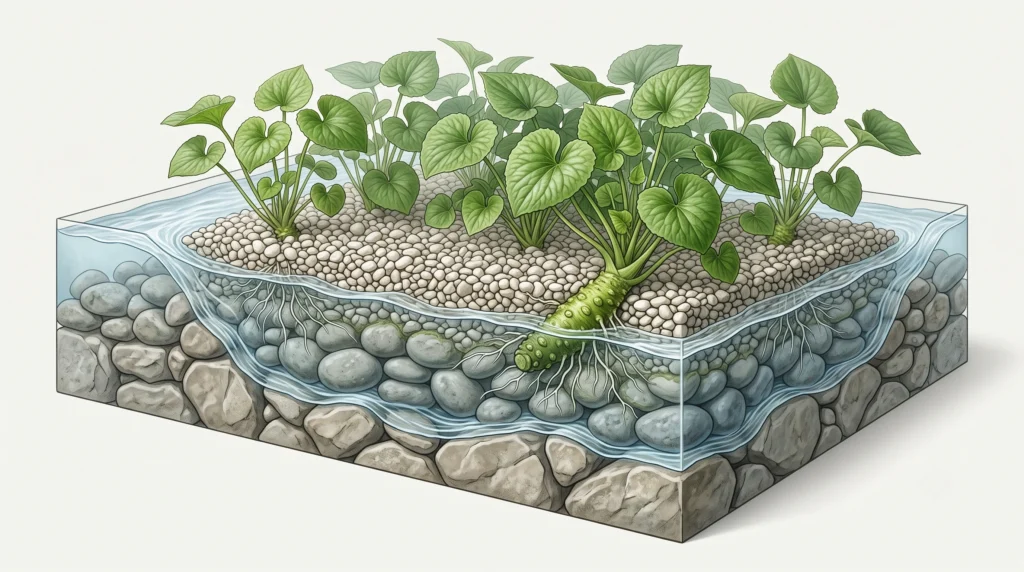
In an indoor hydroponic setup, simulating this environment requires a carefully selected deep media bed. Expanded clay pebbles (LECA) feature high internal porosity, making them an excellent habitat for microbes, but they tend to float until fully saturated and can be washed away by high-velocity streams. Heavy river rock provides excellent anchoring weight for top-heavy wasabi canopies and resists the force of the water stream, but it adds massive physical weight to the greenhouse benches, necessitating reinforced steel framing.
Integrating a functional biological filter into a cold-water system is uniquely challenging because low temperatures severely suppress bacterial metabolic rates. At 55 F, the conversion of ammonia to nitrite and nitrate by Nitrosomonas and Nitrobacter bacteria occurs at less than half the speed compared to a system operating at 75 F. Hydroponic operators running wasabi systems must double the physical volume of their biological media bed to compensate for this cold-induced lethargy. Inoculate media beds deliberately with cold-tolerant beneficial bacteria strains as detailed in our hydroponic microbes enzymes guide.
Photobiology and PPFD Thresholds
Wasabi is an obligate shade plant. In the wild, it grows beneath dense forest canopies that filter out the majority of direct solar radiation. Exposure to direct, high-intensity sunlight destroys the plant’s chloroplasts, causing immediate phototoxicity, severe leaf scorching, and halted rhizome development.
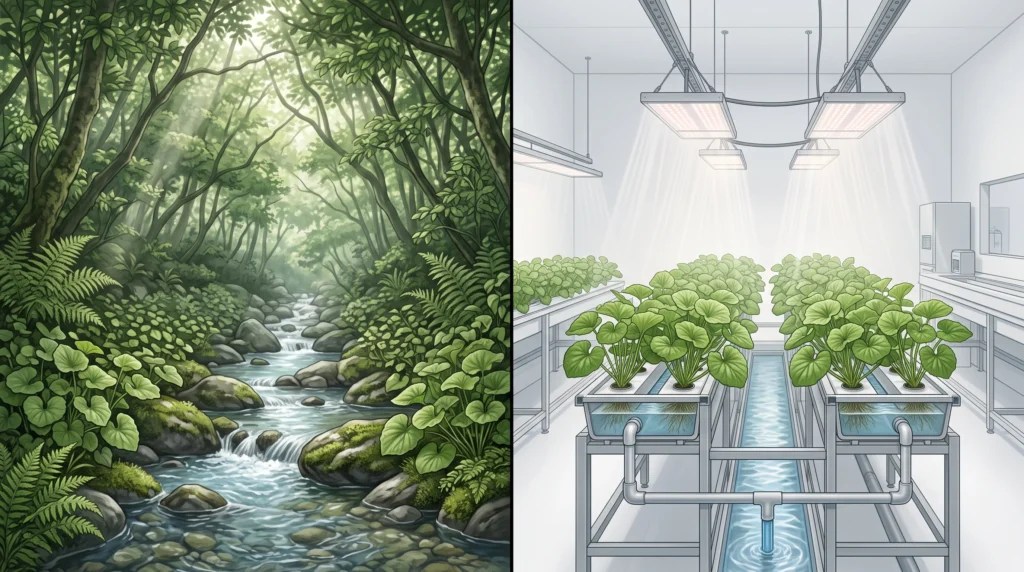
The maximum Photosynthetic Photon Flux Density (PPFD) for Eutrema japonicum is strictly between 150 and 250 micromoles per square meter per second (umol/m2/s). Pushing light intensity higher than 250 umol/m2/s triggers severe stress responses and forces the plant to expend energy repairing cellular damage rather than expanding rhizome mass.
If growing in a traditional greenhouse environment, growers must deploy heavy shade cloth systems. Deployment of 75% to 80% light reduction grids is required during peak summer months to block excess solar radiation and prevent thermal heat gain inside the greenhouse.
Indoor cultivation using LED fixtures provides a highly predictable and easily managed photobiological environment. Set LED arrays to emit a spectrum heavily weighted toward the blue and green bands, while minimizing the deep red and far-red spectrums that induce internodal stretching. Because the PPFD requirement for wasabi is exceptionally low, LED fixtures can be dimmed significantly. This saves immense amounts of electrical energy while substantially lowering the ambient thermal load rejected into the grow room. Calibrate your fixtures to the exact micro-mol target using our led distance ppfd guide.
Nutrient Profiling and Sulfur Chemistry
Standard vegetative growth requires balanced nitrogen, phosphorus, and potassium, but wasabi is exclusively cultivated for the swollen stem structure known as the rhizome. High nitrogen levels during the middle and late stages of the crop cycle push excessive, massive leaf growth entirely at the expense of rhizome girth. Growers must transition to a bloom or root-development formulation higher in phosphorus and potassium as the plant matures past the six-month mark.
Flavor development is entirely dependent on exact sulfur chemistry. The intense, pungent heat characteristic of authentic fresh wasabi does not come from capsaicin, but rather from volatile compounds called allyl isothiocyanates. The plant synthesizes these volatile compounds from sulfur-containing precursors called glucosinolates.
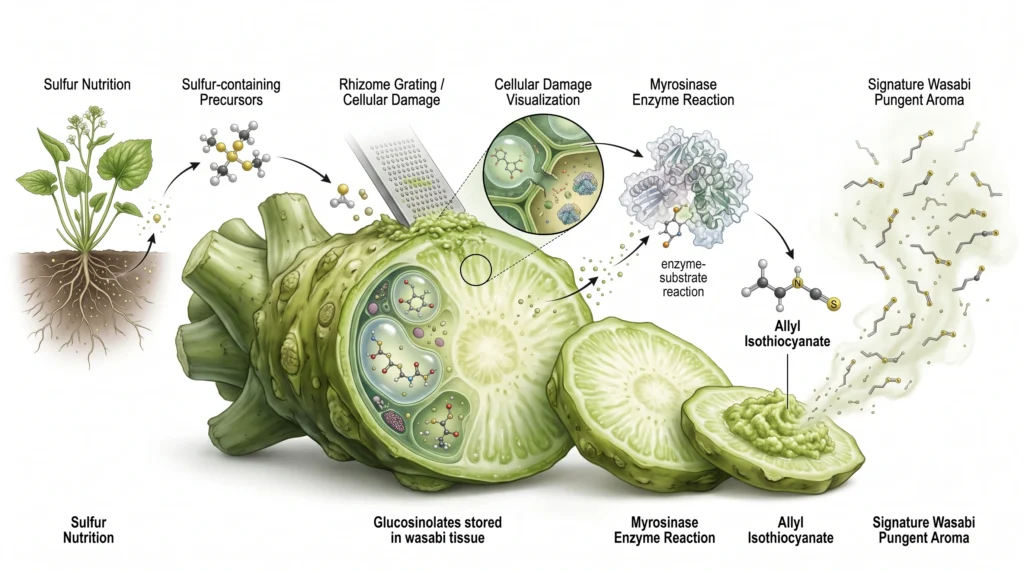
Hydroponic nutrient solutions for wasabi must maintain elevated elemental sulfur levels (between 40 and 60 ppm) to fuel the continuous production of these secondary metabolites. Without sufficient bio-available sulfur in the nutrient stream, the harvested rhizome will be completely bland and commercially worthless. For more on compounding raw mineral salts to hit exact elemental targets, see our hydroponic nutrients guide. Manage dosing automatically with advanced hardware by reviewing the best hydroponic controllers under 200.
System Cleaning and Sanitation Protocols
Cold water naturally slows bacterial replication, but organic root exudates and undissolved mineral salts will still accumulate on pipe walls and reservoir floors. A strict, non-negotiable sanitation protocol is required to prevent the establishment of Pythium and Phytophthora pathogens. Waterborne pathogens thrive in anaerobic zones; consult our hydroponic root rot prevention protocol to design clean layouts.
Monthly Maintenance: Isolate the primary reservoir, drain the fluid entirely, and physically scrub the interior walls with a 10% phosphoric acid solution. This safely dissolves precipitated mineral scale. Rinse thoroughly with clean RO water. Inspect all air stones and soak them in hydrogen peroxide to clear clogged ceramic pores and restore oxygen delivery.
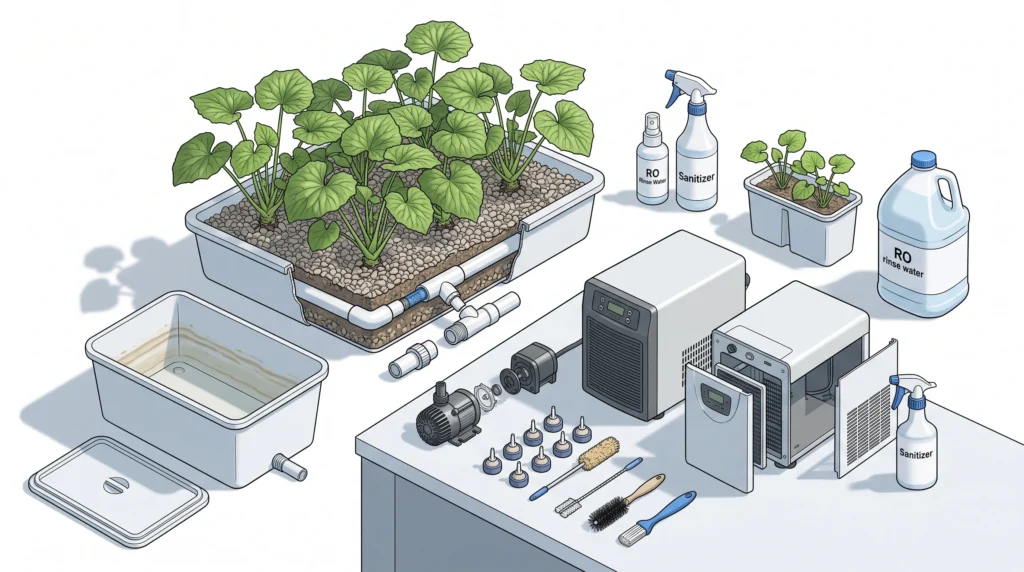
Quarterly Deep Clean: Shut down the primary fluid loop. Temporarily place the wasabi plants in a secondary holding tank. Flush the entire plumbing network, stream channels, and internal chiller coils with a 10% bleach (sodium hypochlorite) solution for exactly 30 minutes to chemically strip all biofilm. Biofilm acts as an armored protective matrix for pathogens; destroying it is mandatory. Rinse the entire system with clean water until zero chlorine registers on a chemical test strip. Keep aphids and fungus gnats away by implementing our hydroponic ipm guide.

Why it’s necessary: Wrapping your reservoir in thermal insulation stops ambient room heat from warming the water, dramatically reducing the electrical workload on your chiller.nKey Spec: Closed-cell foam core with reflective metallic outer barrier.
Harvesting, Processing, and Economics
Harvesting wasabi is an exercise in extreme patience and long-term facility planning. From tissue culture clone or seed to a harvestable rhizome, the timeline is typically 18 to 24 months. During this extended operational cycle, the plant requires continuous environmental monitoring and zero mechanical failures. Once the main rhizome reaches 6 to 8 inches in length and 1.5 to 2.0 inches in diameter, it is ready for extraction.
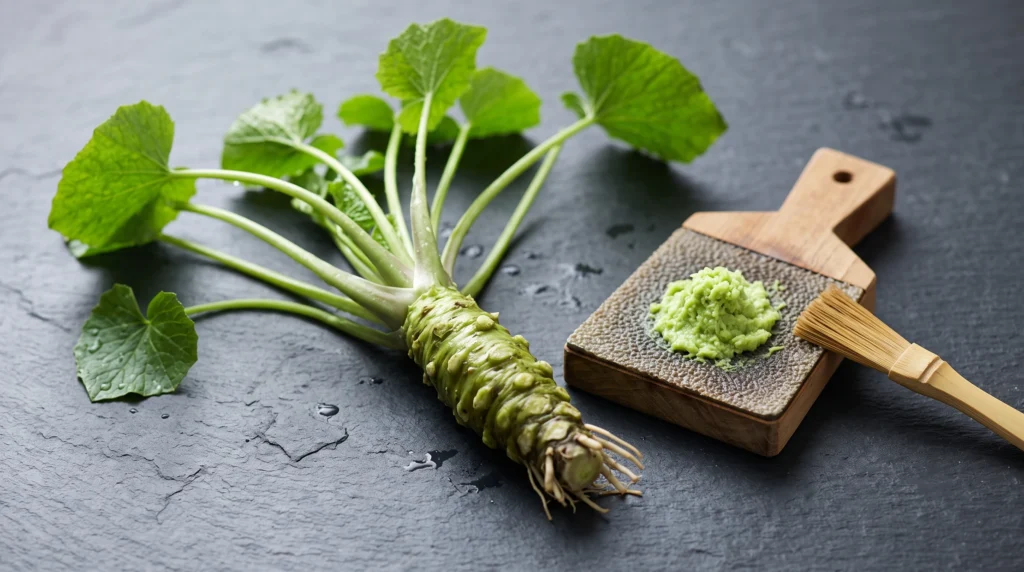
The entire plant is removed from the stream channel. The fine roots are trimmed away with sterilized shears, leaving only the swollen, knobby stem. The large, heart-shaped leaves and long petioles (leaf stems) are completely edible and highly sought after by culinary chefs for salads and pickling. The rhizome itself must be cleaned gently with a soft-bristled brush under running water to remove any residual media or organic debris.
The volatile flavor compounds in wasabi are highly unstable upon cellular rupture. When the rhizome is grated using a traditional sharkskin grater (orohshigane), physical cellular damage mixes the internal enzyme myrosinase with the glucosinolates, creating the allyl isothiocyanate gas that provides the signature sinus-clearing heat.
This chemical reaction is extremely brief. The flavor profile peaks at exactly 5 minutes post-grating and dissipates entirely into a bitter, bland paste after just 15 to 20 minutes. Due to this rapid biochemical degradation, real wasabi is never sold as a pre-mixed paste in tubes. The bright green paste found in standard commercial sushi restaurants is a synthetic mixture of horseradish, mustard powder, and green food coloring. True wasabi must be served whole and grated fresh directly at the dining table.
Frequently Asked Questions
Can I grow wasabi indoors in a standard grow tent?
Yes, but you must modify the environment significantly. A dedicated water chiller and low-intensity LED lighting are mandatory. A standard grow tent runs far too hot without a dedicated air conditioner and fluid chilling loop.
How long does it take for hydroponic wasabi to reach harvest size?
Expect a timeline of 18 to 24 months. Consistency in cold water delivery and strict temperature clamping are the primary drivers of growth speed and final rhizome girth.
Can I use standard vegetative hydroponic nutrients for wasabi?
Standard vegetative formulas work acceptably for early leaf and stem growth, but late-stage rhizome development requires specialized formulations with elevated sulfur and potassium to drive flavor and bulk.
Why are my wasabi leaves turning pale yellow?
Yellowing leaves (chlorosis) in cold-water systems often indicate a severe iron deficiency caused by high pH levels, or the early onset of root rot due to stagnant water. Check your pH limits and ensure dissolved oxygen levels remain above 8.0 mg/L.
Can I grow wasabi in a Deep Water Culture (DWC) system?
No. DWC infrastructure fully submerges the crown of the plant, leading to inevitable crown rot and total crop loss. Wasabi requires a shallow stream (Modified NFT or media bed) that keeps the delicate crown dry while oxygenating the lower roots.
Is it possible to breed my own wasabi plants?
Yes, mature wasabi produces small white flowers and viable seeds, but propagation via vegetative offshoots (the small side shoots extending from the main rhizome) is much faster and guarantees exact genetic cloning of the mother plant.

Continue Your Learning Journey