Nutrient Lockout vs Deficiency in Hydroponics: Diagnosis and Recovery Protocol

Table of Contents
- The Physiology of Nutrient Uptake and Failure
- The Chemistry of pH-Driven Lockout
- Osmotic Pressure and EC-Driven Lockout
- Nutrient Antagonism: The Hidden Lockout
- Step-by-Step Diagnostic Flowchart
- Detailed Recovery Protocols
- Prevention Strategies and System Maintenance
- MISTCULTURE GROWER TOOLBOX
- Frequently Asked Questions
- Conclusion: Mastering Root Zone Chemistry
Disclosure: MistCulture summarizes verified product specs, engineering data, and community feedback. We may earn an affiliate commission if you purchase through our links. Regulations vary by location; this content is for educational purposes only.
Yellowing leaves, necrotic margins, and stunted growth are the universal distress signals of a failing hydroponic crop. When these symptoms appear, the immediate reaction of many novice growers is to pour more fertilizer into the reservoir. This reflex often destroys the crop entirely. The visual presentation of nutrient lockout and nutrient deficiency is identical on the plant canopy. A magnesium deficiency causes interveinal chlorosis on older leaves, and a magnesium lockout causes the exact same interveinal chlorosis. The physiological impact on the plant is the same: the cells lack the elements required for photosynthesis and metabolism.
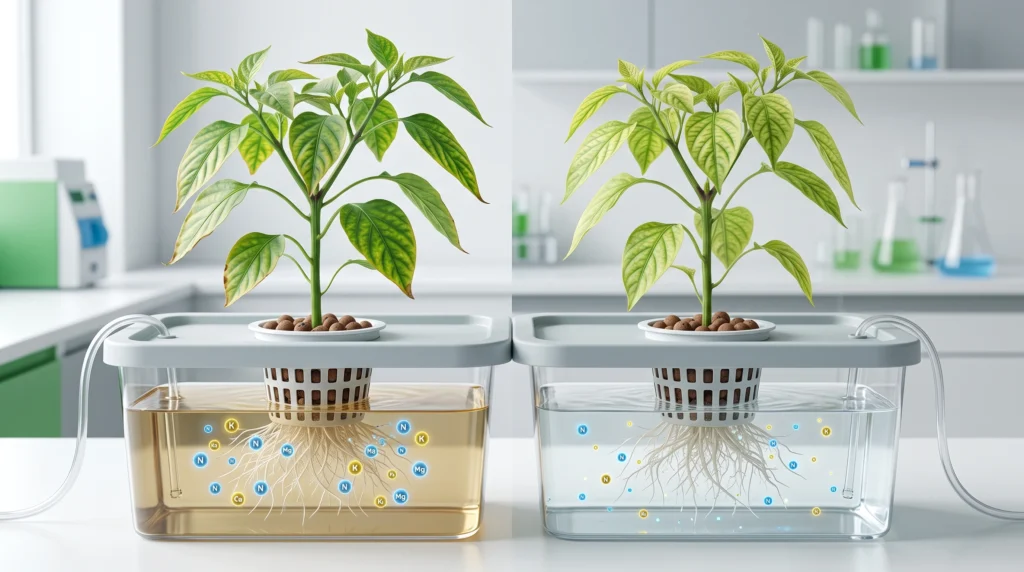
The distinction lies entirely within the chemistry of the root zone. A deficiency means the physical ions are missing from the water. A lockout means the ions are floating in the reservoir in high quantities, but chemical or physical barriers prevent the root cortex from absorbing them. Treating a lockout like a deficiency by adding more fertilizer exacerbates the hostile root zone conditions, accelerating cellular death.
This technical guide breaks down the physical and chemical mechanics separating these two phenomena. By mastering reservoir chemistry, you will learn to accurately diagnose the root cause of plant distress and execute precise recovery protocols without relying on guesswork.
The Physiology of Nutrient Uptake and Failure
Hydroponic plants absorb water and elements through the root epidermis via active transport and osmosis. When the reservoir chemistry falls out of balance, these transport mechanisms fail, causing the plant to starve while surrounded by food.
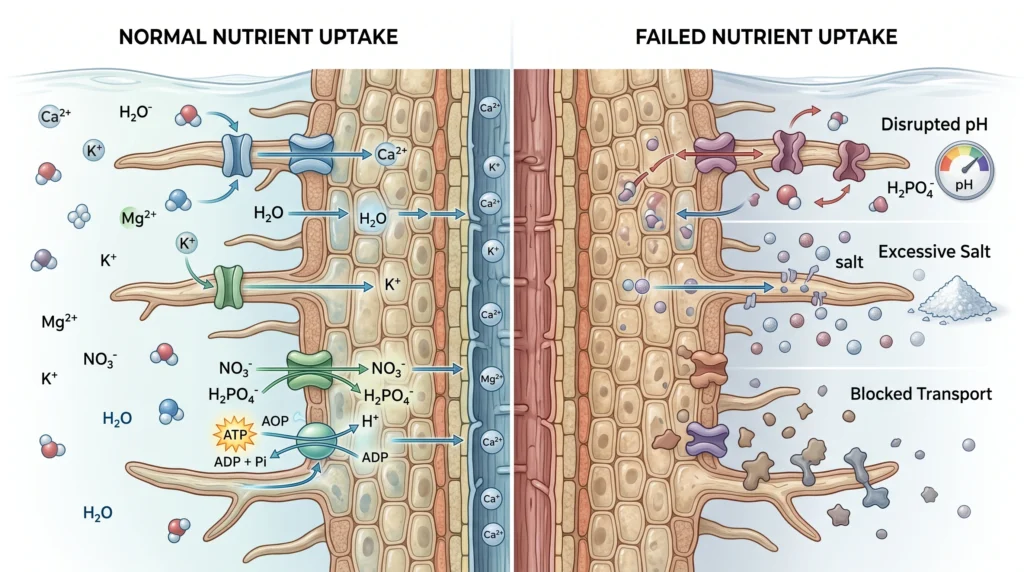
To understand why lockout occurs, we must look at how roots function. Roots do not drink water like a sponge; they selectively pull ions across cellular membranes using carrier proteins. This process requires energy (ATP) and specific environmental conditions to function.
Elements in your nutrient solution exist as charged ions. Cations are positively charged (Calcium Ca2+, Potassium K+, Magnesium Mg2+), and anions are negatively charged (Nitrate NO3-, Phosphate H2PO4-). The root hairs exchange hydrogen ions (H+) and hydroxide ions (OH-) to pull these elements across the cellular membrane.
When the concentration of hydrogen ions in the water fluctuates, the pH of the solution changes. When the total concentration of dissolved salts fluctuates, the Electrical Conductivity (EC) changes. Both variables directly manipulate the physical pressure and electrical gradients the roots rely on to feed.
A nutrient deficiency is straightforward: the plant depletes the available ions in the reservoir, and the grower fails to replenish them. The transport mechanisms function perfectly, but the carrier proteins find nothing to grab.
A nutrient lockout is a systemic failure. The ions are present, but the carrier proteins cannot grab them because the pH has altered the electrical charge, the osmotic pressure has reversed, or competing ions are physically blocking the transport channels. You can read more about establishing baseline targets in our complete hydroponic systems guide.
The Chemistry of pH-Driven Lockout
Every elemental ion has a specific pH range where it remains soluble in water. Pushing the reservoir pH outside this specific window causes ions to precipitate into solid compounds or lose their electrical affinity for root carrier proteins.
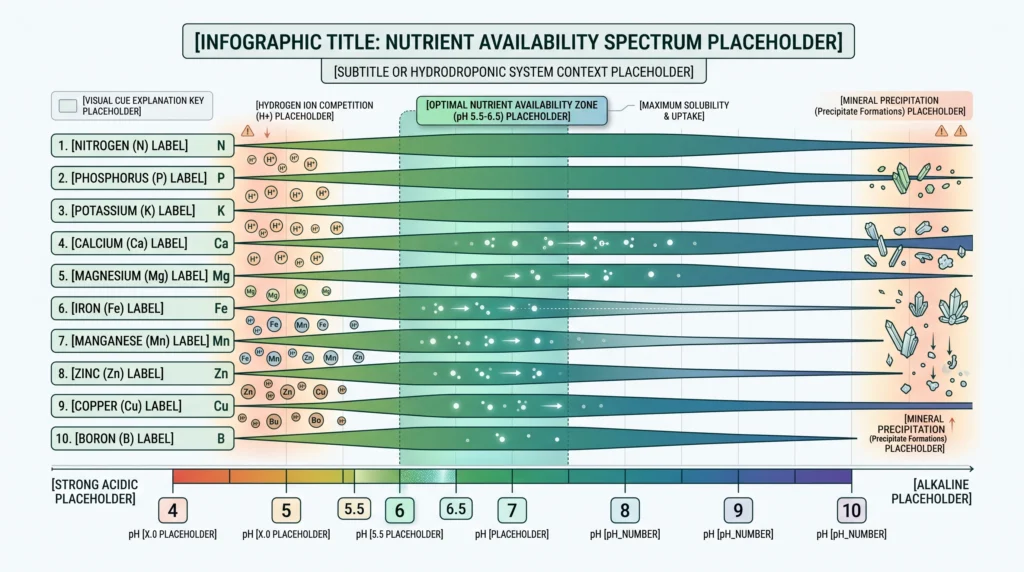
The potential of hydrogen (pH) is a logarithmic scale measuring the concentration of free hydrogen ions in the water. A pH of 5.0 is ten times more acidic than a pH of 6.0. In hydroponics, the target pH range is universally accepted as 5.5 to 6.5. This window represents the optimal overlap where the maximum number of essential elements remains water-soluble and electrically available.
At what pH does nutrient lockout occur in hydroponics?
Hydroponic nutrient lockout occurs when the reservoir pH drifts outside the optimal 5.5 to 6.5 range. Below 5.5, macronutrients like Nitrogen, Potassium, and Magnesium lock out due to hydrogen ion competition. Above 6.5, micronutrients like Iron, Zinc, Copper, and Boron, alongside Phosphorus and Calcium, precipitate into solid, unabsorbable mineral forms
Cation and Anion Precipitation
When pH drifts outside the 5.5 to 6.5 window, a chemical reaction called precipitation occurs. Ions collide and bond together, forming insoluble solid molecules that fall to the bottom of the reservoir as sediment. Plant roots cannot absorb solid molecules; they can only absorb dissolved single ions.
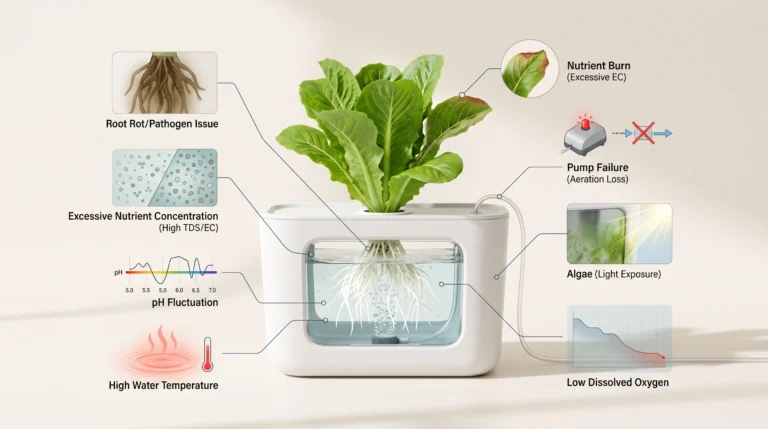
If your pH drifts too high (above 6.5), calcium (Ca2+) and phosphorus (H2PO4-) react to form calcium phosphate. This instantly removes both calcium and phosphorus from the available solution. The meter may still read a high EC because the elements are technically in the tank, but the plant will display severe phosphorus deficiency (purple stems) and calcium deficiency (tip burn).
If your pH drops too low (below 5.5), macronutrients like nitrogen, potassium, and magnesium become restricted. The high concentration of hydrogen ions physically outcompetes these cations for space on the root membrane transport channels.
Element-Specific pH Windows
Different elements lock out at different thresholds. Memorizing these thresholds prevents misdiagnosis:
- Iron (Fe): Highly susceptible to lockout at high pH. Above 6.2, iron begins to oxidize from its usable ferrous state into an unusable ferric state unless protected by advanced chelating agents like EDDHA or DTPA. High pH environments almost always trigger iron lockout, presenting as yellowing on the newest top leaves.
- Calcium (Ca) and Magnesium (Mg): These secondary macronutrients lock out at low pH. Below 5.5, the plant struggles to transport them. This frequently happens in systems using reverse osmosis water without proper buffering.
- Phosphorus (P): Locks out heavily above 6.5 due to precipitation with calcium, and again below 5.0.
- Manganese (Mn), Boron (B), Zinc (Zn), and Copper (Cu): These micronutrients prefer highly acidic environments and will readily lock out if the pH climbs past 6.5.
A stable pH is the foundation of nutrient availability. For a deeper dive into managing daily fluctuations, review our hydroponic pH and EC mastery guide.
Osmotic Pressure and EC-Driven Lockout
Electrical Conductivity (EC) measures total dissolved salts. When EC climbs too high, the osmotic pressure of the solution exceeds the internal pressure of the roots, reversing the flow of water and dehydrating the plant.
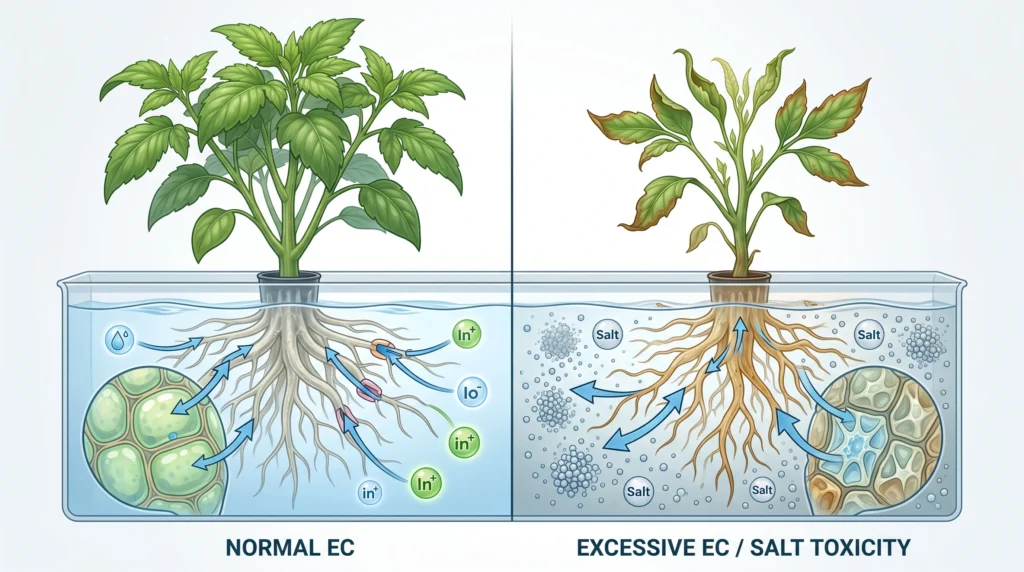
The second primary cause of nutrient lockout is osmotic stress, driven by excessive fertilizer concentrations. Plants absorb water through a passive process called osmosis. Water naturally moves across a semi-permeable membrane from an area of low solute concentration to an area of high solute concentration.
Under normal conditions, the fluid inside the plant’s root cells has a higher concentration of salts, sugars, and organic acids than the hydroponic reservoir. This creates a negative water potential inside the root, acting like a vacuum to pull water and dissolved nutrients out of the reservoir and into the plant.
When a grower adds too much fertilizer, or when evaporation concentrates the existing salts, the EC of the reservoir spikes. If the EC of the reservoir exceeds the internal EC of the root cells, the osmotic gradient reverses. The reservoir now has the stronger vacuum. The roots can no longer pull water inward; instead, the nutrient solution sucks water out of the roots.
What is osmotic lockout (salt toxicity)?
Osmotic lockout, or salt toxicity, occurs when the Electrical Conductivity (EC) of the reservoir exceeds the internal electrical conductivity of the root cells. This reverses the normal osmotic gradient. Instead of the roots absorbing water, the high-salt reservoir pulls water out of the root cells, causing cellular dehydration (physiological drought) and crispy, burned leaf margins
Recognizing Salt Toxicity and Burn
The plant is now effectively dehydrated, a state known as physiological drought. Because water acts as the transport vehicle for nutrients moving up the xylem to the leaves, nutrient transport halts entirely.
The plant will display symptoms of severe nutrient lockout coupled with tissue desiccation. The margins (edges) of the leaves will turn brown, crispy, and curl upward as the cells die from lack of water. The new growth will look pale, stunted, and weak. The overall appearance is a plant burning to death. Adding more nutrients in this scenario will rapidly kill the plant.
Low EC can also present a problem, though it results in a true deficiency rather than a lockout. If the EC drops below the crop’s minimum requirement, the concentration gradient is too weak to provide sufficient elemental mass, even though water uptake is maximized. You can run precise calculations for your crop using our hydroponic nutrient calculator.
Nutrient Antagonism: The Hidden Lockout
Certain elements share similar chemical properties and utilize the same transport channels on the root membrane. An extreme excess of one specific element will physically block the absorption of another, causing a targeted lockout without affecting pH or overall EC.
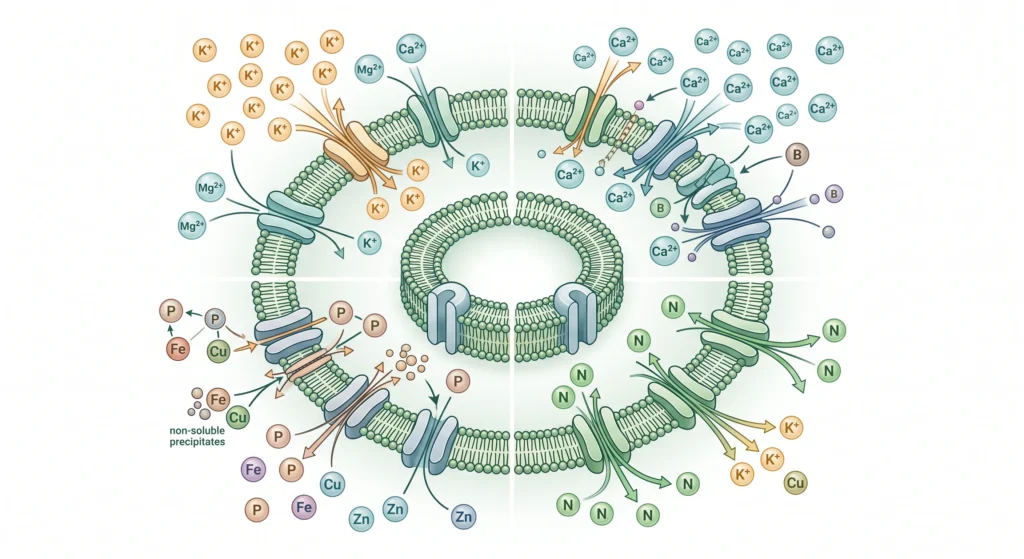
Lockout is not always caused by extreme pH or massive EC spikes. Sometimes, a grower mixes a nutrient solution that is poorly balanced. This phenomenon is mapped on a scientific diagram known as Mulder’s Chart of Nutrient Interactions, which details how elements act as antagonists to one another.
When root carrier proteins open to absorb positively charged cations, they grab whatever ions are most abundant. If you flood a reservoir with excessive potassium (K+) during the flowering phase, those potassium ions will crowd the transport channels. Magnesium (Mg2+) and Calcium (Ca2+), which share similar absorption pathways, get pushed aside. The plant will display severe magnesium deficiency (yellowing between the veins of older leaves) despite having adequate magnesium in the tank.
Common antagonist relationships include:
- High Potassium (K) locks out Magnesium (Mg) and Calcium (Ca).
- High Calcium (Ca) locks out Potassium (K) and Boron (B).
- High Phosphorus (P) locks out Zinc (Zn), Iron (Fe), and Copper (Cu).
- High Nitrogen (N) locks out Potassium (K) and Copper (Cu).
This is why formulating balanced hydroponic solutions is critical. Throwing arbitrary “bloom boosters” or “cal-mag supplements” into a reservoir alters the chemical balance and induces antagonistic lockouts. Strict adherence to proper mixing ratios is required. Refer to our hydroponic nutrients guide for exact formulation science.
The Hydroponic Nutrient Interaction Matrix
| Potassium (K⁺) | Magnesium (Mg²⁺), Calcium (Ca²⁺) [4] | Excess monovalent K⁺ ions crowd out divalent Mg²⁺ and Ca²⁺ at root membrane carrier proteins [4, 5]. | Iron (Fe), Manganese (Mn) |
| Calcium (Ca²⁺) | Potassium (K⁺), Boron (B) [4] | High calcium concentrations reduce cell wall permeability to potassium and boron [4]. | Phosphorus (P), Magnesium (Mg) |
| Phosphorus (H₂PO₄⁻) | Zinc (Zn), Iron (Fe), Copper (Cu) [4] | Phosphate anions chemically bind with micronutrient cations, forming insoluble solid precipitates in the root zone [4, 6]. | Nitrogen (N), Magnesium (Mg) |
| Nitrogen (NO₃⁻ / NH₄⁺) | Potassium (K⁺), Copper (Cu) [4] | High ammonium (NH₄⁺) competitively blocks potassium uptake; high nitrate (NO₃⁻) downregulates copper absorption [4]. | Magnesium (Mg), Phosphorus (P) |
| Magnesium (Mg²⁺) | Calcium (Ca²⁺), Potassium (K⁺) | High magnesium competitively suppresses calcium and potassium carrier channel affinity. | Phosphorus (P) |
Step-by-Step Diagnostic Flowchart
Differentiating between lockout and deficiency requires a methodical testing sequence. Relying on visual symptom identification alone will lead to incorrect diagnoses.
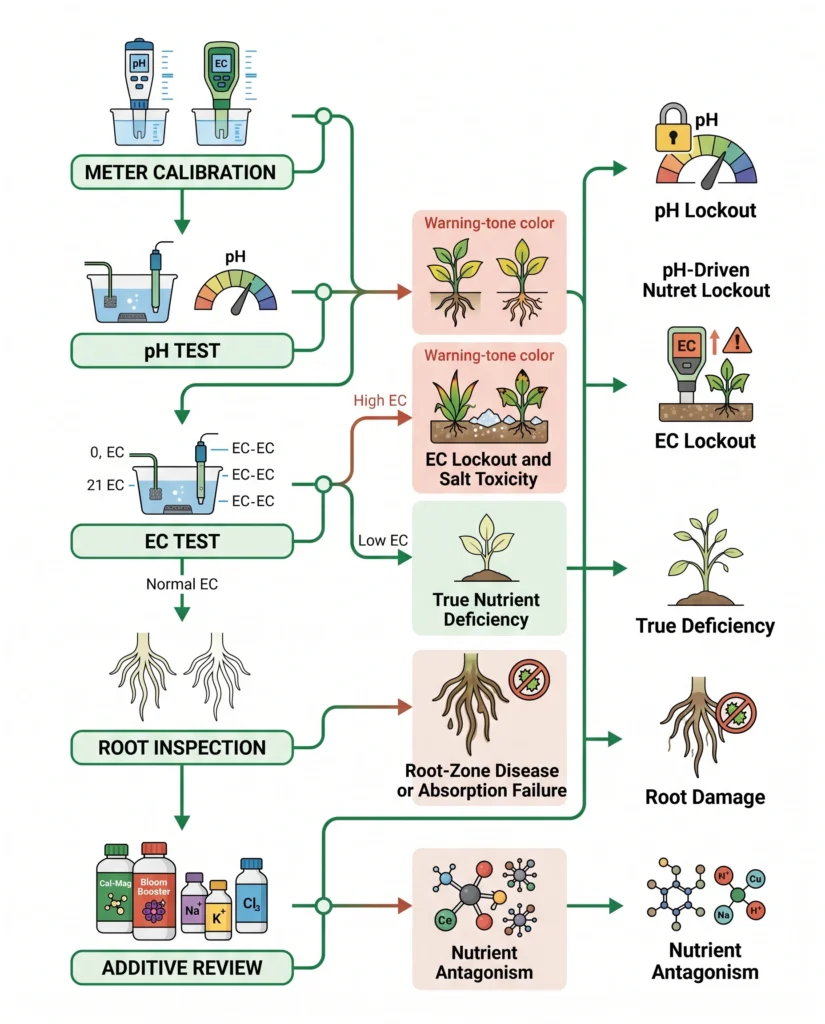
When a plant shows signs of distress, stop and execute the following diagnostic sequence before altering the reservoir chemistry.
Step 1: Check the Hardware and Calibration
Never trust an uncalibrated meter. A pH probe reading 0.4 off the actual value will cause you to chase a phantom deficiency. Place your pH and EC meters into fresh calibration fluids (pH 4.0, pH 7.0, and 1.41 EC standard). If the meters are drifting, recalibrate them immediately. Review our pH and EC meter showdown to ensure you are using reliable diagnostic tools.
Step 2: Measure the Reservoir pH
Test the water directly near the pump intake.
- Result outside 5.5 to 6.5: You have identified a pH-driven lockout. The elements are present but unavailable. Proceed to the pH recovery protocol.
- Result inside 5.5 to 6.5: The pH is optimal. Proceed to Step 3.
Step 3: Measure the Reservoir EC
Test the EC and compare it to the specific target range for your current crop and growth stage.
- Result significantly higher than target: You have identified an EC-driven (osmotic) lockout. The plant is suffering from salt toxicity and physiological drought. Proceed to the EC recovery protocol.
- Result significantly lower than target: You have identified a true nutrient deficiency. The plants have stripped the reservoir of ions. Proceed to the deficiency recovery protocol.
- Result matches target: The chemistry appears sound. Proceed to Step 4.
Step 4: Inspect the Root Zone Health
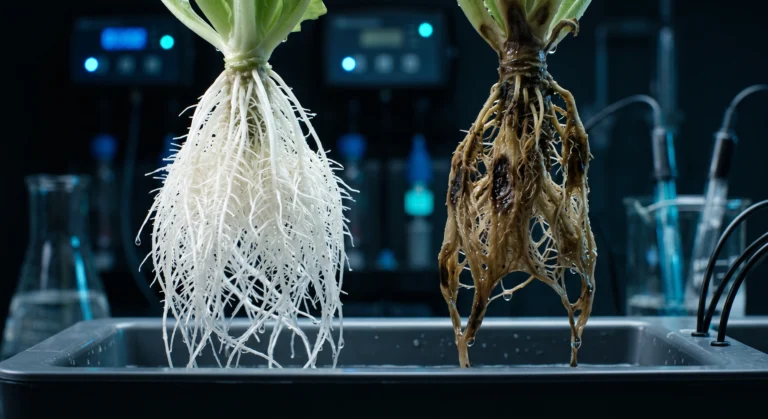
Lift the net cup or inspect the channels. Healthy hydroponic roots must be bright white, firm, and smell like fresh rain.
- Result shows brown, slimy, or foul-smelling roots: You have identified Pythium (root rot) or another pathogen. The roots are physically decaying and cannot absorb nutrients regardless of perfect water chemistry. This requires immediate pathogen intervention. Study our hydroponic root rot prevention protocols to salvage the crop.
- Result shows healthy roots: Proceed to Step 5.
Step 5: Analyze the Feed Log for Antagonism
If pH is perfect, EC is on target, and roots are pristine, review your recent nutrient additions. Have you added massive doses of Cal-Mag? Did you switch to a heavy Phosphorus bloom booster? You are likely experiencing nutrient antagonism. Flush the reservoir and reset with a balanced base nutrient profile. Heavy-feeding plants like cannabis are particularly susceptible to this; see our cannabis pH and nutrient lockout guide for crop-specific antagonist tracking.
Detailed Recovery Protocols
Treating the root cause requires precision. Aggressive over-correction will shock the plant, causing further damage to the delicate root hairs and stalling growth entirely.
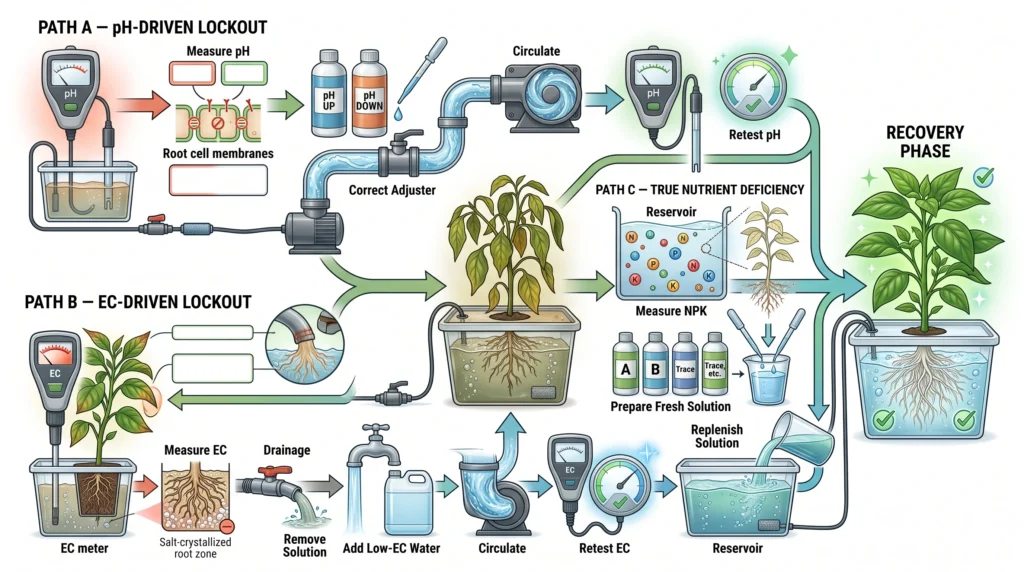
Once you have diagnosed the exact nature of the failure, execute the corresponding recovery protocol with measured, incremental adjustments.
Protocol A: Recovering from pH-Driven Lockout
Do not dump pure acid or base directly into the reservoir. Hydroponic solutions have varying buffer capacities depending on the mineral content of the source water.
- Draw 1 gallon of water from the reservoir into a separate bucket.
- Add dilute pH Down (Phosphoric acid) or pH Up (Potassium hydroxide) drop by drop to the bucket, tracking exactly how many milliliters it takes to reach 6.0.
- Multiply that volume by the total gallons in your main reservoir.
- Dilute the calculated dose of acid/base into a pitcher of fresh water, then slowly pour it into the main reservoir near the circulation pump to ensure rapid mixing.
- Wait 1 hour and retest.
- Do not add any nutrients. Once the pH returns to the 5.5–6.5 window, the precipitated and locked-out ions will slowly dissolve and become available again. Adding more nutrients now will cause an EC spike. Wait 24 to 48 hours for the plant to resume active uptake before adjusting fertilizer levels.
Protocol B: Recovering from EC-Driven Lockout (Salt Toxicity)
High EC requires immediate dilution to relieve the osmotic pressure crushing the roots.
- Calculate the required dilution. If your reservoir is 40 gallons at an EC of 3.0, and your target is an EC of 1.5, you must replace 50% of the solution.
- Equation: (Current Volume * Current EC) + (Added Volume * Added EC) / Total Volume = New EC.
- Drain the calculated volume of water from the system.
- Replace the drained volume with pure, 0.0 EC Reverse Osmosis (RO) water. Do not use tap water, as the existing calcium and carbonates in tap water will skew the recovery EC.
- Allow the system to circulate for 2 hours and retest.
- Inspect the foliage. Badly burned necrotic leaves will not recover. Prune heavily damaged foliage to prevent opportunistic fungal infections from attacking the necrotic tissue, allowing the plant to redirect energy to new, healthy growth.
Protocol C: Recovering from True Nutrient Deficiency
If the EC is low and the pH is balanced, the plant simply needs food.
- Assess the age of the reservoir water. If the water has been circulating for more than 10 days, the elemental ratios are likely skewed. Do not just add more nutrients to old water. Drain the reservoir completely and mix a fresh, perfectly balanced batch of nutrient solution at the target EC.
- If the water is fresh (less than 4 days old), you may safely add a balanced two-part or three-part base nutrient to raise the overall EC to the target level.
- Emergency Bypass (Foliar Feeding): For severe deficiencies (particularly immobile elements like Calcium or Iron), the root system may be too slow to respond. Mix a highly diluted spray (0.2 EC) of the specific missing nutrient and a surfactant. Spray the underside of the leaves shortly before the lights turn off. The stomata will absorb the ions directly into the vascular tissue, bypassing the root zone entirely for rapid symptom relief.
Prevention Strategies and System Maintenance
Consistent environmental controls and scheduled reservoir maintenance are the only ways to permanently eliminate lockouts and deficiencies. Hydroponics is an active management system.
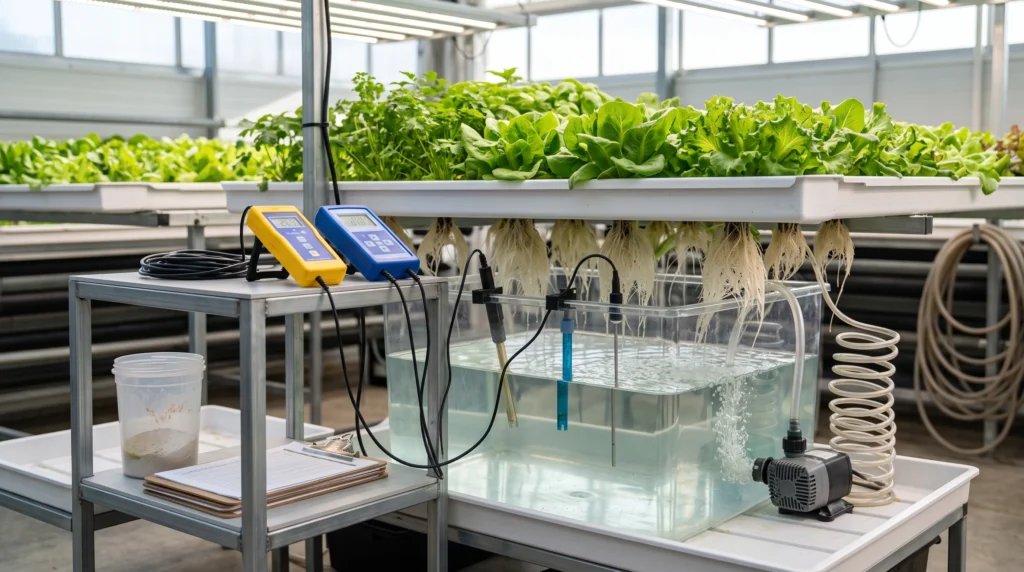
Preventing nutrient lockout requires maintaining the physical parameters of the water. Temperature plays a massive role in chemical solubility. If reservoir temperatures exceed 75°F (24°C), dissolved oxygen plummets, root respiration stalls, and anaerobic bacteria proliferate, leading to pathogenic lockout. Warm water also alters pH drift rates. Implement active or passive chilling strategies to lock reservoir temperatures between 65°F and 68°F. Review our passive hydro cooling guide for non-mechanical temperature management.
Reservoir changing schedules dictate nutrient balance. As plants drink water and absorb specific elements at varying rates, the original perfectly mixed ratio becomes distorted. A tomato plant in heavy fruit production will strip potassium rapidly while leaving nitrogen behind. After two weeks, the tank will test at a perfect 2.0 EC, but that EC will be entirely composed of unused nitrogen and waste salts, leading to severe potassium deficiency. Empty, rinse, and replace the entire volume of your hydroponic reservoir every 10 to 14 days to guarantee a fresh, balanced elemental profile.
Water chemistry limits your baseline. Tap water containing high levels of calcium carbonate (CaCO₃) possesses a high carbonate alkalinity4. This creates a powerful bicarbonate buffer system (HCO₃⁻)in the water that actively neutralizes added acids, forcing the grower to use massive, repetitive doses of phosphoric acid (H₃PO₄) to lower the pH4. This constant titration of phosphoric acid eventually causes chronic phosphorus toxicity in the reservoir, which precipitates out zinc (Zn²⁺) and iron (Fe²⁺) into insoluble mineral salts, inducing localized micro-nutrient lockouts5more_horiz. Switching to a high-efficiency Reverse Osmosis (RO) filtration system strips these carbonates, providing a blank canvas of 0.0 EC water and giving the grower 100% control over the elemental composition of the root zone34.
Recommended Hydroponic Diagnostic Gear
Accurate data collection prevents catastrophic crop failure. Relying on cheap, drifting sensors will cause you to misdiagnose lockouts and deficiencies. We recommend the following laboratory-grade equipment for serious growers.

Why it’s necessary: This commercial-grade EC meter has no buttons to break, requires zero calibration, and is completely waterproof. It provides perfectly accurate EC and PPM readings to instantly diagnose osmotic lockouts.nnKey Spec: Factory calibrated, reads EC (0.2 to 3.6) and PPM scales simultaneously.
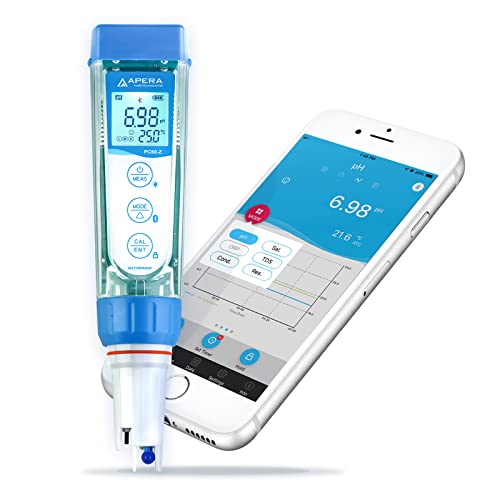
Why it’s necessary: Dual-function probe that tests pH, EC, and temperature simultaneously. The replaceable glass bulb ensures long-term accuracy when diagnosing precise pH-driven lockouts.nnKey Spec: ±0.01 pH accuracy, 1 to 3 point auto-calibration with automatic temperature compensation.
Why it’s necessary: You cannot safely adjust a pH lockout without standardized, hydroponic-specific acid and base buffers. This kit provides pure phosphoric acid and potassium hydroxide for safe titration.nnKey Spec: Includes pH indicator testing fluid as a fail-safe backup to digital probes.

Why it’s necessary: To avoid antagonist lockouts, you must use a scientifically balanced base nutrient. Masterblend separates calcium nitrate and magnesium sulfate to prevent precipitation during mixing.nnKey Spec: 100% water-soluble dry salts, highly concentrated for customized dilution ratios.
MISTCULTURE GROWER TOOLBOX
Interactive Nutrient & Diagnostic Optimization Suite
If your reservoir EC has climbed too high (causing osmotic lockouts or salt toxicity), use this calculator to determine the exact volume of water you must drain and replace with pure RO or low-EC fresh water to achieve your target EC safely.
Calculation Result
Frequently Asked Questions
What is the defining visual difference between a nutrient lockout and a nutrient deficiency?
There is no defining visual difference on the foliage. Symptoms like interveinal chlorosis, marginal necrosis, and stunting appear identical whether the element is absent from the tank (deficiency) or present but chemically unavailable (lockout). Diagnosis relies entirely on testing the pH and EC of the root zone.
Why does my pH keep rising every day, causing iron lockout?
If your pH drifts upward daily, it is generally caused by the plant aggressively consuming nitrate (NO3-). As the plant takes up a negatively charged anion, it excretes a negatively charged hydroxide ion (OH-) to maintain electrical neutrality, which raises the pH. High carbonate alkalinity in tap water will also constantly drive pH up.
Can adding too much Cal-Mag cause a deficiency?
Yes. Excessive dosing of Calcium and Magnesium supplements raises the EC significantly and introduces heavy loads of calcium cations. These calcium ions will physically outcompete potassium ions at the root membrane, inducing a severe potassium deficiency through nutrient antagonism.
How long does it take for a plant to recover after fixing a pH lockout?
Once the pH is corrected to the 5.5-6.5 range, elemental uptake resumes within hours. However, visual recovery takes 3 to 7 days. Heavily damaged or necrotic tissue will never repair itself; you must look at the new apical growth to confirm successful recovery.
Should I flush the system with plain water if I suspect salt toxicity?
You should flush the system with very low EC water (e.g., 0.3 EC using a light dose of base nutrients), not pure distilled or RO water. Flushing roots with 0.0 EC pure water can cause severe osmotic shock, causing the cells to absorb water too rapidly and rupture.
Why do I have calcium deficiency symptoms (tip burn) when my pH and EC are perfect?
Calcium is an immobile element transported exclusively through the xylem via the passive stream of water transpiration. When the u003cstrongu003eVapor Pressure Deficit (VPD)u003c/strongu003e is too low (high relative humidity) or air movement is stagnant, the plant’s stomata close, halting the transpiration stream. This stops calcium from reaching the rapidly growing leaf tips, causing localized cellular collapse and tip burn regardless of how much calcium is in the reservoir.
How to Fix the Transpiration Bottleneck:
u003cstrongu003eOptimize Vapor Pressure Deficit (VPD):u003c/strongu003e Maintain a daytime VPD target between u003cstrongu003e0.8 to 1.2 kPau003c/strongu003e for vegetative growth and u003cstrongu003e1.2 to 1.5 kPau003c/strongu003e during flowering.u003cbru003eu003cstrongu003eEstablish Air Circulation:u003c/strongu003e Introduce oscillating fans directly at the plant canopy to break the stagnant boundary layer of high-humidity air on the leaf surfaces.u003cbru003eu003cstrongu003eRun Dehumidification:u003c/strongu003e If relative humidity climbs above 65%, run a dedicated dehumidifier to restore the osmotic pull that draws water (and calcium) from root to tip.
Conclusion: Mastering Root Zone Chemistry
The line between a record-breaking harvest and total crop failure is governed by root zone chemistry. Chasing leaf symptoms with random fertilizer additives will inevitably compound the problem, burying the original deficiency under a mountain of antagonistic lockouts and osmotic stress.
By rigidly monitoring pH limits, managing EC gradients, and maintaining strict reservoir replacement schedules, you build a fortress against nutrient failure. Trust your meters, follow the diagnostic flowchart, and react with calculated precision. For more detailed diagnostics, explore our comprehensive breakdown of root environment engineering at the MistCulture Systems Guide. What will your next harvest look like once you stop guessing and start measuring?
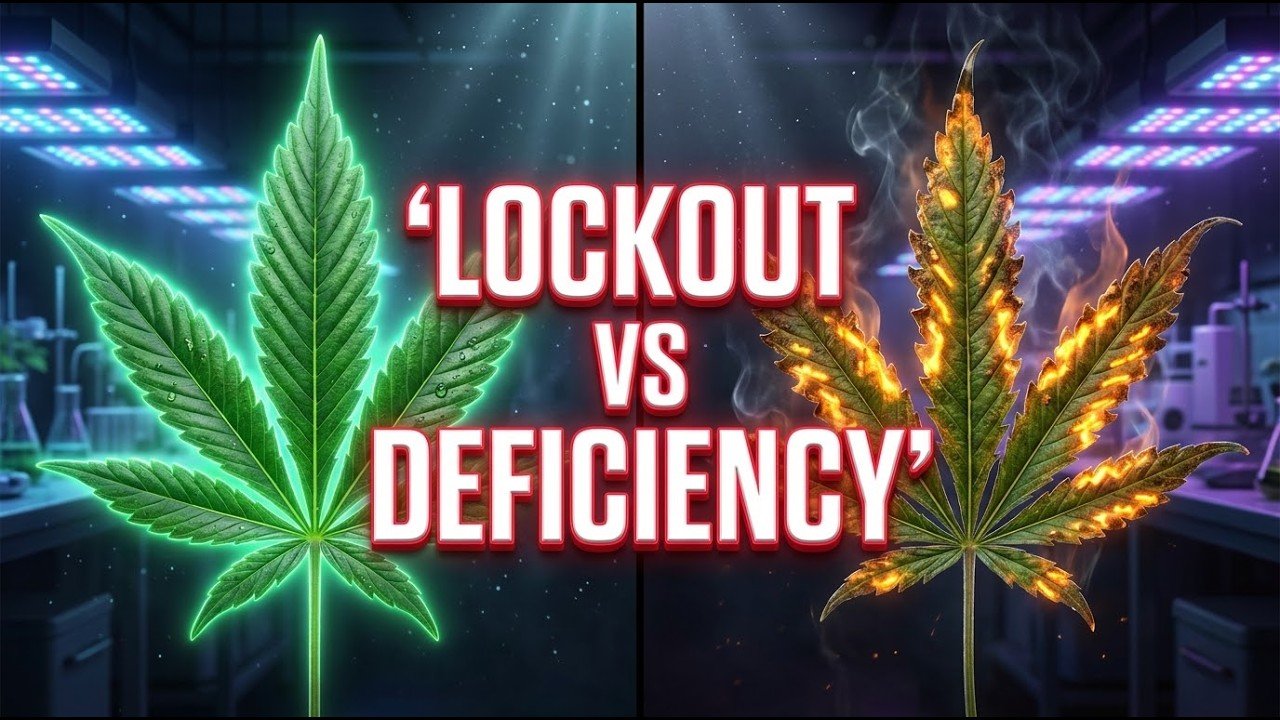
Prefer Visual Learning? Watch the Complete Video Guide
If you want to see the underlying chemistry in action, watch our high-yield visual breakdown.
In just 60 seconds, this short film demonstrates exactly how pH drift precipitates minerals, how high EC reverses osmotic root pressure to cause physiological drought, and how you can apply our 5-step recovery protocol to save your plants today.

Continue Your Learning Journey