CO2 Enrichment for Grow Tents: High PPFD, 1200 PPM

Table of Contents
- Abstract: The Carbon-Light Relationship
- Methodology: Metabolic Shifts at 1200 PPM
- Metric Tables: Aligning PPFD, Temp, and Carbon
- Interactive Tools: Dial In Your CO2 & PPFD Targets
- Grow Room Environment Calculators
- Real-World Yield Impacts
- Industry Implications and Scalability
- Essential Case Study Monitoring Gear
- FAQ: Mastering CO2 in Hydroponics
- Conclusion
When you upgrade your hydroponic garden with top-tier LED lighting, you unlock massive growth potential. Dropping a fixture capable of blasting 1000+ µmol/m²/s of light over your canopy completely alters your plant’s metabolic ceiling. Light alone cannot build plant tissue. Plants manufacture sugars by fixing atmospheric carbon. Ambient air contains roughly 400 parts per million (PPM) of carbon dioxide. Once your lighting intensity crosses a specific threshold, that 400 PPM becomes a severe physiological bottleneck.
Transforming your setup into a true co2 enrichment grow tent shatters this bottleneck. Dialing in your atmospheric carbon to match your light intensity leads to faster vegetative growth, denser fruiting bodies, and accelerated transpiration rates. We are diving deep into the science and application of the 1200 PPM CO2 threshold, evaluating how high-intensity lighting pairs with elevated carbon levels to completely rewrite the rules of indoor agriculture.
Legal Note: Regulations vary by location. Always consult local guidelines. This content is for educational purposes only.
Abstract: The Carbon-Light Relationship
Pushing canopy light levels beyond 800 µmol/m²/s requires a proportional increase in atmospheric CO2 to prevent photoinhibition and maximize photosynthesis. Operating a closed-loop system at 1200 PPM CO2 allows C3 plants to utilize high-intensity light efficiently, leading to significant increases in total dry biomass.
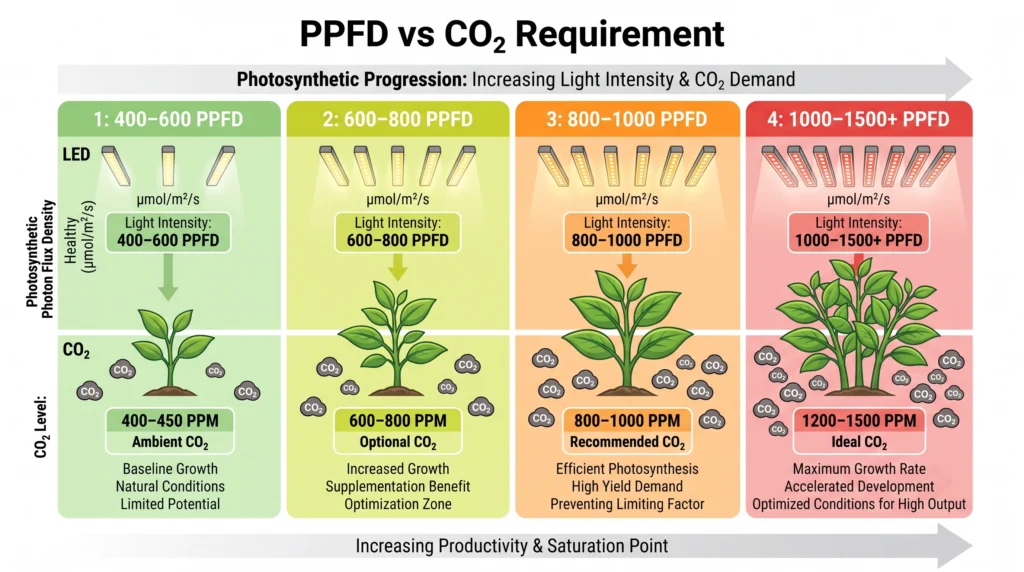
The relationship between light intensity and carbon dioxide is the core engine of hydroponic yield. Plants use light energy to split water and fix CO2 into the simple sugars that fuel their growth. Under standard ambient conditions (400 PPM), most C3 plants hit their light saturation point around 600 to 800 µmol/m²/s of Photosynthetic Photon Flux Density (PPFD). Blasting them with more light than they can process does not increase growth; it triggers light stress and phototoxicity.
By increasing the ambient CO2 concentration, you raise the light saturation point. This is the exact reason a high ppfd co2 requirement exists. When you flood the environment with 1200 PPM of CO2, the plant’s photosynthetic machinery speeds up, allowing it to efficiently process light intensities of 1000 to 1500 µmol/m²/s. The resulting accelerated metabolism demands precise environmental control. Growers must adapt their temperature targets, vapor pressure deficit (VPD) ranges, and hydroponic nutrient delivery to keep pace with the hyper-charged plant. Managing these interconnected variables correctly inside a tightly sealed grow tent transforms a standard hydroponic run into a high-performance biological factory.
Methodology: Metabolic Shifts at 1200 PPM
Elevating CO2 to 1200 PPM drastically suppresses photorespiration, forcing the RuBisCO enzyme to bind carbon rather than oxygen. This metabolic shift requires running elevated root and canopy temperatures to keep the enzymatic processes functioning at peak capacity.
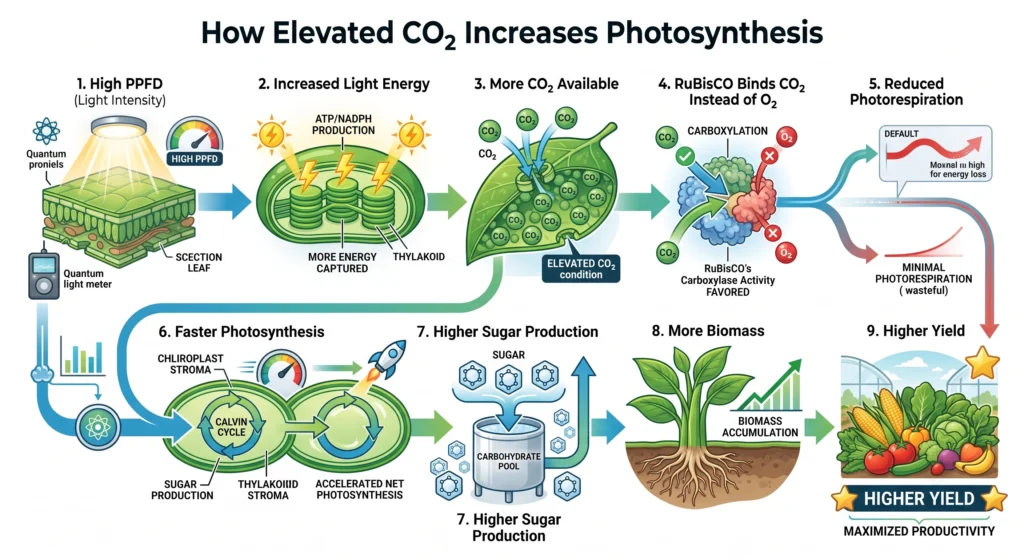
To understand why 1200 ppm co2 hydroponics works, we have to look at the enzyme Ribulose-1,5-bisphosphate carboxylase/oxygenase, commonly known as RuBisCO. RuBisCO is responsible for the first major step of carbon fixation. It has a dual nature: it can bind with CO2 to create sugars (photosynthesis), or it can bind with oxygen (photorespiration). Photorespiration is essentially a waste of the plant’s energy.
When you enrich your environment to 1200 PPM, you overwhelm the RuBisCO enzyme with carbon, drastically reducing the rate of oxygen binding. This makes the plant incredibly efficient. Because biochemical reactions speed up with heat, running a CO2-enriched environment demands higher temperatures. While a standard grow room might operate at 75°F (24°C), a co2 enrichment grow tent thrives at 82°F to 85°F (28°C to 29°C).
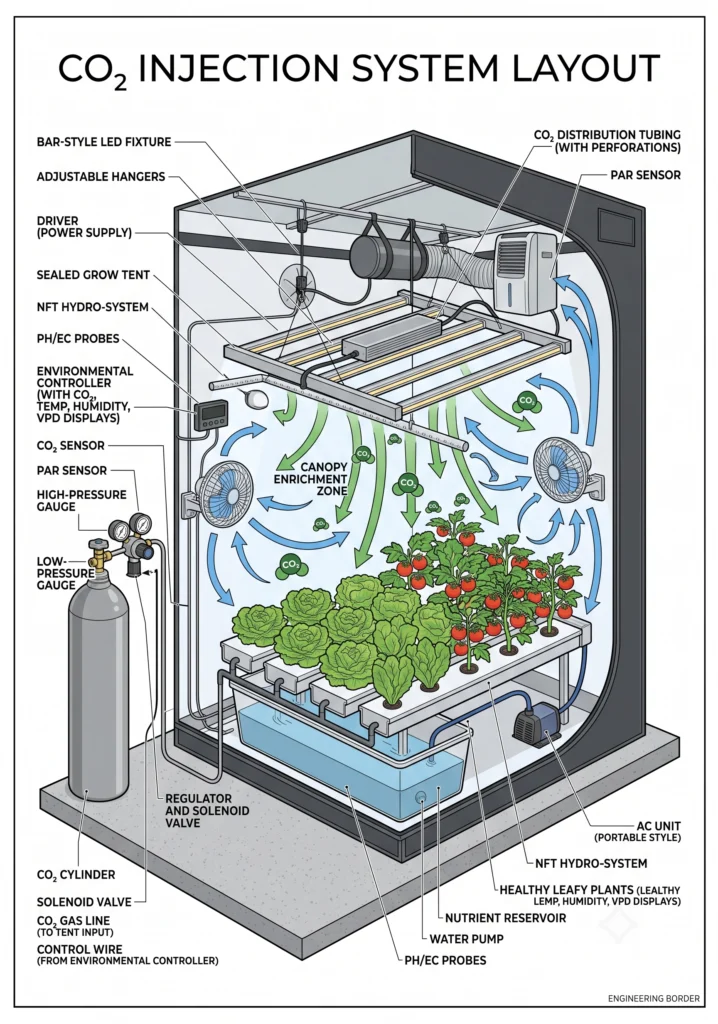
You must trap that CO2 to maintain those elevated levels. Exhausting your air every three minutes to control heat defeats the purpose of running CO2 gas. Growers execute this methodology by running sealed or semi-sealed rooms. Instead of relying on constant exhaust fans, the environment relies on air conditioning units and dehumidifiers to handle the heat and moisture loads generated by the plants. The CO2 is injected precisely using a regulator tied to an atmospheric sensor, maintaining a strict 1200 PPM target throughout the lights-on cycle. Plants only fix carbon during the photoperiod. Injecting CO2 when the lights are off is a complete waste of resources.
Mapping out your light intensity is the first step before opening a CO2 tank. Using a reliable PAR meter to check your footprint ensures you are actually delivering enough light to warrant the gas. If you need a refresher on setting proper light heights, our LED distance and PPFD guide breaks down the specific hanging heights required to hit these advanced metrics.
⚠️ Critical Safety Note for Residential Growers While 1200 PPM of CO2 is an atmospheric sweet spot for C3 plants, you must respect the gas. Ambient outdoor air is roughly 400 PPM. Humans can safely work in 1200 PPM environments (OSHA’s permissible exposure limit for an 8-hour workday is 5,000 PPM), but compressed gas presents a unique hazard. A catastrophic leak from a 20lb cylinder in a sealed basement or bedroom can quickly displace oxygen, creating a severe asphyxiation risk. If you are operating a CO2 enrichment grow tent inside your living space, a standalone, battery-operated carbon monoxide/carbon dioxide dual-alarm mounted outside the tent near the floor (since CO2 is heavier than air) is an absolute, non-negotiable requirement.
Metric Tables: Aligning PPFD, Temp, and Carbon
A highly calibrated grow room aligns specific PPFD targets with corresponding CO2 concentrations and ambient temperatures. Scaling these three parameters simultaneously prevents environmental stress and ensures maximum nutrient uptake.
Navigating the correlation between light, heat, and gas requires strict adherence to environmental metrics. Injecting 1200 PPM of CO2 under weak lighting is ineffective; running high PPFD without carbon causes bleaching. Use this grow room co2 chart as a baseline for your atmospheric scaling.
| Growth Phase | Target PPFD (µmol/m²/s) | Target CO2 (PPM) | Optimal Temp (°F / °C) | Target VPD (kPa) |
| Early Vegetative | 400 – 600 | 400 – 600 | 75 – 78°F (24 – 25°C) | 0.8 – 1.0 |
| Late Vegetative | 600 – 800 | 800 – 1000 | 78 – 82°F (25 – 28°C) | 1.0 – 1.2 |
| Early Flowering | 800 – 1000 | 1000 – 1200 | 82 – 85°F (28 – 29°C) | 1.2 – 1.4 |
| Peak Flowering | 1000 – 1500+ | 1200 – 1500 | 84 – 86°F (29 – 30°C) | 1.4 – 1.6 |
| Late Ripening | 600 – 800 | 400 – 600 | 72 – 76°F (22 – 24°C) | 1.0 – 1.2 |
Data metrics aggregated from commercial baseline standards applied in CEA (Controlled Environment Agriculture) facilities, such as those researched at the USU Crop Physiology Lab.
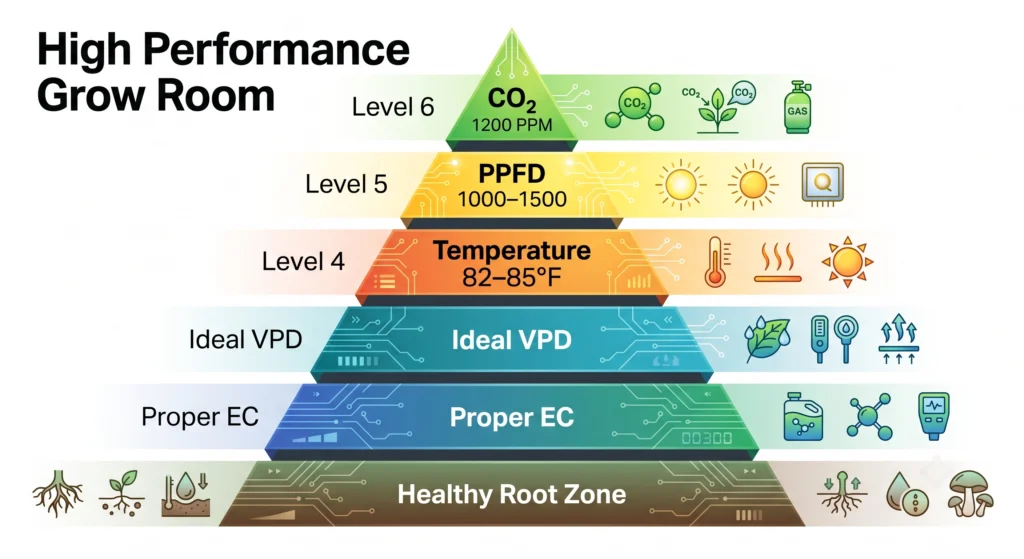
You must also scale your root zone nutrition. A plant operating at 1200 PPM CO2 under 1200 PPFD is drinking heavily and metabolizing minerals at breakneck speeds. Your standard nutrient concentration will fall short. You will need to increase your Electrical Conductivity (EC) targets to match this growth. Frequent monitoring of your reservoir is non-negotiable. If you notice strange leaf symptoms as you scale up your environment, cross-reference your metrics with our hydroponic troubleshooting guide to rule out nutrient lockout. Always verify your inputs using high-quality testing gear; our pH and EC meter showdown covers the most accurate tools for the job.
Interactive Tools: Dial In Your CO2 & PPFD Targets
Theoretical charts are a great starting point, but every indoor garden is physically unique. Now that you understand how light, temperature, and carbon intersect, it is time to run the exact numbers for your own setup. Use the interactive calculators below to map out your precise environmental targets based on your current PPFD, calculate the exact cubic feet per hour (CFH) flow rate required for your tent dimensions, and estimate exactly how many days your CO2 cylinder will last before needing a refill.
Real-World Yield Impacts
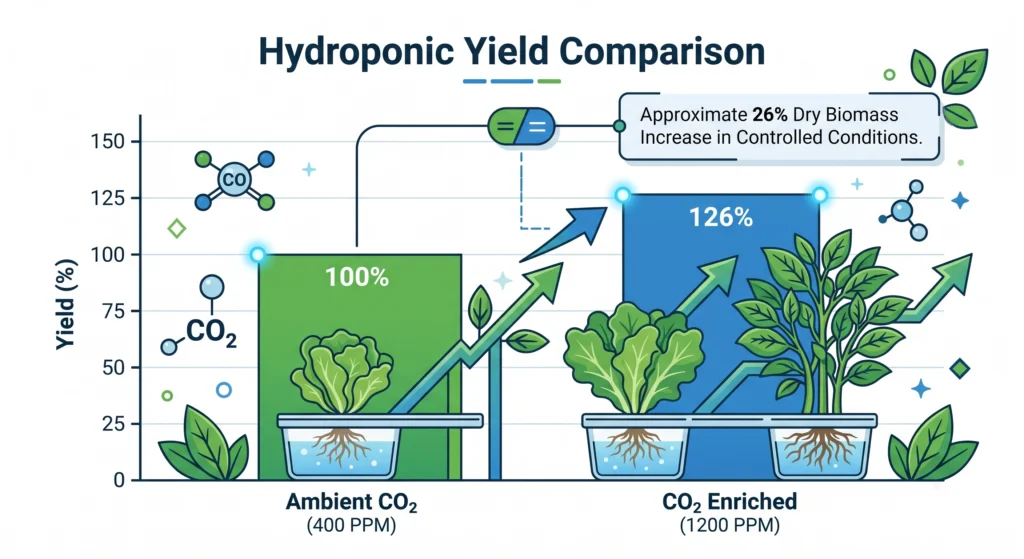
Case studies in controlled environment agriculture demonstrate that optimizing CO2 levels alongside high PPFD can yield dry biomass increases of 20% to 30%. The acceleration of the metabolic rate translates directly into larger, denser harvests within the exact same cultivation timeframe.
Theoretical physiology is fascinating, but tangible harvest weight dictates farm design. The co2 enrichment yield increase is heavily documented across commercial and academic sectors. When light is no longer the limiting factor, and carbon is abundant, the plant stacks cellular tissue rapidly.
In a standardized hydroponic case study tracking fruiting crops, a control group was grown under 1000 µmol/m²/s at ambient 400 PPM CO2. A test group of identical genetics was grown under the same 1000 µmol/m²/s PPFD, but enriched to 1200 PPM CO2 with proportional temperature adjustments.
The control group exhibited signs of mild light stress, including leaf cupping and slight anthocyanin accumulation on the upper canopy, indicating the plants were struggling to process the photon load. The enriched test group remained vibrant green and displayed significantly faster internodal stacking. At harvest, the enriched group produced a 26% greater dry weight yield compared to the control. The fruits in the enriched group were structurally denser, correlating to a higher final gram-per-watt efficiency.
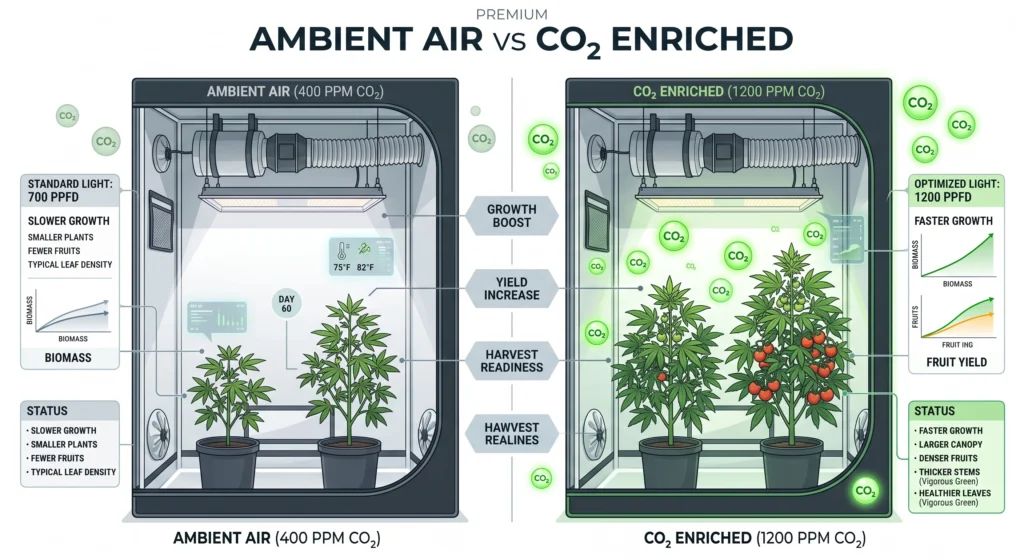
The Financial Breakdown (ROI) The gear required for environmental enrichment is not cheap, but the return on investment (ROI) for high-value crops is staggering when you run the math.
- The Cost: Refilling a standard 20lb aluminum CO2 cylinder at a local welding supply or hydroponic store typically costs between $30 and $50. In a sealed 4×4 or 5×5 tent, one 20lb tank will generally last 3 to 4 weeks, meaning a full 8-week flowering cycle requires about $60 to $100 in gas.
- The Return: If a standard non-enriched 5×5 canopy produces 800 grams of dry biomass, achieving the case study’s 26% yield increase results in an additional 208 grams of premium harvest.
Even factoring in the initial capital expenditure for the regulator, controller, and AC unit, the value of that additional 20% to 30% yield pays for the entire CO2 infrastructure within a single successful harvest cycle.
To support this massive biomass accumulation, the enriched test group consumed 35% more water and required a 20% higher EC baseline in the nutrient reservoir. Managing that accelerated uptake requires an airtight grip on your water chemistry. Review our hydroponic pH and EC mastery guide to ensure your reservoir protocols are robust enough to handle the demand.
Industry Implications and Scalability
Commercial indoor farms rely on automated CO2 enrichment to maximize the return on investment for expensive LED arrays. Bringing this commercial strategy into a residential grow tent requires precise sensor networks and sealed-environment climate control.
Large-scale indoor agriculture views light fixtures as their largest capital expenditure. Running a massive array of high-efficiency LEDs at half power to accommodate ambient CO2 limits is financially inefficient. Commercial operators seal their rooms, run vast HVAC networks, and inject bulk liquid CO2 to ensure every photon emitted is captured and converted into sellable product.
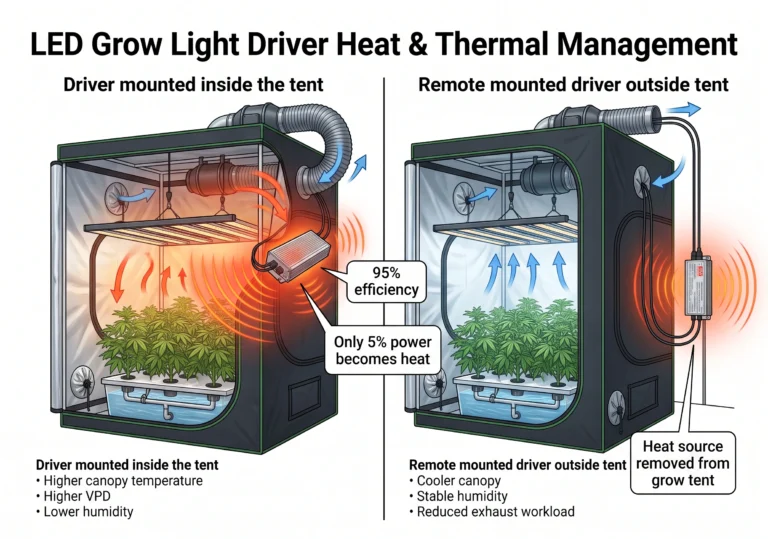
Transitioning this logic to a co2 enrichment grow tent is entirely feasible for the home grower or boutique farmer, provided the infrastructure matches the ambition. You cannot simply crack a CO2 tank valve in a tent with a running 6-inch inline exhaust fan. The gas will be sucked out into your house before the plants can utilize it. True efficiency requires a sealed tent. You manage temperature with a dedicated mini-split or portable AC unit inside the space, and manage humidity with a heavy-duty dehumidifier.
The initial setup cost for this level of environmental control is high. You must weigh the capital expenditure of controllers, sensors, and AC units against the 20-30% yield increase. For high-value crops, the return on investment is often realized within the first two harvest cycles. A complete understanding of the necessary monitoring equipment is vital; our hydroponic sensors guide outlines the specific atmospheric probes required to run a safe and effective sealed room.
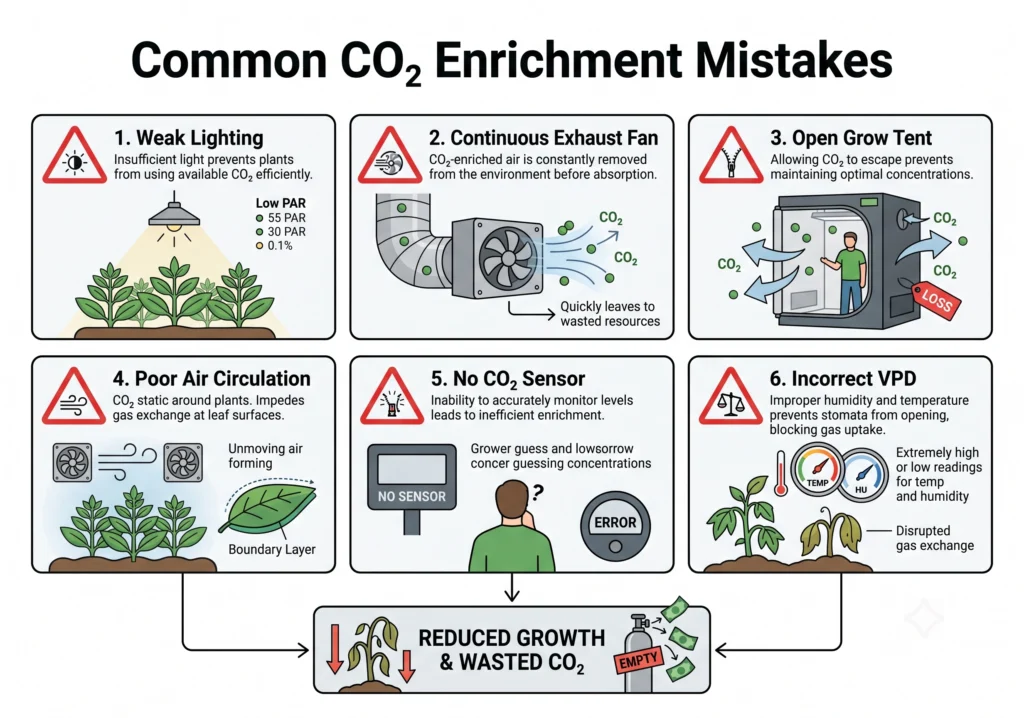
The “Sealed Tent” Reality Check
Commercial facilities use rigid, insulated walls lined with antimicrobial FRP (Fiberglass Reinforced Plastic) to create perfectly sealed environments. As a home grower, you are likely relying on a woven fabric grow tent. It is vital to understand that a fabric tent is almost never 100% airtight.
Even with the exhaust fan turned off, gas will slowly bleed out. To maximize your CO2 efficiency and prevent wasting money on constant tank refills, you must minimize these micro-leaks:
- Zipper Maintenance: The main door zipper is your biggest leak point. Apply a high-quality zipper wax or heavy-duty beeswax along the track to create a better physical seal.
- Port Sealing: Do not rely on the fabric drawstrings to seal your duct ports. Tape off all unused intake and exhaust ports from both the inside and the outside using heavy-duty HVAC foil tape.
- Cable Management: Run all electrical and sensor cables through a single micro-port, pack the remaining void with acoustic foam or a tightly rolled towel, and tape it shut.
- Neutral Pressure: Because you are not exhausting air constantly, your tent walls will not suck inward. Watch for “ballooning” when your AC unit kicks on, which forces expensive CO2 out through the seams.
Essential Case Study Monitoring Gear
Integrating a high-pressure gas system into an indoor hydroponic setup requires specialized, commercial-grade monitoring gear. The following components are critical for replicating the 1200 PPM case study results safely.
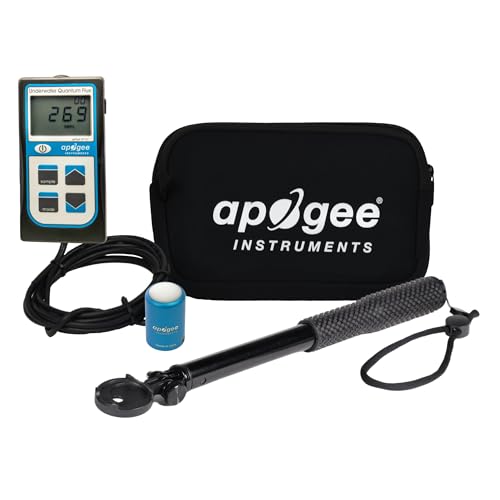
Why I use it: You cannot guess light intensity. The Apogee SQ-520 gives me laboratory-grade PPFD measurements so I know exactly when my canopy crosses the 1000 µmol/m²/s threshold, telling me exactly when to ramp up my CO2 injection.

Why I use it: This is the brain of a sealed room. The Hydro-X coordinates the CO2 regulator, the air conditioning, and the dehumidifier. It ensures my gas injection shuts off instantly if the exhaust fans need to run for an emergency temperature purge.
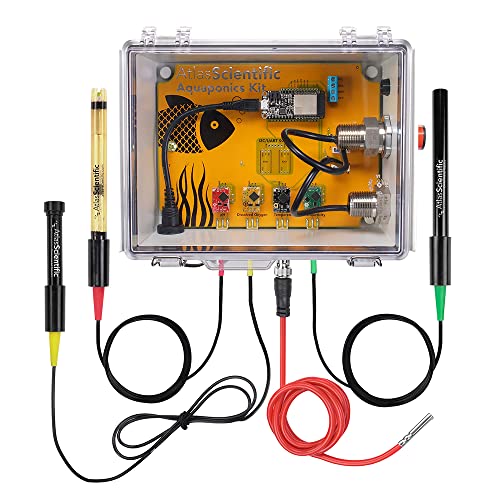
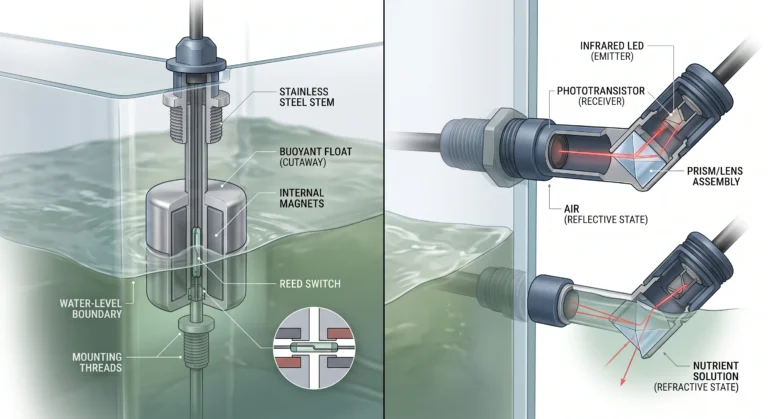
Why I use it: A highly accurate NDIR (Non-Dispersive Infrared) CO2 sensor is non-negotiable. Cheaper sensors drift over time, either suffocating the plants or wasting expensive gas. The Atlas Scientific unit holds calibration beautifully.

Why I use it: Bolted straight to a 20lb aluminum CO2 cylinder, this regulator features a precision flow meter and heavy-duty solenoid valve. It reliably doses the exact cubic cubic feet per hour (CFH) needed to hold the tent steady at 1200 PPM.

Why I use it: Even in a sealed tent, you need emergency exhaust capabilities. The Cloudline T6 integrates perfectly with external controllers. If my AC fails and temps spike past 90°F, this fan kicks on to save the crop while the controller simultaneously halts the CO2 injection.
FAQ: Mastering CO2 in Hydroponics
What is the 1200 ppm co2 hydroponics sweet spot?
The 1200 PPM threshold is generally considered the point of diminishing returns for most C3 plants. While plants can process up to 1500 PPM under extreme lighting (1500+ PPFD), operating at 1200 PPM provides a massive metabolic boost without the rapid gas depletion and severe heat management issues associated with running higher concentrations.
Do I need CO2 if my light is under 600 PPFD?
No. At 600 µmol/m²/s or below, ambient atmospheric CO2 (around 400 to 450 PPM) is perfectly sufficient for the plant to fix carbon efficiently. Adding extra gas at low light levels provides zero measurable yield increase.
What is the high ppfd co2 requirement for the vegetative phase?
Vegetative plants rarely require the sheer intensity of 1200 PPM because you generally do not blast young plants with 1000+ PPFD. During late veg, when pushing light levels around 600 to 800 PPFD, enriching the space to 800 PPM CO2 is an excellent target to encourage rapid, thick branching.
How do I vent a co2 enrichment grow tent?
Ideally, you don’t. You run a sealed environment utilizing an internal air conditioner and dehumidifier to control the climate. If you must vent for temperature control, you use an environmental controller to shut off the CO2 solenoid valve a few minutes before the exhaust fan kicks on, minimizing wasted gas.
Is a co2 enrichment yield increase guaranteed?
Only if every other variable is optimized. If your hydroponic nutrient solution is out of balance, your root zone lacks oxygen, or your VPD is drastically out of range, adding CO2 will not fix the crop. Carbon enrichment is a high-level accelerator meant for an already perfectly tuned hydroponic system.
How do I distribute the CO2 inside the grow tent?
CO2 is heavier than air and will naturally sink to the floor. Run specialized laser-drilled CO2 tubing from your regulator and mount it directly above your plant canopy or behind a high-velocity circulation fan. The airflow will mix the heavy gas evenly throughout the canopy space before it settles.
Will high CO2 levels affect my hydroponic reservoir pH?
Atmospheric CO2 can dissolve into water to form weak carbonic acid, which can gradually lower your reservoir pH over time. Ensure your reservoir has a tight-fitting lid to minimize gas exchange, and monitor your pH daily to counteract any downward drift.
Conclusion
Pushing your hydroponic system to its absolute biological limits requires a holistic understanding of plant physiology. Upgrading to commercial-tier LED lighting is only half the battle. To harness the power of thousands of micromoles of light, you must provide the raw atmospheric carbon necessary for the plant to perform photosynthesis at a hyper-accelerated rate.
Establishing a co2 enrichment grow tent is a significant technical leap. It transitions your indoor garden from an open-loop ventilation setup into a closed-loop, tightly controlled biological laboratory. By managing the profound interplay between light intensity, temperature, VPD, and 1200 PPM of CO2, you effectively remove the atmospheric brakes from your crop. The resulting explosive growth, rapid internodal stacking, and massive harvest densities prove that mastering environmental manipulation is the ultimate key to hydroponic success. Measure your light accurately, seal your environment, calibrate your sensors, and watch your harvest break past every previous plateau.
Supercharge Canopy Photosynthesis & Yield Potential
Pairing high PPFD lighting (>1000 µmol/m²/s) with 1200 PPM CO2 enrichment unlocks explosive growth rates and prevents photo-inhibition. Calculate your exact environmental targets, light saturation points, and grow room metrics with our free tools.
⚡ 100% Free interactive tools • Designed for precision grow tents & commercial yield optimization

Continue Your Learning Journey