Hydroponic Ginger and Turmeric: Shallow Tray DWC Techniques

Table of Contents
- The Anatomy of a Shallow Tray DWC System
- Nutrient Formulation: Ginger vs. Turmeric
- Root Zone Temperature and pH Stabilization
- Aeration Mechanics in Warm Water Hydroponics
- Lighting Parameters and Photoperiods
- Troubleshooting Rhizome Rot and Lockout
- Harvest Optimization and Post-Harvest Curing
- Frequently Asked Questions
- Conclusion
Disclosure: MistCulture summarizes verified product specs, engineering data, and community feedback. We may earn an affiliate commission if you purchase through our links. Regulations vary by location; this content is for educational purposes only.
Ginger (Zingiber officinale) and turmeric (Curcuma longa) are rapidly becoming some of the most economically viable specialty crops for controlled environment agriculture. Both command premium prices in fresh, dried, and extracted forms. They possess established culinary and medicinal markets and respond aggressively to optimized hydroponic conditions. Unlike traditional root crops that struggle to develop in standard hydroponic buckets, ginger and turmeric are rhizomatous herbs. Their harvestable “roots” are actually horizontal underground stems. These rhizomes store nutrients, produce roots that reach downward, and generate vegetative shoots that grow upward. This unique biology makes them perfectly suited for a specialized hydroponic technique: shallow tray Deep Water Culture (DWC).
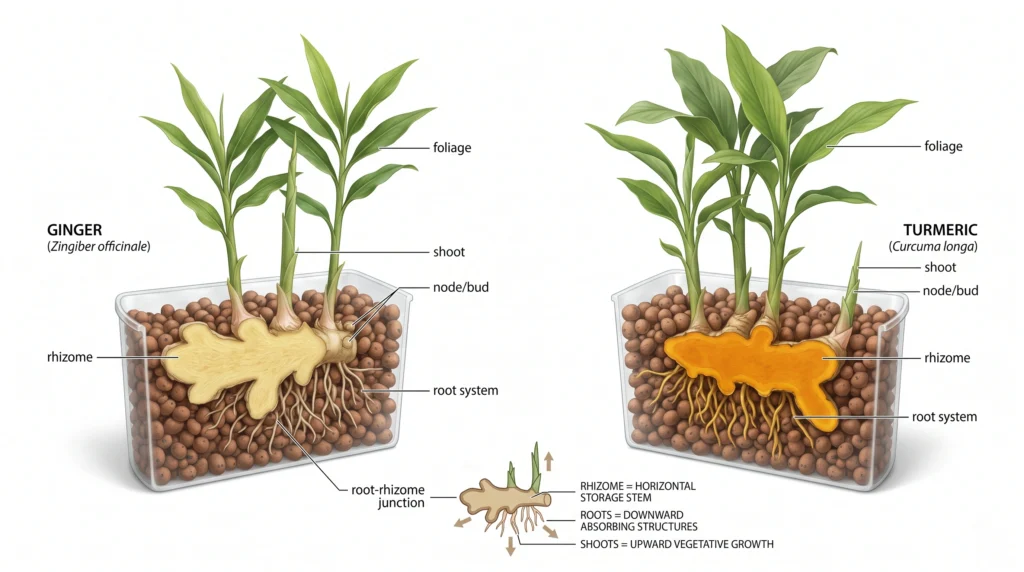
The Anatomy of a Shallow Tray DWC System
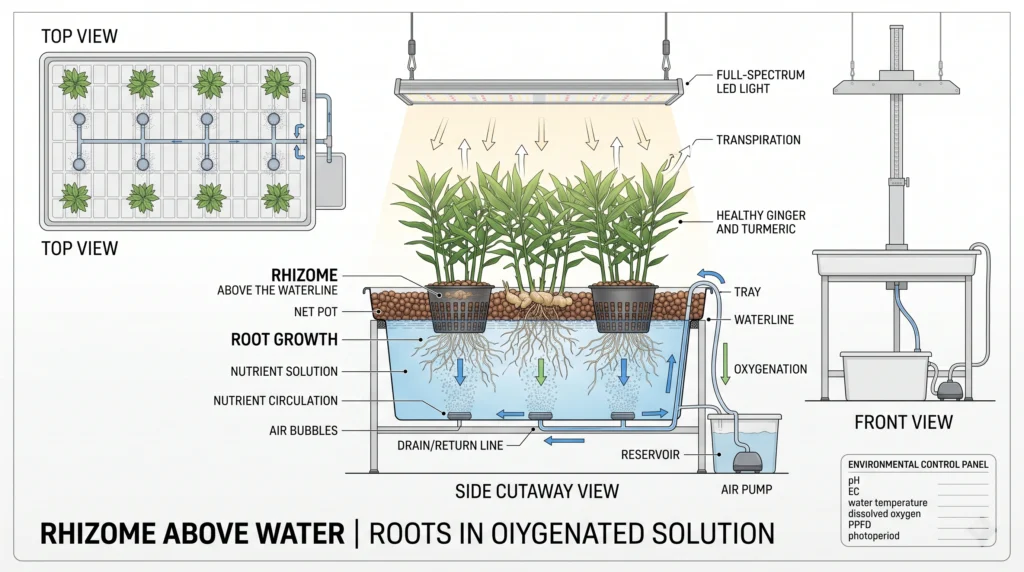
Shallow tray DWC systems operate on the principle of separating the rhizome from the nutrient solution while allowing unrestricted root access to highly oxygenated water. A depth of 4 to 6 inches prevents total submersion, protecting the sensitive crown from rot.
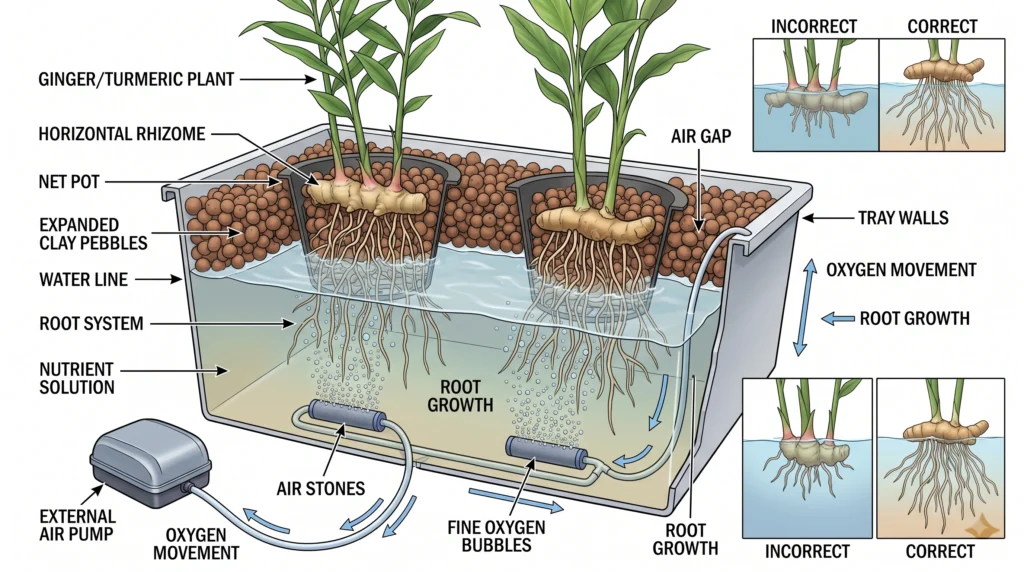
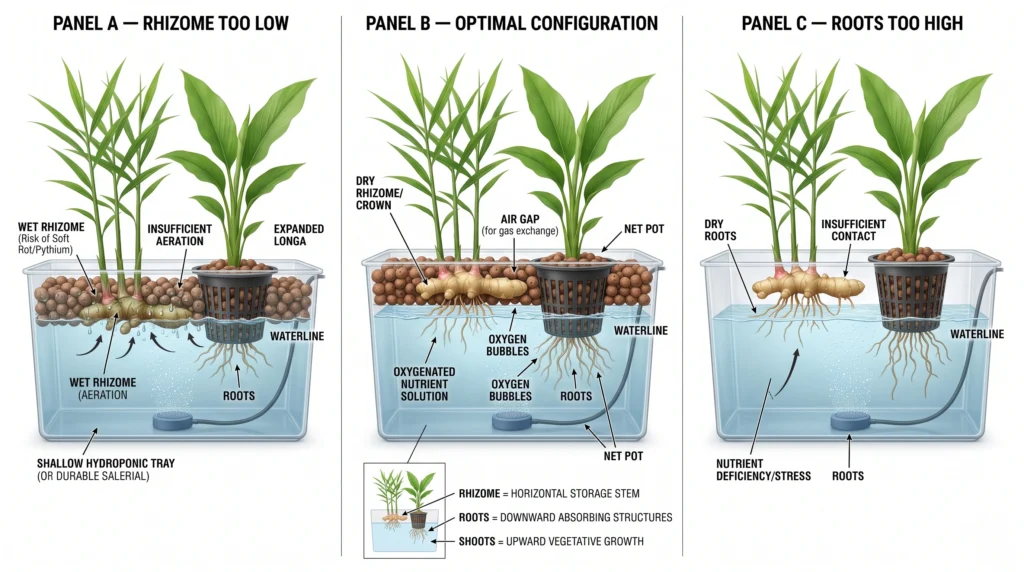
Standard 5-gallon DWC buckets fail rhizome crops because the depth and narrow diameter force the rhizome down into the moisture zone, leading to anaerobic suffocation. A shallow tray system resolves this by utilizing wide, flat basins where the water level is strictly maintained 1 to 2 inches below the bottom of the suspended net pots.
At the commercial scale, these systems resemble shallow raceways. Nutrient solution flows continuously from one end to the other, creating a hybrid environment that blends DWC volume with the movement of Nutrient Film Technique. For smaller setups, static trays fitted with high-output air stones replicate this effect perfectly. You can examine the mechanical differences between these fluid delivery methods in our DWC vs NFT vs Aeroponics analysis.
To engineer a shallow tray system, the rhizome must sit just above the water surface. When planting seed rhizomes (corms), growers place them on a bed of expanded clay pebbles (hydroton) inside a wide net pot. Capillary action wicks enough moisture up through the clay pebbles to trigger root growth. As the roots elongate, they drop out of the net pot and into the oxygenated nutrient pool below. The rhizome remains elevated, exposed to atmospheric oxygen, which promotes rapid horizontal expansion.
Reservoir sizing requires basic fluid mathematics to ensure stability. A standard 4-foot by 4-foot tray filled to a depth of 4 inches contains approximately 40 gallons of nutrient solution.
9,216 ÷ 231 in³/gal = 39.89 gallons
This large volume-to-plant ratio acts as a thermal mass, preventing rapid temperature swings that can shock the root zone. If you are building a system from scratch, our DIY DWC kit guide provides component-by-step assembly instructions.

- Outside size: 18*13.3*4.8 inch
- Made of commercial grad plastic
- Capacity: 13 L
- Why it’s necessary: HDPE plastic resists chemical degradation from synthetic nutrient salts and provides the exact 6-inch depth needed to keep ginger rhizomes elevated above the waterline.
- Key Spec: 6-inch depth / BPA-free High-Density Polyethylene
Nutrient Formulation: Ginger vs. Turmeric
While their growth habits are nearly identical, ginger and turmeric require distinct nutrient ratios. Ginger demands heavy potassium loading for rhizome swelling, while turmeric requires elevated iron and micronutrients to synthesize heavy curcuminoid concentrations.
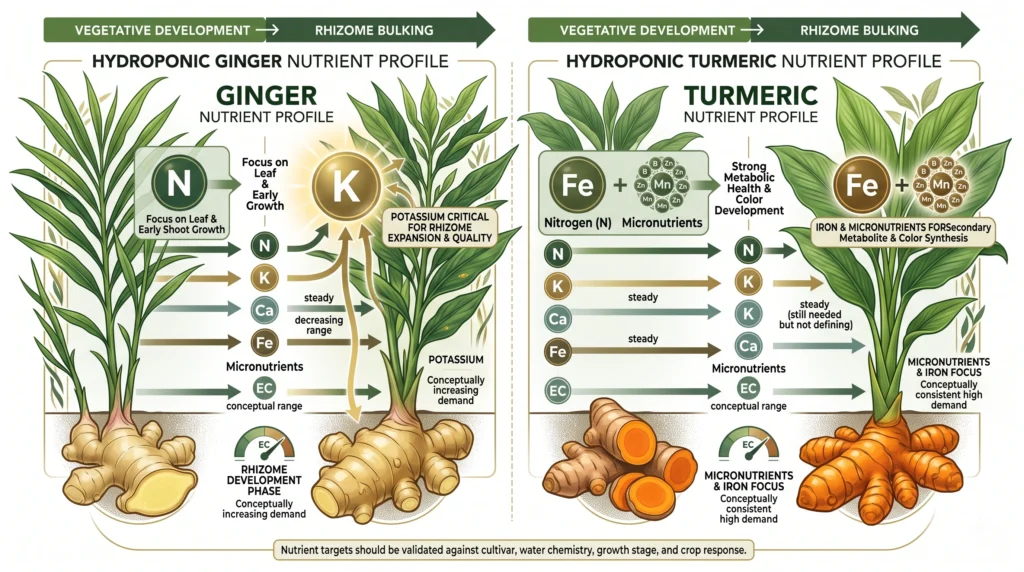
Standard leafy green hydroponic formulas will not produce commercial yields for rhizome crops. Ginger and turmeric require specific elemental inputs staggered across their vegetative and bulking phases.
Ginger Nutrient Targets:
During the first 4 to 6 weeks of vegetative growth, ginger requires moderate nitrogen to establish its canopy. Target an Electrical Conductivity (EC) of 1.4 to 1.8 mS/cm. Once the foliage is established and the plant shifts energy into the horizontal expansion of the rhizome (the bulking phase), potassium demand skyrockets.
- Nitrogen (N): 180-220 ppm
- Potassium (K): 200-250 ppm
- Calcium (Ca): 150-180 ppm
- Iron (Fe): 5-6 ppm
- Target EC (Bulking): 2.0-2.5 mS/cm
Turmeric Nutrient Targets:
Turmeric shares the same base EC requirements but partitions its elements differently. Potassium can be kept slightly lower, while iron must be pushed higher. The deep golden-orange color of high-quality turmeric is directly tied to curcuminoid production, a process that relies heavily on iron and zinc enzymes.
- Nitrogen (N): 180-220 ppm
- Potassium (K): 180-220 ppm
- Calcium (Ca): 150-180 ppm
- Iron (Fe): 6-8 ppm
- Target EC (Bulking): 2.0-2.5 mS/cm
Calculating Custom Nutrient Additions
Relying on pre-mixed bottles often falls short when pushing rhizomes to their maximum genetic potential. Growers frequently supplement with dry agricultural salts like Potassium Sulfate (K2SO4) to hit the 250 ppm K target without over-applying nitrogen.
To calculate exact dosing, you must know the elemental mass percentage of the compound. Potassium sulfate contains 44.8% potassium by mass. If you need to add 50 ppm (50 mg/L) of potassium to a 40-gallon (151-liter) tray to correct a deficiency:
7.55 g ÷ 0.448 = 16.85 g K2SO4
Dissolve 16.85 g Potassium Sulfate to raise K by 50 ppm in 40 gal (151 L)
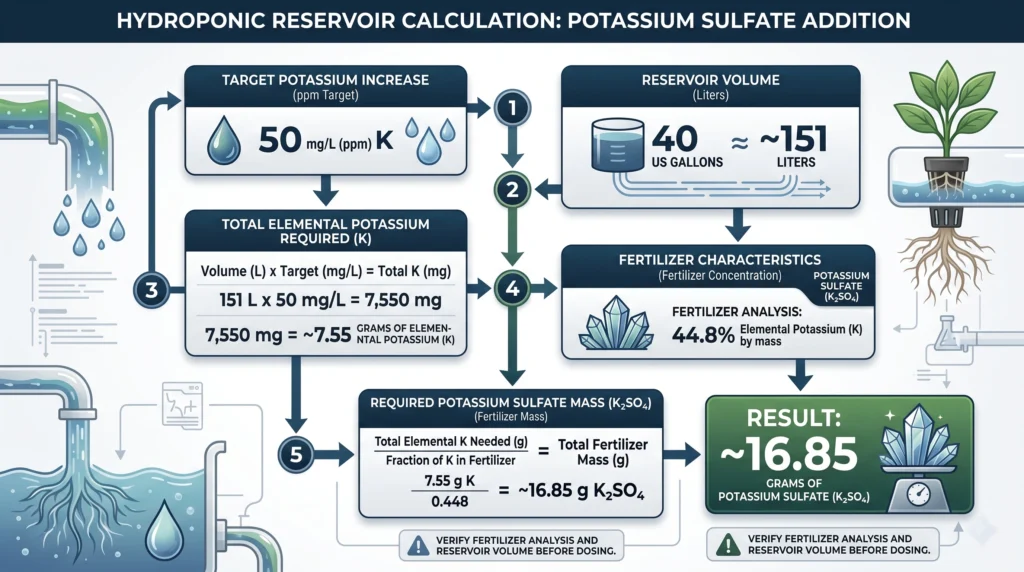
Dissolving exactly 16.85 grams of K2SO4 into that reservoir will bump the potassium levels perfectly without altering the nitrate balance. To automate these types of conversions for your entire formulation, utilize our hydroponic nutrient calculator. For a broader understanding of base salt mixing, review our hydroponic nutrients guide.
Root Zone Temperature and pH Stabilization
Maintaining precise environmental chemistry dictates the speed of rhizome development. A target pH of 5.8 to 6.2 ensures maximum nutrient availability, while water temperatures of 72-80F replicate the tropical soil conditions these plants require.
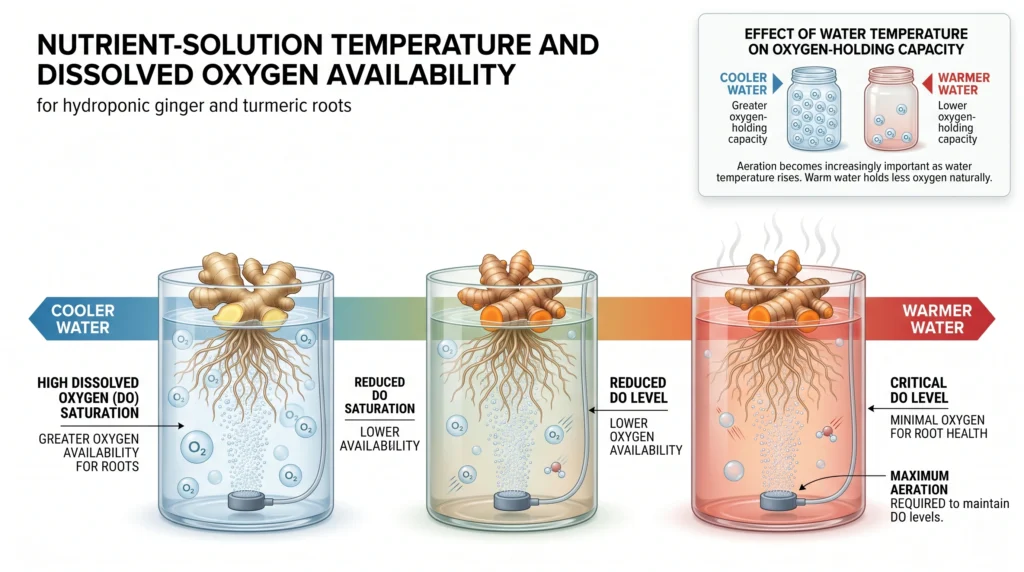
Temperature management makes or breaks a ginger crop. Zingiber officinale is a tropical plant. If the nutrient solution drops below 68F (20C), cellular metabolism stalls, and rhizome expansion stops entirely. Conversely, temperatures exceeding 82F (27.7C) deplete dissolved oxygen rapidly and invite anaerobic bacterial blooms. Keeping the reservoir between 72F and 80F (22C – 26.6C) is non-negotiable. If you are operating in a hot greenhouse or a summer climate, implementing techniques from our passive hydro cooling overview will help lock in your temperatures.
The pH level governs the electrostatic charge of the nutrient ions. If the pH drifts above 6.5, essential micronutrients, especially the iron required by turmeric, precipitate out of the solution. They oxidize, turn into solid particulate, and fall to the bottom of the tray where the roots cannot access them. This manifests rapidly as interveinal chlorosis (yellowing between the veins of new leaves).
Because mature ginger and turmeric plants consume massive amounts of water through transpiration, the concentration of salts left behind in the reservoir increases. As water drops, EC rises, and pH often crashes as the roots excrete hydrogen ions to balance their uptake of heavy cations like potassium. Daily monitoring is required. For a complete breakdown of managing these fluctuations, refer to our hydroponic pH and EC mastery guide.
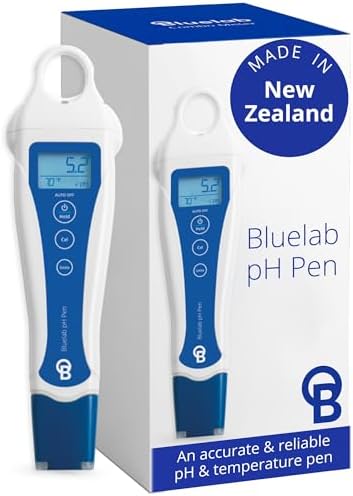
- Perfect pH control for various media – ph meter for water hydroponics can be used for growing tents, swimming pools, dri…
- Easy calibration – Set up our digital pH meter with a two-point calibration process. Calibrate the handheld meter before…
- Thrives in the toughest environments – Our soil pH tester comes with waterproof casing. It can withstand the knocks, dro…
- Why it’s necessary: Accurate daily monitoring prevents tip burn, avoids nutrient lockout, and ensures potassium levels remain within the 200-250 ppm target during the critical rhizome bulking phase.
- Key Spec: ATC (Auto Temperature Compensation) / IP67 Waterproof rating
Aeration Mechanics in Warm Water Hydroponics
High reservoir temperatures inherently lower the oxygen carrying capacity of water. To offset this physical limitation, air pumps in shallow DWC systems must be oversized to maintain the 8.0 mg/L dissolved oxygen saturation limit.
The physics of dissolved oxygen (DO) dictates that warm water holds less gas than cold water. At 60F (15.5C), water can hold roughly 10.0 mg/L of dissolved oxygen. At the 80F (26.6C) target temperature required for optimal ginger growth, the physical saturation limit drops to approximately 8.0 mg/L. This means you have zero margin for error regarding aeration.
In a shallow tray DWC, stagnant water zones are the enemy. The entire 4-inch to 6-inch water column must be violently agitated by rising air bubbles. The bubbles themselves do not inject the bulk of the oxygen into the water; instead, the surface agitation they create facilitates gas exchange at the water-air boundary.
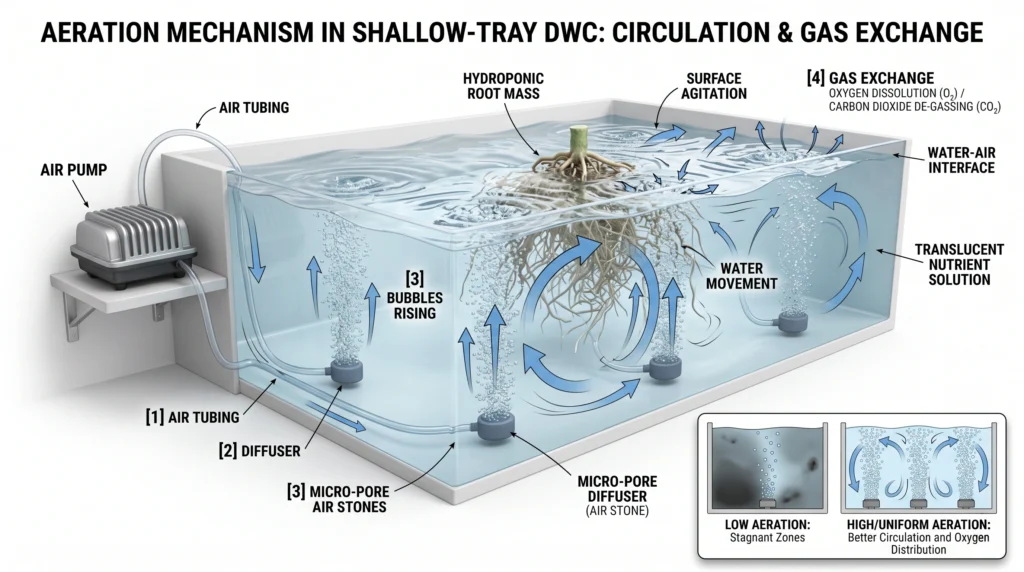
Sizing the air delivery system requires targeting 1 Liter Per Minute (LPM) of airflow for every gallon of nutrient solution. Returning to our 40-gallon tray example, the minimum required air pump output is 40 LPM. Pushing this to 60 LPM provides a buffer against pump degradation over time. Connect the air pump to a grid of micro-pore air stones or specialized diffuser tubing laid flat across the bottom of the tray. Compare the technical specs of commercial-grade piston and diaphragm units in our breakdown of the best DWC air pumps.
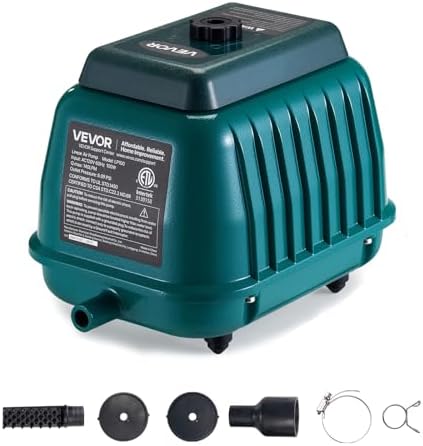
- Efficient Aeration: The linear air pump features electromagnetic diaphragm compression and a dual-air chamber pressuriza…
- Quiet Operation: With a pure copper linear motor, the septic air pump operates with noise below 47dBA. The denoising des…
- Durable and Reliable: This septic tank air pump has a drop-proof aluminum alloy housing, IP44 waterproof, and a pleated …
- Why it’s necessary: High-output electromagnetic diaphragm pumps maintain the heavy 1 LPM per gallon ratio required to keep dissolved oxygen levels maxed out in warm 80F nutrient solutions.
- Key Spec: 60 liters per minute (LPM) / Heat-dissipating aluminum alloy casing
Lighting Parameters and Photoperiods
Ginger and turmeric are natural understory plants. They require consistent, moderate lighting to drive photosynthesis without inducing heat stress or light burn on their broad, thin foliage.
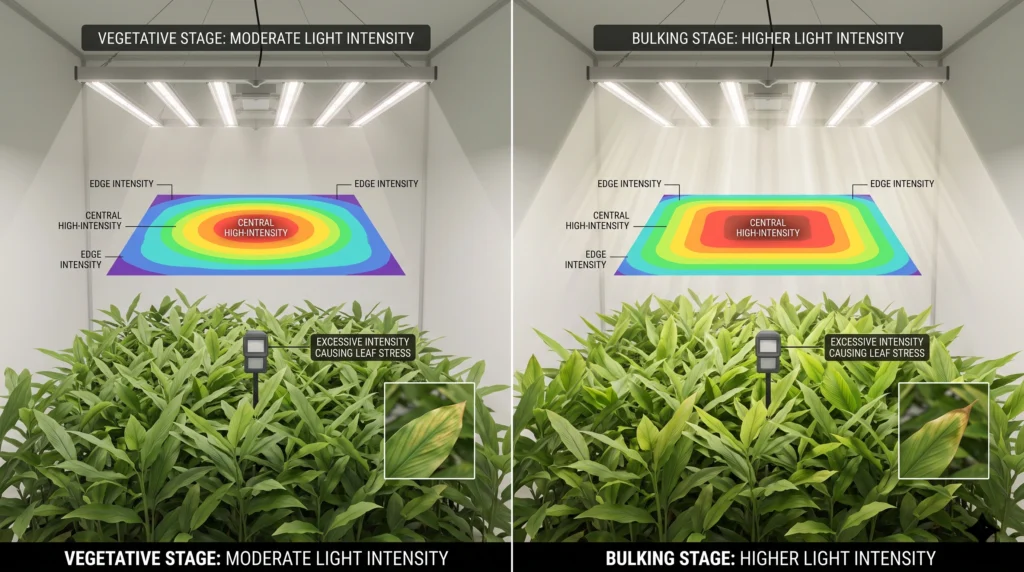
Throwing maximum intensity light at a ginger crop will result in curled, bleached leaves. In their native habitats, these plants grow beneath the canopy of larger tropical trees. When transitioning them to indoor hydroponics, the lighting strategy must reflect this biology.
PPFD Targets (Photosynthetic Photon Flux Density):
- Vegetative Stage: 300 – 400 umol/m2/s
- Bulking Stage: 400 – 600 umol/m2/s
Exceeding 600 umol/m2/s without heavy CO2 supplementation wastes electricity and triggers light stress. A standard 14 to 16-hour photoperiod provides the optimal Daily Light Integral (DLI) for rapid rhizome expansion. Full spectrum LED fixtures are highly recommended over high-pressure sodium (HPS) lamps, as LEDs emit vastly less radiant heat. This prevents the leaf surface temperature from spiking and keeps transpiration rates manageable. Calibrate your fixture height using our LED distance guide

- 【HEALTHY GROWTH & ENERGY SAVING】This DC2000 LED light is designed with 1176pcs high-quality LEDs, brighter and more effi…
- 【SUNLIKE SPECTRUM】 Closely mimicking natural sunlight, this LED adopts the latest high-quality LED diode technology. The…
- 【Adjustable Modes for Different Plant Needs】Features two customizable light modes to suit your garden’s variety. Choose …
- Why it’s necessary: A dimmable quantum board allows growers to dial in the exact 400-600 umol/m2/s PPFD requirement without risking light burn on the broad ginger canopy.
- Key Spec: Dimmable Meanwell Driver / 2.7 umol/J efficacy
Troubleshooting Rhizome Rot and Lockout
Fungal pathogens represent the single greatest threat to shallow tray DWC systems. Pythium species thrive in warm water, attacking compromised roots and rapidly spreading to the rhizome crown if oxygen levels drop.
When ginger roots encounter anaerobic conditions, their cell walls weaken, making them highly susceptible to Pythium and Fusarium infections. Recognizing the early stages of root rot is mandatory for saving a crop. Healthy ginger roots are bright white or slightly off-white and smell like clean earth. Infected roots turn brown, become coated in a thick, foul-smelling slime, and easily slough off when pulled.
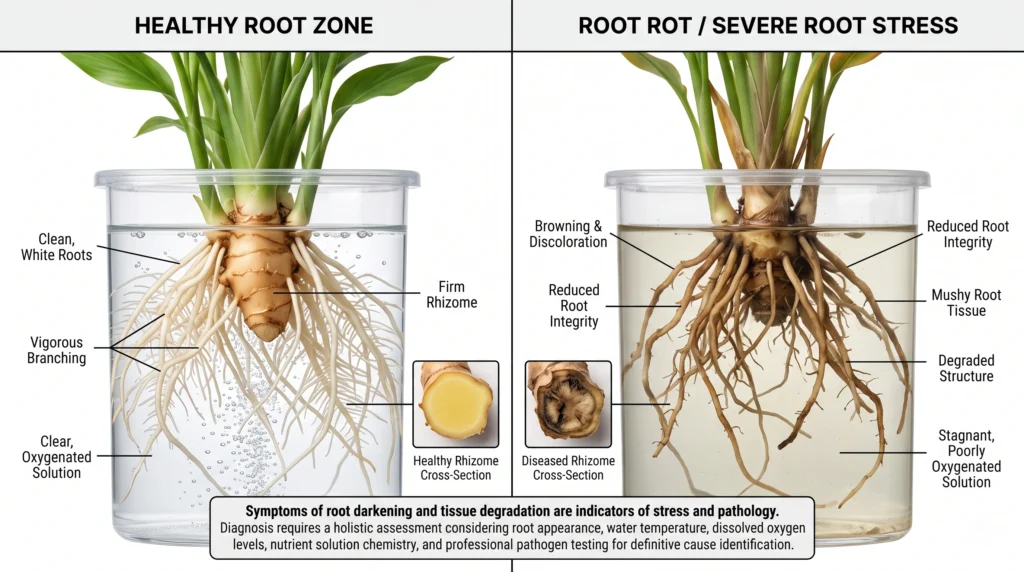
If the infection reaches the rhizome, the harvest is ruined. The rhizome becomes soft, spongy, and gray inside. To combat this, prevention is the only viable strategy.
- Maintain DO Levels: Never let the air pump shut off.
- Water Level Discipline: Ensure the water line never touches the base of the rhizome directly.
- Biological Inoculation: Dose the reservoir with beneficial microbes, specifically Bacillus amyloliquefaciens. These predatory bacteria colonize the root zone, outcompeting fungal pathogens for space and resources.
- Sterilization: For sterile reservoir runners, regular dosing of Hypochlorous Acid (HOCl) at 2-5 ppm keeps the water column entirely free of fungal spores without damaging plant tissue.
For a deeper investigation into diagnosing and eradicating systemic waterborne pathogens, reference our hydroponic root rot prevention manual. If you encounter non-biological issues, such as sudden leaf drop or brittle stems, consult our hydroponic troubleshooting guide.
Harvest Optimization and Post-Harvest Curing
Hydroponic ginger and turmeric possess distinct harvest windows. Cultivation runs 8 to 12 months, and proper post-harvest curing is essential to preserve the volatile oils and extend shelf life for commercial distribution.
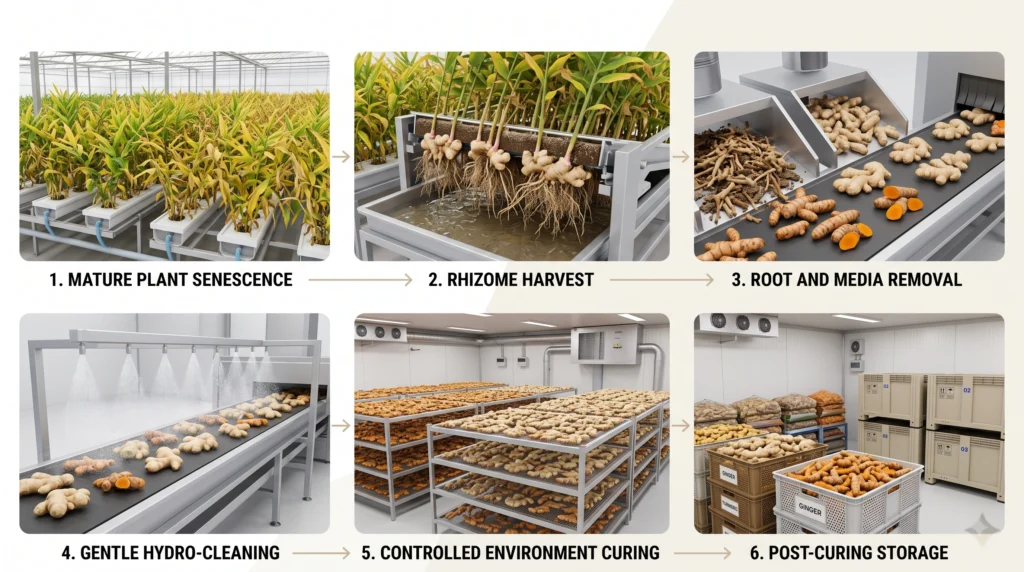
You can harvest “baby ginger” at the 5 to 6-month mark. Baby ginger lacks the tough, fibrous skin of mature ginger, possessing a mild flavor and zero stringiness. It commands exceptionally high prices in niche culinary markets because it requires no peeling. However, for maximum yield and full medicinal compound development (high gingerol and curcumin content), the crop must mature for 8 to 12 months.
The plants will signal readiness when the broad green foliage begins to naturally yellow and die back. At this stage, the rhizomes have drawn all available energy from the canopy.
Yield Mathematics:
In a well-managed shallow tray DWC system, planting density averages 4 to 6 plants per square foot.
- A single hydroponic ginger plant yields 2 to 4 pounds of fresh rhizome annually.
- At 5 plants per square foot, yielding 3 pounds each, a single square foot produces 15 pounds of fresh rhizome.
- A 4×4 tray (16 square feet) will yield roughly 240 pounds of premium, soil-free ginger per year.
Turmeric yields are slightly lower, averaging 1.5 to 3 pounds per plant, heavily dependent on iron availability during the final three months.
The Curing Process:
Because hydroponic rhizomes grow in a 100% humidity root zone, they hold excess water weight at harvest. They must be cured to harden the skin and prevent rapid post-harvest molding.
- Remove the entire net pot assembly.
- Cut the foliage 1 inch above the rhizome crown.
- Wash the rhizomes with cool water to remove any clay dust or debris.
- Cure the rhizomes in a single layer on wire racks in a dark room.
- Set ambient temperature to 75-80F (24-26.6C).
- Regulate Relative Humidity (RH) to precisely 70-75%.
Curing takes 7 to 10 days. The rhizomes will lose roughly 15-20% of their wet weight as the outer epidermal layer thickens. Once cured, store the rhizomes in breathable paper bags in a cool (60-65F), dry (50-60% RH) location. Shelf life extends from 3 to 6 months.
Frequently Asked Questions
Can I grow hydroponic ginger from store-bought rhizomes?
Yes, standard grocery store rhizomes can be used as seed material. Select plump pieces with visible u0022eyesu0022 (growth nodes). Soak them in water overnight to remove any chemical growth retardants sprayed during commercial transit, cut them into 2-inch sections ensuring each has a node, and let the cuts callous over for 48 hours before placing them in the hydroton.
What is the optimal water level in a shallow tray DWC?
The water line must remain 1 to 2 inches below the bottom of the net pot holding the rhizome. The roots will drop down into the nutrient solution, while the air gap prevents moisture from continually soaking the crown, which prevents rhizome rot.
How long does it take for turmeric to reach harvest size hydroponically?
Turmeric requires a long growing season. It takes 10 to 12 months to reach full mature size with maximum curcuminoid production. The crop is ready for harvest when the main stem and leaves naturally turn brown and dry out.
Why are my ginger leaves turning yellow early?
If leaves yellow before the 8-month mark, it indicates a systemic issue. The most common causes are iron deficiency (caused by pH climbing above 6.5), nitrogen deficiency (EC dropping too low during heavy vegetative growth), or Pythium root rot suffocating the root mass. Check your pH, EC, and physical root health immediately.
Do I need to completely change the nutrient solution?
Yes. Because ginger and turmeric reside in the system for up to a year, elemental imbalances are inevitable. The plants strip potassium and iron faster than calcium or sulfur, leaving toxic ratios behind. Perform a complete reservoir drain, flush, and refill every 3 to 4 weeks to reset the elemental balance.
Can ginger and turmeric share the same reservoir?
While they are in the same botanical family, they should be grown in separate systems during the bulking phase. Ginger requires elevated potassium (250 ppm) while turmeric needs highly elevated iron (8 ppm). Sharing a reservoir forces a compromise that sub-optimizes the yield and chemical profile of both crops.
Conclusion
Mastering ginger and turmeric in a shallow tray DWC system requires strict adherence to environmental controls and fluid dynamics. By keeping the rhizomes elevated, maximizing dissolved oxygen, and applying stage-specific EC targets, growers can completely bypass the limitations of soil cultivation. The elimination of soil-borne nematodes, the acceleration of growth rates, and the pristine, scrub-free final product justify the technical setup required. Calibrate your sensors, size your air pumps correctly, and maintain rigorous pH discipline. For further optimization of your nutrient delivery and environmental tracking, explore our advanced systems within the MistCulture library.

Continue Your Learning Journey