Advanced Hydroponic Saffron Cultivation: Systems, Corms, and Nutrients

Table of Contents
- Saffron Corm Biology and Preparation Mechanics
- Cold Dormancy Simulation and Thermal Load Management
- Hydroponic Saffron Nutrient Formulations and EC Targets
- Substrate Engineering and System Architecture
- Lighting DLI, PPFD Targets, and Photoperiod Triggers
- Pathogen Management and Corm Rot Eradication
- Commercial Yield Projections and Pricing Dynamics
- Frequently Asked Questions
- System Expansion and Operational Next Steps
Disclosure: MistCulture summarizes verified product specs, engineering data, and community feedback. We may earn an affiliate commission if you purchase through our links. Regulations vary by location; this content is for educational purposes only.
Saffron (Crocus sativus) dictates a premium price tag unmatched by any other agricultural product on the planet. Premium Grade A (sargol) saffron retails between $5,000 and $10,000 per kilogram. This astronomical valuation drives intense interest in controlled environment agriculture (CEA) and soilless production. Growing saffron hydroponically shifts production away from unpredictable Mediterranean climates into precision-engineered indoor environments.
The transition from field to controlled facility demands strict mastery over plant biology. Saffron does not grow from seeds; it propagates through underground storage structures called corms. The plant enforces a rigid lifecycle requiring a distinct cold dormancy period, precise photoperiod shifts, and nutrient dosing curves that change radically between foliar growth and cormlet development. This engineering guide breaks down the physics, chemistry, and biological requirements for running a highly productive hydroponic saffron system.
Saffron Corm Biology and Preparation Mechanics
Hydroponic saffron production relies entirely on the initial quality and mass of the Crocus sativus corms. Proper grading, curing, and pathogen sterilization define the success rate of the flowering cycle long before the corms enter the growing substrate.
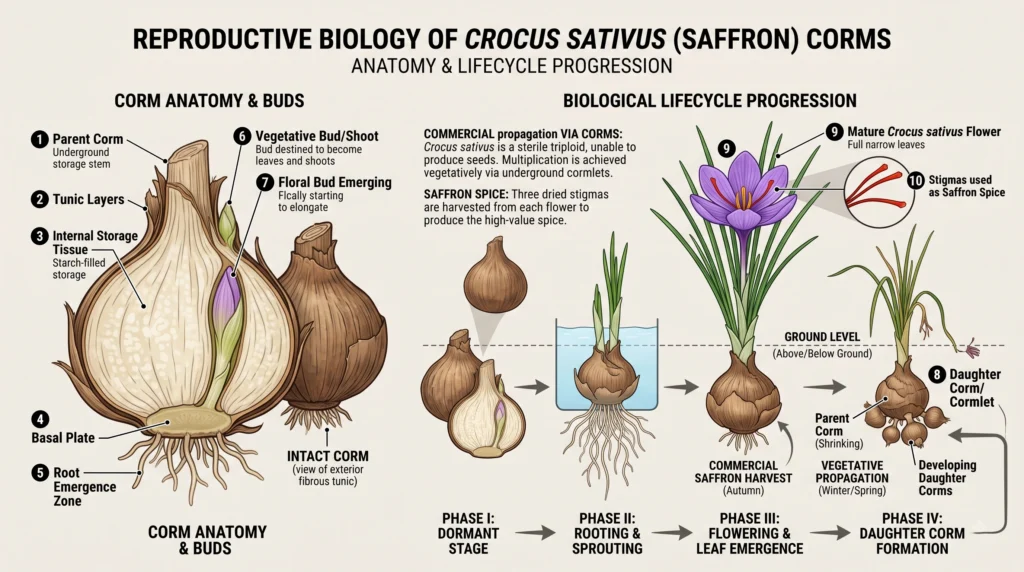
Saffron reproduces exclusively through corm division. These swollen underground stems store the carbohydrates and mineral reserves the plant needs to push flowers out rapidly in the autumn. Understanding corm biology dictates the structural layout of your growing operation. A single corm generates 1 to 3 new cormlets each growing season. Simultaneously, the parent corm produces between 1 and 7 flowers, each yielding exactly three red stigma threads—the actual saffron spice.
Corm mass directly correlates with floral output. Mass dictates energy reserves. Sorting corms by weight using a precision scale is a mandatory baseline procedure. Corms weighing under 5 grams lack the stored energy to produce a reliable harvest, yielding 0 to 1 flowers. Mid-grade corms in the 5 to 8-gram range yield 1 to 2 flowers. Premium corms weighing 8 grams or more will push 2 to 4 flowers, with exceptional 15-gram corms generating up to 6 flowers in their first year.
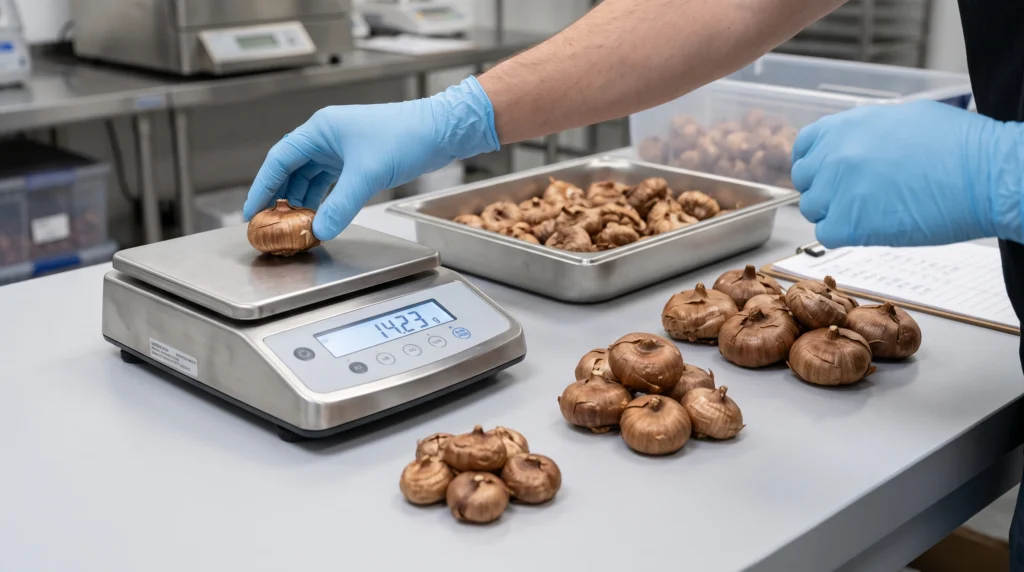
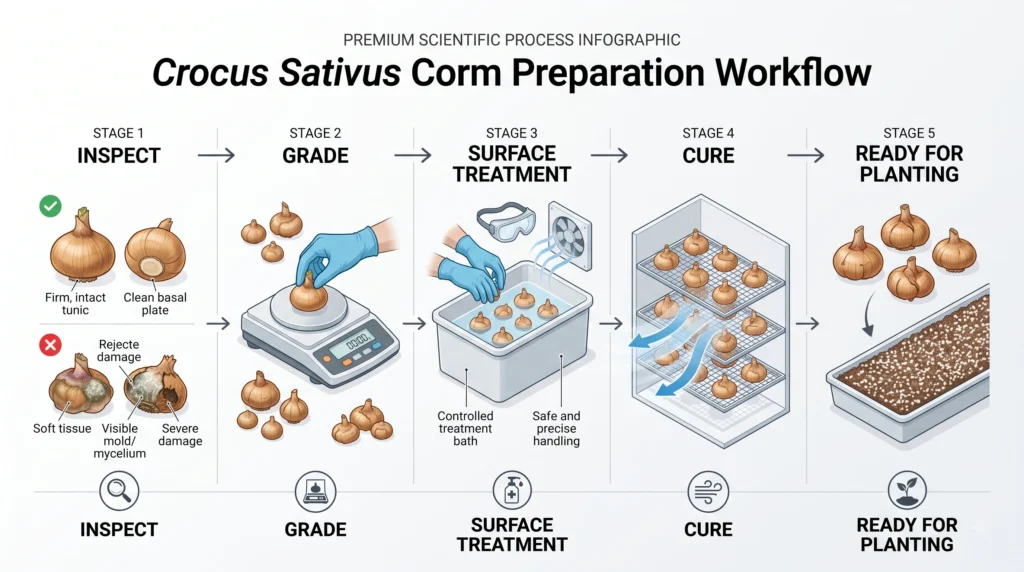
To prepare the corms for hydroponic environments, growers execute a strict preparation protocol:
- Physical Inspection and Grading: Discard any corms displaying soft spots, foul odors, or visible mycelium. Weigh all remaining inventory.
- Surface Sterilization: Pathogen loading from field-sourced corms easily wipes out high-density indoor systems. Submerge the selected corms in a 1% hydrogen peroxide (H2O2) solution for exactly 5 minutes.
- Curing: Transfer the sterilized corms to wire racks in an environment held between 65 F and 75 F (18 C to 24 C) with heavy airflow. Maintain these conditions for 4 to 6 weeks to develop robust root primordia.
Calculating the dilution for the sterilization bath requires basic chemistry. If you source standard agricultural 35% H2O2, you must dilute it to reach the 1% target safely.
Use the dilution formula: V1 * C1 = V2 * C2
Where V1 is the volume of concentrated H2O2 needed, C1 is the concentration (35%), V2 is the total target volume (e.g., 100 liters), and C2 is the target concentration (1%).
V1 * 35 = 100 * 1
V1 = 100 / 35
V1 = 2.85 liters of 35% H2O2 mixed into 97.15 liters of clean water.

- Precise Measurement: Suitable for all kinds of weighing measurement, there are 6 units of g, oz, ozt, dwt, ct, gn to cho…
- High Precision: Accurate readings can be obtained every time with a high-precision sensor system; minimum weighing weigh…
- Multi-Functions Scale: The “Tare” function allows you to Zero the Scale before adding additional ingredients, ensuring a…
- Why it’s necessary: Accurate corm grading dictates your harvest math. Weighing individual corms to separate the 5-gram rejects from the 10-gram premium producers requires a reliable, fast-response digital scale capable of reading to the 0.01g level.
- Key Spec: 500g maximum capacity with 0.01g resolution.
Cold Dormancy Simulation and Thermal Load Management
Forcing saffron to flower indoors requires simulating a rapid shift from a hot, dry summer into a cool autumn. Modulating temperature to artificially induce a cold dormancy period triggers the biological pathways necessary for stigma development.
In its native habitat, Crocus sativus bakes in the hot summer soil before autumn rains and dropping temperatures signal the plant to wake up. Indoor growers simulate this environment using commercial refrigeration and targeted thermal drops. Without precise cold treatment, the corms simply push out green vegetative leaves and bypass the flowering stage entirely—a devastating outcome for commercial operators.
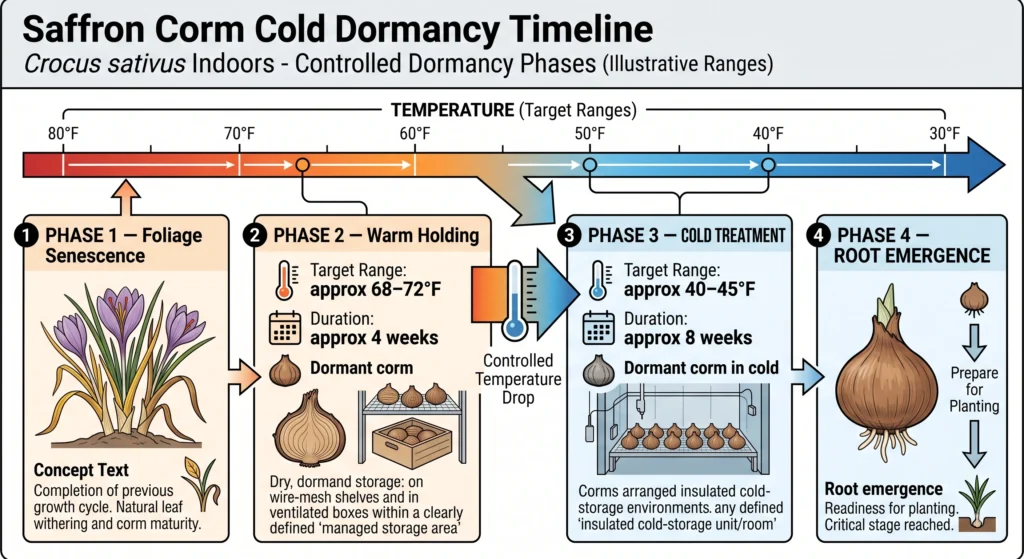
The dormancy breaking protocol runs on a rigid thermal schedule:
- Allow spring foliage to die back completely by withholding water and letting the ambient temperature rise (simulating May-June). Remove dried foliage.
- Hold corms at room temperature (68 F to 72 F) with 70% to 80% relative humidity for 4 weeks.
- Drop the temperature aggressively. Move the corms into a cold storage environment maintained at 40 F to 45 F (4 C to 7 C) for exactly 8 weeks.
- Monitor the corms closely toward the end of the cooling cycle. The visual cue for a successful dormancy break is the emergence of white root tips from the basal plate.
Executing this cold shift at a commercial scale requires calculating the sensible heat load of the corms and the refrigeration space. If you stack 10,000 corms averaging 10 grams each, you are moving 100 kilograms of biological mass into a cooler. The refrigeration unit must overcome the specific heat of the corms and the constant heat transfer through the walls of the storage room to hold a strict 40 F setpoint. Growers often use heavily insulated walk-in coolers combined with digital temperature controllers to eliminate thermal drift. You can explore advanced thermal strategies in our passive-hydro-cooling-guide to offset heavy compressor electricity costs.

- 【Easy to use】 Supports °C/°F display.
- 【Dual relay】able to power refrigeration and heating equipment as conditions change.
- 【Dual Display Window】Displays measured temperature and set temperature at the same time.
- Why it’s necessary: Refrigerators often have wide deadbands, meaning the temperature fluctuates 5 to 10 degrees before the compressor kicks on. A precise external controller tightens that deadband to within 1 degree, ensuring the corms stay exactly at 42 F during their critical 8-week dormancy phase.
- Key Spec: Dual-stage heating and cooling control with customizable compressor delay protection.
Hydroponic Saffron Nutrient Formulations and EC Targets
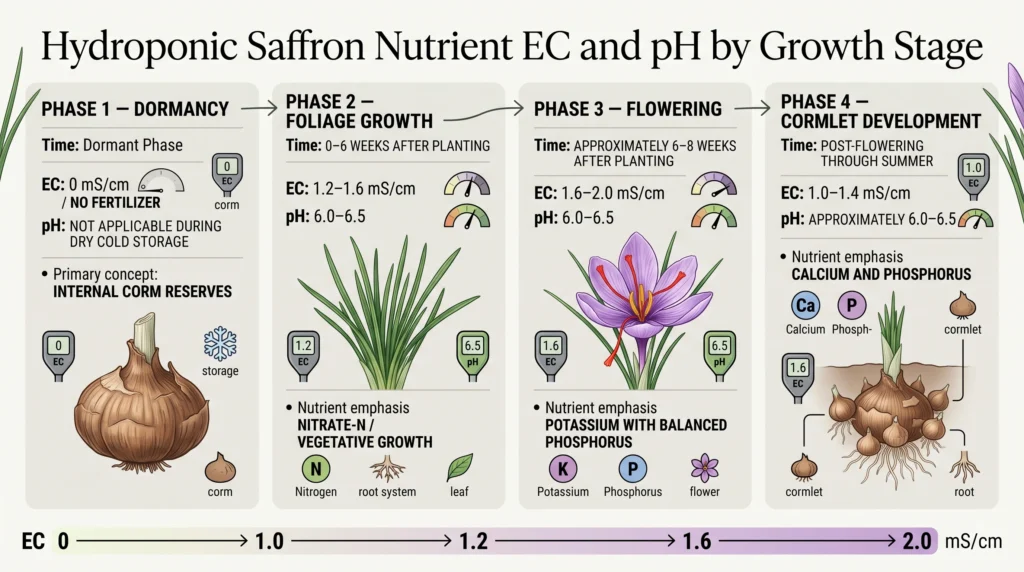
Saffron plants exhibit dynamic nutritional requirements that shift based on their phenological stage. The chemical composition of the nutrient solution must pivot from a nitrogen-heavy bias during vegetative growth to a potassium-dominant mix during flowering, finishing with a calcium and phosphorus surge to fuel cormlet expansion.
Managing ions in a saffron system leaves no room for error. The slow biological processes of the Crocus corm mean that nutrient lockout can stunt the entire crop cycle before visual symptoms appear. Relying on generic vegetable formulations limits floral output. You must mix targeted elemental ratios.
To plan your salt weights, leverage the hydroponic nutrient calculator to generate custom blends based on your water volume. Check our hydroponic-nutrients-guide for baseline salt sourcing.
Phase 1: Dormancy Phase (Cold Storage)
Zero nutrients. Applying fertilizer during dormancy guarantees root burn and invites fungal pathogens. The corm survives completely on its internal carbohydrate reserves.
Phase 2: Foliage Growth (0 to 6 Weeks Post-Planting)
Once the corms enter the substrate and root primordia expand, vegetative growth begins. The plant needs nitrogen to construct photosynthetic tissue.
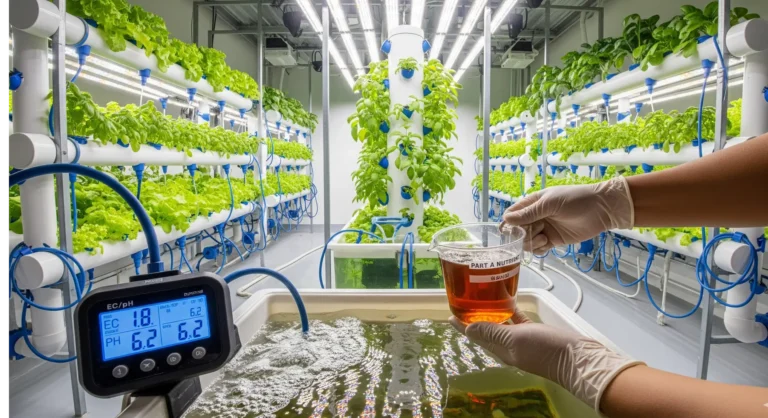
- Electrical Conductivity (EC): 1.2 to 1.6 mS/cm
- Target pH: 6.0 to 6.5
- Elemental Focus: Elevated Nitrate-Nitrogen (NO3-). Maintain a minimum of 150 ppm N.
Phase 3: Flowering Induction (6 to 8 Weeks Post-Planting)
The appearance of the floral spathe signals a rapid shift. Saffron flowers are incredibly short-lived, remaining open for just 2 to 3 weeks. The rapid expansion of petals and stamen requires high osmotic pressure driven by potassium.
- Electrical Conductivity (EC): 1.6 to 2.0 mS/cm
- Target pH: 6.0 to 6.5
- Elemental Focus: High Potassium (K) to boost stigma mass and color intensity. Maintain moderate Phosphorus (P) for ATP energy transfer. Target K levels should reach 250 ppm to 300 ppm.
Phase 4: Cormlet Development (Post-Flowering through Summer)
After the stigmas are harvested, the plant shifts energy downward. The goal is no longer foliage or flowers; it is mass accumulation in the daughter cormlets. The heavier these new corms become, the better next year’s harvest will be.
- Electrical Conductivity (EC): Drop the EC to 1.0 to 1.4 mS/cm. Slower ion diffusion in cooler autumn/winter ambient temperatures combined with reduced foliage activity means high EC will cause salt toxicity.
- Elemental Focus: Calcium (Ca) and Phosphorus (P). Calcium dictates cell wall structural integrity in the new corms, protecting them against rot. Phosphorus fuels the cellular division required to swell the cormlets to the 8+ gram target range.
If you are struggling to keep these numbers locked in, dive into our hydroponic-ph-ec-guide-2026 to understand the relationship between water temperature and ion availability.

- Compatible Protective Case + Digital Meter – Includes the Bluelab Combo Meter (pH/EC/Temp) bundled with the Bluelab Carr…
- Easy Monitoring for Hydroponics & Indoor Growing – Measure pH, conductivity (EC/TDS/PPM), and temperature in water-based…
- Reliable Readings With Quality Probes – The Combo Meter includes a lab-quality double-junction pH probe and ATC for cons…
- Why it’s necessary: Shifting EC targets from 1.2 up to 2.0 and back down to 1.0 mS/cm requires laboratory-grade precision. Cheap pen meters drift out of calibration rapidly, leading to salt buildup or starvation. The Bluelab meter provides automatic temperature compensation to keep readings perfectly accurate.
- Key Spec: Measures pH (0.0 – 14.0), EC (0.0 – 9.9 mS/cm), and Temperature with simple two-point calibration.
Substrate Engineering and System Architecture
Saffron roots demand aggressive drainage and high oxygen exchange. Heavy substrates trigger anaerobic zones, leading directly to corm rot. Designing the physical infrastructure requires balancing moisture retention with rapid fluid evacuation.
Growing saffron hydroponically differs wildly from growing lettuce or basil. Deep Water Culture (DWC) systems drown the corms. Nutrient Film Technique (NFT) channels lack the structural depth to support the physical expansion of the underground cormlets. To review the mechanical limits of other systems, see our vertical-farming-reality-check.
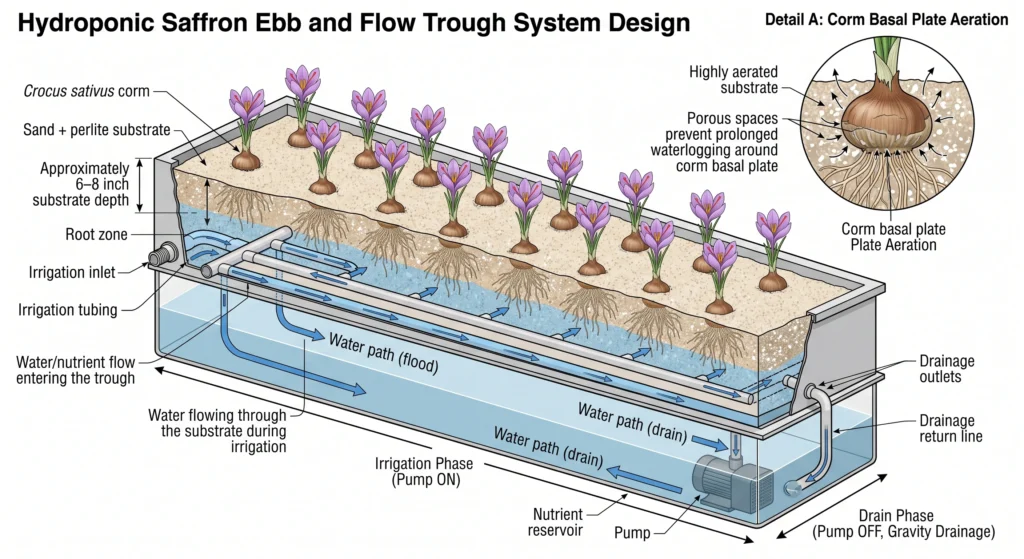
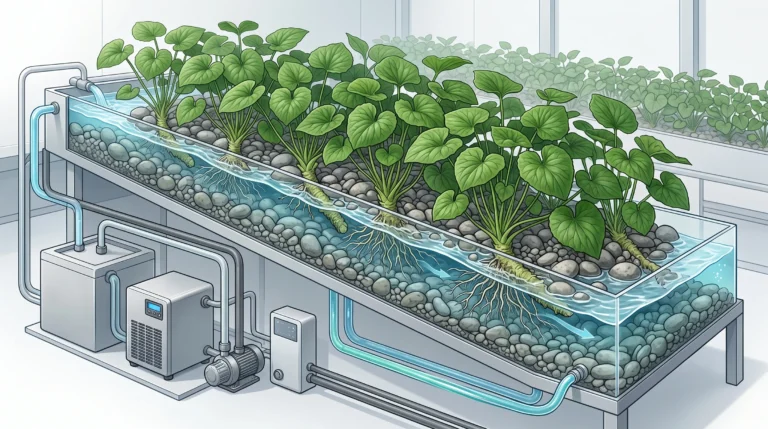
The undisputed champion for saffron is media-based ebb and flow (flood and drain) or drip-irrigated trough systems.
System Design Parameters:
- Trough Dimensions: Standard commercial troughs run 4 feet wide by 8 feet long, with a strict depth of 6 to 8 inches.
- Drainage: Drill 1/2-inch drainage holes spaced exactly 6 inches apart down the centerline of the trough. This guarantees no standing water remains after a fertigation cycle.
- Spacing: Plant corms 4 to 6 inches apart. A standard 4×8 foot trough comfortably holds 96 to 144 corms.
Substrate Physics:
The physical media must anchor the plant while shedding water instantly. Rockwool holds too much moisture. Pure clay pebbles (hydroton) dry out too fast, causing the fine root hairs to desiccate.
The optimal saffron substrate is a precise 3:1 volumetric blend of coarse sand and horticultural perlite.
- Coarse Sand: Provides heavy physical anchorage and prevents the corms from shifting as they swell.
- Perlite: Introduces macropores into the matrix, ensuring that capillary action does not hold a perched water table near the basal plate of the corm.
To prevent algae blooms on the surface of the media, top-dress the troughs with a 1-inch layer of dry, sterilized coarse silica sand. Algae competes for dissolved oxygen and attracts fungus gnats, both of which degrade system performance. If you are building out custom infrastructure, reference our diy-pvc-vertical-hydroponics guide for plumbing manifold calculations.
Lighting DLI, PPFD Targets, and Photoperiod Triggers
Crocus sativus acts as a photoperiod-sensitive organism. Shifting the duration and intensity of the lighting canopy mimics the seasonal changes required to force the plant from vegetative growth into explosive floral production.
Saffron does not demand the blinding light intensity of a fruiting tomato plant, but it still requires a specific volume of photons to manufacture the carbohydrates stored in the corm. We measure this light volume using Daily Light Integral (DLI), tracking the total moles of photons hitting a square meter per day.
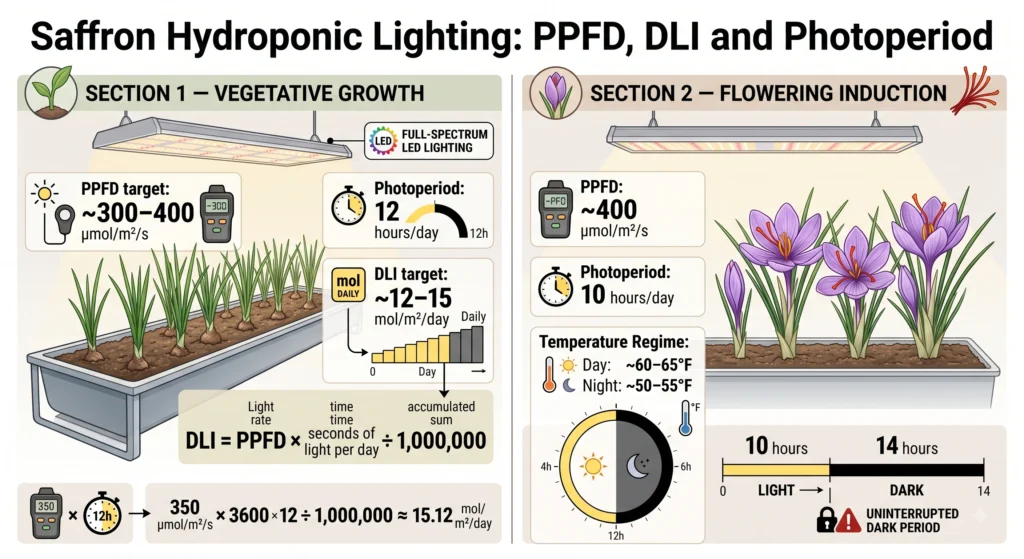
For baseline vegetative growth, target a DLI of 12 to 15 mol/m2/day. To achieve this, dial your LED fixtures to emit a Photosynthetic Photon Flux Density (PPFD) of 300 to 400 umol/m2/s over a 12-hour photoperiod.
Calculation:
PPFD (350) * 3600 seconds * 12 hours / 1,000,000 = 15.12 mol/m2/day.
When you want to trigger the flowering response, the plant needs to “feel” the days getting shorter, simulating late autumn.
- Drop the photoperiod from 12 hours down to 10 hours.
- Maintain the PPFD at 400 umol/m2/s.
- Ensure the ambient air temperature during the “day” cycle sits between 60 F and 65 F, dropping to 50 F to 55 F at night.
Using automated blackout curtains over greenhouse racks or strict digital timers in indoor grow rooms guarantees no light leaks interrupt the dark cycle. Saffron is highly sensitive to light pollution; even a small LED indicator light on a nearby piece of equipment can disrupt the flowering trigger. Check our detailed led-distance-ppfd-guide to map out your fixture mounting heights.

- NEW DIODE LAYOUT & LOWER RUNNING COST: VIPARSPECTRA upgraded P1000 grow light adopts a more scientific diode distributio…
- OPTIMAL FULL SPECTRUM LIGHT & SUPERIOR HEAT DISSIPATION: Consists of 660nm red light, 3000K 5000K white light, and 730nm…
- LOW ENERGY CONSUMPTION GROW LIGHTING: Comparable to traditional 250W HPS/MH while consuming only 100W! Perfect for 2.5×2…
- Why it’s necessary: Uniform light distribution prevents uneven flowering across the trough. The P1000 utilizes Samsung diodes to deliver a precise full-spectrum blend with adjustable dimming, allowing you to dial in exactly 350 umol/m2/s at the canopy level without burning the delicate foliage.
- Key Spec: Dimmable full-spectrum LED (3000K, 5000K, 6600nm, 730nm IR) with solid aluminum heat sink.
Pathogen Management and Corm Rot Eradication
The high planting density of indoor saffron systems creates a perfect vector for rapid pathogen transmission. A single infected corm can spread Fusarium through the nutrient solution, destroying an entire trough in days.
Saffron faces three primary biological threats: Fungal corm rot, root-knot nematodes, and mammalian pests (rodents). In an indoor CEA setup, rodents are easily excluded with basic facility hardening, leaving fungi and nematodes as the primary enemies.
Review our comprehensive hydroponic-ipm-guide for facility sanitation protocols.
Corm Rot (Fusarium oxysporum and Penicillium)
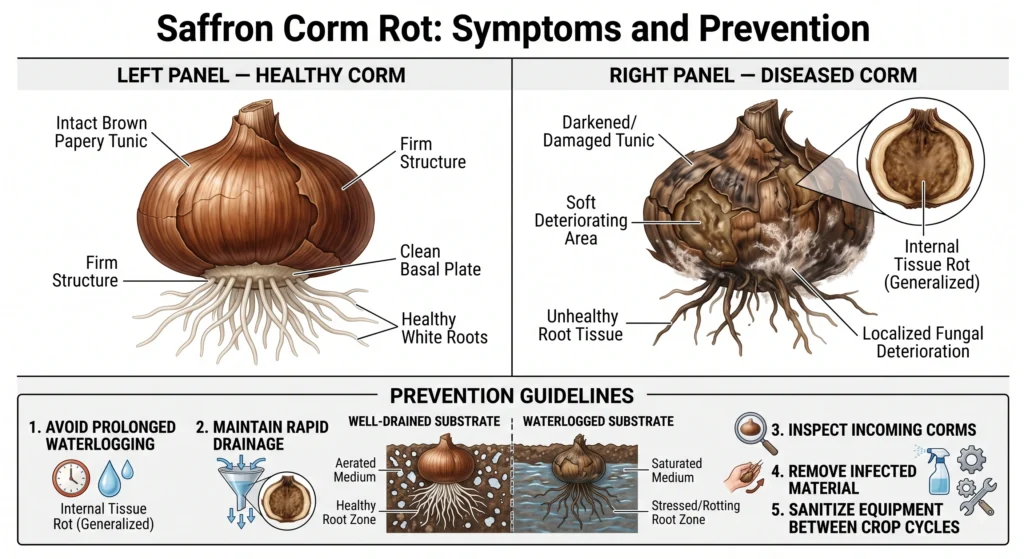
Fungal pathogens thrive in warm, waterlogged substrates. Symptoms present as soft, mushy dark patches on the corm tunics accompanied by a distinct, sour odor. Once Fusarium breaches the cellular wall of the corm, the tissue breaks down into a brown paste.
- Prevention: The 3:1 sand/perlite mix mentioned earlier prevents the waterlogging that triggers spore blooms. Treat all incoming corms with a 0.5% copper sulfate solution dunk prior to planting.
- Eradication: Fungal infections in corms are terminal. Remove and destroy any infected corm and the immediate surrounding substrate instantly. Do not compost infected tissue. Flush the irrigation lines with a 10% bleach solution between crop cycles. Reference our hydroponic-root-rot-prevention breakdown for advanced H2O2 line-flushing math.
Root-Knot Nematodes (Meloidogyne spp.)
These microscopic worms burrow into the root tissue, causing massive galls (swollen knots) that physically block the xylem and phloem. The plant slowly starves, resulting in stunted, yellowing foliage.
- Prevention: Never reuse sand or perlite without running it through a high-temperature steam sterilization process. Injecting beneficial predatory nematodes (like Steinernema feltiae) into the substrate early in the season creates a defensive perimeter around the saffron roots.
To maintain baseline diagnostics on your water quality to prevent pathogen outbreaks, keep your sensors calibrated. We cover the best hardware in our ph-ec-meter-showdown-2025.
Commercial Yield Projections and Pricing Dynamics
Transitioning saffron from a hobby experiment to a profitable commercial enterprise requires ruthless tracking of corm density, labor hours for harvesting, and stigma dry weights. Saffron grading dictates the final market price.
The math behind saffron ROI relies on maximizing the number of corms per square foot while maintaining high individual corm mass.
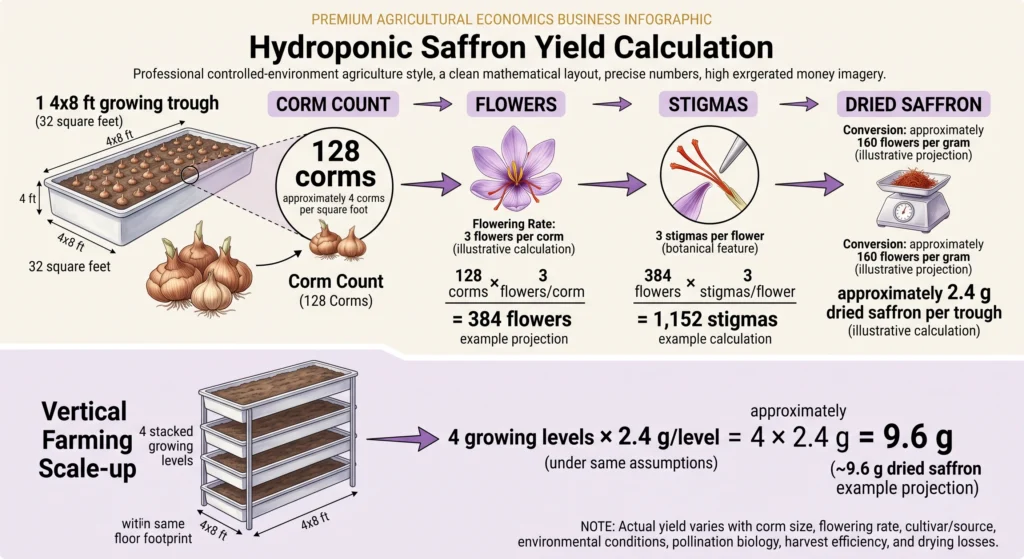
Let’s break down the yield equation for a standard 4×8 foot trough (32 square feet):
- Planting Density: 4 corms per square foot = 128 corms per trough.
- Floral Output: Assuming premium 10-gram corms, expect an average of 3 flowers per corm. (128 * 3 = 384 flowers).
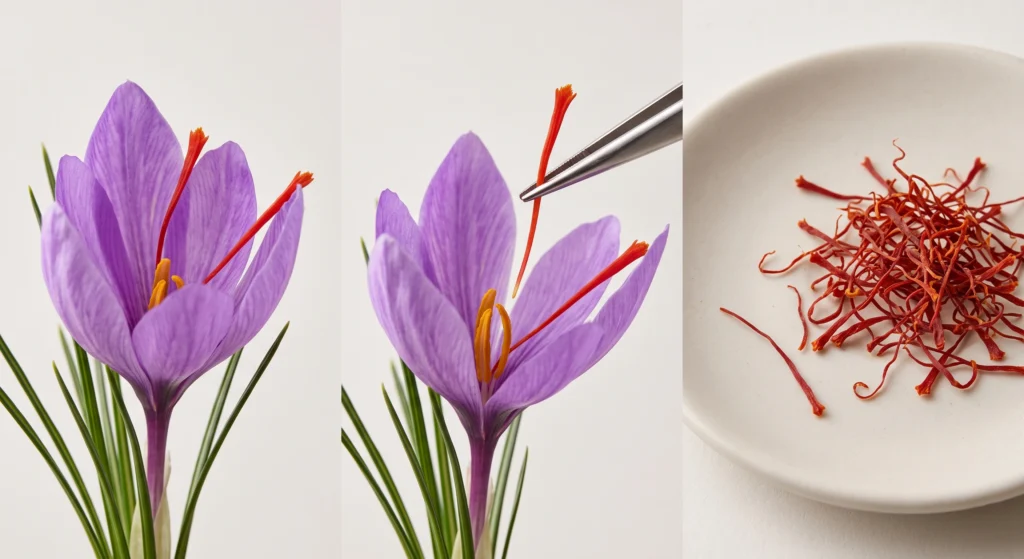
- Stigma Yield: Each flower produces 3 stigmas. It takes roughly 150 to 170 flowers to produce 1 gram of dried saffron.
- Total Output: 384 flowers / 160 flowers per gram = 2.4 grams of dried premium saffron per 32 sq ft trough.
While 2.4 grams sounds small, a vertical farming setup can stack these troughs four levels high. A single 4×8 footprint now produces 9.6 grams. Scale this across a 1,000 square foot facility, and the numbers generate real revenue, especially when selling direct-to-consumer or to high-end culinary buyers at $80 to $100 per gram for local, indoor-grown Grade A Sargol.
The hidden cost in the ROI calculation is labor. Harvesting saffron requires tweezers, steady hands, and immense patience. The harvest window is brutal; flowers must be picked daily for 2 to 3 weeks as they open. The stigmas must be plucked and dried immediately to preserve the crocin (color), picrocrocin (flavor), and safranal (aroma) compounds.
Frequently Asked Questions
Can I grow saffron in a Deep Water Culture (DWC) system?
No. Crocus sativus corms will rot rapidly if submerged continuously in water. Saffron requires a highly oxygenated, fast-draining substrate like a sand and perlite mix. Use ebb and flow or drip irrigation systems instead.
How long does the cold dormancy period need to be?
Saffron corms demand exactly 6 to 8 weeks of cold storage at temperatures between 35 F and 50 F (2 C to 10 C). Bypassing this step results in the plant producing only foliage with zero flower development.
What EC level is best for flowering saffron?
During the active flowering phase, raise the nutrient solution electrical conductivity (EC) to between 1.6 and 2.0 mS/cm. This stage requires higher potassium levels to support the rapid expansion of the floral structures and stigmas.
How much does a saffron corm need to weigh to produce flowers?
A corm must weigh an absolute minimum of 5 grams to produce a single flower, though 8 grams is the recommended baseline for commercial viability. Premium corms weighing 10 to 15 grams can produce 3 to 6 flowers in their first season.
Why are my saffron plants growing leaves but no flowers?
The most common cause of vegetative growth without flowering is insufficient cold dormancy. Other factors include planting corms that are too small (under 5 grams), excessive nitrogen in the nutrient solution, or failing to shift the photoperiod to simulate short autumn days.
What is the best pH for a saffron hydroponic system?
Maintain the pH of your nutrient solution strictly between 6.0 and 6.5. This range ensures optimal availability of phosphorus and calcium, which are heavy requirements during the cormlet development phase.
System Expansion and Operational Next Steps
Mastering hydroponic saffron requires precision engineering, aggressive environmental control, and strict adherence to the biological timelines of the corm. The financial rewards of producing the world’s most expensive spice justify the technical complexity of the system. You must treat the cold dormancy phase, the shifting EC targets, and the aggressive drainage requirements as non-negotiable laws of physics.
To refine your nutrient dosing math and lock in your elemental ppm targets for the upcoming flowering cycle, utilize our hydroponic nutrient calculator. Scale your operation methodically, track your corm weights religiously, and your indoor saffron harvest will consistently outpace traditional field-grown yields.

Continue Your Learning Journey