Industrial Peristaltic Dosing Pumps for Automated pH Buffering

Table of Contents
- Core Mechanics of Peristaltic Displacement
- Flow Dynamics and Sizing Calculations
- Material Compatibility in Corrosive Environments
- Integration with Sensors and Controllers
- Precision Calibration and Validation Protocols
- Exhaustive Installation and Commissioning Guidelines
- Long-Term Operation and Maintenance Schedules
- Comprehensive Troubleshooting and Problem Resolution
- Economic Analysis and Total Cost of Ownership
- Future Developments in Automated Dosing
- Frequently Asked Questions
- Strategic Integration for Hydroponic Mastery
Disclosure: MistCulture summarizes verified product specs, engineering data, and community feedback. We may earn an affiliate commission if you purchase through our links. Regulations vary by location; this content is for educational purposes only.
Maintaining a stable pH and electrical conductivity (EC) profile in a large-scale hydroponic reservoir requires precision fluid delivery. Manual adjustment introduces human error, causes severe pH swings, and directly damages delicate root systems. Automated hydroponic systems rely on peristaltic dosing pumps to deliver concentrated acids, bases, and nutrient solutions with absolute volumetric accuracy. Unlike traditional centrifugal or diaphragm pumps, peristaltic mechanisms isolate the corrosive fluid within a flexible tube, preventing chemical degradation of internal motor components and ensuring a pulse-free, highly predictable flow rate.
Implementing these pumps effectively demands a thorough understanding of fluid dynamics, material compatibility, and control system integration. A poorly specified dosing pump will stall, leak, or continuously overshoot your pH setpoints, leading to nutrient lockout and massive crop loss.
Core Mechanics of Peristaltic Displacement
Peristaltic pumps operate on the principle of positive displacement, using a rotating shoe or roller to compress a flexible tube. This compression creates a vacuum that draws fluid in, while the advancing roller forces a precise volume of fluid out the discharge end.
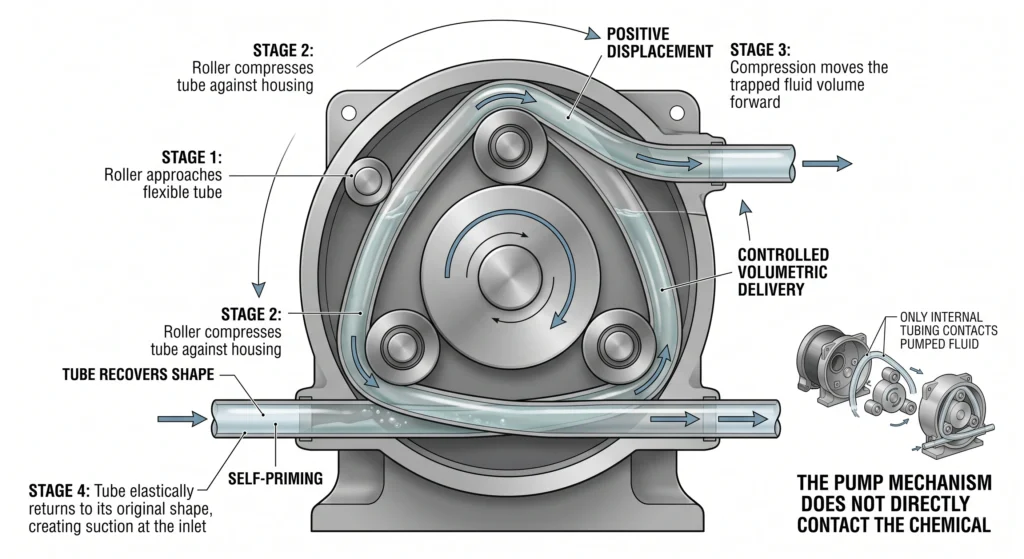
The mechanical action of a peristaltic dosing pump isolates the pumped fluid entirely. The liquid only touches the inside of the tubing. A central rotor houses two or more rollers. As the rotor turns, the rollers pinch the tubing against the pump housing. The section of tubing between two rollers holds a specific, measurable volume of fluid. The motor speed directly dictates the flow rate.
This design offers several distinct engineering advantages for hydroponic pH buffering. First, the pump is inherently self-priming. It can pull fluid from a storage container located significantly below the pump head without requiring a flooded suction line. Second, it acts as a check valve. When the rotor stops, at least one roller remains fully compressed against the tubing, preventing backflow or siphoning of concentrated acid into the main reservoir.
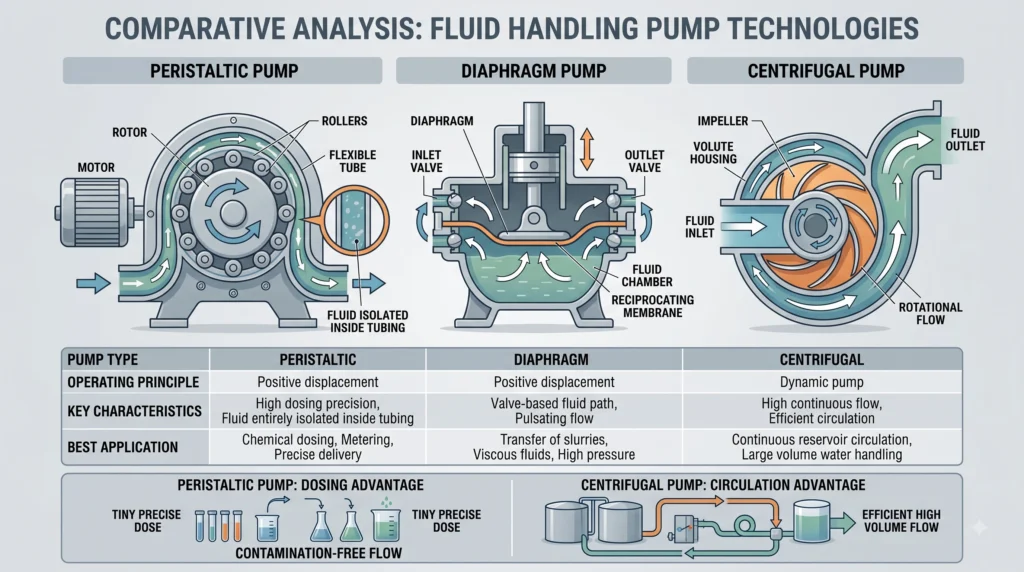
Pump performance relies on the restitution of the tubing—its ability to return to its original shape after compression. If the tubing loses elasticity due to chemical degradation or mechanical fatigue, the vacuum decreases, and the dosing volume becomes erratic. Precision dosing requires high-quality stepper motors capable of micro-stepping, allowing the pump to deliver micro-liters of fluid to avoid overshooting pH targets.

- DIP1500 intelligent peristaltic pump, using high-precision long-life stepper motor, with a digital LED display to show t…
- Standard silicone tube S18#7.9mm IDx11.1mm OD(consumables,lifetime about 200H), easy to change tube, 3 rotors, speed ran…
- Support the functions of start-stop, reversing, speed regulation, calibration, reverse sucking back, etc. Precise contro…
- Why it’s necessary: Built with four independent channels and precision stepper motors, this unit allows simultaneous dosing of pH Up, pH Down, and separate nutrient parts without cross-contamination. Its app-based interface simplifies calibration and scheduling.
- Key Spec: 0-100 mL/min adjustable flow rate per channel with WiFi integration.
Flow Dynamics and Sizing Calculations
Sizing a dosing pump requires matching the pump’s maximum flow rate and resolution to the total volume of your hydroponic reservoir and the concentration of your buffering agents.
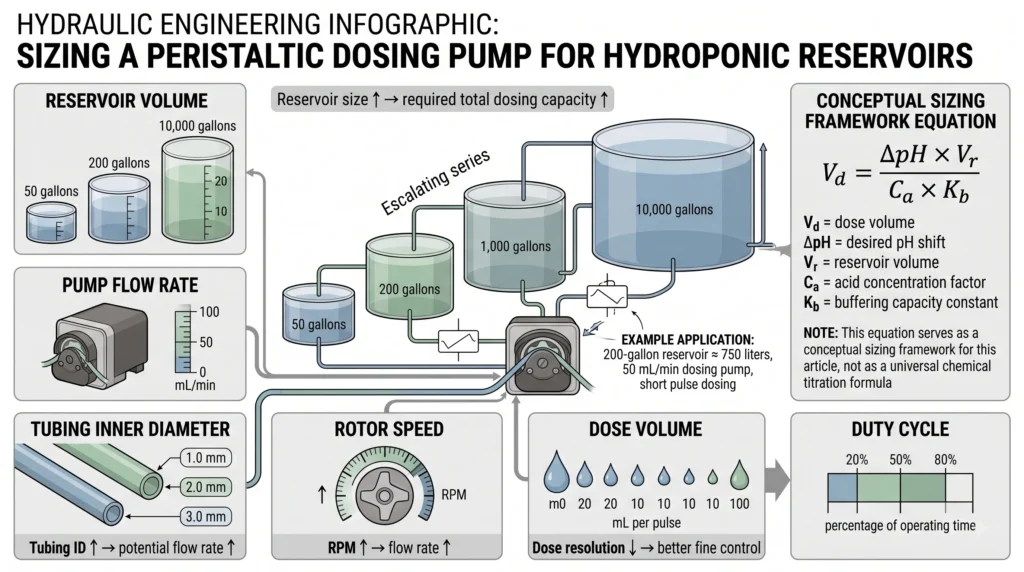
Applying concentrated phosphoric acid to a 50-gallon reservoir requires a drastically different flow rate than buffering a 10,000-gallon commercial system. If a pump pushes 500 mL/min into a small reservoir, a single one-second pulse will deliver over 8 mL of acid. Depending on the buffer concentration, this can crash the pH from 6.0 to 4.0 instantly. Conversely, a 10 mL/min pump trying to adjust a massive commercial system will run continuously, causing severe mechanical wear and failing to keep up with the natural pH drift caused by plant transpiration.
To determine the correct pump size, calculate the required buffer volume to shift your specific water chemistry.
Buffer Demand Calculation:
For a standard 200-gallon (750 Liter) system using 10% phosphoric acid, a pump rated for 50 mL/min provides an excellent balance of speed and precision. The controller can pulse the pump for two seconds to deliver a micro-dose of approximately 1.6 mL. When exploring system capacity, consult our hydroponic pump sizing guide to align your circulation pumps with your dosing equipment.
Flow rates are heavily influenced by the inner diameter (ID) of the tubing and the RPM of the rotor.
- 1.0 mm ID tubing at 100 RPM yields roughly 5 mL/min.
- 2.0 mm ID tubing at 100 RPM yields roughly 20 mL/min.
- 3.0 mm ID tubing at 100 RPM yields roughly 45 mL/min.
Select a pump that can achieve your maximum required daily dose within a 20% duty cycle to prevent premature motor burnout.
Material Compatibility in Corrosive Environments
Tubing material dictates the lifespan and reliability of the dosing pump. Silicone fails rapidly when exposed to strong acids or bases, making advanced materials like PharMed BPT or Tygon essential for pH buffering applications.
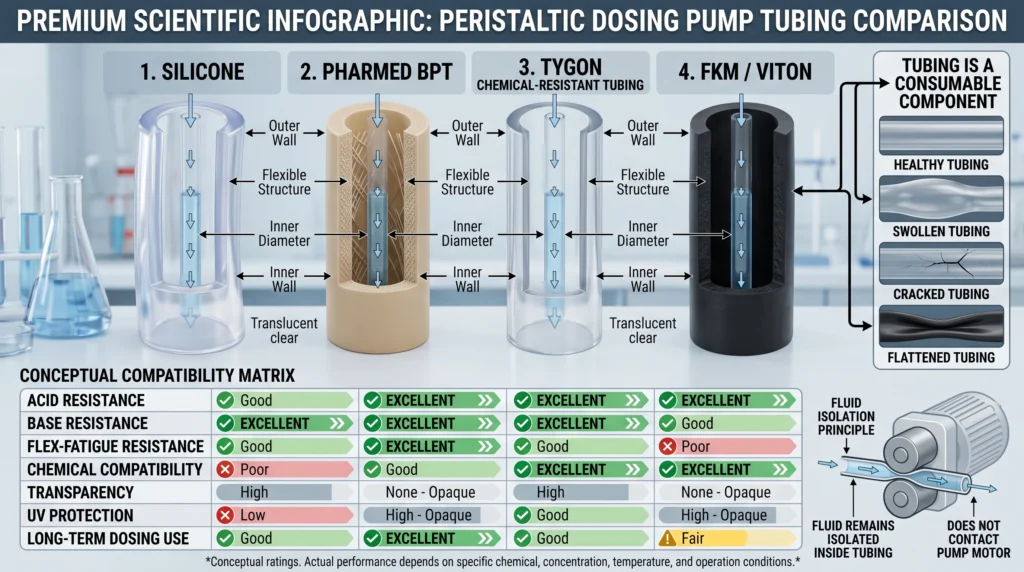
The chemical environment inside a hydroponic dosing tube is hostile. pH Down solutions rely on phosphoric, nitric, or sulfuric acids. pH Up solutions utilize potassium hydroxide or potassium carbonate. Standard silicone tubing, often included with cheap dosing pumps, degrades, swells, and eventually ruptures when exposed to these chemicals over time. A ruptured tube inside the pump head spills concentrated acid directly onto the motor shaft and housing, destroying the equipment and creating a severe safety hazard.
For long-term reliability, industrial standard materials are non-negotiable.
- PharMed BPT: This opaque material withstands repeated compression up to 30 times longer than standard silicone. It exhibits excellent resistance to both strong acids and strong bases. It is the gold standard for continuous-duty hydroponic dosing.
- Tygon Chemical (2001 or similar variants): Offers supreme chemical resistance and is transparent, allowing operators to visually confirm fluid flow and spot air bubbles. It is slightly stiffer than PharMed, which can put slightly more load on the pump motor.
- Fluoroelastomers (FKM / Viton): Used in extreme industrial applications. Highly resistant to nitric acid (commonly used in commercial tomato facilities), but expensive and often unnecessary for standard residential or light-commercial hydroponics.
Tubing must also block UV light if you are dosing organic additives or certain iron chelates that degrade under light exposure. Opaque tubing prevents algae from forming inside the lines and blocking the injection valves.

- 1/4″ ID x 3/8″ OD
- 25 Ft
- Biocompatible inner bore is perfect for sensitive bioprocess fluids
- Why it’s necessary: Standard silicone tubes rupture under the stress of harsh pH adjusters. PharMed BPT offers exceptional flex-fatigue life and chemical resistance, ensuring safe, long-term operation without catastrophic acid leaks.
- Key Spec: Withstands up to 10,000 hours of continuous pumping; compatible with concentrated phosphoric acid and potassium hydroxide.
Integration with Sensors and Controllers
Dosing pumps are execution devices; they require an intelligent controller reading real-time sensor data to dictate when and how much fluid to inject.
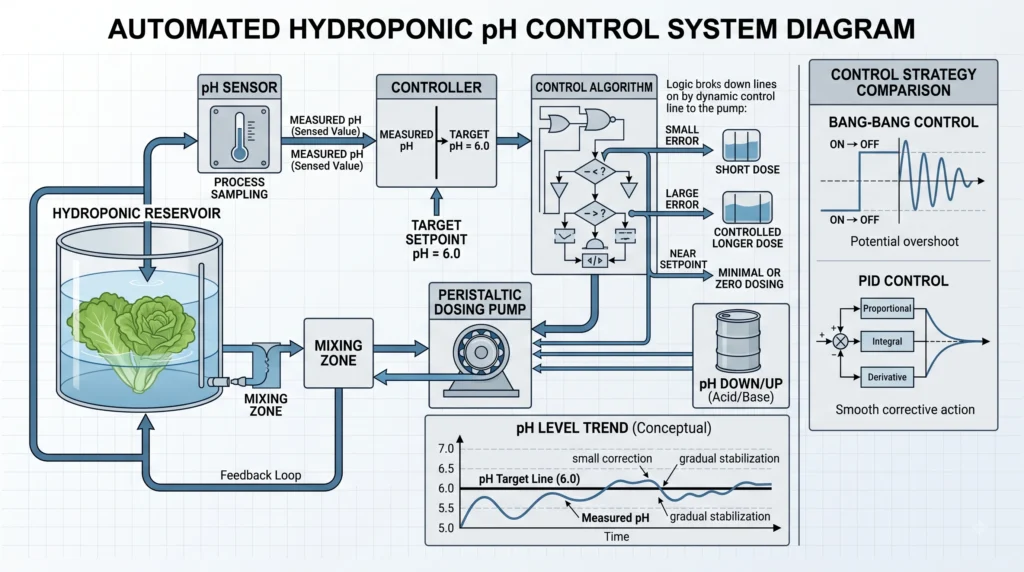
Integrating a peristaltic pump into a hydroponic system involves closing the control loop. The system reads the water chemistry, calculates the error against the setpoint, and commands the pump to fire. For a complete understanding of sensor deployment, review our hydroponic sensors guide.
Basic controllers use simple “bang-bang” logic. If the pH rises above 6.0, the pump turns on. When the pH hits 6.0, the pump turns off. This creates massive overshoots because the injected acid takes time to mix throughout the reservoir and reach the sensor. The pump continues firing while the acid mixes, resulting in a crashed pH.
Advanced systems utilize PID (Proportional, Integral, Derivative) control logic.
- Proportional: The further the pH is from the target, the longer the pump runs.
- Integral: Accounts for accumulated past errors, ensuring the system reaches the exact target even if there is a slight natural drift.
- Derivative: Predicts future error based on the current rate of change, slowing the dosing pump as the pH approaches the target to prevent overshoot.
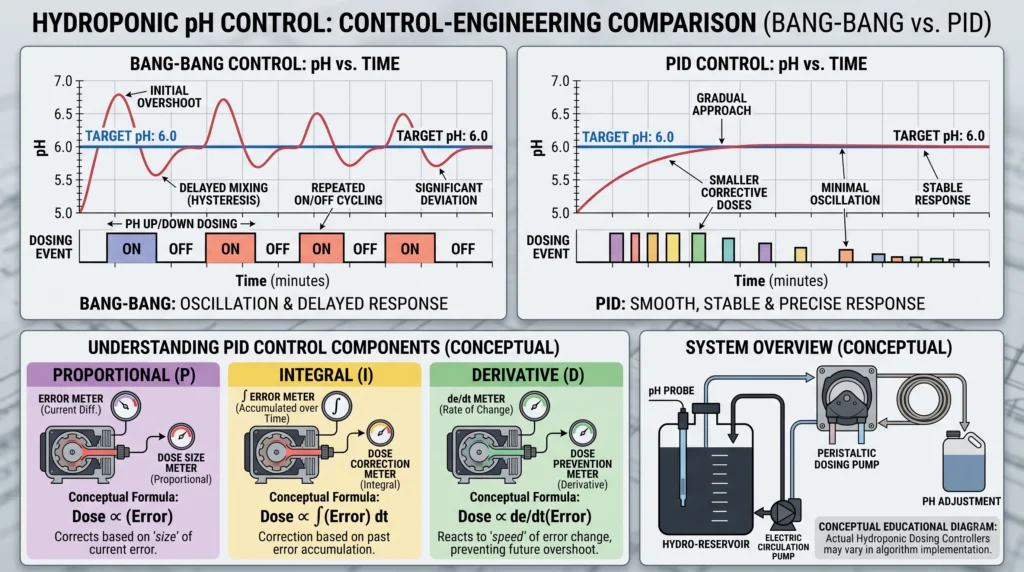
Electrical integration varies by equipment. Industrial pumps utilize 0-10V analog signals or 4-20mA current loops to dictate motor speed. Hobbyist and light-commercial units interface via digital PWM (Pulse Width Modulation) or I2C communication protocols. When building DIY automation, isolated relays must separate the low-voltage microcontroller (like a Raspberry Pi or Arduino) from the higher voltage required by the stepper motors. Read our breakdown on the best hydroponic controllers under $200 to find budget-friendly brains for your dosing setup.
Precision Calibration and Validation Protocols
Calibration maps the theoretical pump output to actual real-world fluid delivery. Because tubing stretches and wears over time, recurring calibration is mandatory to prevent nutrient lockout caused by dosing drift.
A pump rated for 50 mL/min will rarely deliver exactly 50 mL/min out of the box. The viscosity of the fluid, the specific gravity of the nutrient mix, and the vertical lift from the storage jug all impact the final flow rate.
Calibration must be performed using the actual chemical you intend to pump, installed in its final physical location.
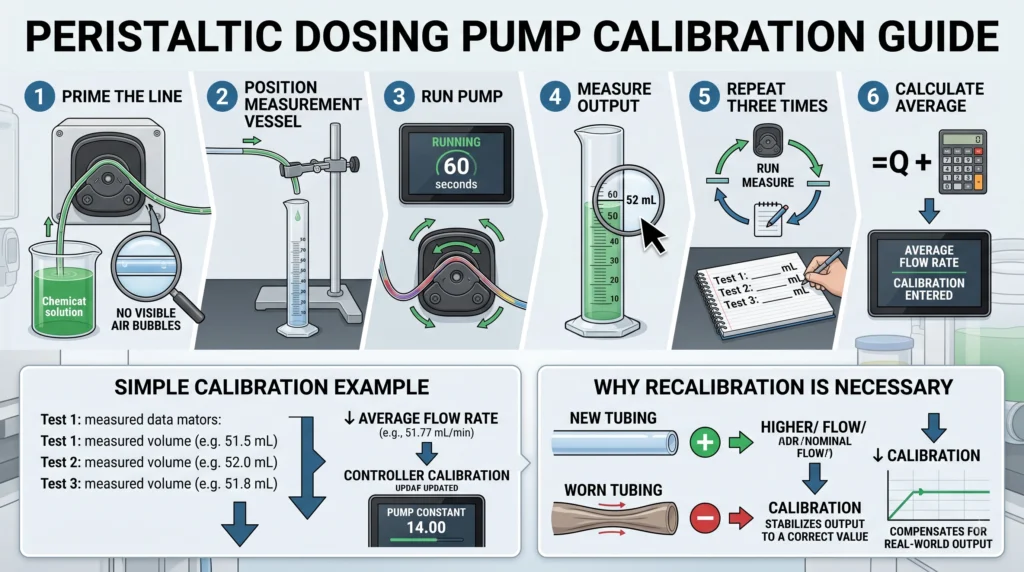
Step-by-Step Calibration Procedure:
- Prime the line completely. Ensure there are no air bubbles from the intake strainer to the discharge nozzle.
- Place the discharge nozzle into a highly accurate graduated cylinder (e.g., a 100 mL glass cylinder).
- Command the controller to run the pump for exactly 60 seconds at 100% speed.
- Record the exact volume delivered.
- Repeat this process three times and average the results to account for slight mechanical variations.
- Input this average flow rate into your master controller software.
Tubing experiences mechanical fatigue. As the rollers crush the tube millions of times, the elastomer weakens, reducing the vacuum and lowering the flow rate. A pump calibrated to deliver 50 mL/min in January may only deliver 42 mL/min by June. Establish a strict monthly calibration schedule.
If you are dosing heavy, viscous organic nutrients, calculate the flow rate loss accurately. Use our hydroponic nutrient calculator to determine exact baseline feed ratios before relying on automated dosing hardware.

Why it’s necessary: Relying on visual estimates in a plastic beaker leads to compounding errors. A high-precision digital flow scale validates the exact output of your dosing pump down to the fraction of a milliliter.nnKey Spec: Measures micro-doses from 0.1 mL to 1000 mL with +/- 0.5% accuracy.
Exhaustive Installation and Commissioning Guidelines
Correct physical installation isolates the dosing equipment from humidity, prevents chemical siphoning, and ensures rapid mixing within the main nutrient reservoir.
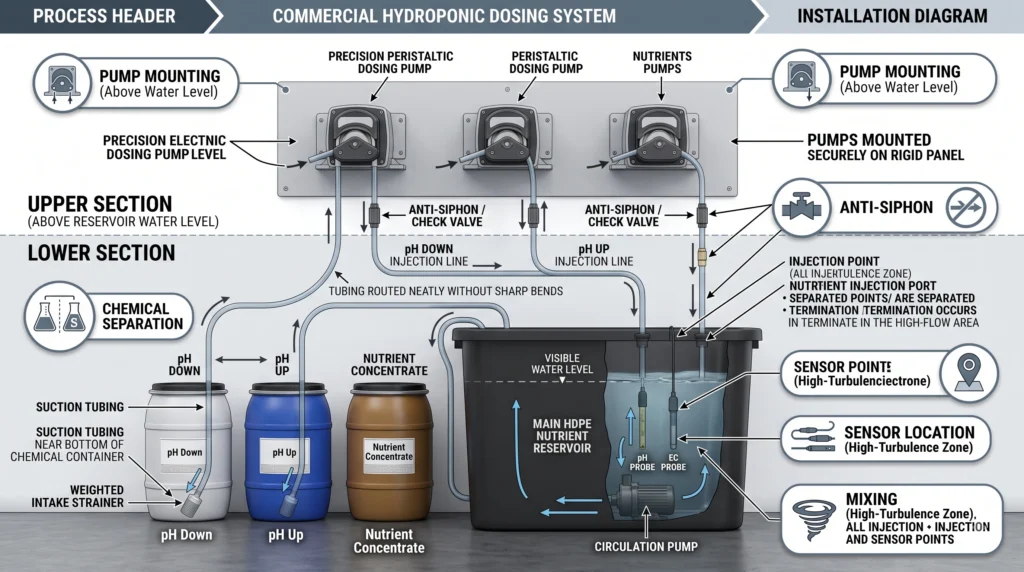
Mount the peristaltic pumps on a rigid, vibration-free surface above the maximum water level of your reservoir. Never mount electronic dosing pumps directly over open water. Condensation will inevitably corrode the control boards, and accidental leaks will destroy the hardware.
The suction lines must reach the absolute bottom of your chemical storage jugs. Use a weighted ceramic or stainless-steel intake strainer to ensure the tube does not curl upward and suck air when the jug runs low.
Discharge line placement is critical. Do not drop the acid and base discharge lines into the same physical area of the reservoir. If concentrated pH Up and pH Down mix before they are heavily diluted by the reservoir water, they will react violently, instantly precipitating out nutrient salts and causing localized extreme heat.
The injection point should be located in a high-turbulence zone. Injecting chemicals directly into the intake stream of your main circulation pump ensures immediate, violent mixing. This rapid homogenization prevents localized pH pockets and allows your sensors to read the true system pH within seconds, preventing the controller from over-dosing.
Install anti-siphon check valves at the very end of the discharge lines. Even though peristaltic pumps act as natural check valves, tubing fatigue can allow fluid to slip past the rollers. An anti-siphon valve guarantees that tank water cannot flow backward into your acid jug, and concentrated acid cannot siphon forward into the reservoir when the pump is idle.
Long-Term Operation and Maintenance Schedules
Preventive maintenance prevents catastrophic system failures. Regularly replacing pump heads, lubricating rollers, and inspecting tubing ensures year-round operational stability.
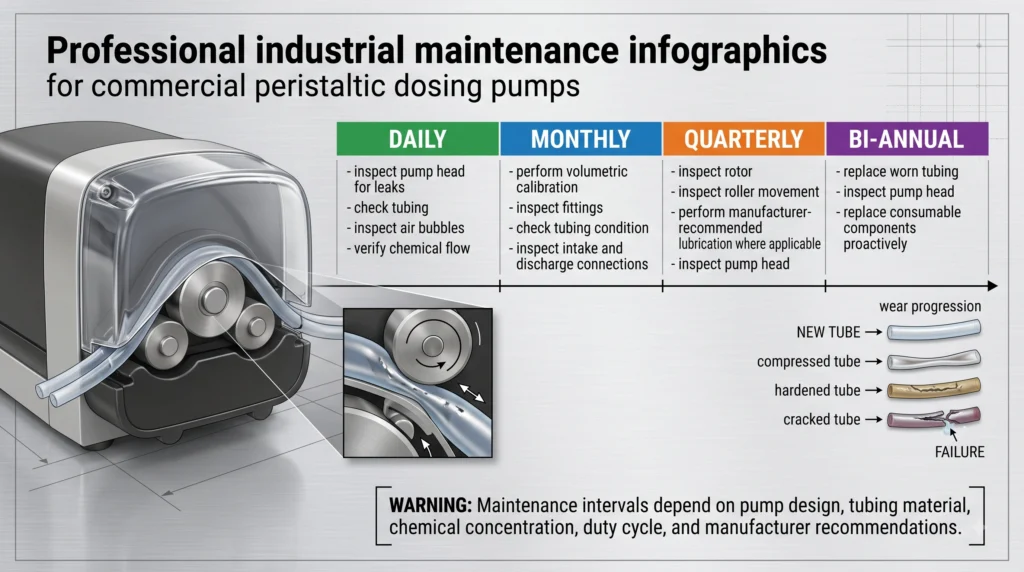
Peristaltic pumps are robust, but they possess consumable wear parts. The tubing inside the pump head takes immense physical abuse.
Daily Inspections: Visually confirm that there is no fluid pooling inside the clear plastic pump head housing. Any moisture indicates a micro-fracture in the tubing. Verify that the fluid lines are free of large air gaps.
Monthly Maintenance: Perform a volumetric calibration test to adjust for tube fatigue. Check the connections at the intake and discharge barbs. Strong chemicals can cause the tubing to harden and shrink, leading to air leaks at the connection points.
Quarterly Maintenance: Lubricate the rollers. Use only the manufacturer-specified silicone grease. Petroleum-based lubricants will degrade the plastic housing and destroy certain types of tubing.
Bi-Annual Maintenance: Replace the pump head tubing entirely. Do not wait for a failure. Preventive replacement is significantly cheaper than replacing a burned-out pump motor or losing a crop to a pH crash. Modern pump designs feature snap-off heads that allow you to swap the entire mechanical assembly in under thirty seconds. Keep spare heads in your environmental control room at all times.
For deeper insights on maintaining your entire water chemistry profile, refer to our comprehensive hydroponic pH and EC mastery guide.
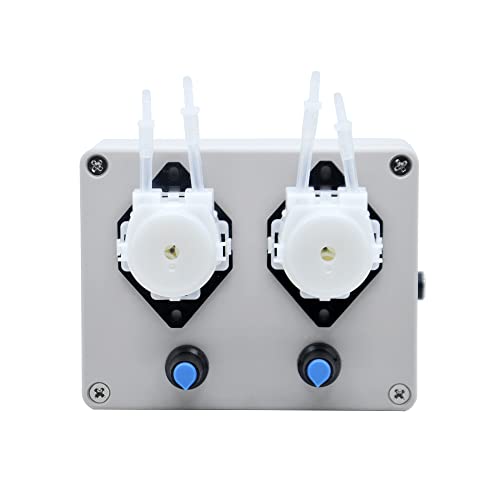
- Double knob design, flow adjustment is more convenient, with independent speed regulation, without interference.
- Easy to disassemble the pump head for easy replacement and easy maintenance.
- Cannot absorb viscous liquids. Three wheel structure, accurate speed, low noise, precise flow. The tubes of two pump hea…
- Why it’s necessary: Attempting to thread new tubing through a tight pump rotor during a mid-cycle failure is stressful and error-prone. Quick-release heads let you snap a completely fresh, pre-tubed assembly onto the motor shaft instantly.
- Key Spec: Tool-less snap-on design; pre-loaded with chemical-resistant PharMed tubing.
Comprehensive Troubleshooting and Problem Resolution
Systematic fault isolation is required when dosing systems fail. Air leaks, stepper motor stalls, and sensor drift are the primary culprits behind erratic pH control.
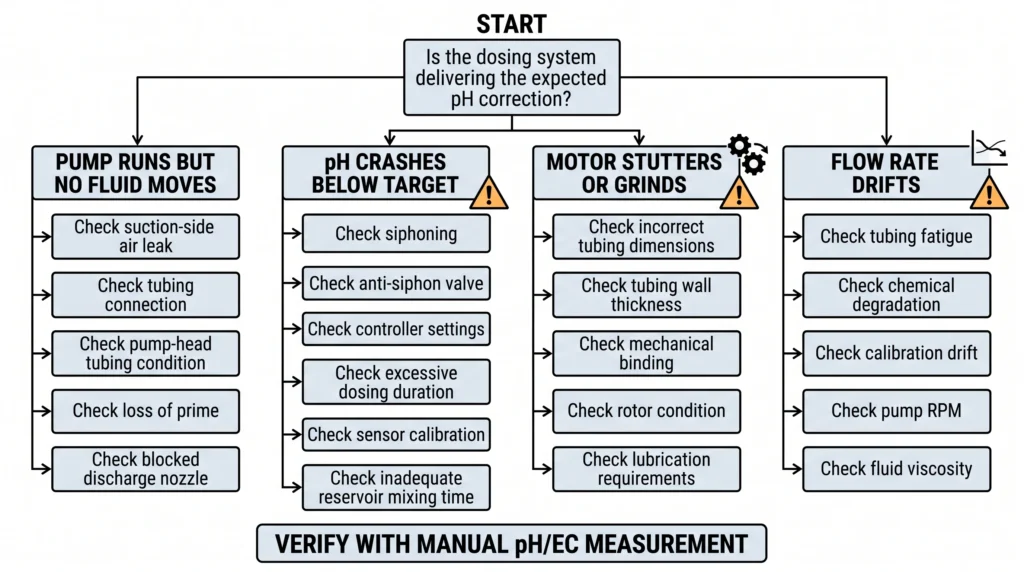
When the automated pH system fails to maintain setpoints, the issue rarely lies with the motor itself. Follow this diagnostic matrix to resolve dosing failures.
Symptom: Pump motor turns, but no fluid moves.
- Cause 1: Loss of prime due to an air leak on the suction side.
- Resolution: Inspect the connection between the rigid intake strainer and the flexible tubing. Cut off the bottom half-inch of tubing and re-seat it on the barb.
- Cause 2: Tubing inside the pump head has collapsed and lost restitution.
- Resolution: Replace the pump head or the internal tubing segment immediately.
- Cause 3: Clogged injection valve. Nutrient salts can crystallize at the discharge tip.
- Resolution: Remove the discharge nozzle and soak in hot water and mild acid to dissolve calcification.
Symptom: pH crashes well below the target setpoint.
- Cause 1: Siphoning effect. The reservoir level is lower than the chemical jug, and fluid is being pulled through the pump.
- Resolution: Install an inline anti-siphon check valve on the discharge line. Ensure the rollers are maintaining proper compression against the housing.
- Cause 2: Controller PID settings are too aggressive.
- Resolution: Reduce the proportional band or increase the lockout time between doses to allow the reservoir to mix thoroughly before taking another sensor reading.
- Cause 3: Sensor drift. The pH probe is reading artificially high, causing the controller to dump acid unnecessarily.
- Resolution: Clean the pH probe with a soft brush and re-calibrate using 4.0 and 7.0 buffer solutions. Read more in our hydroponic troubleshooting guide.
Symptom: Stepper motor stutters or emits a grinding noise.
- Cause 1: Tubing wall is too thick, causing the rollers to bind against the housing.
- Resolution: Use only the exact specified tubing dimensions designated by the pump manufacturer.
- Cause 2: Lack of lubrication on the rotor shaft.
- Resolution: Apply high-grade silicone grease to the central bearing and roller pins.
Economic Analysis and Total Cost of Ownership
The initial capital expenditure (Capex) of industrial dosing pumps is offset by the drastic reduction in operational expenditure (Opex) achieved through labor savings and elimination of crop loss due to human error.
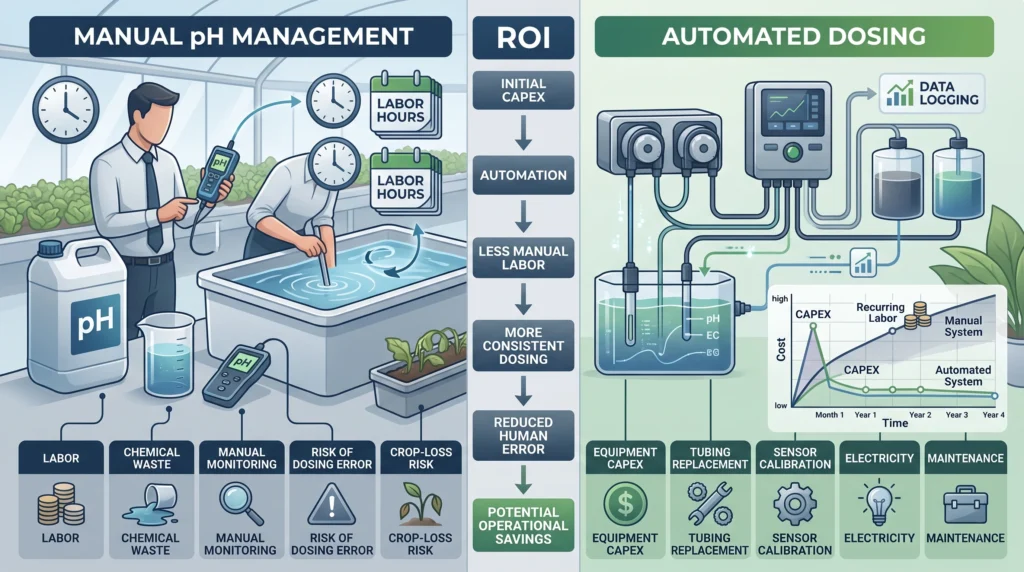
Deploying a commercial-grade peristaltic dosing system requires a higher upfront investment than manual mixing. A four-channel stepper-motor dosing unit, paired with a reliable pH/EC controller, requires dedicated budget allocation. However, manual pH buffering incurs hidden costs that rapidly exceed the price of automation.
Calculating Opex savings involves quantifying daily labor. If a technician spends 20 minutes per day measuring, mixing, and adjusting pH across multiple reservoirs, this equals over 120 hours of labor annually. Automation reallocates this labor to high-value tasks like crop steering and pest management. Check our deep dive into hydroponic system upgrades and ROI to see how automation pays for itself.
Furthermore, automated dosing prevents yield suppression. Plants subjected to pH swings of 1.0 or more experience localized root shock and temporary nutrient lockout. A stable pH profile maximizes nutrient uptake efficiency, directly accelerating vegetative growth and increasing final harvest weights. The payback period for a high-end dosing system in a 1,000-square-foot facility is typically under eight months.
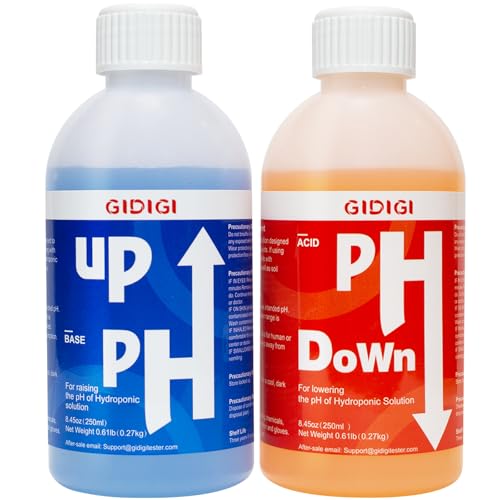
- ✅Precise pH Control – Formulated with food-grade phosphoric acid (pH Down) and premium buffering agents, this kit ensure…
- ✅Complete pH Testing Kit – Includes pH Up & Down solutions (8.45oz/250ml each), measuring cup, dropper, pH test strips a…
- ✅Super Concentrated Formula – Highly effective yet economical—only 1 tbsp (15mL) per gallon (3mL per liter) required for…
- Why it’s necessary: Automated systems consume buffering agents predictably. Purchasing in 1-gallon or 5-gallon bulk containers significantly reduces the cost per milliliter compared to quart-sized hobbyist bottles.
- Key Spec: Highly concentrated food-grade phosphoric acid (Down) and potassium carbonate (Up) formulated for automated injection.
Future Developments in Automated Dosing
The next generation of dosing hardware integrates seamlessly with cloud-based IoT networks, allowing predictive maintenance algorithms to flag tubing wear before a mechanical failure occurs.
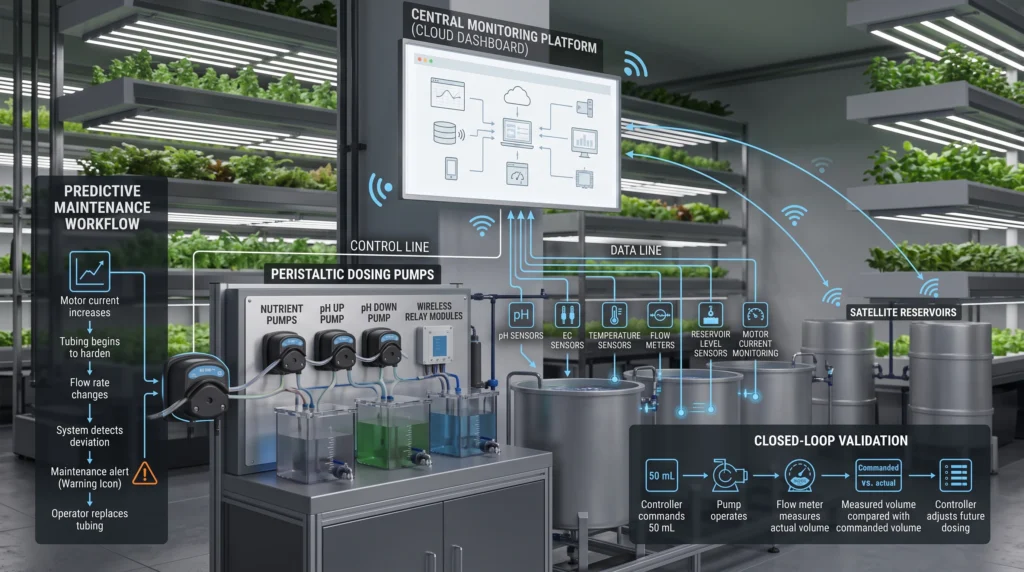
Hydroponic automation is moving beyond simple localized control. Modern peristaltic dosing pumps are becoming nodes within broader Internet of Things (IoT) ecosystems. By monitoring the electrical current draw of the stepper motor in real-time, the central processor can detect when the tubing begins to harden. An alert is sent to the operator’s smartphone, scheduling a preventive maintenance task days before the flow rate is impacted.
Integration with flow meters provides closed-loop validation. If the controller commands 50 mL of acid, the inline flow meter verifies that exactly 50 mL passed through the line. If a discrepancy is detected, the system automatically adjusts the pump’s run time to compensate for the deviation.
Smart plugs and wireless relays allow distributed dosing. Rather than running hundreds of feet of acid tubing from a central pump room, growers can mount wireless dosing pumps directly above satellite reservoirs, all commanded by a single master controller. Learn how to implement wireless architecture in our guide to smart plugs and timers for hydroponics.
Frequently Asked Questions
Can I run peristaltic pumps continuously for circulation?
No. Peristaltic pumps are designed for precise, intermittent dosing. Continuous operation will generate excessive heat, rapidly degrade the flexible tubing, and lead to premature motor failure. Use magnetic drive centrifugal pumps for continuous water circulation.
Why does my dosing pump lose its prime overnight?
Loss of prime is almost always caused by a micro-leak on the suction side of the tubing. Check all barbed fittings. Ensure the tubing is pushed entirely over the barb and secure it with a plastic zip tie or hose clamp. Tubing that has stretched at the connection point must be trimmed and re-seated.
Should I dilute my pH Down before running it through the dosing pump?
Yes, in smaller systems. If your reservoir is under 50 gallons, concentrated commercial acids are often too strong for the pump to dose accurately without overshooting. Diluting your acid 1:10 with distilled water allows the pump to run longer, providing the controller with finer resolution over the pH adjustment.
How do I prevent the acid and base solutions from crystallizing at the injection point?
Inject the solutions into an area with high water turbulence, preferably directly upstream of an inline mixing baffle or the main water pump intake. Keep the injection nozzles slightly elevated above the water line to prevent reservoir water from wicking back up into the chemical tubes and causing scaling.
What is the difference between DC motors and Stepper motors in dosing pumps?
Standard DC motors spin at a variable speed based on voltage and lack precision at very low flow rates. Stepper motors move in exact, discrete rotational steps, allowing the controller to dispense exact microliter volumes with near-perfect repeatability.
Strategic Integration for Hydroponic Mastery
Mastering automated fluid delivery fundamentally shifts your operation from reactive correction to proactive stability. Peristaltic dosing pumps eliminate the chaotic pH swings that stunt crop growth and invite root pathogens. By combining industrial-grade tubing, proper sensor integration, and rigorous calibration protocols, you establish an environment where plants experience zero nutritional downtime.
To maximize the potential of your newly automated reservoir, explore our complete Hydroponic pH and EC Mastery Guide. Optimize your entire fluid management strategy and unlock professional-tier yields today.

Continue Your Learning Journey