Dutch Bucket vs DWC: Which System Wins for Tomatoes, Peppers & Heavy Vining Crops?

Table of Contents
- Architectural Mechanics of the Dutch Bucket (Bato) System
- Engineering Dynamics of Deep Water Culture (DWC)
- Head-to-Head Comparative Framework
- Nutrient Management and System Mathematics
- Substrate Selection and Hydraulic Conductivity
- Crop Suitability and Yield Modeling
- Hydroponic Engineering Interactive Simulator
- Emergency Failure Playbook: Downtime Survival Protocols for Dutch Bucket and DWC
- Frequently Asked Questions
- System Selection Verdict
Disclosure: MistCulture summarizes verified product specs, engineering data, and community feedback. We may earn an affiliate commission if you purchase through our links. Regulations vary by location; this content is for educational purposes only.
Hydroponic cultivators face a major architectural decision when expanding their grow rooms: choosing the right infrastructure for the right crop. Dutch bucket (Bato bucket) systems and Deep Water Culture (DWC) both earn loyal fans among indoor growers, yet they solve completely different problems. Dutch buckets are engineered to grow heavy vining crops in a coarse medium with a drip-fed, recirculating solution. Deep Water Culture suspends bare roots directly into a highly oxygenated reservoir to drive explosive vegetative growth in fast-maturing plants.
This technical guide breaks down the mechanics, hydraulic design, and physiological impacts of both systems. We will look closely at root zone failure risks, nutrient volume mathematics, media selection, crop compatibility, and daily maintenance loads. By understanding the structural differences between top-fed media systems and bare-root liquid environments, you can match your grow room architecture to your specific harvest goals.
Architectural Mechanics of the Dutch Bucket (Bato) System
Dutch bucket systems utilize individual, medium-filled plastic pots connected to a shared nutrient line and a gravity-fed drain, creating an isolated yet centralized hydroponic environment perfect for long-term vining crops.
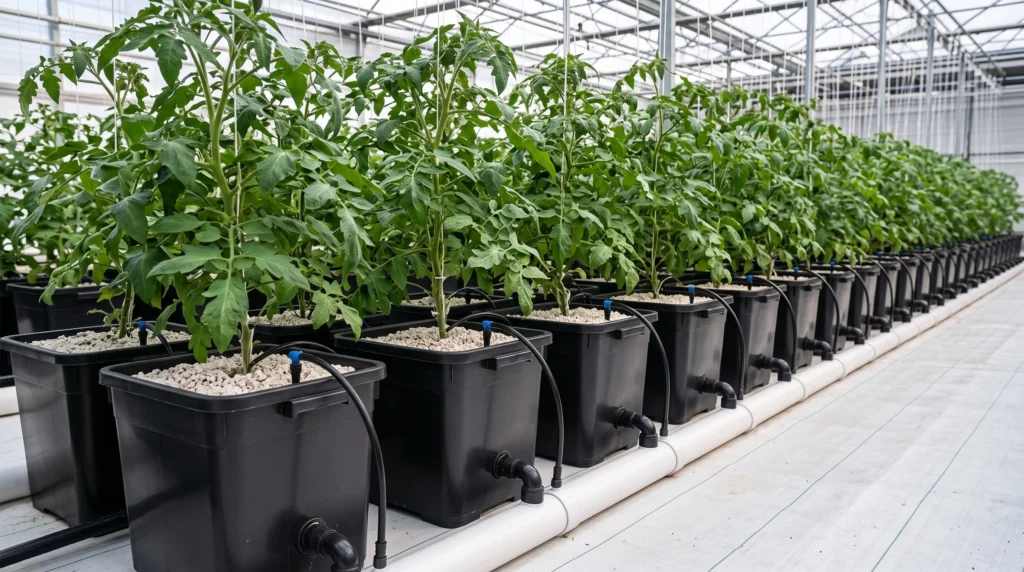
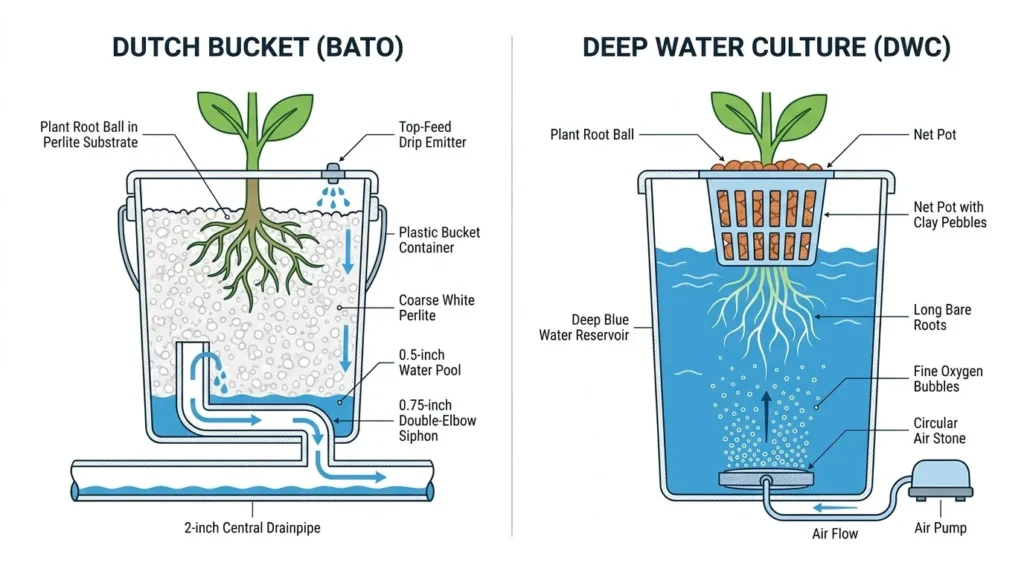
A Dutch bucket system is a medium-based, drip-irrigated, recirculating system built around rigid plastic pots. Standard commercial buckets measure 12 x 10 x 9 inches (30 x 25 x 23 cm). When filled to within 1 inch (2.5 cm) of the top, each bucket holds approximately 4 US gallons (16 L) of substrate. Every bucket sits atop a centralized drainpipe. The nutrient solution is pumped from a main reservoir to the top of each bucket through a drip line, percolates through the media, and drains by gravity back to the central tank.
The system was originally refined for commercial vine-crop production. Large-scale agricultural operations use this exact layout for cultivating beefsteak tomatoes, cherry tomatoes, bell peppers, eggplants, and European cucumbers.
Looking at the engineering details from commercial installations reveals why the system functions so reliably. The drainpipes are usually 2 inches (5 cm) in diameter. Early designs tested 1.5-inch pipes, but those proved too small and quickly filled with intrusive root masses, causing system-wide backups.
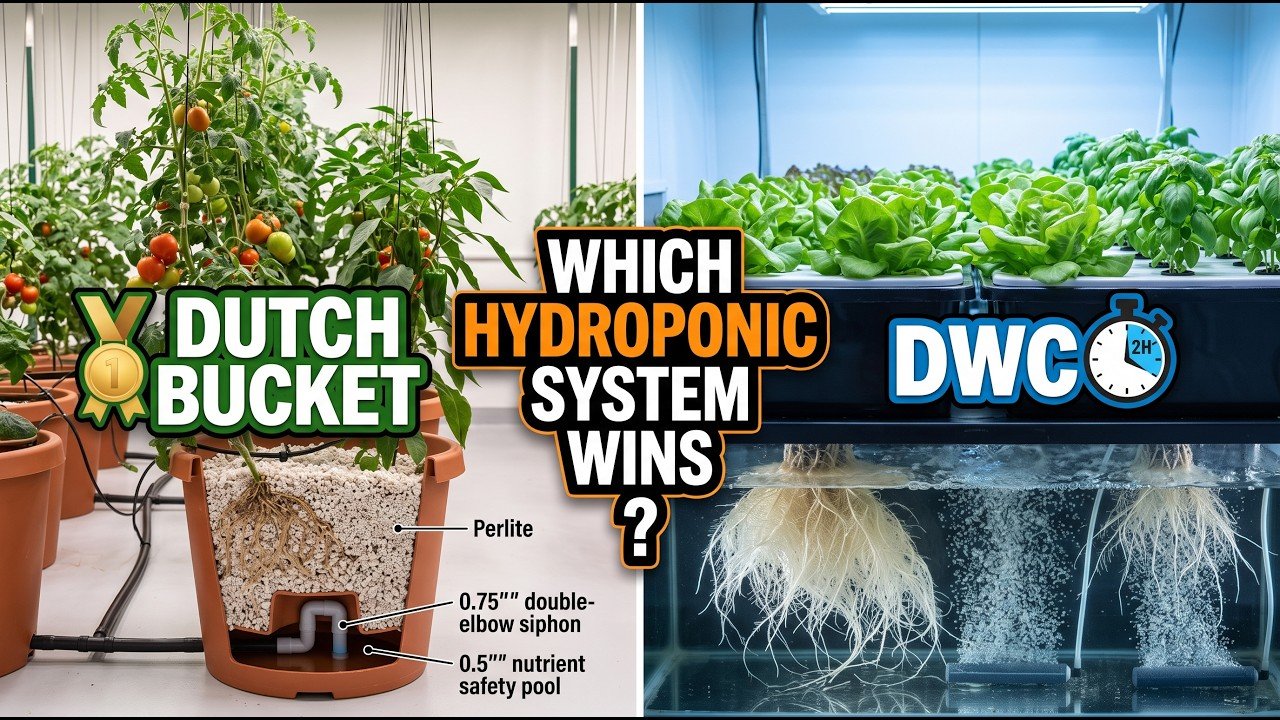
At the base of each Bato bucket sits a 0.75-inch double-elbow siphon. This specific plumbing geometry keeps a 0.5-inch (1.2 cm) reservoir of nutrient solution resting at the bottom of the pot at all times before the excess fluid spills over into the drainpipe. This residual pool prevents the bottom of the root zone from completely drying out between irrigation cycles.
Standard spatial configuration staggers the buckets at 16-inch (40.6 cm) centers along the drainpipe, with the drainpipes spaced about 6 feet (1.8 m) apart to allow for lateral canopy growth and worker access. Irrigation flow rates must be carefully calculated. A standard tomato or pepper plant receives two drip lines per bucket, while a high-transpiration crop like a European cucumber receives three. Using 0.5-gal/h (2 L/h) pressure-compensating emitters ensures that each plant gets a precise volume of solution regardless of its position along the supply line.
Because each bucket operates independently, a plugged drip line or localized root issue isolated to one bucket only affects that specific plant. The rest of the crop continues to thrive. This inherent failure isolation makes the Dutch bucket architecture highly resilient for crops that stay in the system for six to twelve months.
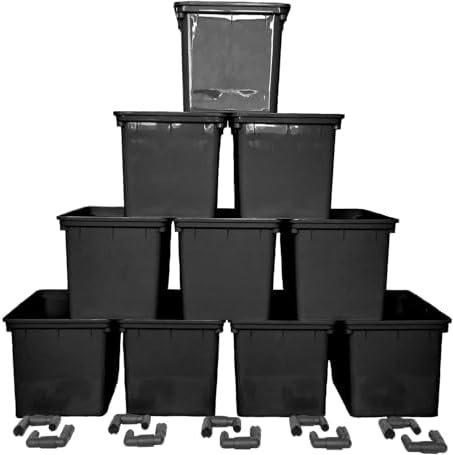
Why it’s necessary: Piecing together matching siphons, buckets, and irrigation lines can lead to leaks if tolerances are off. A pre-engineered kit ensures perfectly fitted drainage elbows and UV-resistant buckets designed specifically for long-term hydroponic use.nnKey Spec: Includes food-grade UV-resistant Bato buckets with pre-installed dual-elbow siphon drains.
Engineering Dynamics of Deep Water Culture (DWC)
Deep Water Culture suspends plant roots directly into an aerated nutrient solution without a supporting substrate, offering maximum nutrient availability for rapid vegetative growth but carrying zero buffer against mechanical failures.
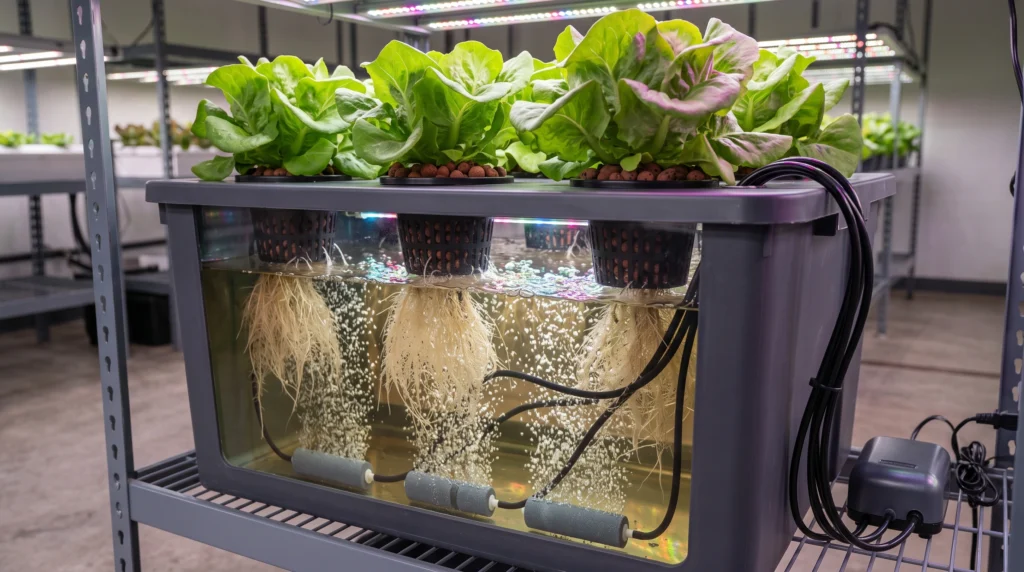
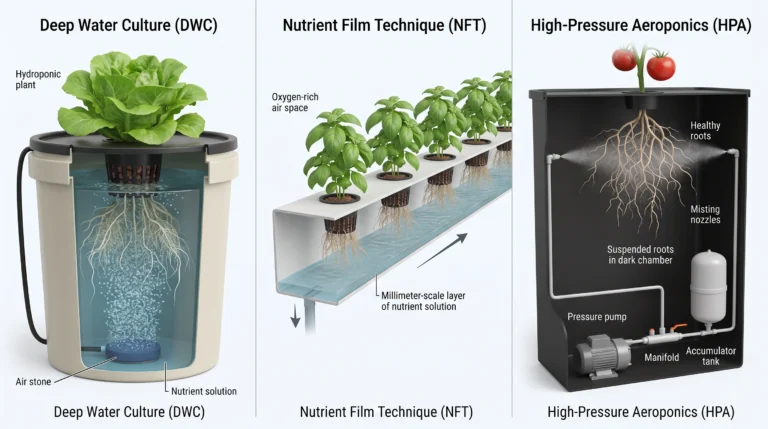
DWC operates as a pure water culture system. Plants sit in net pots with a minimal amount of clay pebbles or foam acting solely as an anchor. The root mass hangs directly into a deep reservoir of nutrient solution, which is typically maintained at a depth of 6 to 10 inches depending on the container size.
The biological engine of a DWC setup is the aeration system. An air pump forces ambient air through air stones resting at the bottom of the reservoir. This continuous bubbling action serves two functions: it physically mixes the nutrient solution to prevent stratification, and it rapidly increases the dissolved oxygen (DO) levels in the water. The roots breathe dissolved oxygen from the fluid rather than atmospheric air from soil voids.
This highly oxygenated, frictionless root zone drives explosive vegetative growth. Plant energy is entirely redirected from pushing roots through heavy soil into expanding the above-ground foliage. This biological efficiency makes DWC the default choice for cultivating high-volume leafy greens, herbs, and short-season crops.
The primary engineering trade-off is vulnerability. With no medium to hold moisture or insulate the roots, there is absolute dependency on active mechanical components. A dead air pump or a power outage in a warm room can starve the roots of oxygen in a matter of hours, leading to rapid tissue death and crop loss.
For growers calculating aeration needs, a standard baseline is providing 1 liter of air per minute for every gallon of nutrient solution. System planners must read up on the best DWC air pumps to ensure they have enough static pressure to push air through the water column efficiently.
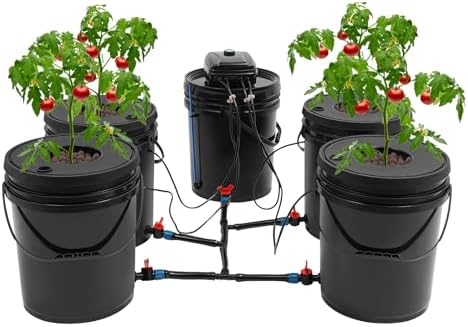
Why it’s necessary: Building a DIY DWC tub requires light-proofing and drilling exact hole sizes. A dedicated DWC kit provides light-tight reservoirs and properly sized net pots to prevent algae blooms and root exposure.nnKey Spec: 5-gallon opaque reservoir with customized heavy-duty air pump and low-micron air stones.
Head-to-Head Comparative Framework
Comparing Dutch buckets and DWC reveals a clear divide: centralized recirculating systems favor structural stability and risk isolation, while decentralized liquid reservoirs prioritize growth speed and footprint efficiency.
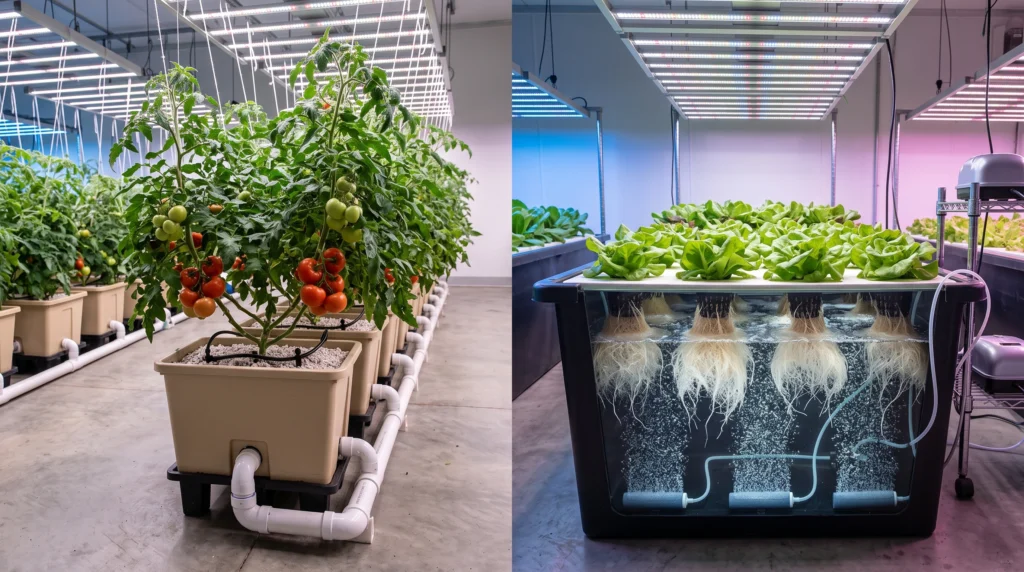
When looking at the exact parameters of Dutch Bucket versus DWC, system operators must align their infrastructure with their risk tolerance and maintenance capabilities.
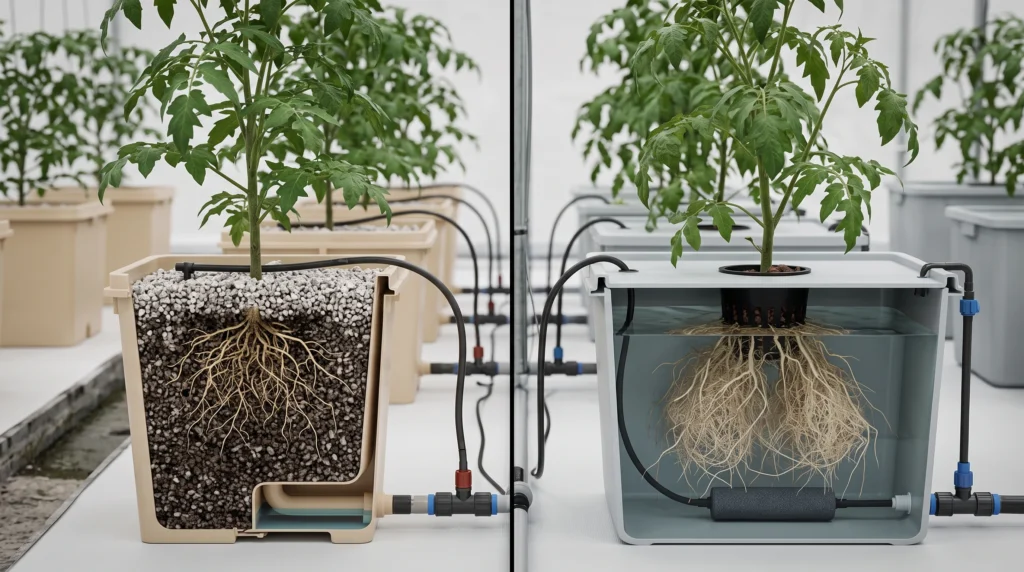
Root Zone Architecture: Dutch buckets rely on a coarse medium like perlite or lava rock, paired with intermittent top-feed dripping. DWC utilizes bare roots suspended constantly in aerated water.
Recirculation and Plumbing: Dutch buckets pump from a main tank, drip through the media, and return via gravity to the starting tank. This is a classic recirculating loop. DWC systems operate as isolated bodies of water where the plant lives entirely within its specific bucket or tub.
Failure Isolation: In a Bato system, a single blocked emitter risks one plant. The central pump keeps the rest of the room running. In a decentralized DWC setup, an air pump failure might wipe out every bucket attached to that specific pump line simultaneously.
Oxygenation Methods: Dutch buckets oxygenate the root zone passively. As the nutrient solution drains through the coarse perlite, it pulls fresh atmospheric oxygen down into the void spaces between the rocks. DWC oxygenates actively, requiring constant electrical power to force air through submerged stones.
Thermal Sensitivity: Root temperatures dictate crop health. Dutch buckets offer a slight thermal buffer because the physical medium insulates the core of the root ball from ambient air spikes. DWC is highly sensitive to ambient room temperatures. Warm water holds less dissolved oxygen than cold water. If a DWC reservoir creeps above 72F (22C), the dissolved oxygen drops, creating a favorable environment for anaerobic bacteria. System designers sizing fluid mechanics can review our hydroponic pump sizing guide to ensure moving water does not add excess mechanical heat to the system.
Fail-Safe Comparison Matrix
| Operational Metric | Deep Water Culture (DWC) | Dutch Bucket (Bato) |
| Primary Root Environment | Bare roots in liquid solution | Substrate-based (coarse perlite) |
| Oxygenation Method | Active (constant electrical air pump) | Passive (gravity-drain air intake) |
| Root Buffer Level | Zero buffer (highly vulnerable) | High buffer (forgiving) |
| Blackout Timeline | Roots suffocate in 2 to 4 hours | Plants survive 12 to 24+ hours |
| Primary Failure Point | Air pump failure / Power outage | Clogged drip emitters / Drain clogs |
| Emergency Action | Drop in battery aerators; add ice bottles | Clear/replace emitter; check siphons |
| Post-Failure Risk | Rapid Pythium (root rot) outbreak | Minor localized wilt on blocked line |
| Long-Term Recovery | Hard—requires manual scrubbing of biofilm | Easy—replace emitter; substrate buffers shock |
Nutrient Management and System Mathematics
Managing EC and pH in a centralized Dutch bucket tank requires far less daily labor than adjusting multiple isolated DWC reservoirs, though shared water systems carry the risk of spreading pathogens.
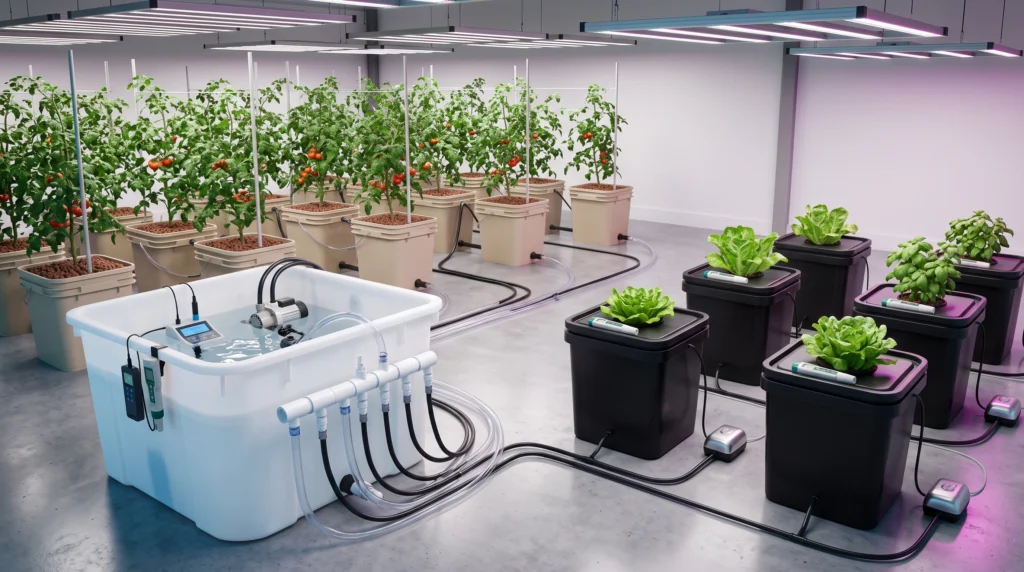
The mathematical reality of managing hydroponic water chemistry dictates the daily labor load of the facility. Dutch buckets recirculate back to a single nutrient tank. If you have 50 plants, you mix one batch of nutrients, measure the electrical conductivity (EC) and pH in one place, and adjust a single volume of water. All 50 plants receive the exact same feed profile.
This centralized architecture makes it practical to run automated injector systems and stock-tank automation. A single dosing controller can manage the entire crop. To model exact elemental parts per million (PPM) based on your reservoir size, operators should utilize our hydroponic nutrient calculator.
The centralized tradeoff is biological exposure. Because every plant shares the same water loop, a root pathogen like Pythium introduced at one plant can shed spores into the drain line, hit the main tank, and circulate to every other plant in the room.
Basic DWC (without a recirculating modification) is the exact opposite. Every bucket is an isolated reservoir. A fungal infection in Bucket A stays in Bucket A. The labor penalty for this isolation is high. A 12-bucket DWC array requires the grower to take 12 separate EC readings, make 12 distinct pH adjustments, and mix 12 top-off solutions.
Calculating the daily maintenance load: Adjusting a single 50-gallon tank takes an experienced grower about 5 minutes. Adjusting twelve 5-gallon DWC buckets takes roughly 30 to 40 minutes. For a hobbyist growing a few heads of lettuce, this is manageable. For serious production, managing decentralized reservoirs acts as a heavy maintenance tax. Growers aiming to refine their daily chemistry checks should study our hydroponic pH and EC mastery guide.

Why it’s necessary: Accurate nutrient concentration readings prevent fertilizer burn and nutrient lockout. A reliable, waterproof meter ensures you maintain precise feed strengths whether dosing a central sump or individual buckets.nnKey Spec: Auto-temperature compensation (ATC) with high-accuracy dual EC and PPM readout capabilities.
Substrate Selection and Hydraulic Conductivity
Media selection in Dutch buckets dictates drainage speed and root aeration, with coarse perlite proving superior to clay pebbles due to its superior capillary action inside the siphon reservoir.
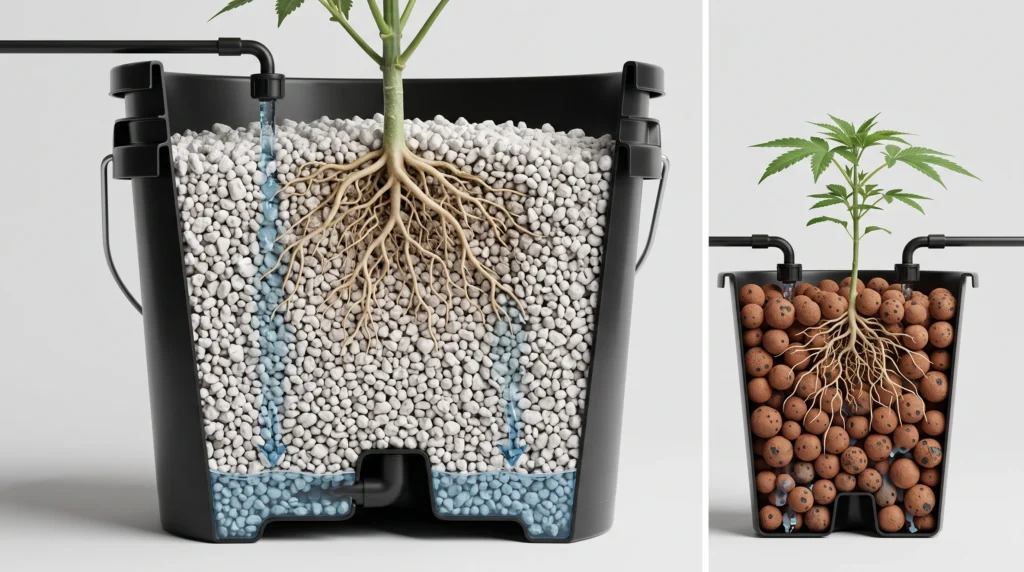
The physical media chosen for Dutch buckets directly impacts the hydraulic conductivity of the system. Commercial bato bucket farms specifically rely on coarse horticultural perlite.
Perlite provides excellent void space for air while retaining surface moisture. Commercial operators warn against packing or compressing the perlite. Compacted media blocks the downward flow of water, leading to localized flooding that plugs the drain siphon. Growers must also avoid fine-grade perlite, as the small dust particles migrate down to the bottom of the bucket and clog the 0.75-inch elbow.
Lava rock and coarse coco-perlite blends also perform well in Bato systems. The system works because the siphon maintains a 0.5-inch reservoir in the base. The perlite acts like a sponge, using capillary action to pull that residual moisture upward into the root zone between drip cycles. This ensures the root ball never completely dries out even if the pump turns off for an hour. To understand how specific elements bind to these different media types, consult our comprehensive hydroponic nutrients guide.
Clay pebbles (LECA) are the classic anchor medium used in DWC net pots, but they perform poorly when filling an entire Dutch bucket. Clay pebbles have very low water-holding capacity compared to perlite. Because they cannot wick moisture effectively, the top half of a Dutch bucket filled with clay pebbles will dry out rapidly between drip cycles, rendering the siphon reservoir at the bottom useless for the upper roots. System design dictates that top-fed drip buckets require water-holding particles, while submerged net pots only require structural anchors.
Crop Suitability and Yield Modeling
Matching plant physiology to system design is the foundation of hydroponic success; large fruiting vines require the root support of Dutch buckets, while fast-growing leafy greens maximize their potential in DWC.
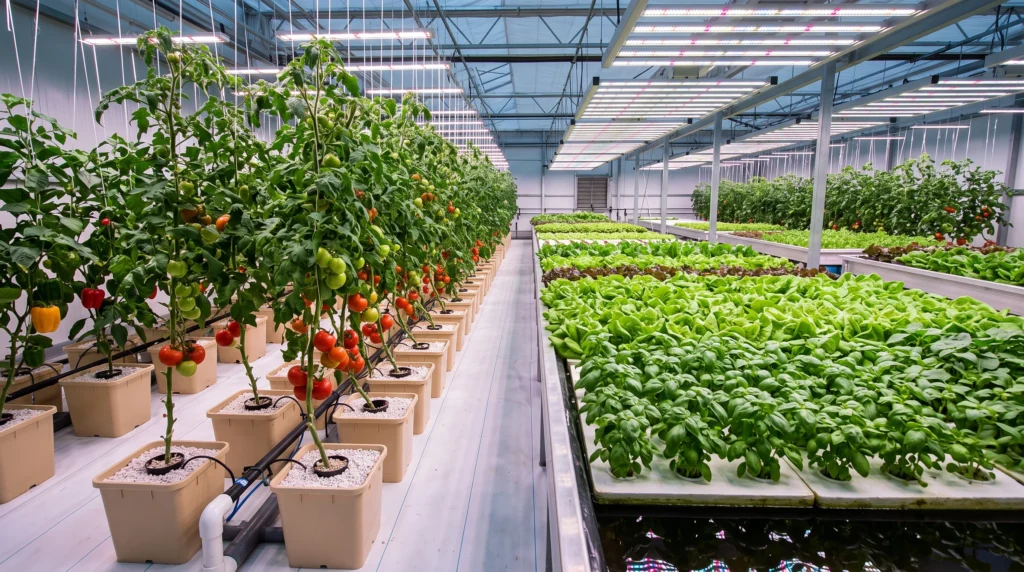
The physical constraints of the plant dictate the system choice. Trying to force the wrong plant into the wrong system results in poor yields and constant maintenance headaches.
Dutch Bucket Crop Profiles:
- Beefsteak and Cherry Tomatoes: Commercial standards dictate planting two tomatoes per bucket. The plants are drip-fed and supported via overhead roller hooks or stakes. The heavy root mass is perfectly contained within the 11-liter capacity.
- Peppers (Bell, Chili, Jalapeno): Grown at two per bucket. The coarse media supports the thick, woody base stems as the plant loads up with heavy fruit.
- European Cucumbers: Typically planted one per bucket due to massive transpiration rates. Three drip lines are required to keep the media saturated.
- Eggplants: Grown at two per bucket, utilizing the deep media for structural anchoring.
For specific environmental targets and pruning strategies for vining plants, review our hydroponic tomatoes & peppers guide.
Deep Water Culture (DWC) Crop Profiles:
- Lettuce varieties (Butterhead, Romaine): Explosive growth in water culture allows for rapid crop turnover. DWC bypasses the structural needs of vine crops to focus entirely on leaf expansion.
- Herbs (Basil, Mint, Cilantro): Rapid vegetative harvesting.
- Semi-hardy greens (Kale, Chard): Performs excellently up to the point of harvest.
Short-season crops exploit the speed of DWC. Long-season vine crops demand the physical stability and temperature buffering of a medium-based system. Attempting to grow a 6-month-old tomato plant in a 5-gallon DWC bucket results in a massive, tangled root ball that displaces the water volume, leaving no room for nutrient solution and causing the reservoir to rapidly overheat. Growers can explore further crop optimizations in our hydroponic lettuce yield hack.

Why it’s necessary: Rapid pH fluctuations in DWC reservoirs can lock out nutrient absorption in hours. A lab-grade pH pen allows you to track and adjust acidity levels perfectly to the 5.5 – 6.5 range required for maximum mineral uptake.nnKey Spec: Glass bulb electrode with automatic calibration and replaceable probe housing.
Emergency Failure Playbook: Downtime Survival Protocols for Dutch Bucket and DWC
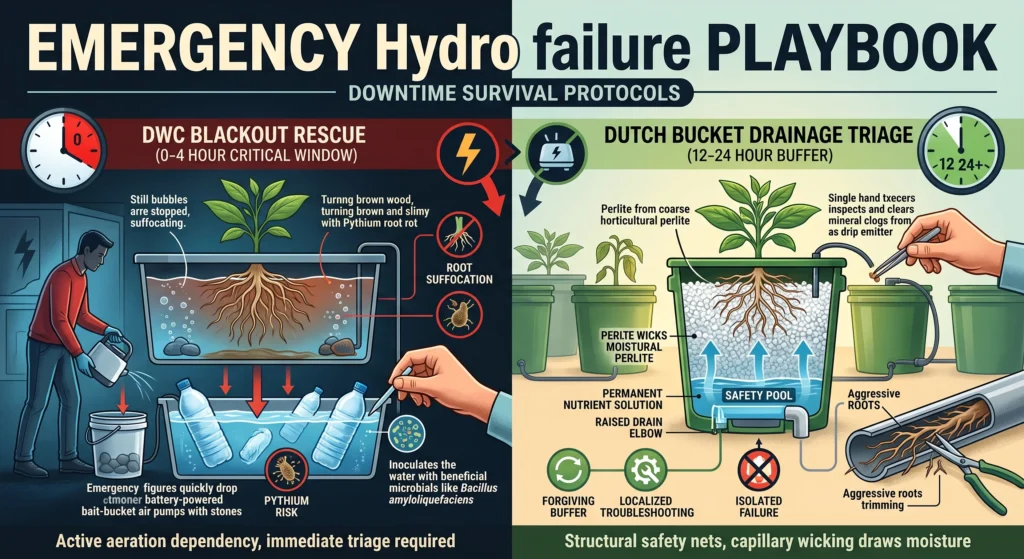
System resilience is defined by how long crops can survive a mechanical failure. In hydroponic cultivation, mechanical failure is not a matter of "if," but "when." Power grids fail, air pumps burn out, and organic biofilms clog emitters. How your crop survives these unexpected operational shutdowns depends entirely on your chosen system architecture. While the Dutch bucket (Bato) provides a forgiving physical moisture buffer, Deep Water Culture (DWC) forces cultivators into rapid emergency triage.
Below is the definitive emergency failure protocol to keep your crops alive when the power goes out or the plumbing fails.
The DWC Blackout Rescue (0 to 4-Hour Critical Window)
DWC operates as a bare-root liquid environment. Because plants sit in net pots with roots suspended directly in stagnant water, they have absolute dependency on continuous active mechanical aeration to breathe.
When the power fails or an air pump dies, dissolved oxygen (DO) levels deplete in a warm room within 2 to 4 hours, suffocating the root zone. Denied oxygen, the root tissues begin to drown and die, and opportunistic pathogens like Pythium (root rot) capitalize on this immediate stress, transforming a healthy root system into a brown, slimy mess within a day.
If your DWC aeration drops, initiate this immediate triage:
- Deploy Emergency Aeration: Keep battery-powered bait-bucket air pumps on hand. If a power outage hits, drop battery-powered stones into your reservoirs immediately to maintain minimal dissolved oxygen.
- Execute Reservoir Chilling: Warm water holds significantly less dissolved oxygen than cold water. Float clean, frozen water bottles in your DWC reservoirs. Dropping water temperatures below 68°F (20°C) slows down the plants' respiration rates and prevents Pythium spores from germinating, buying your crops critical hours.
- Withhold Feed and Apply Suppression: Do not add fresh nutrients during a blackout. Instead, inoculate the stagnant reservoirs with beneficial microbial agents (such as Bacillus amyloliquefaciens). These beneficial biology strains actively compete with and suppress Pythium, safeguarding vulnerable root membranes.
The Dutch Bucket Drip & Drainage Triage (12 to 24-Hour Buffer)
In contrast to DWC, the Dutch bucket system is highly forgiving of mechanical failure, engineered with structural safety nets.
Each Bato bucket is filled with coarse horticultural perlite or a clay-perlite blend, which retains physical moisture. Crucially, the 0.75-inch double-elbow siphon at the base of each bucket maintains a permanent 0.5-inch safety pool of nutrient solution. Even if the main pump fails entirely, capillary wicking in the coarse perlite draws moisture upward from this safety pool, ensuring that the root zone never completely dries out for 12 to 24 hours.
When troubleshooting a Dutch bucket plumbing failure, follow this playbook:
- Emitter Inspection & Clog Clearing: The single most common failure point in a Dutch bucket system is a clogged drip emitter. Mineral buildup or organic biofilms can easily block the tiny 0.5-gal/h pressure-compensating orifices. Check individual buckets daily. If a plant shows slight wilt, clean or replace the individual drip emitter—the surrounding plants remain unaffected thanks to the system's isolated design.
- Clear Intrusive Roots from Drainpipes: Standard Dutch bucket systems utilize 2-inch centralized drainpipes to direct runoff back to the reservoir. During long-term vining crop cycles (such as 6 to 12 months for tomatoes), aggressive roots can migrate out of the siphons and clog the drainpipe. Routinely check the drain line outlets; a clogged drainpipe can lead to system-wide backups and flooding.
- Maintain the Substrate Integrity: Never compress or pack coarse perlite into the buckets, as this destroys the air voids and blocks downward flow, leading to localized flooding. Avoid fine-grade perlite which migrates and clogs the 0.75-inch elbow siphon.
To see how DWC stacks up against other pure liquid systems, read our comprehensive DWC vs NFT vs Aeroponics guide.
Frequently Asked Questions
Can I grow heavy beefsteak tomatoes in a DWC system?
While you physically can grow tomatoes in DWC, it is highly discouraged for heavy, long-term varieties. The root ball of a 6-month-old beefsteak tomato will completely fill a 5-gallon bucket, displacing the water and creating severe oxygen deprivation and temperature control issues. Dutch buckets provide the structural support and thermal insulation required for long-term tomato health.
Do Dutch bucket systems require a centralized recirculation tank?
The commercial standard relies on a central recirculating tank to lower nutrient costs and simplify pH/EC management. However, growers can run Bato buckets in a u0022drain-to-wasteu0022 configuration where the runoff is directed out of the grow room. Recirculation is an efficiency choice, not a strict mechanical requirement.
Why does the Bato bucket feature a raised siphon rather than a flat drain hole?
The double-elbow siphon at the base creates a permanent 0.5-inch deep pool of nutrient solution. This small reservoir acts as a safety buffer. Capillary action in the perlite or lava rock draws this moisture upward between drip cycles, ensuring the root zone never completely dries out even during high heat or temporary pump failures.
Is perlite or expanded clay better for a Dutch bucket?
Coarse horticultural perlite is vastly superior to expanded clay pebbles (LECA) for Dutch buckets. Perlite holds significantly more moisture and facilitates proper capillary wicking from the bottom reservoir. Clay pebbles drain too rapidly, leaving the upper root zone dry between irrigation feeds.
How do you prevent root rot in a Deep Water Culture setup?
Root rot in DWC is prevented by maximizing dissolved oxygen and controlling water temperatures. Reservoir temperatures must be kept below 72F (22C), and air pumps must be sized to deliver at least 1 liter of air per minute per gallon of water. Utilizing beneficial biological inoculants can also outcompete Pythium spores.
Which hydroponic system is better for a beginner?
For a beginner looking to grow lettuce and basil, a small DWC tub is the fastest and easiest system to build. For a beginner aiming to grow fruiting crops like tomatoes or peppers, a 4-pot Dutch bucket system offers much more forgiveness regarding temperature spikes and power outages. Growers unsure of their infrastructure needs should consult our u003ca href=u0022https://mistculture.com/hydroponic-system-match-guide/u0022 target=u0022_blanku0022 rel=u0022noreferrer noopeneru0022u003ehydroponic system match guideu003c/au003e.
System Selection Verdict
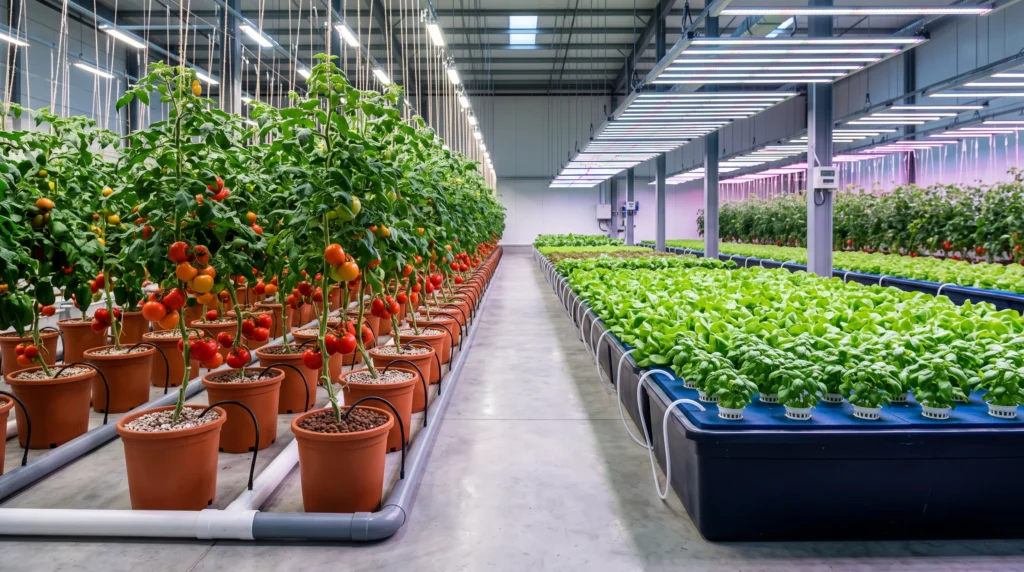
The choice between a Dutch bucket architecture and Deep Water Culture comes down to the biological demands of the plant and the logistical capabilities of the grower. If you are constructing a grow room for long-term, heavy-fruiting vines like tomatoes, peppers, cucumbers, or eggplants, the Dutch bucket system is the undisputed commercial standard. The combination of structural media, isolated root risk, and moisture buffering provides the precise environment large plants require to thrive for months on end.
If your production goals focus entirely on rapid turnover of lettuce, arugula, spinach, or basil, DWC provides the frictionless, highly oxygenated liquid environment necessary to drive explosive leaf growth. Assess your crop goals, evaluate your risk tolerance for mechanical failures, and build the infrastructure that guarantees your harvest. Ensure you use the right mathematical models for your setup by visiting our Tools and Resources Hub before laying your first pipe.
Prefer Visual Learning? Watch the Complete Video Guide
If you want a step-by-step visual tour of how these fluid mechanics and root environments function in practice, watch our detailed video guide below.
We break down the physical geometry of the 0.75-inch double-elbow siphon, walk through the air-stone bubble dynamics in DWC, and model how different crops—like heavy-fruiting tomatoes or fast-growing lettuce—perform in each infrastructure.

Continue Your Learning Journey